“China has many of the world’s leading production capacities, but many products start from villages and counties and enter the world market, but reach consumers with the trademarks of overseas customers.”
Text/Ba Jiuling
On this National Day, Shuitingmen in Quzhou is particularly lively.
Coinciding with the tenth anniversary of the opening of the street, nearly a hundred cultural and tourism activities were packed into the streets of the ancient city. In this most lively tourist gathering place in Quzhou, a snack that seems a bit “violent” has attracted many people to stop – caviar ice cream.
A small spoonful of black caviar is spread on the snow-white ice cream ball. Many tourists hold the cones and take pictures while eating. The caviar experience store not far away has just launched caviar mooncakes this year.
In the past, caviar was presented with great pomp and circumstance, including shell spoons, champagne, white tablecloths, and a Western restaurant with a high per capita consumption. But now, the “black gold” priced by the gram has become a street food that can be tasted for just a few dozen yuan.
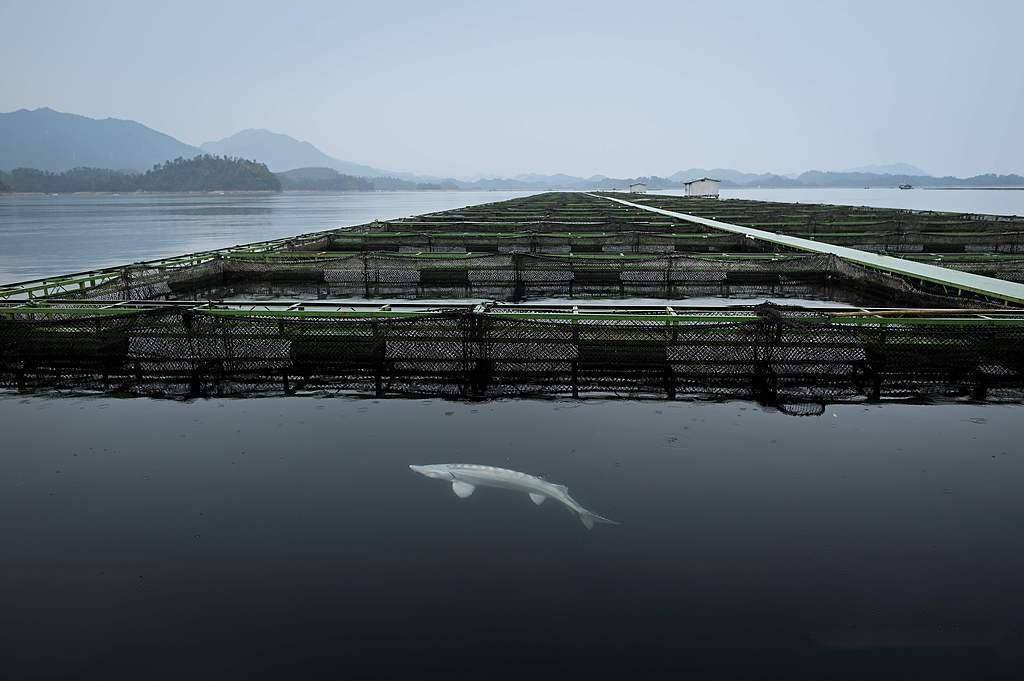
These caviar do not come from traditional production areas such as Russia and Iran, but are produced locally in Quzhou, a small town in western Zhejiang hundreds of kilometers away from the coast.
Similar caviar delicacies are beginning to appear in more inland cities.
Ya’an in Sichuan, Huize in Yunnan, Baokang in Hubei, Huishui in Guizhou… these cities that are thousands of miles apart are using their respective cold water resources to grow the same high-priced food. Caviar is shipped from these places around the world, and is also served on local people’s tables and packed into souvenir boxes, turning it into a new experience in scenic spots.
Inland cities seize the caviar industry chain
Before 2000, the world’s main caviar production areas were in countries along the Caspian Sea, and their raw materials were highly dependent on wild sturgeon. As the number of wild sturgeons has declined rapidly due to overfishing, environmental pollution and other reasons, in 1997, Acipuriformes were fully included in the Convention on International Trade in Endangered Species of Wild Fauna and Flora, and artificially cultured sturgeons have gradually become the mainstream of the caviar industry.
As a result, China got a ticket to a new industry. At that time, Quzhou was looking for a development path that would “get rich without pollution.”
Quzhou is located at the source of the Qiantang River. In order to ensure the ecological mission of “a river of clean water flowing out of Quzhou”, Quzhou established the goal of “ecological city construction” early on. When discussing investment promotion in 2005, it was clearly stated that it should not become a “garbage dump” for the transfer of eliminated industries in developed areas, but should look for projects that take into account the environment, economic benefits and people’s income.
The added value of the caviar industry is much higher than that of ordinary freshwater fish farming, and it can bring surrounding farmers into the industrial chain through sturgeon farming, caviar processing and other links. It is a rare industrial opportunity that can sell Quzhou’s ecological resources at high prices.
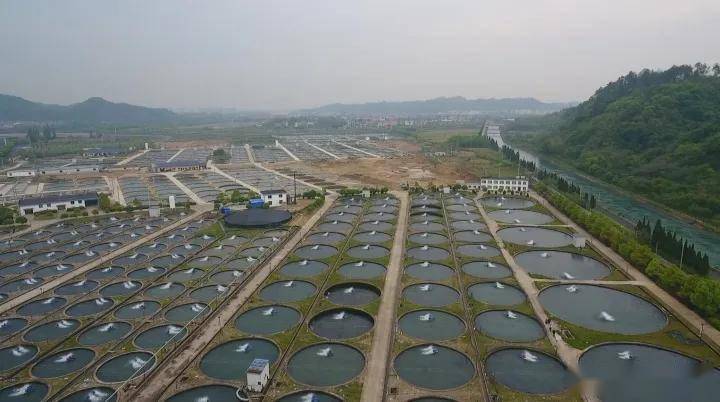
Quzhou, Zhejiang, sturgeon breeding base
In 2005, the opportunity presented itself.
In the summer of this year, Qiandao Lake continued to have high temperatures. More than half of the 50,000 sturgeons farmed by the local caviar company Sturgeon Technology died, causing heavy losses.
Since then, Sturgeon Technology began to look for a suitable breeding base again, and the Wuxi River in Quzhou is suitable for long-term sturgeon breeding in terms of water temperature, flow rate and dissolved oxygen.
However, the competition is very fierce. Yushan County in Jiangxi Province, which also has better water source conditions, also extended an olive branch. According to people familiar with the matter, the deputy county magistrate of the county personally led a team to inspect and promised to provide more than 20,000 acres of land, and Sturgeon Technology was close to signing a contract.
When the news reached Quzhou, the local government quickly took action to coordinate key issues such as selected breeding land and compensation, and finally left the breeding base of Sturgeon Technology in Quzhou.
In 2009, Sturgeon Technology began to plan to build a caviar processing base, and the Quzhou government took action again. Wang Guoqiang, then deputy mayor of Kecheng District, went to Qiandao Lake for the third time. The main person in charge of Kecheng District also went to the Chinese Academy of Fishery Sciences many times for docking, striving for the implementation of the project while seeking scientific research and technical support for it. In the end, the success convinced Sturgeon Technology to build its processing base in Quzhou.
By 2012, the Quzhou Caviar Processing Center was built, and the foundation of the caviar industry chain integrating breeding, breeding, and processing was completed in Quzhou. In the following two years, Sturgeon Technology’s caviar production increased by more than 73%, becoming the world’s largest caviar company, and Quzhou subsequently became the world’s largest caviar producer.
A similar story also happened in Ya’an, Sichuan, the second largest caviar producing area in my country. In this region, which many people have only seen in the earthquake news, the production and sales of caviar reached 70 tons last year, accounting for more than 14% of the global share, and the products are exported to more than 30 countries and regions.
In the past, Ya’an Tianquan County has long been dominated by traditional breeding and breeding. Although the local area is rich in mountain springs and cold water resources, it has not been able to find a product that can turn its resource advantages into industrial advantages. Meanwhile, an aquaculture team is looking for suitable places to grow sturgeons. The cold water in the mountains of Tianquan County has a suitable temperature and high oxygen content. The original local rare fish rescue center has left some breeding facilities.
In 2012, the needs of both parties hit it off, and Runzhao Fisheries settled in Tianquan County and started cultivating sturgeon using existing facilities. While the company is exploring breeding technology, Ya’an has also begun to expand fish ponds and improve processing facilities around sturgeon.
In 2015, Tianquan County built the largest caviar production base in the province at that time; in 2020, the company invested another 120 million yuan to build the second phase of the project. By 2023, Sichuan Province introduced the “Tianfu Caviar Industry Cluster Construction Plan (2023-2025)”, with Ya’an’s Tianquan and Yingjing as the core, linking improved seed breeding, standardized breeding, processing and brand building. Ya’an’s caviar industry has gradually grown from a corporate breeding project into a local industrial chain.
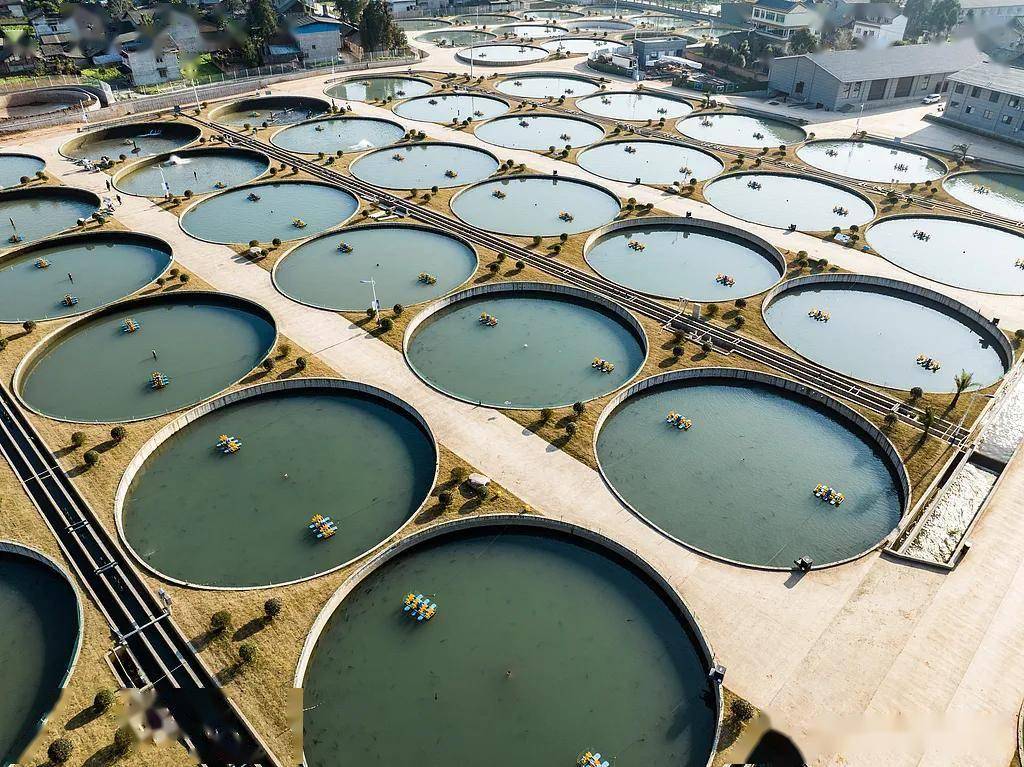
Ya’an, Sichuan, sturgeon breeding base fish pond
In addition to Quzhou in Zhejiang and Ya’an in Sichuan, Huize in Yunnan, Baokang in Hubei, Huishui in Guizhou and other places are all important caviar producing areas in my country. In 2006, China’s production of farmed sturgeon caviar was only 0.7 tons. By last year, China’s caviar sales had soared to 437 tons, accounting for 54% of total global sales.Ingredients that were once rare have become products that can be stably supplied in many inland areas.
To be number one in the world, another piece of the puzzle needs to be added.
As the caviar industry has taken root in many cities in my country, the benefits from breeding and processing have also begun to flow to surrounding villages and some farmers through employment, land transfer, etc.
According to Hangzhou Daily, Quzhou has formed an industrial chain with an output value of more than 500 million yuan around sturgeon breeding, breeding and caviar processing and export. Sturgeon Technology adopts the “land transfer priority re-employment” model. Farmers can not only obtain rent through land transfer, but also be re-employed to work in the company. This model has driven more than 150 surrounding farmers to increase their annual income by more than 6 million yuan.
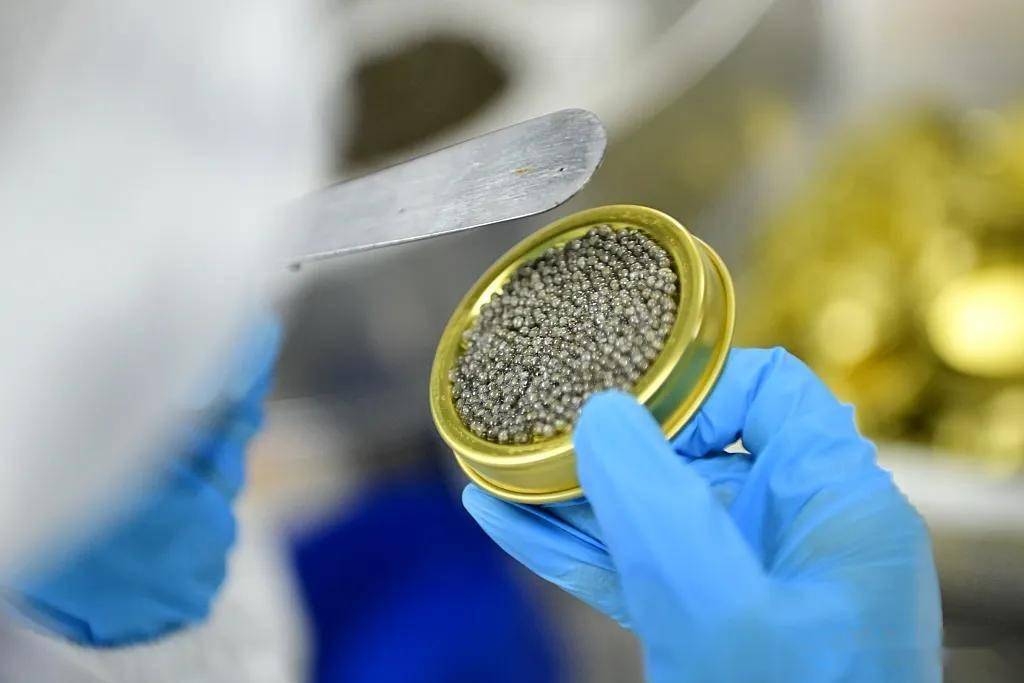
Caviar processing
Similarly, Ya’an Tianquan is exploring the construction of a “shared fish pond”. The company transfers land to villagers and pays rent. The village collective funds the construction of standardized fish ponds and hands them over to the company to operate and receive dividends. After training, villagers can also enter the park to work and receive wages. Today, the local caviar industry has driven the development of 22 village collective economic organizations in the county, increasing the income of nearly 3,000 surrounding farmers.
Huize Shangcun Township in Yunnan has established a “rent + salary + stock + tax” mechanism to support farmers around the caviar industry. According to a report by China Central Broadcasting Network, the local sturgeon breeding base has transferred the land of 620 households in 7 villages, paying an annual rent of 2,057 yuan per mu. In addition, the industry has also increased the village collective income by more than 1.03 million yuan per year.
The profits brought by the caviar industry are thus broken down into payments of rent, wages and dividends, and remain in the place of production.
然而, These production areas also face a common problem: industrial profits are mainly concentrated in the breeding and processing links, covering mostly breeding bases and surrounding villages, and their connection with the local consumer market is limited.
In other words, Chinese caviar can be shipped to the global market within 48 hours, but it may not enter the local people’s dining tables. Many people don’t even know that their hometown has such a powerful industry.
This is related to my country’s long-term export orientation of caviar.
Take Sturgeon Technology as an example. In 2025, approximately 84% of the company’s revenue will come from overseas markets, with domestic sales accounting for only 16%. After a jar of caviar is processed in Quzhou, it often directly enters the aviation cold chain and is sent to Europe, the United States, Japan and other places.
Moreover, when Chinese caviar is exported to third-party brands, it is usually packaged in large packaging. After the products arrive overseas, customers will repackage and label them according to their own brand positioning and local market needs. Therefore, the popularity of my country’s private caviar brands is not high.
This means, The growth in production and sales has not been simultaneously accumulated into brand assets. The more caviar sold in my country, the more likely consumers will remember foreign brands.In Huize, Yunnan, Chen Jiaquan, secretary of the Shangcun Township Party Committee, bluntly said that most of the products are sold under OEM brands and are faced with the shortcoming of “products but no brands”.
This has brought new problems to my country’s caviar industry: After caviar is sold all over the world, how to keep more value in the local area?
Origin, leaving more value
In recent years, Quzhou, Ya’an and other places have begun to make caviar a part of local cultural tourism.
At the beginning of last year, the country’s first offline caviar experience store was opened at Shuitingmen in Quzhou Scenic Area. In this store, caviar ice cream for 39 yuan, caviar hot dogs for 69 yuan, and caviar tempura for 89 yuan are all available. Visitors can buy one to try out when they go here.
Caviar also began to appear on restaurant menus and became part of Quzhou’s specialty cuisine. Fang Xu, the head chef of Quzhou Oriental Hotel, said that ten years ago, there were very few dishes with caviar. But now, he has developed various innovative dishes such as caviar spring rolls, caviar fried rice, yogurt caviar, etc. Caviar has become a must-have dish for high-end banquets in Quzhou. “Without this product, people will not come to you.”
After eating this bite, visitors can also go and see how the fish are raised. Last year, Sturgeon Technology launched a project in Xiangchundi Village, Shishi Township, Quzhou, where female seedlings are returned to the company and male seedlings are sent to households. After the sturgeon seedlings are raised to the point where they can distinguish between male and female, the male seedlings are given to farmers in Xiangchundi Village for free. Today, Xiangchundi Village has created a sturgeon tour route of more than 800 meters, where tourists can experience sturgeon-themed fishermen’s entertainment, homestays and various rural leisure tourism projects.
Ya’an Tianquan County is also promoting the caviar industry from single farming and processing to an “experiential economy” that integrates visiting, research, and tasting. This year’s National Day, Tianquan has included caviar in the local travel guide. Caviar, along with pepper chicken and toast feast, is listed as a local delicacy that tourists “don’t miss when coming to Tianquan”. This is not a temporary idea. As early as last year when the Tianquan G318 Travel Museum was fully opened, an independent Caviar Experience Center.
In addition, Sichuan Ya’an is still adopting the “corporate independent brand + regional public brand” model, while encouraging caviar companies to promote their own brands such as “Fosita” and applying for trademarks in 17 countries and regions including the United States and Japan; while cultivating the “Tianfu Caviar” regional brand and opening up domestic sales through e-commerce, short video platforms, and hotel cooperation.
Yunnan Huize is also trying to expand domestic consumption scenarios. At present, Amur Group has entered high-end Western restaurants, five-star hotels, high-end clubs and other channels in Beijing, Shanghai and other cities with its own brand “Amur”, and plans to continue to develop gift box products for domestic individual consumers…
For my country’s caviar producing areas, the development of catering and cultural tourism is not about adding a few ancillary projects in addition to breeding and processing, but extending the industrial chain from the production end to the consumer end, allowing more consumers to remember the place of origin, and allowing more restaurants, B&Bs, merchants and villagers to share the dividends brought by this global business.
This is not a problem unique to the caviar industry.
China has many of the world’s leading production capacities, but many products originate from villages and counties and enter the world market, but reach consumers with the trademarks of overseas customers.
Data from the General Administration of Customs show that in 2025, my country’s independent brand exports will account for 23.2% of total exports. Although it increased by 1.4 percentage points from the previous year, it still only accounts for less than a quarter of China’s huge export scale.
This is not just a matter of whose trademark is affixed to the product, but also who controls the brand, channels, pricing power and consumers. According to the “Key Points of World Intangible Assets Investment in 2025” released by the World Intellectual Property Organization, From 2008 to 2024, the growth rate of investment in intangible assets such as brands, R&D, data, and design in the 27 sample economies was 3.7 times that of tangible assets such as factories and machines.
Factories and breeding bases determine whether products can be produced, while brands and consumer relationships increasingly affect the price at which products can be sold, who consumers ultimately remember, and where more revenue is retained.
And this may also be the next step for many advantageous industries in China.
References:
1. “The Ten-Million-Yuan Effect of a Sturgeon”, Zhejiang Daily, 2014.8
2. “Series of reports on Zhejiang’s industrial transformation and upgrading (3): Sturgeons swim a way to wealth”, China United Business Daily, 2010.7
3. “Seafood is also produced in the mountains: See how a small place can become famous”, Focus Interview, 2024.3
4. “”Green Projects” Transformed into a “New Engine” for Transformation – Insights from Tianquan County’s Exploration of Economic Revitalization and Growth Pole”, Ya’an Municipal People’s Government, 2025. 6
5. “Sturgeon Technology: A “Slow Fish” Accelerates Sharing Wealth”, Hangzhou Daily, 2025.7
6. “”Living water” nourishes caviar on the world’s tables”, Farmers Daily, 2026.8
7. “Ten Years of Nanjing Expo · Linking the World | One “Sturgeon” Wumeng Mountain: How Caviar from a Small County Swims to the World”, China Broadcasting Network, 2026.6
8. “”Made in Sichuan” caviar from mountain poolside to world dining table”, cover news, 2026.6
9. “World Intangible Investment Highlights 2025”, World Intellectual Property Organization
Author|Jiang Zihan, Lin Bo
主編|何夢飛
Related Reading
- Original Yang Zhilin broke his wrist: Kimi’s darkest moment and expedition2026-10-06
- SpaceX stock price surges, Musk’s net worth surges by more than $30 billion in one day2026-10-06
- Trump plans another oil stockpile sell-off with global reserves already ‘scarily thin’2026-10-06
- Original: 157,000 businesses closed down in one year! With an average of 430 stores withdrawing every day, why do milk tea shops collectively “evaporate”?2026-10-06
- Original Holiday Personality Illustrated: Young people have become “schedulers”2026-10-05