From 200 yuan to 32.1 billion, the difference is a full 160.5 million times.
There is a world-class leading company in Hebei with an annual revenue of 32.1 billion. It was three brothers who started the business with only 200 yuan.
Starting from a small workshop collecting scrap aluminum in the streets, after 40 years of trials and hardships, it has built the global leader in aluminum industry – Lizhong Group, which supplies BMW and Tesla.
In 2026, the companyRevenue in the first three quarters was nearly 30 billion yuan, a year-on-year increase of more than 25%.
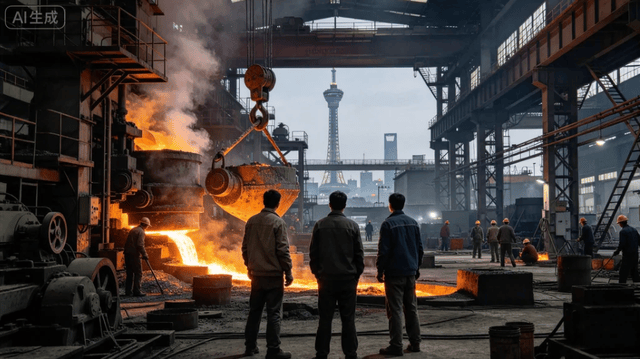
For an aluminum manufacturing company, the most impressive thing is not the financial report, but the few seconds when aluminum water is poured into the mold, everything becomes possible.
As you can imagine,Empty cans, old window frames, and scrap engine casings can be reborn into car wheels and high-end alloy parts when thrown into the furnace. This is not a simple environmental protection, but the “regeneration alchemy” of China’s manufacturing industry.
而How did this small family-owned workshop, which started from scrap aluminum slag, counterattack and become the number one in the world?
01
Dong’an Village in Qingyuan, Baoding, hides a legend of struggle that shocked the world.
In the 1980s, China was an era of dividends everywhere.
Domestic primary aluminum is in short supply, and aluminum prices have skyrocketed, from 7,000 yuan/ton to 18,000 yuan/ton in a short period of time.However, the price increase of aluminum slag and scrap aluminum is slow, and there is a huge price difference in front of us. There are many small family workshops in Baoding, Hebei Province that collect aluminum ash.
In the first month of 1984, in Dong’an Village, Qingyuan, Baoding, there was still snow on the field ridges, and the villagers were still having a “cat winter” in the chill of the last winter.
Zang Ligen, 26, wrapped the 200 yuan his family had scraped together three times in cloth, stuffed it into his pocket, and headed north through the snow to collect aluminum dust that others considered worthless.
After much trouble, he found a seller in Tianjin, brought back 5 tons of aluminum slag, and made a net profit of more than 1,800 yuan.
You know, at that time, the monthly salary of ordinary workers was only 80 yuan; this time, it was equivalent to two or three years of work for ordinary people.
Molten aluminum is bright orange when it comes out of the furnace. It is soft, pliable, and plastic, like all “ambition” that has not yet been finalized.
It flows into the mold and becomes the prototype of the wheel hub in a few seconds. It then undergoes machining, painting, and inspection, and finally lies quietly on the assembly line of the OEM, waiting to be screwed on with four bolts, and from then on it bears the weight of tons of a vehicle.
The most moving part of this process is the transformation of “from scrap to whole”.
A discarded can, a dismantled old window frame, and an oil-stained engine casing can be turned into load-bearing parts for high-end manufacturing after being remelted.
This is not called environmental protection, this is “alchemy”.
Although Zang Ligen had not witnessed this magical process with his own eyes at that time, he truly felt the happiness brought by “alchemy”.
In the same year, he and his two younger brothers Zang Lizhong and Zang Liguo set up a small workshop in the village and named it “Lizhong”.
The three brothers are from the generation with the Chinese character “Li”, and the Chinese character “中” is taken from China, which means “to establish roots in China and do business all over the world.”
No one expected that this stall, which started out as a rag-tag business, wouldIn 40 years, it will become a world-class leading company with annual revenue exceeding 30 billion, aluminum-based master alloys accounting for about 15%-20% of the global market, and wheels sold to BMW, Mercedes-Benz, Audi, and Tesla.
02
In an era where everyone is making quick money, Lizhong is taking the slow road.
Brothers working together can cut through metal. The three brothers run the business together. The eldest brother Ligen is responsible for purchasing and sales, while Lizhong and Liguo are responsible for smelting and processing. The business is growing like a snowball.
Around 1988, Lizhong already had 9 million yuan in cash on its books.
In an era when households worth ten thousand yuan were still in the newspapers, this amount of money was definitely enough to cause a rift in any family.
This is indeed the case. Most of the peers choose to make money when the dividends come, and go wherever the money comes in quickly.
Most of the Baoding people around me buy houses and land, invest in short-term and fast investments, and the track changes over and over again.
But the Zang brothers understood,This is the dividend of the times, not one’s core competency. The quick money earned by relying on price differences is destined to be unsustainable.
So, they did something that went against common sense:The profits are not spent, but all spent on R&D.
Others are still paying the price difference, and they have already begun to make “flavoring agents in aluminum alloys” – aluminum-based functional master alloys.
In 1993, Lizhong independently developed high-purity aluminum, silicon, magnesium and titanium cast aluminum alloys, and won the national key new product certificate, directly filling the domestic gap.
Zang Ligen’s last words broke the knot of many businessmen:“In the past few decades, we have had countless opportunities to make quick money. Once we leave, we can make a lot of money in the short term, but in the end no industry will become big. In this life, I want to make China the strongest in high-end applications of aluminum alloys.”
This is also the fundamental reason why many aluminum workshops that made money from the dividends of the times during the same period were eventually wiped out by the waves.
But the “sobriety” of the three Zang brothers goes beyond this.
03
Sharing hardships makes it easier to share joys and sorrows, and family businesses are most likely to fall into “internal strife.”
Since ancient times, family businesses have been the easiest to grow and the easiest to fail.
They are brothers and sisters in management, sons-in-law and brothers-in-law in purchasing, sisters-in-law and sisters-in-law in finance, uncles and nephews in the workshop. When money is made, they first argue about dividing the spoils. When the head of the family leaves, they divide the family and disperse.
The threshold of the manufacturing industry is not only technology, but also internal human relationships.
A group of workshops that started at the same time suffered inexplicably: the company was full of relatives, with entangled interests and conflicts. It became common for brothers to fight against each other and business collapse.
The three Zang brothers almost fell into this pit, but they laid the foundation in advance.
In 1990, the three Zang brothers finalized their shareholdings: Zang Ligen 34%, Zang Lizhong and Zang Liguo 33% each, and their rights and responsibilities were clearly written in black and white.
Officially implemented in 1995, ownership and management rights were separated, and daily operations were handed over to professional managers.
Zang Ligen has a very vivid metaphor: offspring of incestuous marriages are prone to deformities, and family businesses have always been run by relatives, which is not the same principle.
It has to be said that this system has long eradicated the soil of internal strife in the family.
Today, the group has tens of thousands of employees and hundreds of core management positions, but not a single family member is in charge.
The system manages people and processes manage things. This advanced determination can support the long-term layout of the entire industry chain.
04
It is worth mentioning that the threshold for the recycled aluminum industry is actually very low: scrap aluminum goes in and aluminum ingots come out, and you earn a processing fee of several hundred yuan per ton. The upstream scrap aluminum increases, and the downstream die-casting factories are suppressed, and both sides suffer.
Competitors either only make materials or parts.
For example, Wanfeng Aowei is deeply engaged in automotive aluminum and magnesium parts, but the raw materials are outsourced; Shunbo Alloy focuses on recycled aluminum production capacity, stopping at the material end and not making wheels downstream.
Only one link in the industrial chain has little financial pressure and simple management.
Li Zhong chose a more arduous path: to open up the entire industrial chain and eat upstream and downstream together.
We develop our own smelting equipment, make our own master alloys, smelt recycled aluminum, develop molds, design and manufacture wheels, and even digest hazardous waste ourselves. Just for recycled aluminum alloy casting, 79 production lines have been rolled out.
With full-chain collaboration, costs can be suppressed, new materials can be directly verified in their own production lines, and downstream customers can be secured; however, the price is difficult management, heavy assets, high depreciation, thin profits, and rising interest-bearing liabilities.
Upward, the aluminum-based master alloy is the “flavoring agent” of aluminum alloys and also the national-level manufacturing individual champion; downstairs, aluminum alloy wheels are directly supplied to global car companies.
In 2025, annual revenue will be 32.124 billion yuan, master alloys will account for about 15%-20% of the global market, and 23.36 million wheels will be sold a year, successfully entering the supply chains of BMW, Mercedes-Benz and Audi.
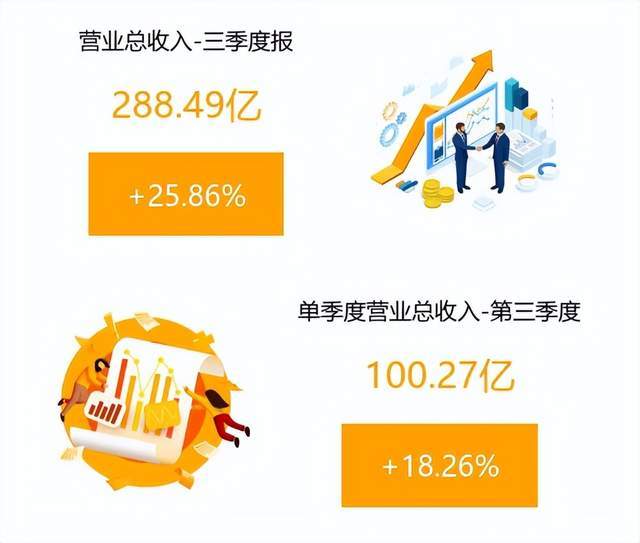
Lizhong Group’s third quarterly report for 2026 shows that,During the period, the company’s revenue was 28.849 billion yuan, a year-on-year increase of 25.86%; net profit attributable to the parent company was 929 million yuan, a year-on-year increase of 48.47%; deducting non-net profit was 901 million yuan, a year-on-year increase of 61.02%; of which, the company’s third quarter revenue was 10.027 billion yuan, a year-on-year increase of 18.2% 7%; the net profit attributable to the parent company in a single quarter was 351 million yuan, a year-on-year increase of 56.79%; the non-net profit in a single quarter was 352 million yuan, a year-on-year increase of 76.02%; the debt ratio was 63.87%, investment income was 12.3256 million yuan, financial expenses were 348 million yuan, and the gross profit margin was 10.77%.
The idea that one generation starts a business and the second generation keeps it is no longer very applicable today with the rapid changes in technology.
The wave of new energy vehicles and integrated die-casting is coming, and the second generation Zang Yongxing (son of Zang Ligen) is aiming at high value-added tracks:Heat-free aluminum alloys are supplied to leading die-casting companies; microcrystalline silicon-aluminum composite materials are used as domestic substitutes for semiconductor precision components and optical equipment; there are also aerospace special alloys and lightweight structural parts for humanoid robots.
However, transformation never happens overnight.
The growth rate of semiconductor silicon and aluminum materials is impressive, but the current revenue volume is still very small, which is a long-term strategic option; the lithium hexafluorophosphate track that was once laid out has shrunk in time due to cyclical fluctuations and returned to the main line of aluminum.
It is difficult for new businesses to immediately reverse the overall profitability in the short term. Fluctuations in aluminum prices and geopolitical and exchange rate risks from overseas factories are always hanging over our heads.
However, this is also the only way for manufacturing companies to break through.
Starting from 200 yuan, it has grown from a small workshop to an industry leader with an annual revenue of 32.1 billion.
Many people regard Lizhong’s story as a cool article about a grassroots counterattack.
但Peeling off the legendary shell, it is the epitome of China’s private manufacturing industry.
In Hebei, the steel industry is the absolute mainstream, and Lizhong has abruptly embarked on a light alloy recycling manufacturing route.
Rooted in China, down-to-earth, upright and innovative, and constantly making progress.
Related Reading
- Nvidia stock extends $2.7 trillion rout as SEC probe reportedly investigates its accounting2026-11-22
- Global computing power enters the “post-Huang Renxun era”2026-11-21
- Stock market today: Dow, S&P 500, Nasdaq sink as Anthropic IPO fails to ease AI worries2026-11-21
- Anthropic is on the market, and the big model bubble is not far away2026-11-20
- Let wild giant pandas return to the bamboo forest: Li Binbin wins the 2026 Rolex Award2026-11-20