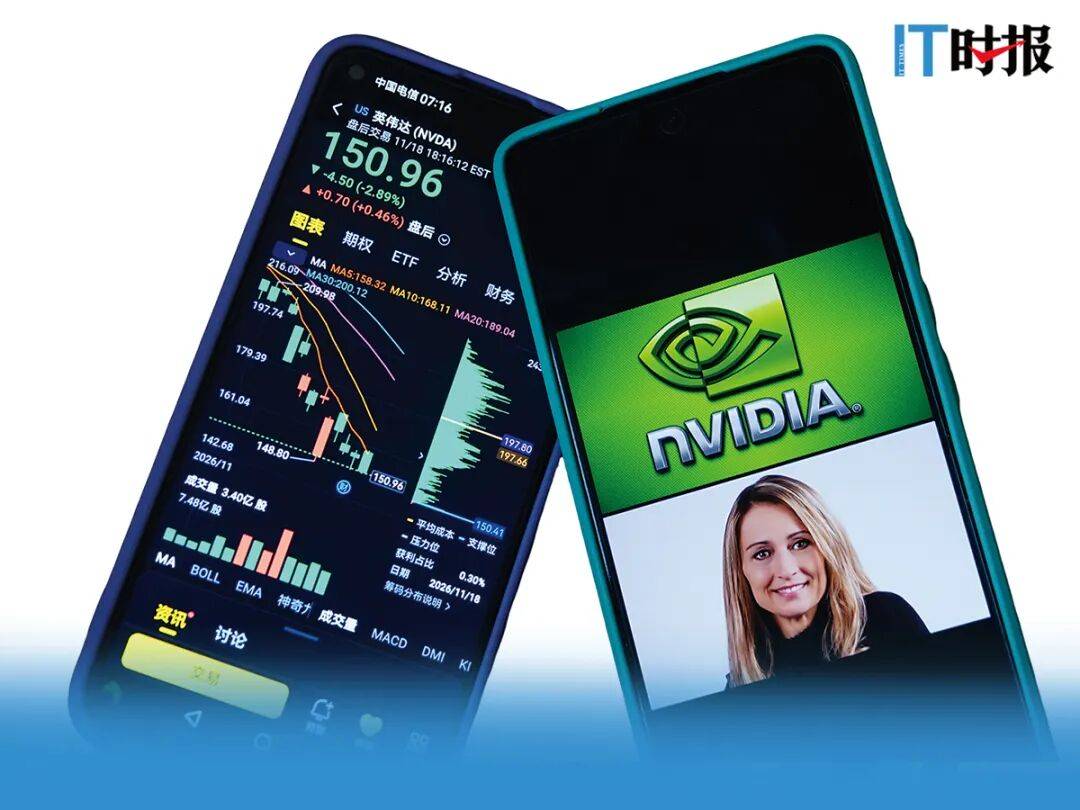
Demand for domestic computing power is heating up, and capital is shifting from embodied intelligence to semiconductors
Author/IT Times Mao Yu
Editor/Hao Junhui Sun Yan
The way Jen-Hsun Huang left Nvidia was more sudden than the market expected.
On November 12, local time, Huang Renxun resigned as president, CEO and board member. On November 17, he publicly stated that he was willing to return as CEO if the board of directors believed that his return was in the interests of the company; but on the same day, Harvey Jones, chairman of the board of directors, made it clear during the fiscal 2027 third quarter earnings call that the board of directors “does not intend to resume his position as CEO.”
The departure of a founder who has been at the helm for 33 years in this way is shocking enough in itself. But what really affected the nerves of China’s computing power industry chain was another thing that happened at almost the same time window.
On November 16, the U.S. Department of Commerce’s Bureau of Industry and Security (BIS) issued interim final rules to further extend the scope of control to the remote acquisition of advanced computing power through overseas data centers. For some AI companies, in addition to chip procurement, computing power leasing also faces more uncertainties. The question then becomes: What is the real trump card?
Changes have been transmitted to the market. “IT Times” reporters learned from multiple interviews that GPU quotations from some channels have fluctuated, and the number of inquiries about domestic computing power products is also increasing. More customers are beginning to ask about domestic cards, but practical issues such as price and supply are still before them, and the final answer is not a simple “domestic substitution acceleration” narrative.

Control extended to overseas computing power leasing
In the past few years, some companies have rented high-end GPU computing power through data centers. Today, that path faces greater scrutiny.
According to the new BIS regulations, Indonesia, Malaysia, Singapore, Thailand and Brazil are listed as areas with “higher than normal transfer risks”. To export, re-export or transfer relevant advanced semiconductors within the country to these countries, you need to apply for a regional stabilization license in accordance with the new regulations. Data centers that have provided computing power services of relevant scale before the rules are announced must obtain a license within 90 days after the rules take effect, otherwise they may face subsequent export restrictions.
This means that who overseas data centers serve and how much computing power they provide have also entered the regulatory field.
Another point of contention is the law. The U.S. Remote Access Security Act (RASA, H.R.2683) passed the House of Representatives in January this year with 369 votes in favor and 22 votes against, and was subsequently sent to the Senate Banking, Housing and Urban Affairs Committee. Although the bill has not yet entered the voting process and has not yet taken effect, its legislative intention is consistent with the direction of the new regulations: to include “remote use of computing power” into the same control framework as the physical export of chips. In fact, some analysts pointed out that even if RASA does not vote separately in the short term, its core logic has already been partially implemented through the new BIS regulations.
The basis for judging compliance is shifting from the physical location of computing power to the actual service objects of computing power. For the industry, this means that friction points have moved forward.

The market shifts to domestic chips
The market reaction has already appeared on the quotation sheet.
“IT Times” reporters learned from multiple computing power leasing and server channels that the sales and leasing quotations of overseas high-end GPUs have increased slightly since the news of Huang Renxun’s resignation. One channel source said prices “change almost every day,” but the overall direction is slightly upward.
In addition to price, customers are increasingly concerned about the sustainability of supply. A server manufacturer previously told reporters that the certainty of the supply side is “visibly declining” and customers need to consider whether the contract can be renewed, whether resources can be continuously supplied, and whether subsequent regulatory standards will change.
Of course, not everyone is eager to take action. Service providers that have completed procurement and have ready goods in hand have significantly enhanced their bargaining power in lease renewal negotiations; while users who are still waiting for delivery are re-evaluating their training schedules.
Large model manufacturers are also feeling the pressure. On November 18, Tencent stated in its third quarter earnings call that new chip limitations will affect model training, and it may take longer to launch the next generation model in the short term.
The uncertainty of overseas computing power drives more customers to pay attention to domestic computing power.
“More and more people are asking about domestic cards, such as Huawei Shengteng, Tianshu Zhixin, Muxi, etc.” A source told the “IT Times” reporter that while the number of inquiries has increased, price and supply are still issues that customers cannot avoid. He revealed that there are not many AI servers equipped with Ascend 950DT chips.
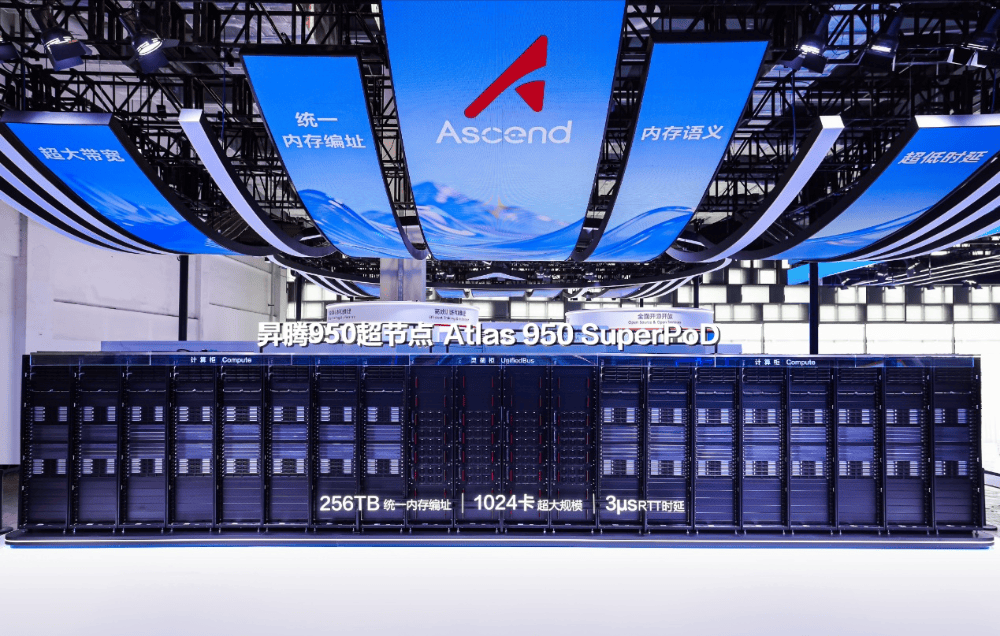
From inquiry to order placement, customers also need to consider whether they have enough equipment on hand and whether the delivery time can keep up with their needs. For companies that are eager to arrange training tasks, these issues are directly related to when computing power can actually be used.
Investors are switching positions
Funds in the primary market react earlier than public opinion.
“Part of the money for embodied intelligence has gone to semiconductors.” An investor who focuses on the hard technology track bluntly told the IT Times reporter that because the secondary market has been unable to wait for the launch window of embodied intelligence, and the semiconductor market already has a number of listed targets and public pricing for reference, some funds are moving upstream of the industry chain.
According to data from the China Investment Research Institute, 631 investment transactions occurred in the semiconductor field in the third quarter of this year, with a financing scale of 109.243 billion yuan, a year-on-year increase of 91.2%.
However, “money is chasing chips” does not mean that “money is chasing all chips.” The screening standards are rapidly tightening. The above-mentioned investors observed that investors’ examination of projects is shifting from “what track they are in” to “who the products are sold to and how big the order is.” “Now looking at semiconductor projects, whether there are orders and how big the order size is, the weight is much higher than the track label.”
The above-mentioned investors admitted that it is difficult to promote the next round of financing simply by telling the story of “benchmarking H200”. Taking Oriental Computing Core as an example, the valuation after the A+ round of investment has exceeded 10 billion yuan, and it plans to launch the B round in the fourth quarter. It relies on “software definition + 3D stacking” to provide a verifiable engineering path, rather than empty “replacement emotions.”
Capacity constraints are becoming a more realistic consideration than orders. At present, SMIC’s production capacity continues to be in tight condition. Its co-CEO Zhao Haijun said at the third quarter results meeting in November that the global equipment supply chain is overall tense, the delivery cycle is lengthened, and there is still uncertainty in the delivery time of some equipment.
However, since there are not many leading GPU targets available for investment in the primary market, hot money is also overflowing into more dispersed hard technology fields such as brain-computer interfaces, quantum computing, controllable nuclear fusion, storage and computing integration, and optical communications.
Huang Renxun’s departure is a management question for Nvidia, but it is a new beginning for domestic computing power. Hot money can flow in many directions, but there is only one destination for domestic computing power. The window has been opened, and how big it can be depends on the delivery volume in the customer’s computer room.
Typesetting/ Ji Jiaying
Picture/Huawei Oriental computing core Nvidia Oriental IC
Source/”IT Times” public account vittimes
Related Reading
- Nvidia stock extends $2.7 trillion rout as SEC probe reportedly investigates its accounting2026-11-22
- Original: Three brothers from Hebei started with just 200 yuan and became number one in the world2026-11-21
- Stock market today: Dow, S&P 500, Nasdaq sink as Anthropic IPO fails to ease AI worries2026-11-21
- Anthropic is on the market, and the big model bubble is not far away2026-11-20
- Let wild giant pandas return to the bamboo forest: Li Binbin wins the 2026 Rolex Award2026-11-20