In 2026, Rolex announces the new Rolex Grand Prix winner. Environmental scientist Li Binbin is among them, becoming one of the five winners this year and the only Chinese scientist to win this honor this year.

Environmental scientist Li Binbin is one of the five winners of the 2026 Rolex Award. She has been devoted to nature conservation for a long time, especially focusing on the protection of wild giant pandas in China. © Rolex/Liu Xiaoxue
The award was founded in 1976. It was originally to commemorate the 50th anniversary of the launch of Rolex’s first waterproof watch, the Oyster watch. This year coincides with the 50th anniversary of the establishment of the Rolex Talent Award. On the occasion of the 50th anniversary, the award has been comprehensively reformed and officially renamed the “Rolex Award”. The five winners this year are all women. For Li Binbin, this award is not only an affirmation of her personal work, but also allows more people to see that the protection of giant pandas is inseparable from the participation of the local community.
“Fighting for food” in the bamboo forest in early spring
Li Binbin is a recognized senior expert in the field of global wild giant panda research. Her profound accumulation in this field stems from long-term field work in the wild, tracking and studying about 2,000 giant pandas living in the mountainous areas of central China.
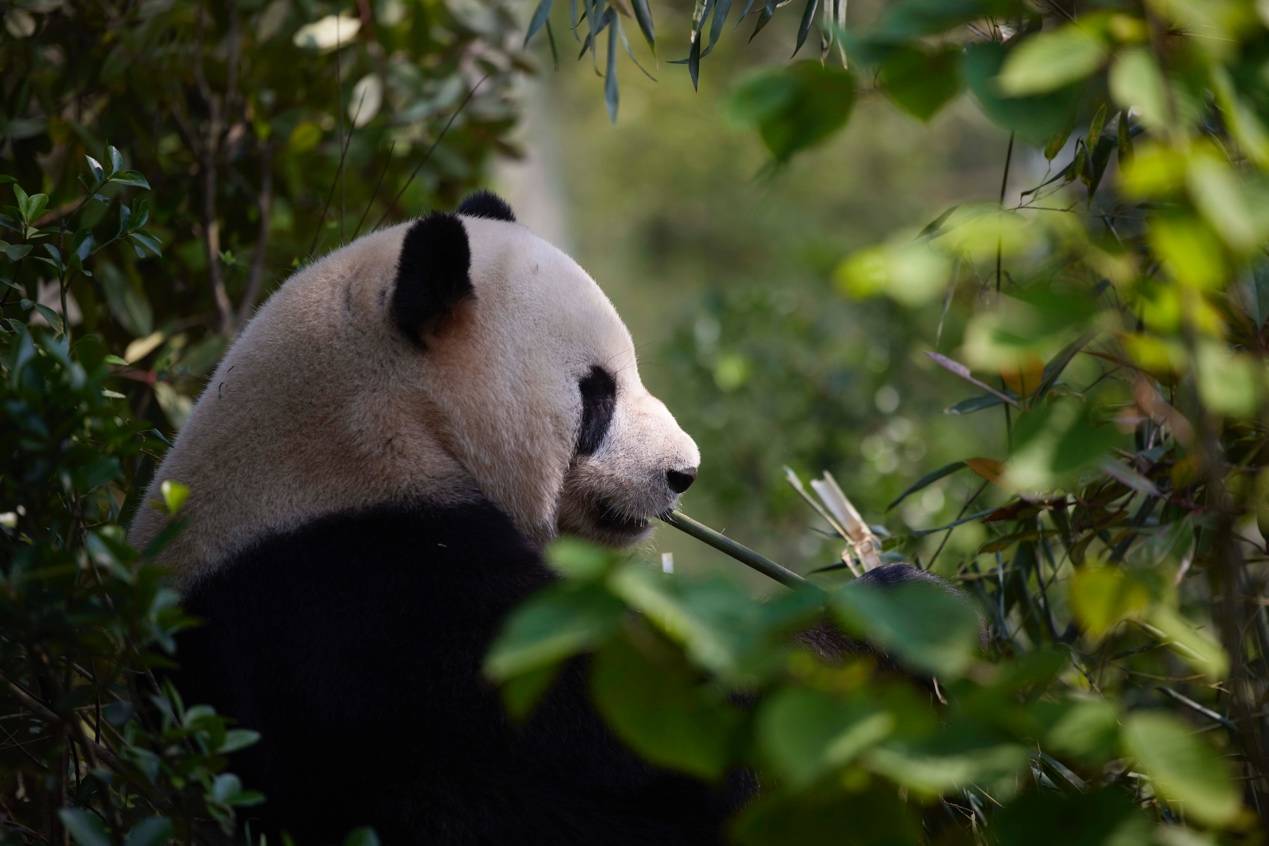
A giant panda in Chengdu, China. Environmental scientist Li Binbin is a globally recognized senior expert in the field of wild giant panda research. Her profound accumulation in this field stems from long-term field work in the field, tracking and studying about 2,000 giant pandas inhabiting the mountainous areas of central China. © Rolex/Liu Xiaoxue
She began her career as a field researcher in 2007, then earned her PhD from the Nicholas School of the Environment at Duke University in North Carolina, USA. Her doctoral research focuses on biodiversity conservation in China, covering issues such as protected area management, species conservation, and giant panda habitats.
In 2017, Li Binbin published a research report on the degradation of giant panda habitats in central China, and took this as an opportunity to launch the current conservation project. With support from Rolex, the project is gradually expanding to five mountain habitats. She and her study co-authors assessed that more than one-third of giant panda habitat in and around Sichuan Wanglang National Nature Reserve has been destroyed by grazing.
These problems did not exist from the beginning. Research points out that the number of free-range livestock began to grow in the early 2000s. At that time, in order to curb excessive deforestation and protect the habitat of giant pandas, the government began to encourage the development of animal husbandry. This plan had remarkable results, but it also unexpectedly caused new problems of overgrazing.
The herds, mainly cattle and horses, roam free all year round and feed on bamboo leaves and young shoots. These are the food sources that attract giant pandas to migrate to lower altitudes in early spring.
Li Binbin recognized that for conservation to be successful, a sustainable balance must be achieved between farmers’ livelihoods, local community development, ecological environment protection and giant panda protection.
Expand monitoring objects from pandas to the entire pastoral ecology
The Giant Panda National Park spans the three provinces of Sichuan, Shaanxi and Gansu in central China and was officially established in 2021. It covers at least 67 nature reserves and provides protection for more than 70% of the country’s wild giant pandas.
In this vast protected area, Li Binbin used infrared cameras, fecal DNA analysis, trace surveys, and footprint identification to track the activities of giant pandas and conduct in-depth research on the impact of habitat changes and reductions on their activities.
With the support of the Rolex Award, Li Binbin and his team will expand the scale of the tracking project to monitor livestock activities with GPS positioning collars and infrared cameras. By mapping the movement routes of herds, she works with local farmers to plan grazing routes and jointly protect the ecological environment of the bamboo forest.
Not all of this work takes place in the forest. She will also visit herders’ homes to communicate with local communities about new satellite tracking collars and grazing-related issues, check the satellite tracking applications on herders’ mobile phones, and guide them in using the collars.
She shares her expertise with local communities on how to use satellite tracking collars and how to carry out scientific grazing. Involvement of local communities in developing and adhering to these guidelines is critical to protecting giant pandas in China.
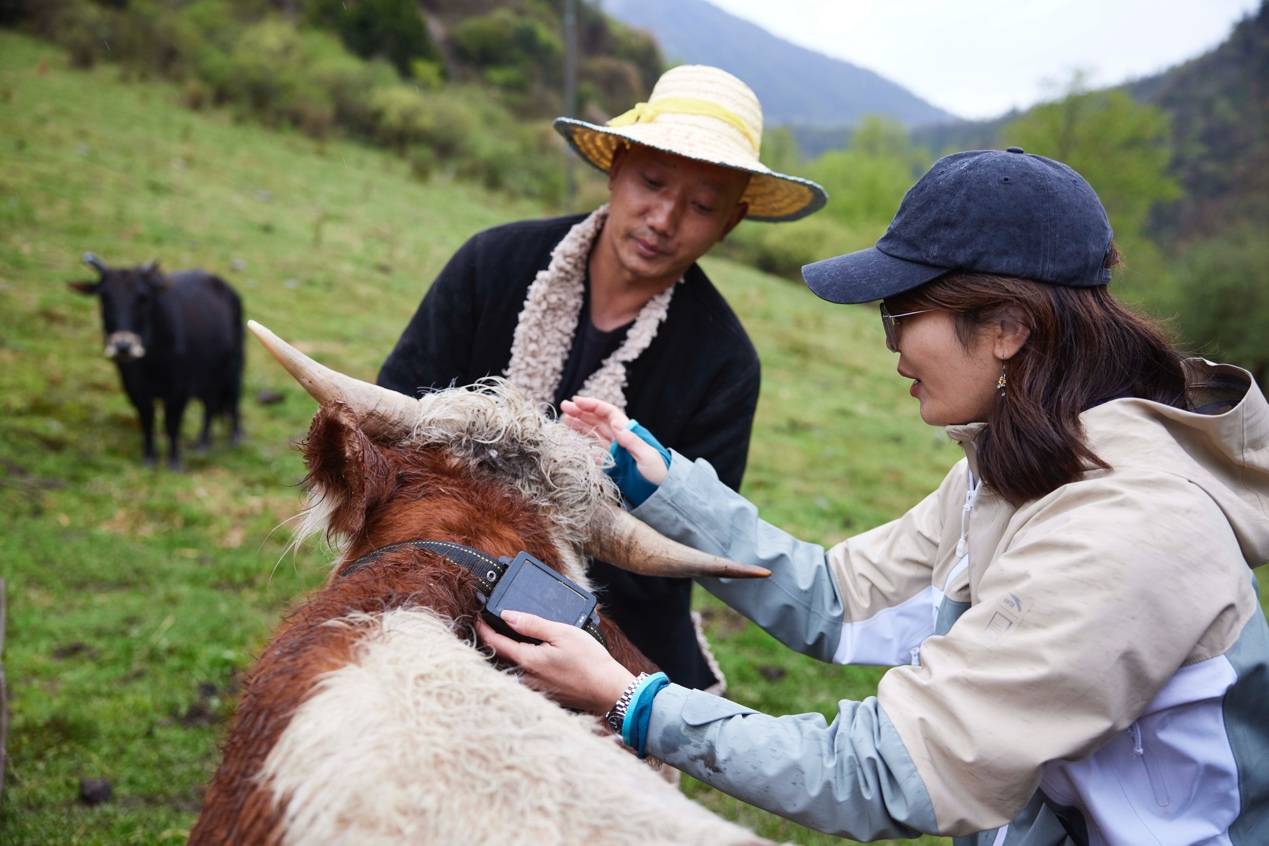
Li Binbin, the 2026 Rolex Grand Prix winner, is instructing herders to use satellite tracking collars in Pingwu County, China. Her focus is to work with local communities to explore sustainable solutions and implement grazing models that take into account biodiversity conservation and local livelihoods.
© Rolex/Liu Xiaoxue
With support from Rolex, the project plans to establish grazing regulations based on ecological carrying capacity while establishing economic incentives to promote biodiversity conservation, such as increasing the price of sustainably farmed meat.
Disease prevention is also included. Free-range livestock in giant panda habitats often lack vaccinations and veterinary care, posing risks of zoonotic disease transmission. The project will also provide training to local communities on monitoring animal activity and disease risks to help identify early signs of potential outbreaks.
These tasks may not sound “romantic”, but they determine whether Zhulin can truly recover. “In China, we use the term ‘the first to eat crabs’ to describe pioneers who dare to break through innovation and inspire the community to try new methods. We want to support these people who bravely take the first step, because we believe that more people will follow in the future,” said Li Binbin.
Behind the award is to bring Chinese samples to more mountainous areas
Binbin Li is currently an associate professor of environmental science and a researcher at the Environmental Research Center at Duke Kunshan University in Jiangsu Province, China. She focuses on conservation biology research and is committed to exploring synergistic paths between biodiversity conservation and sustainable development.
In the field of nature conservation, she initiated the “National Bird Collision Prevention Action Network” and actively participated in the work of multiple international professional organizations. She is Co-Chair of the Planet Conservation Expert Group of the IUCN World Commission on Protected Areas and serves as a member of the IUCN Species Survival Commission. In 2022, she won the title of “Best Nature Photographer of the Year” in the “China National Geographic” China Wildlife Imaging Annual Competition; in 2025, she won the “Pathfinder Award” from the National Geographic Society.
These identities and experiences all come back to the same question: how to coexist with people’s livelihoods.
Regarding winning the award, Li Binbin sees it clearly: This is an affirmation of past research and a spur for future work. She also said, “Next, with this support, we will continue to improve the practical plan of sustainable grazing, and promote the community co-management and scientific grazing model explored in panda habitats to more mountainous areas, so that more places can achieve a win-win situation of restoring panda habitats and increasing community income. We also hope to provide more Chinese samples for ecological management of global protected areas, so that the original intention of protecting the earth can take root in every practice.”
She also pointed out that global ecological solutions are too homogeneous. China’s ecological protection experience, especially local exploration, can actually fill some gaps in the international arena. For example, our understanding of the relationship between man and nature, culture and ecology is an indispensable part of global diversified solutions.
She also pointed out that the environmental crisis is not only a scientific issue, but also a development model issue. While we are still competing against each other and trapped in the vortex of competition for economic growth, the decline of nature and the loss of biodiversity have brought the greatest uncertainty to a stable development environment. If we continue to ignore the changes in nature, it will be impossible to predict and plan our lives and economy for the future.

In China’s Giant Panda National Park, 2026 Rolex Grand Prix winner Li Binbin danced and celebrated with herdsmen in traditional costumes around a bonfire. Li Binbin said: “With the support of Rolex, we now have more resources and can enter more farmers’ homes, expand the scale of the project, and attract more people to participate in conservation work.” © Rolex/Liu Xiaoxue
With the support of Rolex, Li Binbin’s team now has more resources and can enter more farmers’ homes, expand the scale of the project, and attract more people to participate in conservation work.
For Li Binbin, the award is a new starting point. The protection of wild giant pandas does not rely on a slogan, but on giant panda tracking, grazing routes, community collaboration, meat price mechanisms, vaccines, training and repeated field surveys in the mountains.
Related Reading
- Nvidia stock extends $2.7 trillion rout as SEC probe reportedly investigates its accounting2026-11-22
- Original: Three brothers from Hebei started with just 200 yuan and became number one in the world2026-11-21
- Global computing power enters the “post-Huang Renxun era”2026-11-21
- Stock market today: Dow, S&P 500, Nasdaq sink as Anthropic IPO fails to ease AI worries2026-11-21
- Anthropic is on the market, and the big model bubble is not far away2026-11-20