In recent years, with the rapid development of China’s tea industry, various involution methods have emerged in endlessly. Recently, some media revealed that milk tea shops have begun to compete with convenience stores for business. Will you buy things at milk tea shops?
1. Are milk tea shops competing with convenience stores for business?
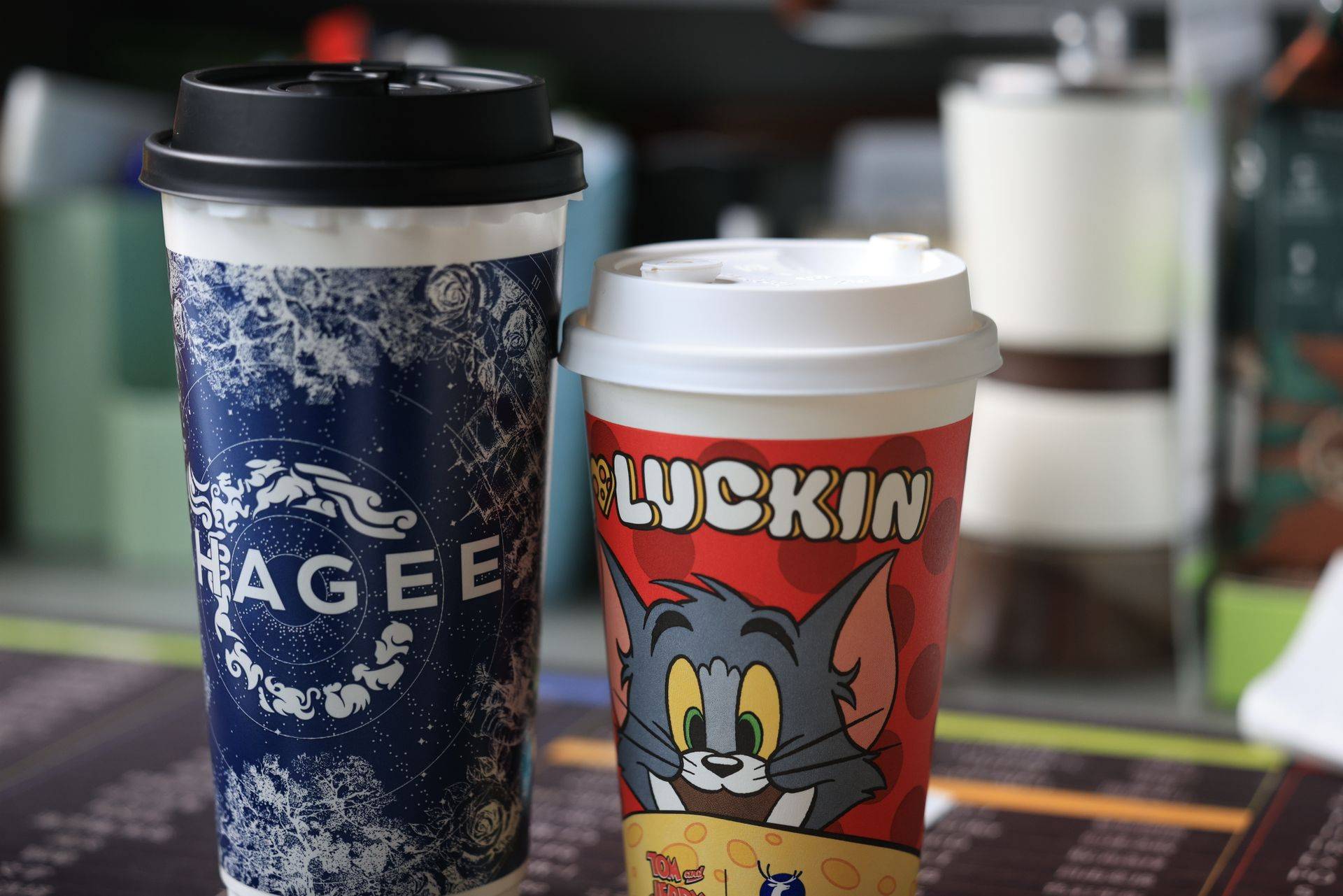
According to the Daily People News Agency, recently, at 8 o’clock in the morning, young people rushing to work bought a cup of coffee at Guming and took away a sandwich; at 3 o’clock in the afternoon, milk tea was still the protagonist; in the evening, on the way to get off work, some people went to Bawang Chaji to buy an ice cream, and some people turned into Fulu’s house in Mixue Bingcheng to pack a cup of fresh beer.
In the past, these products were scattered on the shelves of cafes, breakfast shops, convenience stores and pubs. Nowadays, they are almost all contracted by milk tea shops.
Milk tea shops are moving closer to convenience stores. On the surface, there are more things on the shelves. But if you move forward in time, you will find that this matter did not start with a grand ambition, but more like a forced choice. Because it only sells milk tea, it has become increasingly difficult to maintain the business of a store.
“How many cups does a store need to sell every day to make money?” This is an account that franchisees have calculated repeatedly in the past few years. An entrepreneur who joined a leading tea drink brand once wrote on social media: “After careful consideration, I lost 1 million yuan.”
However, there are also negative cases. When Nayuki’s Tea opened its first store in 2015, it tied tea drinks and soft European bags together. Before the listing, the baking business once contributed about a quarter of the revenue. Stores required ovens, operating tables and dedicated baking staff, and the unit price per customer was more than 43 yuan.
This model once helped Naixue establish differentiation. However, as the store scale expands, the requirements for space, manpower and supply chain for freshly baked goods are also getting higher and higher. Starting from 2022, Naixue will begin to remove large areas of the live baking rooms and shift baking to central kitchen pre-production. By the first half of 2026, baking revenue has dropped to 133 million yuan, accounting for about 7% of total revenue, a decrease of 32.4% from the same period in 2025.

2. Is it really useful to cross-border convenience stores with milk tea shops?
Recently, stores that originally only smelled of milk tea in the afternoon have turned on the lights at seven or eight in the morning, with hot burritos and freshly ground coffee on the counter. When passing by late at night, you can still see someone walking out with a cup of freshly brewed beer. What is going on?
First of all, the new tea beverage industry has fully entered the era of stock game. From the perspective of the industry life cycle, any fully competitive consumer industry will go through a complete cycle from incremental expansion to deep cultivation of stock, and new tea drinks are no exception. In the past decade or so, new tea drinks have achieved nationwide store penetration by relying on consumption upgrades, young group preferences, and scene dividends. Head brands, regional brands, and niche Internet celebrity brands have been laid out layer by layer, and the blank areas in the market have basically been filled. Although there are still large market gaps in many sinking markets, the market stage has begun to undergo major changes. Now the industry no longer has the market space to make profits by just opening a store. The extensive model of simply competing for the number of stores and expanding coverage has lost its commercial value.
Under such a stock pattern, all participants in the industry are facing a common dilemma: single store traffic has peaked, homogeneous competition is serious, and new product premium capabilities continue to decline. In the past, brands could rely on one hit drink to drive overall store revenue. Nowadays, new product iterations are getting faster and faster, consumers’ aesthetic fatigue has become more obvious, and the profit margins of the drinks themselves have been continuously compressed. This forces all tea brands to change their business thinking and no longer look externally for scale, but to tap internal potential. The core goal is to improve the efficiency of a single store, lengthen the store profit cycle, and revitalize the traffic value of existing stores. Cross-border retailing and expanding consumption scenarios across all categories are the core means for new tea beverage companies to break through growth bottlenecks and amplify single-store effects. They are also one of the best solutions under the competition of the entire industry.
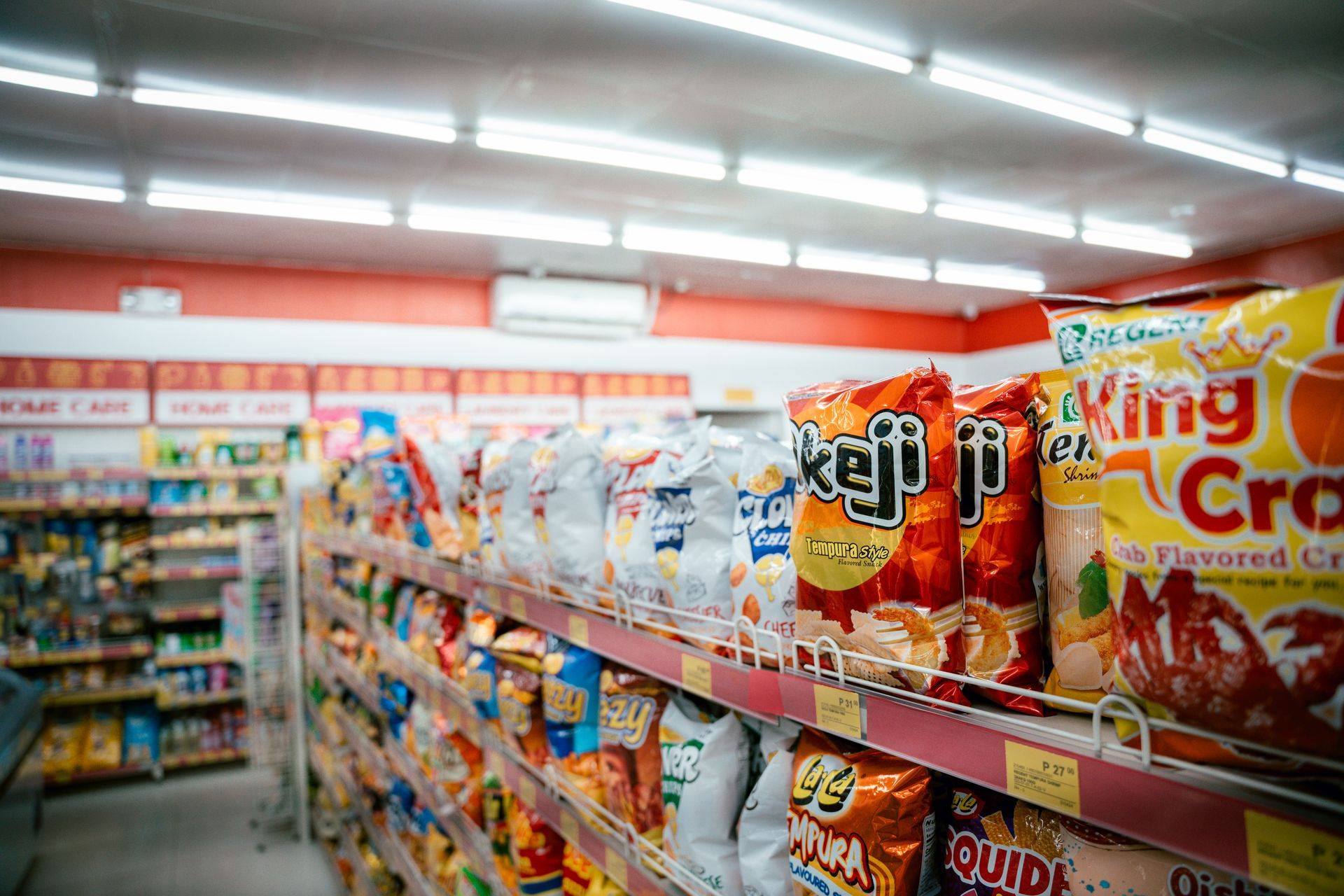
Secondly, cross-border convenience stores are aiming to grab the consumption share during all hours. Carefully dismantling the cross-border movement of milk tea, we can see that it very clearly cuts into the three core time periods that convenience stores rely on to survive, expands the business scope from traditional afternoon tea to all-time periods, and does everything possible to seize users’ all-time and all-scenario shopping needs.
One is to blatantly grab the breakfast and coffee market during breakfast time. Many white-collar workers are in a hurry in the morning and used to buy a steamed bun with a cup of American food at a convenience store. Now if they pass by a large store, those freshly baked croissants and sandwiches are directly displayed in the most conspicuous position, paired with the recently launched freshly ground and extracted coffee, which constitutes a quite qualified breakfast combination.
The second is to quietly infiltrate during daily hours and directly snatch the snacks and dry goods shelves of convenience stores. When consumers suddenly feel hungry or greedy in the afternoon, they used to go to convenience stores to buy a ham sausage or a bag of potato chips. Now many in-store displays have become snack corners, with tempting low-sugar snacks, baked pastries and even daily souvenirs. For young people who want to satisfy their craving but are afraid of getting bored, the temptation is simply fatal.
Third, during the night consumption period, they have even reached out to convenience stores for tipsy business. Nowadays, young people relax in the evening and do not want to go to bars. The freezers of convenience stores were originally a good place for them to buy cans of beer. But now some brands have generously launched special low-alcohol wines, so you can enjoy the tipsy atmosphere while sitting in the store. The crossover in these three directions is obviously aimed at attracting money around the clock.
We have repeatedly talked about the concept of total national time before. Today’s total national time is no longer a simple entertainment time, but a full-time consumption time. The goal of the milk tea brand is to evolve from the original simple afternoon tea to a full-time consumption scenario, so that the value of this rental point can be maximized. This is the core logic of its current series of expansions.
Third, it is useful for new tea drinks to cross borders, but the effects vary greatly. This wave of cross-border grabs for new tea drinks is indeed useful, and has actually helped many brands stabilize the operational efficiency of single stores. However, there is a huge gap between the operational logic of convenience stores and the underlying logic of milk tea shops. Every additional SKU will increase the operational pressure on milk tea shops. The core difficulty in this matter has never been to launch new products, but how to truly match the new product forms with the existing consumption scenarios.
Many people only see new coffee, new breakfast, and new beer in milk tea shops, and think that crossing borders is a very simple matter. They just need to put the products on the counter. In fact, this is not the case at all. The original system of the milk tea shop was built around freshly made tea drinks. All supply chains, personnel training, and store management logic were all designed to serve a cup of standardized freshly made drinks. However, the supply chain requirements, warehousing standards, and personnel operating specifications behind each category of breakfast baked products, pre-packaged snacks, and fresh beer are completely different from making milk tea.
When many brands first started to cross-border, they took it for granted to add all categories to the menu, and in the end, they made their stores nondescript. The clerks made milk tea and coffee, and also took care of breakfast and snacks. They were busy during peak hours, but the quality of the original core milk tea business was brought down.
Therefore, this matter is never about adding more categories, the better. The key is whether the new categories you add can truly match your existing store scenarios, user portraits, and supply chain capabilities. If the matching is not good, the so-called efficiency improvement will eventually turn into an increase in burden.
Fourth, mixed operations with blurred boundaries will become the general trend. Although the efforts made by milk tea shops to seize the market have initially yielded results, this does not mean that the status of convenience stores will be easily replaced. We must clearly realize that the core essence of convenience stores is full-time emergency retail. Behind this is strong SKU refined management capabilities, a huge community store network, and the ability to be extremely flexible and close to consumers.
If you urgently need a fever-reducing medicine late at night or a pack of daily necessities on the roadside, this is still the world of convenience stores. The logic of the milk tea shop is essentially to provide fresh flavor and emotional value, and it is an experiential store. Many times, people may be curious to go to a milk tea shop to buy coffee or wine, but the scene that is truly close to the bottom of life is still firmly in the hands of convenience stores. It can be concluded that the boundaries between the two will become increasingly blurred after this round of fierce competition.
Related Reading
- Trump to begin sending $500 ACA refund checks to 1 million Americans2026-10-01
- Original After losing more than 70 billion in 5 years, the “big brother of Huanjing Real Estate” is waiting for the “white knight”2026-10-01
- Senate blocks bill restricting stock trading by members of Congress2026-10-01
- Original: Young people who want to buy a house are waiting for a big benefit2026-10-01
- U.S. economy grew 2.2% last quarter, stronger than first estimated2026-10-01