Author | Ye Er Editor | Wei Xiao
Yu Chengdong has not spoken publicly.
Many netizens flooded into the comment area, either because they were upset about Yu Chengdong, or they wanted to know how to develop in the future, but he still did not respond and remained calm.
The announcement rhythm on Weibo is as usual, and the platform is still speaking out as planned. If there are any subtle changes, it is that the content released about Hongmeng Zhixing in the past two days all revolves around the world of wisdom and the world of enjoyment.
Yu Chengdong is still working hard to promote Hongmeng Zhixing, but now the most critical part is missing – Wenjie.
On September 15, Hongmeng Zhixing and Wenjie Automobile issued a document simultaneously: From now on, Wenjie will explore a new cooperation model under the cooperation framework of Hongmeng Zhixing – product definition, product design, brand marketing, channel retail, and service system, all led by Cyrus, while Huawei terminals will be relegated to the position of participating in empowerment.
Although it is officially clear that Wenjie still remains within the Hongmeng Intelligent System, everyone knows that its nature has fundamentally changed. Just today, market news further showed that Wenjie will officially withdraw from Hongmeng Zhixing and Huawei stores on January 1, 2027.
In other words, Wenjie, the earliest and most successful example of Huawei’s smart car selection model led by Yu Chengdong, has “parted ways” with Yu Chengdong himself.
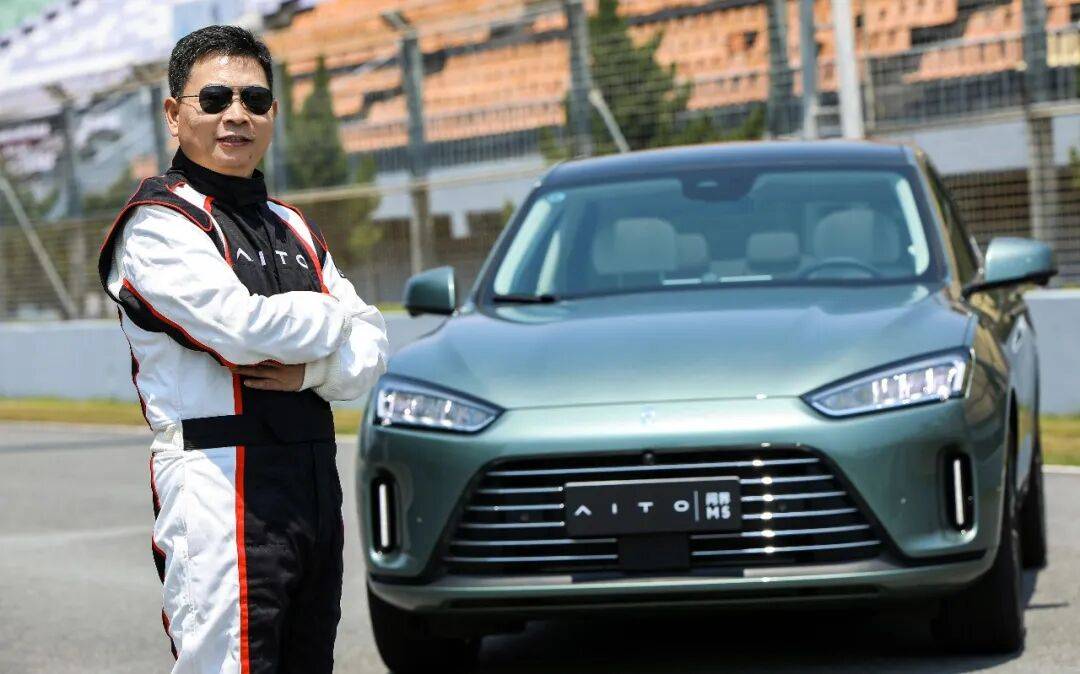
And more than that, this also means that Huawei’s smart car selection model has retreated from the internal weight of Huawei.
At the same time that the two parties were officially announcing changes in their cooperation, Huawei once again publicly emphasized on its internal voice community that Huawei “does not build cars.” Although its smart car parts business is global, it does not engage in vehicle manufacturing.
This definitely sets the tone once again.
Even in the past few years, Yu Chengdong brought Huawei’s smart car selection model, which not only allowed the market to see the huge energy brought by Huawei’s empowerment, but also directly stirred up the high-end car market and defeated the BBA.
But in the end, all this will ultimately have to give way to Huawei’s overall strategy.
Three years ago, Yu Chengdong experienced such a concession.
At that time, he tried to push Wenjie to change “AITO Wenjie” to “HUAWEI Wenjie” and fully use the Huawei logo on its official website and stores, but was quickly rejected by the group. Ren Zhengfei even signed a resolution reaffirming that Huawei does not build cars, and specifically emphasized that “the Huawei or HUAWEI logo is not allowed to appear in the promotion and appearance of complete vehicles.”
At that time, Yu Chengdong was very upset.
He left a sentiment in the internal voice community: These times have changed, which will only make it more difficult for us! After a few years, everyone will understand clearly. Let time test it.
But this time, Yu Chengdong did not leave any emotion, did not reveal his feelings, and quietly accepted the result.
He has thoroughly proven his ability to “build cars”, and it doesn’t matter if he turns the page in the world of questioning.
After all, in 2021, Yu Chengdong took over the smart car solution BU. It was originally an important task for Huawei to fill the gap in its consumer BG business after it encountered external pressure. Now this mission has come to an end.
What’s more, next, there are more important, longer-term, and more important things that need to be solved, and he needs to take charge of them.
Smart car selection mission accomplished
After 53 months, the total delivery of the entire series exceeded 1.5 million.
This is the achievement delivered by Hongmeng Intelligent Technology, setting a record for the fastest delivery of 1.5 million by a new domestic brand.
More importantly, it’s not just speed, but also high-end.
Wenjie has been firmly in the core track of high-end new energy for a long time, and Zunjie has directly entered the million-level luxury track, truly realizing the upward breakthrough of domestic high-end products. Since the development of the domestic automobile industry, what has really had a substantial impact on BBA’s luxury base, and can even be said to have defeated BBA, is the smart car route led by Yu Chengdong.
Hongmeng Zhixing’s influence is not limited to the automotive industry.
Also at Huawei.
The market knows that Huawei does not build cars, but chooses to “help car companies build good cars.” Before the smart car selection model, there were two main approaches. One was the parts supplier model, which sold software and hardware such as smart driving and cockpits; the other was the HI (Huawei Inside) model, which provided a full set of smart solutions.
Before the explosion of the WeChat industry, although these two approaches have been on the market for many years, they have always been quiet and failed to make waves in the market.
After the emergence of the smart car selection model, Yu Chengdong suddenly ran through the complete closed business loop of Huawei’s vehicle empowerment from scratch.
From product intelligent definition and Hongmeng cockpit ecological adaptation, to high-end market pricing logic and user service system construction, to global brand marketing and offline channel implementation, he has completely transformed Huawei’s technical and ecological advantages into solid product competitiveness and market recognition.
Huawei empowerment is no longer just a technical slogan, but has completely become a moat for cooperative car companies. It has also been deeply implanted in users’ minds and has become a key factor in users’ purchasing decisions.
This directly and significantly promotes Huawei’s strategy of “helping car companies build good cars”, and also allows Huawei to become a supplier similar to Bosch in the automotive industry chain, which is a big step forward.
For example, Huawei’s HI model has been tepid before. In just a few years, it has quickly attracted the attention of three major car companies: Dongfeng, GAC, SAIC-GM-Wuling, and created the “Three Realms” series, realizing the universalization of Huawei’s high-end smart technology at all prices.
Another example is that the installed capacity of Huawei Qiankun Smart Driving and Hongmeng Cockpit simultaneously exceeded 2 million. Huawei has become the first company in the field of core components of smart cars in China to achieve this scale. Among them, Huawei Qiankun has united 25 brands and launched more than 60 mass-produced models, covering the full price range from 150,000-class family cars to million-class luxury cars.
Another example is that Huawei Auto BU was spun off to become Huawei. When it was first established, its valuation reached 115 billion yuan…
And these also mean that the mission of the smart car selection model led by Yu Chengdong has been achieved.
At this time, it is a natural step to withdraw from the world of inquiry.
Big models want to be first
In fact, Yu Chengdong already has a new mission.
Just three months before the “weaning” news hit the screen, on June 12, 2026, at the Huawei HDC conference in Shenzhen, Yu Chengdong stood on the stage and released the openPangu 2.0 large model of open source Pangu.
He said something that was quoted by major technology media:
“On the eve of the National Day last year, the company asked me to be in charge of large models. I will lead the team to catch up and surpass each other, from the first in China to the first in the world in the future. In my dictionary, Yu Chengdong, there is never second, only first.”
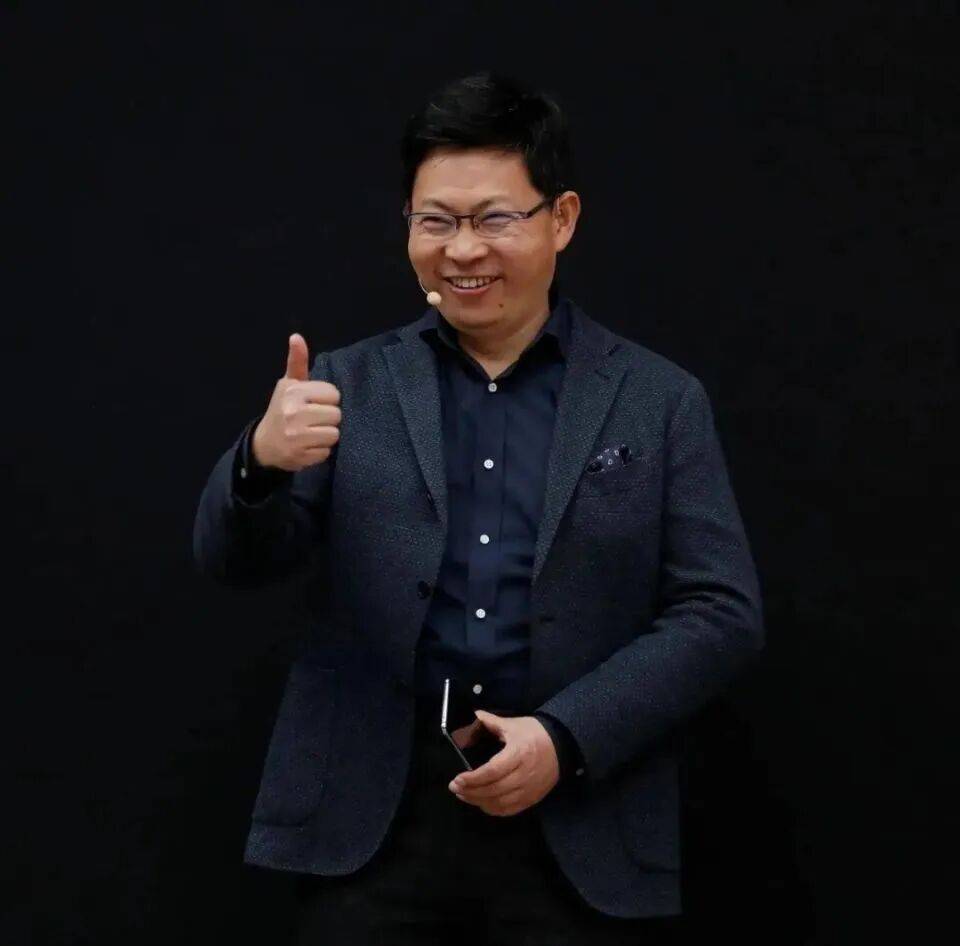
Yes, compared to getting involved in the car circle, the AI large model is the track that needs Yu Chengdong’s performance more at the moment, not to mention that this is also a critical call.
Turn the time back to the National Day in 2025. At that time, the large model of Pangu was in a rather embarrassing position.
In the early days, Pangu strategically focused on B-end industry applications and focused on “AI for Industries”. When ChatGPT set off a wave of universal dialogue models, Huawei did not synchronize its C-side universal capabilities and missed the best window period. By the time they react, the market has been divided up by players such as Doubao, Tongyi Qianwen, and DeepSeek.
Even more troubling is the crisis in technological credibility. In mid-2025, Huawei open sourced a small Pangu model. As a result, the developer found out that the parameter structure was very similar to Alibaba Tongyi Qianwen, which directly triggered a “shell” controversy. Although Huawei later responded that only basic components referenced open source practices, this incident had a serious impact on Pangu’s technical credibility.
Data can also speak volumes.
Doubao’s monthly active users are 345 million, while Pangu’s is less than 10 million, a gap of more than 30 times. In terms of developer ecology, Doubao and Qianwen have millions of developers. When Pangu first became open source, the developer ecology was almost zero.
Yu Chengdong’s appointment at this time is naturally to turn the tide and bring Pangu, a product that has obviously fallen behind on the general large model track, back to the first echelon, and even compete for first place.
Change has already occurred.
openPangu 2.0 is catching up. The Pro version has a total parameter volume of 505 billion and an activated parameter volume of 18 billion; the Flash version has a total parameter volume of 92 billion and an activated parameter volume of 6 billion.
Agent layout is also unfolding.
On September 16, on the AI office track, Huawei launched corresponding products and started internal testing of Xiaoyi Work. According to the information currently released on the official website of Xiaoyi Work, Xiaoyi Work will support mobile phones, tablets, computers and other devices. The download of the Windows client has been started, and the Hongmeng version client is in reservation status.
In the AI era, for top technology companies like Huawei, there is no other choice but to go all out.
And this also requires Yu Chengdong’s All IN.
Huawei AI flag-bearer
Also recently, a long article from DeepSeek’s core engineer hit the internet.
In an article titled “I had to bury my talent in yesterday,” the engineer expressed his inner conflict: He clearly knew that AI capabilities would continue to iterate and would one day surpass human operator experts, but he still chose to participate in this revolution.
The core logic is: If AI becomes a giant monopoly, a few companies will control the vast majority of computing power and technical resources, and only a small number of people will be able to enjoy top AI. And he believes that the most cutting-edge intelligence should be available to everyone in an open and cheap way, and is willing to work hard for this.
The engineer also raised a pointed question: If companies like Anthropic permanently control the world’s top AI, what will happen to society in the future?
This logic is the simple thinking of most domestic AI practitioners, and it is also the direction in which DeepSeek, Kimi and others are devoted.
And to answer the pointed question above, there is Huawei.
In addition to once again setting the tone of “not building cars” in the Xinsheng community, Huawei further clarified its goals in the AI era, such as representing China’s highest level in the fields of computing power, talent, and data, and providing solid choices for China and the world, such as becoming “NVIDIA” in the ICT business and computing fields.
Huawei has advantages.
Especially for domestic AI chips, Huawei will ship 812,000 domestic AI chips in 2025, ranking first in China. Ascend 384 super node has been commercially deployed in more than 750 sets, covering core production scenarios in more than 20 industries such as the Internet, finance, transportation, education, medical care, and manufacturing. It is also the only super node in China that has trained SOTA models.
It can be said that the rise of Shengteng is Huawei’s strongest trump card in the AI era. But having this trump card does not mean that you can completely run through the closed loop of full-stack AI.
Huawei needs someone who can connect chips, models, terminals, and ecosystem together. At the same time, AI large models and AI computing power infrastructure are at the moment when strong people are most needed to lead teams to tackle difficulties.
This person is Yu Chengdong.
Past victories prove this, and Yu Chengdong now controls four businesses: terminal BG, Hongmeng OS, Hongmeng Zhixing and large models. This means that he can tear down the wall and let Ascend provide computing power support to Pangu. Pangu can serve as the base for the Agent architecture of Hongmeng 7, allowing “Xiaoyi” in mobile phones to work across apps and allocate resources across devices, thus leading Huawei to achieve rapid breakthroughs in full-stack AI.
In fact, as early as September last year, Ren Zhengfei personally signed a document appointing Yu Chengdong as the director of the company’s Product Investment Review Board (IRB).
The core function of this committee is to evaluate and control key decisions such as resource investment, project establishment, and budget approval in the company’s major strategic directions to ensure that resources are efficiently directed toward core strategic goals. Yu Chengdong’s appointment as director of IRB is to lead Huawei to win the key battle of artificial intelligence (AI) and achieve global leadership.
One fact is that Huawei’s future is not in cars, but in computing power and AI.
And Yu Chengdong himself knows this better than anyone else. After all, no one is more suitable to carry the flag of Huawei AI than him.
Lanmeih/Today’s topic