There is no such thing as Ning Wang anymore
14萬
文|蟪蛄
編輯|楊旭然
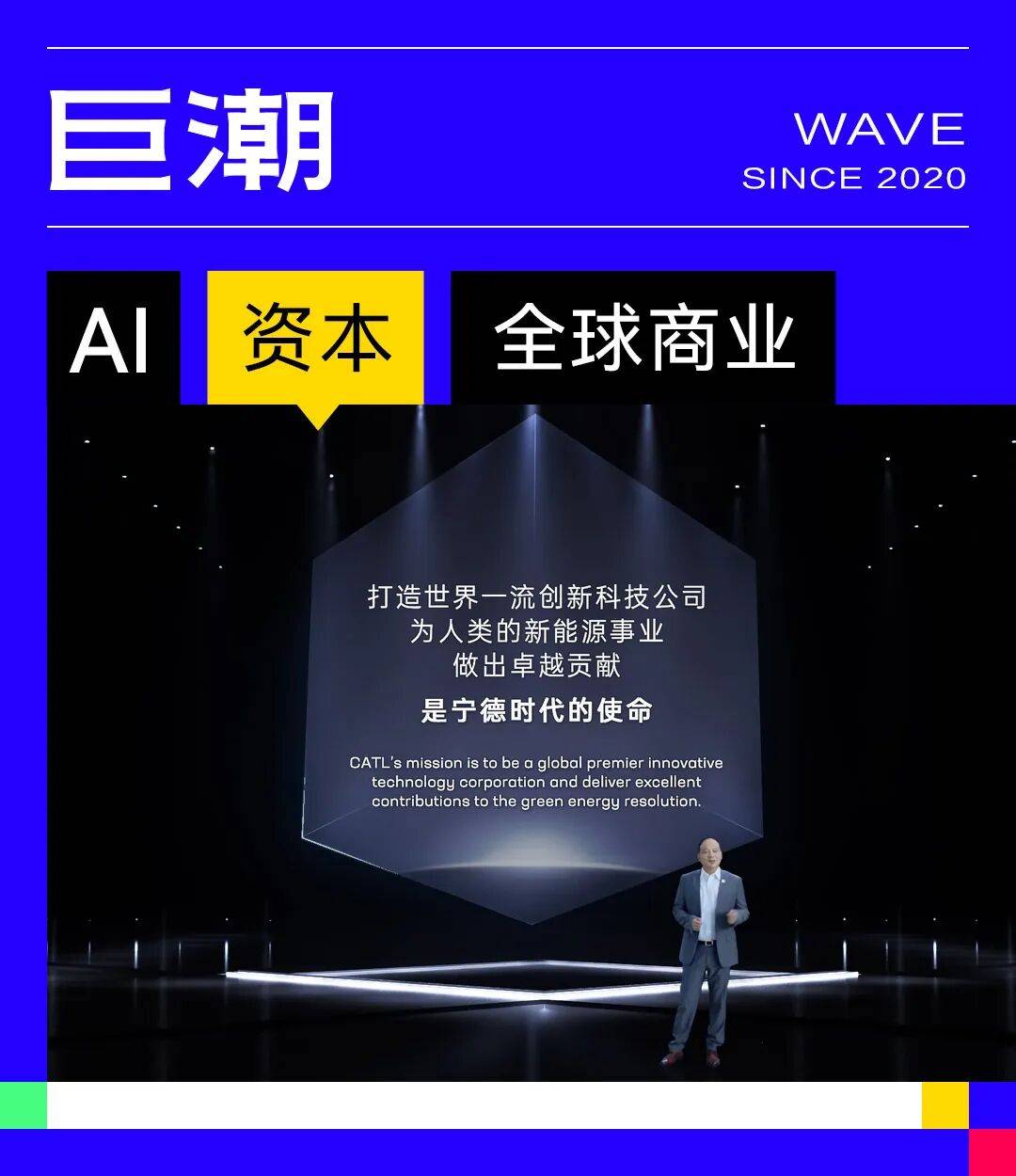
The existence of “Ningwang” once included the Chinese automobile industry’s recognition of a power battery company.
There are very specific reasons for this recognition. For new energy vehicles to enter ordinary households, batteries with sufficient battery life and stable quality are most important. During the explosive period of industry development, CATL took on this important task and provided batteries with good enough quality and competitive prices. In the end, it gained an unparalleled industry position and made enough money.
This is how “Ning Wang”‘s reputation and weight in the industry were accumulated.
But now, the core contradiction of the entire new energy vehicle industry is no longer whether consumers are willing to accept it, but that after large-scale replacement of new energy vehicles, consumers’ demands are getting higher and higher, cars are becoming more and more difficult to sell, and car companies’ profits are getting thinner and thinner. But what car companies are facing is still the sky-high price of batteries.

As the core provider of this battery, CATL is stronger than ever. The latest data for the first three quarters is that it accounted for 39.1% of the global electric vehicle battery installation share, deducting non-net profits of 57.876 billion yuan, a year-on-year increase of 32.68%. All data related to making money continue to increase, and there is no intention to stop.
This article is an in-depth and valuable article from the content team of “WAVE”. You are welcome to pay attention to it on multiple platforms.
分利潤
From the perspective of car company operations, we will get a reality that is completely different from the prosperity and optimism of the CATL era: in the first 10 months of this year, domestic retail sales of new energy passenger vehicles were 8.869 million units, a year-on-year decrease of 12.9%. In the first three quarters, the total profits of the automobile manufacturing industry above designated size fell by 22.8%, and the profit margin dropped to about 3.3%.
According to data from the Ministry of Industry and Information Technology, national lithium battery production increased by 44% year-on-year in the first half of the year. In addition to the continued growth of domestic automobile production capacity, energy storage is also undertaking a large amount of industry supply.
After Chinese consumers’ demand for car purchases shrank, the demand for Chinese new energy vehicles in overseas markets increased rapidly. Overall, the national new energy vehicle production in the first half of 2026 was 7.438 million units, a year-on-year increase of 6.7%. Newly produced vehicles may not necessarily generate profits, but they must require batteries.
CATL has not lost much profit because automobile companies are not making money. In the first three quarters, the gross profit margin of its power battery system dropped by 1.78 percentage points year-on-year, but the overall profit margin was still as high as 20.63%.
The reason for this obvious contrast is related to the special status of batteries in the new energy vehicle industry.Car companies cannot replace a car’s battery at any time – battery cell specifications, vehicle layout, thermal management and safety verification are all related to each other. Changing suppliers requires investing development resources in advance.Those technical solutions that have been selected will form dependencies within a model cycle.
The technical advantages and delivery capabilities of battery factories have been transformed into negotiation advantages with car companies, and ultimately into higher profits. On the one hand, car companies are enduring a brutal price war on the consumer side.
In the past, the introduction of second suppliers was a relatively mild approach for car companies – this strategy gave rise to good business for second-tier battery manufacturers such as China Innovation Aviation, but it had little impact on CATL.
Nowadays, some car companies are no longer satisfied with allocating orders among several battery factories, and have begun to delve deeper into the research and development and manufacturing links, embarking on the path that BYD took in the early years.
The ideal choice is very representative. It develops and manufactures battery packs by itself. The materials, structure and solutions of the battery cells are developed by itself, and large-scale production is handed over to its partner Xinwangda.
The two parties have reached a fairly in-depth cooperation. According to Sunwanda’s announcement in September, Ideal plans to invest 2.65 billion yuan to increase Sunwanda Power, hoping to further in-depth cooperation and even bonding at the equity level in addition to the business level.
The state-owned manufacturer Guangzhou Automobile Group Co., Ltd. is going even harder. In October this year, the company’s 300,000th battery set rolled off the production line, and it already has the R&D and manufacturing capabilities from battery cells to battery packs, and is equipped with a variety of Aion models.
Self-research by car companies also needs to complete technical difficulties such as vehicle matching and data integration. It cannot simply be understood as lowering prices, but requires a profound change in the traditional power battery procurement relationship.
After years of development, domestic power battery materials, equipment and professional manufacturing technologies have gradually matured, which has also given latecomers more opportunities to complete their layout – self-built factories, equity participation in related companies, commissioned production and other methods, without having to bear the investment of the entire industry chain at once.
Car companies do not need to catch up with CATL in all technologies before they can renegotiate prices. A mature lithium iron phosphate battery can accept some orders as long as it meets the safety, endurance and warranty requirements of the target model.
These “self-produced and self-sold” new batteries may not be cheaper than CATL’s, and the yield and scale also need to be slowly accumulated, but many car companies are willing to invest in this. For CATL, the pressure is much greater than having one more pure battery competitor. After all, BYD had already had the greatest success experience before this.
新賽道
Zeng Yuqun did not feel comfortable because of the continued growth of profits, and has been developing new business directions and profit margins for CATL.
It is an indisputable fact that domestic automobile demand is weakening, and customers are constantly increasing their self-supply capabilities. Even if overseas and energy storage businesses can still support growth to a certain extent, the pressure on CATL is real.
Power exchange and AI investment are the two key directions of Zeng Yuqun’s long-term layout.Exchanging profits from existing businesses for long-term revenue sources can reduce the impact of long-term fluctuations in the automotive industry on operations.
The promotion of chocolate battery swap means that CATL has recognized the change from selling batteries to leasing batteries. On November 13, BAIC Jihu launched a new battery-swap model; previously, FAW, Changan, Chery, and GAC have also released cooperation models with CATL.
The separation of vehicle and electricity can reduce the first-time car purchase expense, which is a good thing for the sales of low-priced cars. For CATL, the battery business has been extended to a deeper level of use, maintenance and recycling. Although it is still far from being profitable, it provides CATL with another way to participate in industry profit distribution – directly serving car owners, instead of just arranging business around the purchase plans of car companies.
Compared with the difference between buying batteries and renting batteries, AI and robot investments are more relevant and diversified investments.
After CATL led the investment in the robotics company Galaxy General, the two parties reached a strategic cooperation in June this year, and Galaxy General’s robots participated in part of its battery production work. By July, the startup RoboParty announced that it had completed nearly 500 million yuan in financing, of which Xiaomi Venture Capital participated in the Angel++ round, and CATL exclusively invested in the Pre-A round. This company specializes in open-source bipedal humanoid robots, hoping to lower the development threshold for the industry.
In addition, Puquan Capital, a subsidiary of CATL, also led the investment in smart hand company Xinuo Future and participated in the financing of force sensor company Blue Point Touch. Dexterous hands solve fine operation problems, and force sensors help robots sense contact strength, both of which are related to whether the machine can work stably in a real factory.
In addition, in terms of AI energy, CATL invested heavily in Damao Intelligence and became the largest shareholder. In terms of physical AI, CATL and Saudi Aramco jointly invested in Deep Intelligence Control.
AI energy is one of the key investment directions of CATL
The investment in DeepSeek further demonstrates CATL’s strength in AI investment. In October, CATL invested about 5 billion yuan in its first round of investment. Subsequently, in DeepSeek’s new round of financing exceeding 100 billion yuan, CATL was also one of the main participants.
Capital of this magnitude is already beyond the upper limit of the investment capabilities of most companies. The large model targets many industries, especially its implementation process will inevitably be accompanied by the maturity of a large number of new smart hardware, which means that after the investment and financing relationship, the two will have more cooperation opportunities in the future.
CATL’s investment in the field of AI goes beyond the relatively simple narrative of “installing batteries for robots” and is a higher-level advance layout.
新思路
Ningde Times invested its profits in new technologies and industries and obtained a ticket for the development of the next era. In fact, car companies also need funds to catch up with the next round of changes.
They need to do smart driving, upgrade their manufacturing capabilities, and continue to invest in safety and after-sales. In the current lack of profits, these have become more difficult – the upstream uses profits to invest in robots and large models, while the downstream is repeatedly cutting budgets for a new car, and the gap in development capabilities within the industry is widening.
If this gap expands for a long time, it will not only affect the income statements of several companies, but also the continued viability of China’s entire high-end manufacturing industry, represented by automobiles, will become a problem.
Whether leading companies have responsibilities in this process is a fact that does not need to be discussed. Then, the focus of future changes in the entire industry will be how the excess profits of CATL should support the continued development of the entire industry chain.
Of the profit from a battery, at least about a thousand yuan can be communicated and negotiated on the basis of policy mediation. A seemingly small change in the cost of a bicycle will change who has the ability to continue investing in the entire industry.
The efficiency gains brought about by cost reduction and scale expansion of mature products should be passed on to customers through a small adjustment in the procurement mechanism. Taking the operating data of CATL in 2025 as an example, this profit transfer of about 1,000 yuan per battery will eventually allow car companies to recover revenue of 10 billion yuan.For these car companies, this money does not mean that profitability will rebound significantly, but it is completely enough to improve the income and living standards of workers.
This is just a rough idea, not the only correct answer to solve industry problems, but it can also become an idea that can be explored for leading enterprises in the industry chain to realize social value.
If CATL does not give up profits, car companies will not sit still and wait for death. In the past, everyone had a relatively mild secondary supply model, but now they have added in-depth cooperation with second-tier battery manufacturers and self-invested battery production lines. No one knows what new business model innovations or even technological route innovations will be developed in the future.
More and more car companies are trying to explore BYD’s successful experience
For Ningde Times, leaving reasonable profits to customers also reduces the motivation of customers to start a new business. Compared with trying our best to complete a round of zero-sum game or even negative-sum game in every round of negotiation, this is a new idea worthy of more thinking.
“Ningwang” used to mean technological leadership, moving in the same direction as industrial development, and respect. But today, the respect part of Ningwang has almost disappeared.
Return to the homepage to see more car information
Related Reading
- Anthropic engineer’s warning about Claude Code explains why tech outages could get much worse2026-11-22
- Original Unexpectedly, just one day after the APEC summit, China became famous around the world because of its three “specialties”2026-11-21
- Original Anthropic goes public and creates wealth: 96% of employees became millionaires overnight2026-11-20
- The beauties and handsome guys from UB.com want to enter your home and wait until they arrive.2026-11-20
- Original: Tencent’s shareholders will suffer again2026-11-20