According to news on November 10, at the Barron Investment Conference recently, someone asked Musk how he planned to sell Tesla’s Optimus humanoid robot. As a result, Musk said directly: probably rent it.
As soon as these words came out, there was a wave of heated discussion on the Internet.
Originally, everyone was wondering whether it would be expensive to sell this robot for 200,000 yuan, but it turned out that they didn’t plan to sell it to you at all, but rented it to you on a monthly or annual basis.
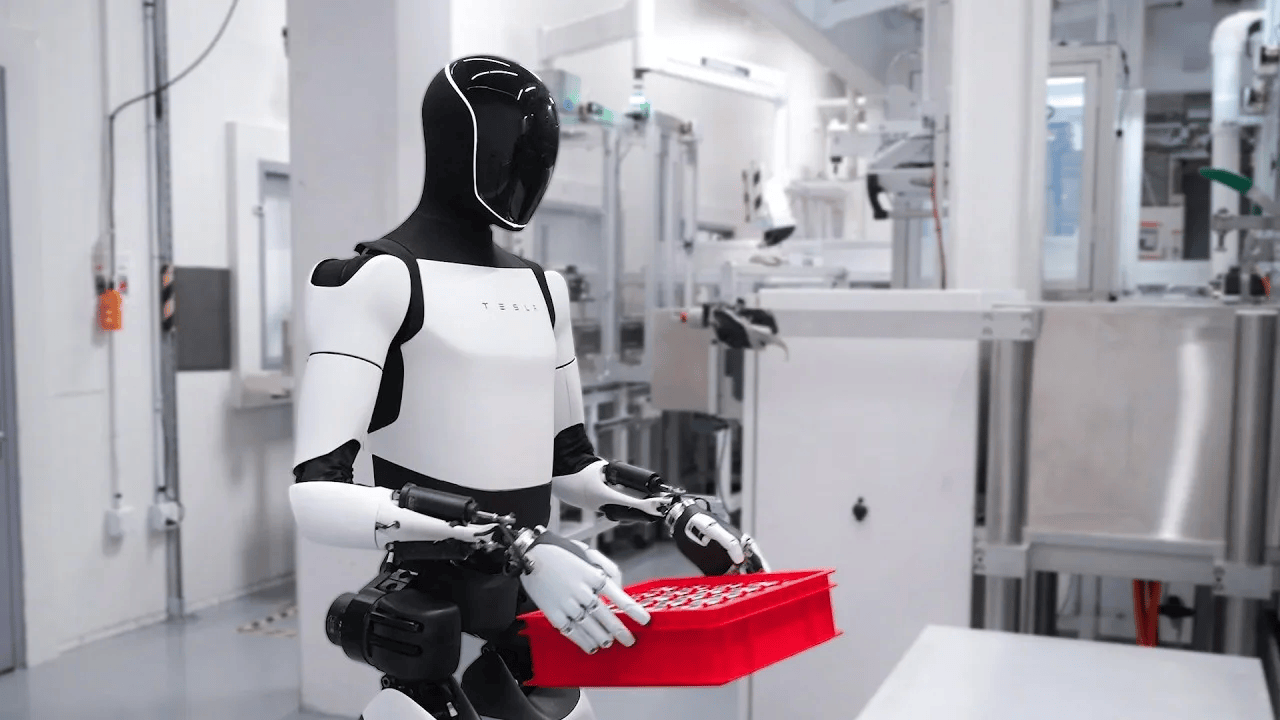
Musk also released a lot of information this time: the initial cost of a single unit of Optimus is about US$30,000, which is equivalent to about 200,000 RMB. After subsequent mass production, it will drop to US$20,000, which is about 130,000.
The robot’s work efficiency can be five times that of ordinary people. The Fremont factory has begun early mass production. The production line is built at a scale of 1 million units a year, but full mass production will have to wait for another year.
External delivery will not be until the end of 2027 at the earliest, and it will be used in Tesla’s own factory before being released outside.
The most important thing is that it is only for rent and not for sale. Many people’s first reaction is: Is it too expensive for fear that no one will buy it, so they engage in leasing to lower the threshold?
Xiaolei thinks it’s not that simple.
A robot costs hundreds of thousands, and if it were to be sold, the factory owner wouldn’t be able to afford it. But Musk doesn’t want to do a one-time deal, he wants to do a business of selling labor.
You buy a robot and Tesla makes money once, and that’s it. But renting it to you, collecting rent every month, and also collecting fees for software upgrades and daily maintenance, this is a steady stream of cash flow.
Does this routine look familiar? Yes, Tesla’s electric cars have been doing this for a long time.
In the past, it made money by selling cars, but now the FSD self-driving subscription service can earn nearly $1 billion a year. Switching from selling hardware to selling services and collecting subscriptions has always been the path Tesla has been taking, but now it has just copied this style of play to humanoid robots.
From the perspective of corporate customers, leasing actually has benefits. There is no need to spend hundreds of thousands to buy equipment at once, and the financial pressure is much less; if the equipment breaks down or the software needs to be upgraded, Tesla will cover it all, and there is no need to maintain a technical team of its own.
Especially in manufacturing factories, there are low and peak seasons for orders. Renting a few more units when busy and returning them when free is much more flexible than maintaining a group of permanent workers.
However, don’t think that leasing means everyone can afford it.
Some netizens have done some rough calculations, and the industry estimates that the annual rent for an Optimus is between 120,000 and 180,000.
If the factory only operates one shift, eight hours a day, the cost is actually not much different from hiring a worker, or even more expensive. What is really cost-effective is the kind of factory that works in two or three shifts. The robots work 24 hours a day, and there is no need to take a break or pay social security. The hourly cost is lower than that of labor.
Xiaolei Bibi (ID: xiaoleibbb) believes that the first industries to benefit are auto parts, 3C assembly, logistics and warehousing, which are highly standardized and have repetitive processes.
Those small factories with small batches, multiple varieties, and frequent product changes will most likely lose money when renting them back. In just the time it takes to debug the program, all the rent is flowing out.
What will happen to workers in the future? The efficiency is five times that of a human being, and you don’t have to sleep to get paid. Isn’t this taking away your job?
Xiao Lei feels that there will definitely be an impact, but there is no need to panic too much. External deliveries will only begin in 2027, and full popularization is far away.
Moreover, the early humanoid robots were only capable of simple and repetitive tasks such as carrying, tightening screws, and sorting. It really cannot replace complex tasks that require flexible judgment.
Secondly, new technologies will eliminate old jobs, but they will also create new ones. In the past, the factory was full of textile workers. Now that there are automated equipment, there are more positions for equipment operation and maintenance, programming and debugging.
Xiaolei Bibi (ID: xiaoleibbb) believes that renting and selling can not only lock in long-term income, but also has a hidden benefit, which is that all robots are under Tesla’s control.
How they work every day, what problems they encounter, and where they need optimization, all data will be sent back to Tesla headquarters.
With data from these real scenarios, AI can become smarter as it is trained, and product iterations will be much faster than if they are sold and scattered in various factories.
In the future, the factory will no longer need to recruit people, and will rent robots directly from Tesla, paying by the hour, as much as you want. Once this market is opened, it will be much bigger than selling electric cars.
Musk himself said that the annual demand for humanoid robots will reach 1 billion units in the future.
Tesla will hold a shareholder meeting on December 3, and it is said that more details will be announced at that time, including whether reservations will be open and how much the rent will be. We will know by then.
Related Reading
- Nvidia live updates: Jensen Huang ousted, CFO Colette Kress to serve as interim CEO2026-11-13
- Are mangoes not afraid of red fruits?2026-11-12
- Original: After Huang Renxun, who is most likely to take over Nvidia?2026-11-12
- Samsung’s roll-screen mobile phone is exposed, creating a new form ahead of Huawei and Apple, and folding screens are expected to be eliminated2026-11-12
- Musk’s favorite car is going to be discontinued.2026-11-12