Before the flames of the food delivery war were completely extinguished, the No. 1 figure in JD.com’s food delivery suddenly resigned.
On November 4, multiple authoritative media confirmed that Guo Qing, head of JD.com’s local lifestyle business, known as Lao K in the industry, resigned due to personal reasons, and the replacement candidate has not yet been announced.
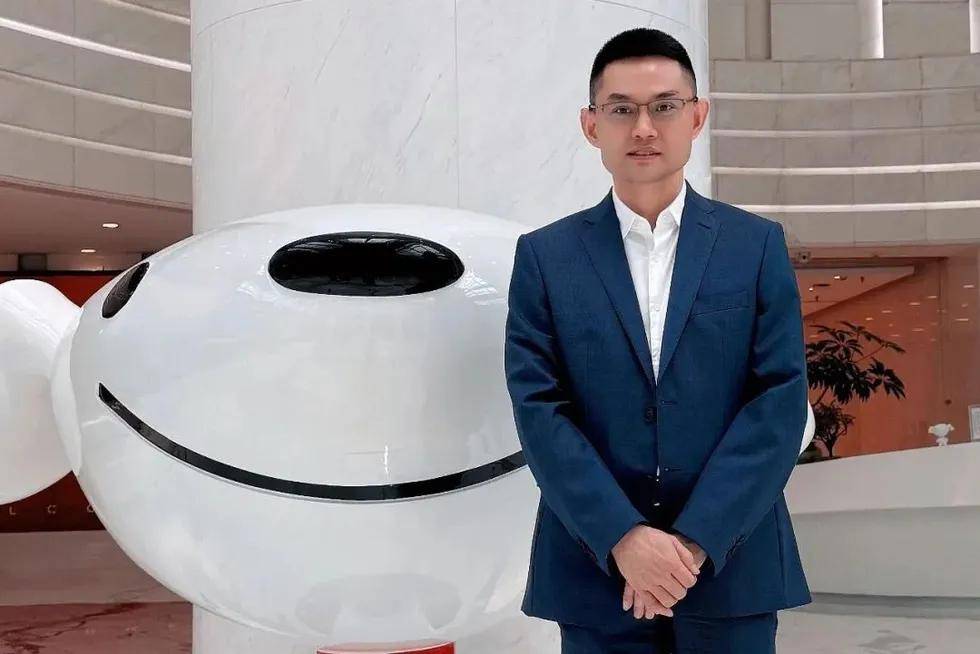
JD.com expressed its gratitude to Guo Qing for his contribution during his tenure. With the joint efforts of all colleagues in the local life team, JD Takeout has embarked on a new development stage with JD characteristics centered on “supply chain innovation” – the “JD Takeout 2.0” stage.
After burning tens of billions, will JD.com finally give up?
1. 美團猛將
Guo Qing came to JD.com with a clear mission.
He joined Meituan in 2014 and led the expansion of Meituan’s wine and travel business. He expanded Meituan’s hotel business from the early group buying segment. Since 2018, the number of hotel room nights has exceeded the total of Ctrip in a single month and in the entire year.
With his outstanding performance, he joined the S-team, the highest decision-making level of Meituan, in early 2020. He is one of the generals under Wang Xing who is recognized as good at fighting tough battles.
In January 2024, Guo Qing joined JD.com as a CEO consultant, and a year and a half later he officially took charge of the local life business group. JD.com’s intention to invite him is very clear – to use Meituan’s war experience in local life to start JD.com’s food delivery business.
When JD.com launched its food delivery service, it launched a powerful combination of no commission for merchants, five insurances and one housing fund for riders, and tens of billions of subsidies to quickly take off. After Guo Qing took over the local life business group, he continued to promote expansion. One year after the business was launched, it had covered 350 cities, had more than 2 million merchants, and the cumulative number of users who placed orders exceeded 240 million.
But he also encountered the same wall that all outsiders encounter. The barrier to the takeout business is not the thickness of the subsidy, but the density and flexibility of the delivery network.
It took Meituan more than ten years to accumulate millions of active riders in order to maintain the certainty of contract performance during heavy rains, mid-day peak hours, and remote counties; behind Taobao’s flash sales is Ele.me’s local contract fulfillment chassis that has been accumulated for many years, coupled with the infusion of Alibaba’s e-commerce traffic.
JD.com’s instant delivery has a good reputation for timeliness, but the economies of scale of food delivery are based on the flywheel of “the higher the order volume, the lower the average order cost.” If the order volume cannot increase, the flywheel will not spin.
Guo Qing once said publicly: “JD.com will never fall into the single volume trap, and will never use order volume to reflect its market position or create market bubbles.”
That’s what they say, but if a fight actually breaks out, who can be exempted?
The patience of capital is limited, and the expectations of the group are very high. How can you prove that you can do it if you don’t offset the order volume? In the end, we still embarked on the old path of subsidy in exchange for growth.
2. 易攻難守
JD.com’s 2025 financial report shows that the new business segment’s annual operating loss was 46.641 billion yuan, marketing expenses soared from 48 billion to 84 billion, and the group’s net profit attributable to the parent company was directly cut in half, from 41.4 billion to 19.6 billion.
The market generally believes that food delivery is the main source of losses in this sector.
But once the money is spent, the noise is indeed not small.
Data from iResearch shows that in June 2025, JD.com’s daily order volume for food delivery reached 25 million, and its market share once reached 31%.
That was the peak moment of JD Takeout.
After JD.com ignited the food delivery war, Meituan’s core local business turned from profit to loss, and Alibaba upgraded Ele.me to Taobao flash sales to fully participate in the war. The three companies burned through nearly 100 billion in subsidies in more than a year.
However, the tide receded faster than it rose, and once subsidies were withdrawn, order volumes fell back.
Data from UBS in February this year showed that JD.com’s average daily order volume dropped to about 8 million orders, and its market share fell from 31% to about 7%. Even according to iResearch’s more optimistic comprehensive calculation, it is still around 15%.
After all, it is difficult to hold on to the market share gained by relying on money.
3. 回到本命
JD.com officially said that it will next enter the food delivery 2.0 stage, with supply chain innovation as its core.
I believe this, because this is JD.com’s real home court.
The so-called supply chain innovation, to put it bluntly, means moving upstream rather than being a pure platform. The most typical one is Qixian Kitchen.
JD.com provides the money, venue, and supply chain, and the catering partners provide the recipes and technology to jointly develop self-operated catering. Ingredients are purchased in a unified manner, vegetables are distributed in a unified manner, kitchen standards are unified, and even the oil, salt, sauce and vinegar are all branded products directly announced.
Focus on assets, control quality, and earn money from the supply chain, rather than earning commissions for poor information.
This approach is very Jingdong.
Liu Qiangdong said last year that JD.com’s food delivery essentially serves the fresh food supply chain, and it needs to develop a completely different business model from Meituan.
You can understand that JD.com no longer wants to be the second Meituan. It wants to be the self-operated version of JD.com in the food delivery industry.
Under this strategic direction, JD.com should not copy Meituan’s playbook from the beginning when it comes to food delivery.
You have a mature fast-moving consumer goods supply chain across the country and a dense warehouse and distribution network. If you don’t use these long-term advantages, you have to fight hard to promote the iron army and increase subsidies. Isn’t that using your own shortcomings to attack others’ strengths?
Now the direction of 2.0 is finally back on track.
Bring takeout back from the traffic business to the supply chain business, use Qixian Kitchen for self-operated supply, use JD Instant Delivery for instant retail, use supermarket categories to drive catering categories, and take a differentiated path.
This path may not allow JD.com to take the first place in the industry, but it will most likely allow it to survive and live with its own characteristics.
But for Liu Qiangdong, this is enough. Because takeout has never been his main battlefield, it is just a piece of the puzzle in the real-time retail landscape.
Related Reading
- Nvidia live updates: Jensen Huang ousted, CFO Colette Kress to serve as interim CEO2026-11-13
- Are mangoes not afraid of red fruits?2026-11-12
- Original: After Huang Renxun, who is most likely to take over Nvidia?2026-11-12
- Samsung’s roll-screen mobile phone is exposed, creating a new form ahead of Huawei and Apple, and folding screens are expected to be eliminated2026-11-12
- Musk’s favorite car is going to be discontinued.2026-11-12