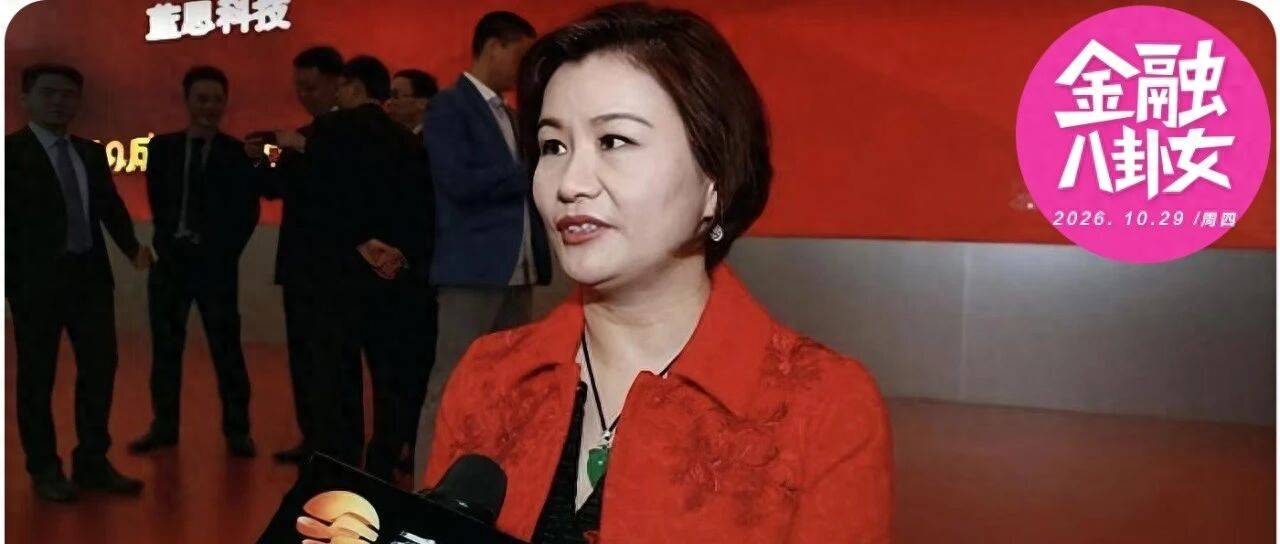
The richest woman in China has changed again! On October 27, the Hurun Rich List was released, and 56-year-old Zhou Qunfei once again topped the list with a net worth of 127 billion yuan. It has been 11 years since Zhou Qunfei last won this title. Being out of the industry twice makes people more curious about this Hunan woman: how did a woman who worked in Shenzhen step by step build her business to where it is today, and what did she rely on to get back to the top?
Article | Financial Gossip Female Contributing Author: Fang Fang in Armor
· · ·
The richest woman in China has changed again!
On October 27, the Hurun Rich List was released, and 56-year-old Zhou Qunfei once again topped the list with a net worth of 127 billion yuan. Hansoh Pharma’s mother and daughter Zhong Huijuan, who ranked first last year, saw their wealth shrink by 17 billion yuan this year, falling to second place with 124 billion yuan.
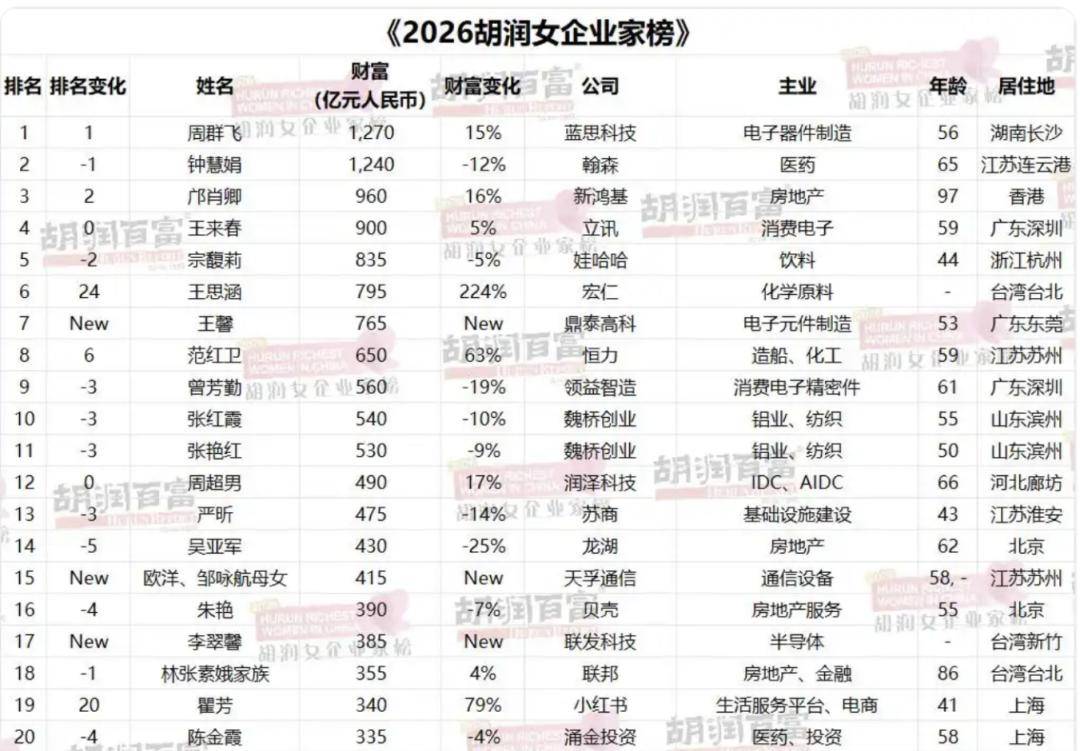
It has been 11 years since Zhou Qunfei last won this title.
In fact, in May this year, she became “little” popular. At that time, a photo of a state banquet seat attracted attention online. Zhou Qunfei was sitting between Musk and Cook, and Huang Renxun was at the same table. With big names in the global technology circle surrounding her, she became the most eye-catching Chinese person that night.
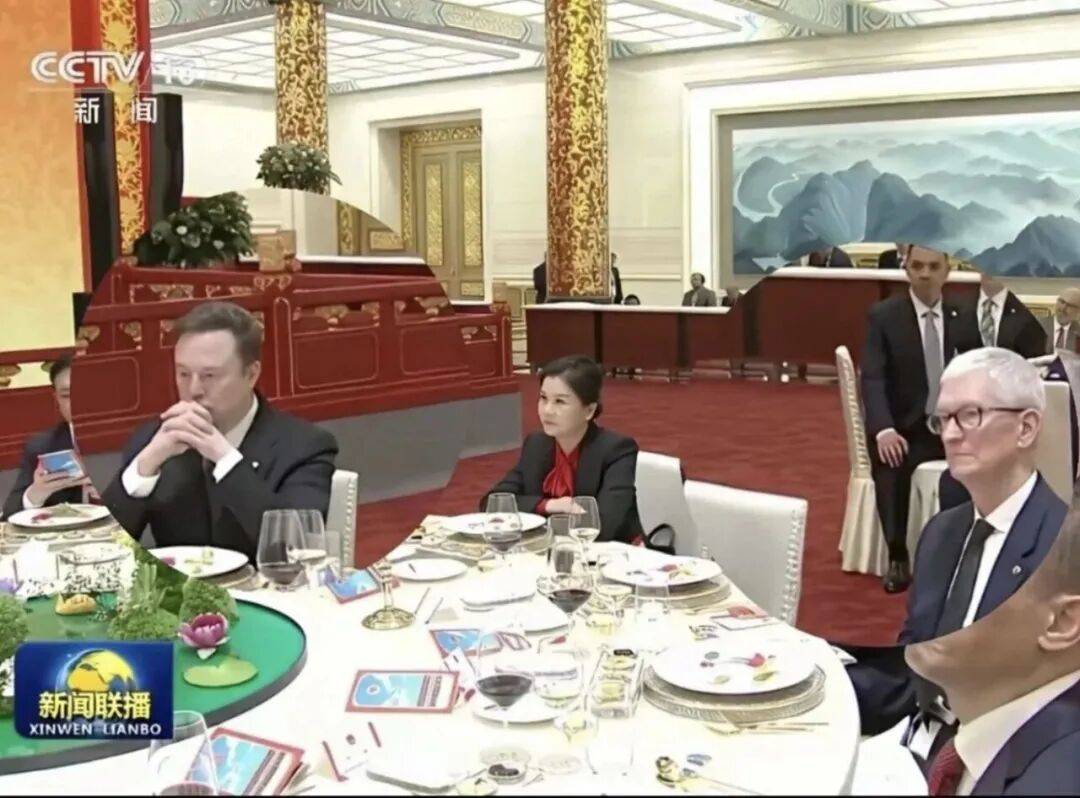
Five months later, she became the center of attention again, but this time she was remembered not for the people at her desk, but for her net worth of 127 billion yuan.
Being out of the industry twice makes people more curious about this Hunan woman: how did a woman who worked in Shenzhen step by step build her business to where it is today, and what did she rely on to get back to the top?
1./ From mobile phone screens to smart glasses, Zhou Qunfei doesn’t want to just be the woman behind Apple/
Zhou Qunfei’s wealth is almost tied to the development of the smartphone industry.
In 2003, Zhou Qunfei founded Lens Technology and started making mobile phone glass panels.At that time, mobile phones were still dominated by brands such as Nokia and Motorola. Button machines were the mainstream, and mobile phone screens were far less complicated than they would be later. Few people would have thought that a small piece of glass could support a listed company with a market value of hundreds of billions in the future.
What Zhou Qunfei is interested in is precisely the business behind this piece of glass.
To make mobile phone glass, you can’t just find a piece of glass and cut everything and deliver it. The glass must be thin and transparent, and must be wear-resistant and impact-resistant. There must be no burrs on the edges and no defects on the surface. In particular, mobile phone manufacturers are becoming more and more particular about appearance. If a piece of glass is not ready, the quality of the entire phone may be compromised.
This business looks inconspicuous, but it takes a lot of effort to do it. Zhou Qunfei took Lens Technology bit by bit to hone technology and expand production capacity, and finally received an order from Motorola.
In 2004, Motorola launched the classic model RAZR V3.This mobile phone featured a thin and light design, with a metal body and a large screen. It became a popular product as soon as it was launched.Lens Technology has also gradually become famous in the mobile phone glass supply chain through this cooperation.
However, what really made Zhou Qunfei’s business grow bigger and bigger was the subsequent popularity of smartphones.
In 2006, Lens Technology began cooperating with Apple to provide glass-related components.In 2007, Apple launched the first-generation iPhone. The glass cover of the first-generation iPhone was processed and produced by Lens Technology. This cooperation also allowed the company to catch up with an important node in the development of smartphones.
As the smartphone market expands rapidly, Lens Technology has also received more orders. However, the larger the order, the higher the requirements for production capacity and delivery speed.
Zhou Qunfei led the company to expand all the way. In 2006, Lens Technology’s headquarters settled in Changsha (Liuyang), Hunan, and built its first production base. Since then, the park has expanded to Xiangtan, Yong’an and other places. The company gradually grew from a limited-scale processing enterprise to a manufacturer capable of undertaking large-volume orders.
Later, Lens Technology extended its business to tablet computers, smart wearable devices and other fields, no longer just focusing on the small screen of mobile phones.
On March 18, 2015, Lens Technology was listed on the GEM of the Shenzhen Stock Exchange. Zhou Qunfei became the richest woman in China for the first time. That year, she was 45 years old.
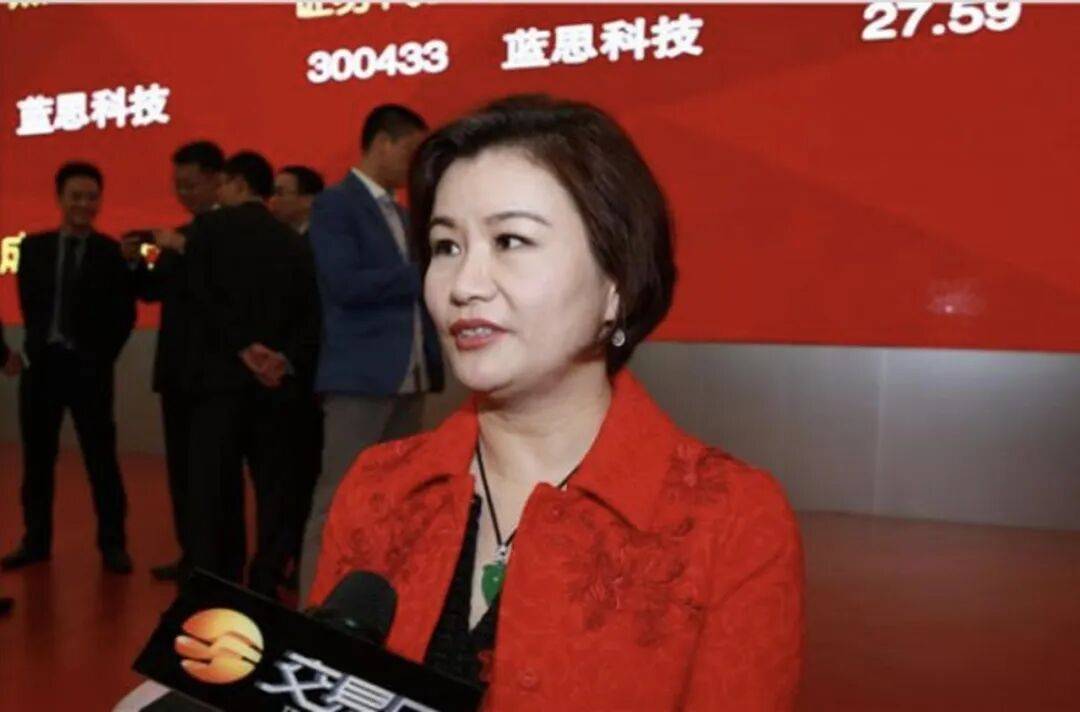
In the following years, the mobile phone market gradually matured, and Lens Technology also began to look for new growth space.Automotive central control screens, smart wearable devices, smart glasses,All have become the company’s expansion direction. AI hardware has become more popular in recent years, products such as AI glasses, smart cars and robots,It has brought new opportunities to the company.
These products look different from mobile phones, but they have a lot in common: the parts must be precise enough, and the quality must be stable during mass production. The experience Lens Technology has accumulated in the consumer electronics industry chain has a new use case.
In July 2025, Lens Technology was listed on the main board of the Hong Kong Stock Exchange, forming an “A+H” dual capital platform.In the same year, the company’s annual revenue reached 74.410 billion yuan, a year-on-year increase of 6.46%; the net profit attributable to the parent company was 4.018 billion yuan, a year-on-year increase of 10.87%.
From the perspective of revenue composition, smartphone and computer business revenue is 61.184 billion yuan, still accounting for the majority of the company’s revenue; smart car and cockpit business revenue is 6.462 billion yuan, and smart head-mounted display and smart wearable business revenue is approximately 3.978 billion yuan, which is also opening up new growth space for the company.
After working on a piece of glass for more than 20 years, Zhou Qunfei went from an ordinary employee to the position of the richest woman in China.
2./ From a working girl to a billionaire woman, Zhou Qunfei turned a piece of glass into a big business/
However, Zhou Qunfei’s starting point in life is different from what most people imagine as the richest woman.
In 1970, she was born in Chongxi Village, Hutian Town, Xiangxiang, Hunan. Her father had an accident while making explosives and was almost blind and lost two fingers. Her mother died when she was five years old. The three children in the family relied on their father to make a living by weaving bamboo baskets and growing rice.
My father had suffered the disadvantage of being uneducated, so he paid special attention to his children’s education.Ask someone to teach Zhou Qunfei to read the “Three Character Classic” and let her copy the “Zengguang Xianwen”. “The poor live in the busy city and no one cares about them, the rich live in the mountains and have distant relatives” was what I wrote down at that time.
Her father also often warned her not to be too proud when she was proud and not to care too much when she was frustrated.
When he was a child, Zhou Qun flew up to the mountains to chop wood and cut pig grass, and when he returned home, he would feed pigs and chickens. When she was 15 years old, her family could not afford the tuition fees, so she dropped out of school and went to Guangdong, settling in Shenzhen and starting a watch glass business at Aoya Optical.
Working during the day and attending night school at night, Zhou Qunfei passed the exams for an accounting certificate, a computer operator certificate, a customs declaration certificate, and a B-plate driver’s license.She knew that her academic qualifications were not high, so she wanted to learn as much as possible.
In 1990, a branch of the factory suddenly stopped working halfway through its expansion, and the boss was preparing to divest. Zhou Qunfei took the initiative to take over: if it is completed, the salary will be determined by the boss; if it is not completed, he will work for the boss for the rest of his life. With her self-taught screen printing technology, she quickly turned the branch factory into the most profitable factory in the company. But later she was ostracized and left.
Since there are restrictions on working for others, then do it yourself.
On March 18, 1993, 23-year-old Zhou Qunfei rented a private house with three bedrooms and one living room in Bao’an, Shenzhen, along with his sister, brother-in-law, brother, sister-in-law and three cousins, and started a screen printing workshop with more than 20,000 Hong Kong dollars. The living room serves as a workshop, the bedrooms are occupied, and the kitchen doubles as a canteen. Everyone is busy until two or three in the morning every day. Later, Zheng Junlong (now her husband) joined the team and was responsible for purchasing, order taking and delivery.
▲Zhou Qunfei in the early stages of entrepreneurship, source: Baidu
During the financial crisis in 1997, many customers could not afford to pay for goods and had to use old equipment to pay off their debts. Zhou Qunfei took over the equipment, added a grinding machine and a profiling machine, and gradually opened up the cutting, polishing, screen printing, coating and other processes to establish a complete production line. When it was the most difficult time to start a business, she even sold her house twice to pay her employees.
In 2000, Zhou Qunfei began to try to apply watch glass technology to mobile phones, using glass to replace the common plexiglass screens at the time. In 2001, TCL flip phone used the glass screen provided by her. The product was a hit, and manufacturers such as ZTE and Konka also followed suit.
In the same year, his father died in Shenzhen. Zhou Qunfei sent his father back to his hometown for burial. In 2007, she moved her investment focus back to Hunan, both for business development and to fulfill her father’s last wish.
On March 18, 2015, Lens Technology was listed on the GEM of the Shenzhen Stock Exchange.She chose this day specifically because on the same day 22 years ago, she took her family to start a business.
After going public, Zhou Qunfei’s business continues to expand. Lens Technology and its subsidiary Qunxin Investment have been involved in a total of 46 investment events and 44 invested companies, with a total of more than ten investments in 2026. The investment direction has also extended from production capacity expansion and industrial chain completion to areas such as robotics, embodied intelligence, brain-computer interfaces and AI glasses. Lens Technology focuses on industrial synergy, while Qunxin Investment focuses on equity participation and fund investment, continuing to find new growth opportunities for enterprises.
▲Zhou Qunfei and Lens Technology investment map, source: Baidu
3./ From foundry to AI track, female entrepreneurs begin to look for the next big business /
Not only Zhou Qunfei, but also today’s female entrepreneurs in the technology circle are no longer satisfied with just one business.
From consumer electronics to automotive electronics, to AI servers, optical interconnection and humanoid robot parts, they are expanding their original businesses while looking for new growth opportunities.
Wang Laichun is one of them.
Wang Laichun was born in Shantou, Guangdong in 1967. In 1988, at the age of 21, she entered Foxconn’s Shenzhen Bao’an factory and became one of the first employees recruited by Foxconn in mainland China. She started out as an ordinary employee on the assembly line. Nearly ten years later, she was promoted to section chief, responsible for the production and delivery management of the production line, and she also accumulated an understanding of the electronics manufacturing industry.
Around 1997, Wang Laichun left Foxconn and started his own business.
In 1999, she and her brother Wang Laisheng bought shares in Hong Kong’s Luxshare, and then focused their business on electronic connectors and other products. In 2004, Luxshare Precision was established.
In the early days of its business, the company mainly provided connectors, connecting wires and other components for the consumer electronics industry chain. It relied on product quality, production efficiency and delivery capabilities to gradually accumulate customers.
This business may seem inconspicuous, but it is an indispensable part of the production of electronic products. As customers and orders gradually increased, Luxshare Precision began to expand its production scale and extend its business from connectors to more complex parts and complete machine manufacturing. In 2010, the company was listed on the Shenzhen Stock Exchange.
In 2011, the company acquired Kunshan Liantao and entered Apple’s supply chain; in 2017, Luxshare won the AirPods OEM business, further increasing its share in the Apple system.
此後,Luxshare Precision’s business territory continues to expand, extending from consumer electronics to automotive electronics, and has begun to deploy AI computing power-related industries.
At the same time, Luxshare Precision has deployed more than 100 production bases in nearly 30 countries including Vietnam, Mexico, Thailand, Malaysia, Indonesia, and Romania, extending its manufacturing capabilities overseas.
On July 9, 2026, the company completed its Hong Kong stock listing with an issue price of HK$63.28 and raised approximately HK$24.3 billion, becoming one of the largest advanced manufacturing IPOs in Hong Kong during the year.
The path Zeng Fangqin traveled also started in the electronics manufacturing industry.
Zeng Fangqin went to the United States to study in his early years and served as the general manager of Lax Precision China after returning to China. In 2006, she quit her high-paying job and founded Lingsheng Electronics in Dongguan. The first big customer was Nokia. In 2007, the company entered Apple’s supply chain and gradually accumulated precision manufacturing technology and customer resources.
In 2018, Lingsheng Electronics used its parent company Lingyi Technology to backdoor Jiangfen Magnetic Materials and listed on the A-share market. After the listing, the company changed its name to Lingyi Intelligent Manufacturing. Since then, Zeng Fangqin has promoted the company’s expansion into automobiles, photovoltaics and other fields, and has set its sights on emerging industries such as humanoid robots. With the development of the AI industry, Lingyi Intelligent Manufacturing has also begun to extend to areas such as AI server hardware and AI optical communications.
On June 26, 2026, Lingyi Intelligent Manufacturing completed its Hong Kong stock listing with an issue price of HK$10.18 and raised HK$8.266 billion. The company’s revenue in the first half of the year reached 23.6 billion yuan, a year-on-year increase of 23%. The new business direction also opened up space for future development.
From connectors to precision structural parts, from consumer electronics to AI servers, Wang Laichun and Zeng Fangqin are doing one thing:
Bringing familiar manufacturing capabilities to a broader market.
Technology is changing, and customer needs are changing, but product research and development, precision processing, large-scale production and supply chain management are still the basic skills for these companies to stay in the market. No matter how popular AI servers and humanoid robots are, they cannot make money just by having a name.
For these female entrepreneurs, what really deserves our attention is not only where their net worth ranks, but also whether they can continue to run their already big businesses.
Related Reading
- Nvidia live updates: Jensen Huang ousted, CFO Colette Kress to serve as interim CEO2026-11-13
- Are mangoes not afraid of red fruits?2026-11-12
- Original: After Huang Renxun, who is most likely to take over Nvidia?2026-11-12
- Samsung’s roll-screen mobile phone is exposed, creating a new form ahead of Huawei and Apple, and folding screens are expected to be eliminated2026-11-12
- Musk’s favorite car is going to be discontinued.2026-11-12