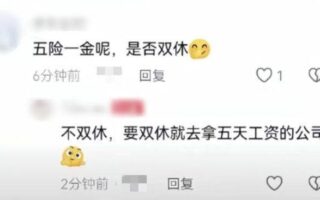
Can you believe it?
The mobile phone cases we hold in our hands every day are actually made of medical waste.
Because it is in this small mobile phone case that the lead content exceeds the standard by 1,500 times, and some even contain carcinogens.
In layman’s terms, long-term use of this cheap phone case is tantamount to chronic suicide!
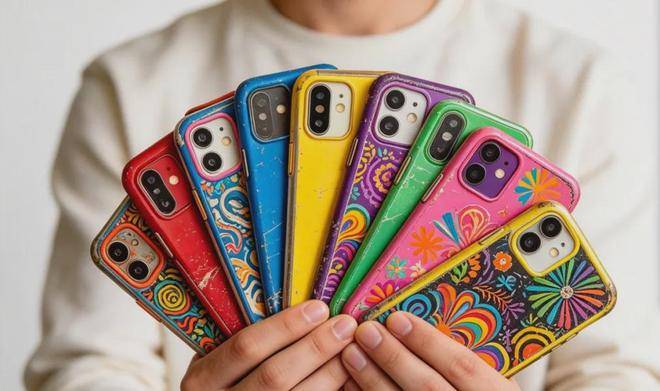
On August 10, CCTV channel “Financial Investigation” brought to the table a black production chain of mobile phone cases that had been hidden for many years.
The mobile phone cases made here are the ones we come into contact with every day and are inseparable. They protect our mobile phones, but they cause harm to our bodies.
You won’t believe it. The mobile phone case that accompanies us every day may have been an infusion tube in its “previous life”.
A recent undercover investigation by CCTV’s “Financial Investigation” found that some cheap soft mobile phone cases labeled as “food grade” are actually made from discarded infusion tubes, disposable syringes and other medical waste that should be incinerated.
These medical wastes are infectious wastes. Once they flow into underground factories through illegal recycling, reselling and transportation, they are simply broken, washed, melted, and mixed with low-quality recycled plastics.
Then it is re-injected into the mold and transformed into a mobile phone case ranging from a few yuan to more than ten yuan on the e-commerce platform.
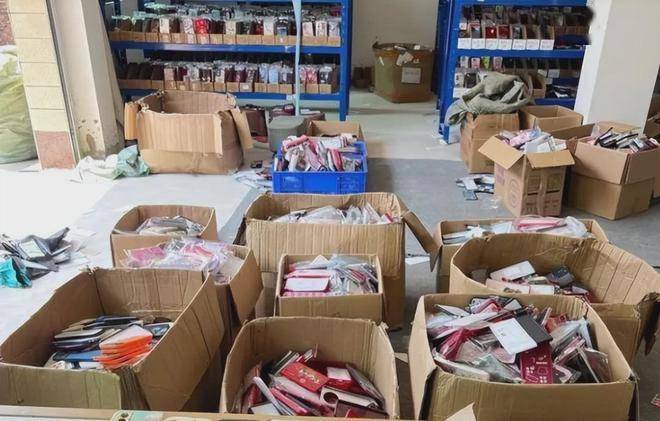
The question then arises: Why do mobile phone case manufacturers not use qualified raw materials to make them but have to use medical waste?
Faced with such a shocking phenomenon, what kind of industrial chain is behind it?
The answer is first hidden in a cost account on the raw material side.
The starting point of this gray chain is actually a simple account.
New compliant TPU materials cost over 10,000 yuan per ton, and illegal medical waste is less than one-third of the price of regular raw materials. When mixed in, the cost is cut by two-thirds.
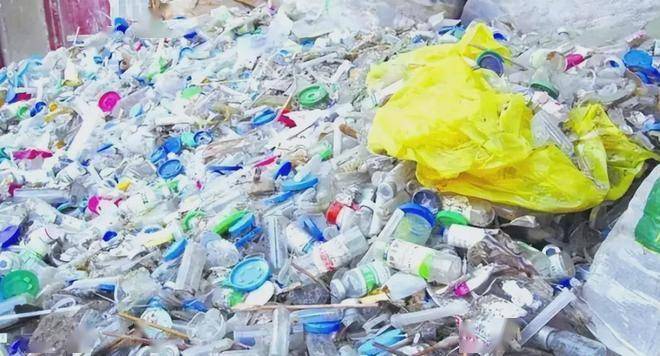
Huge profits start from the raw material side.
A set of molds costs 8,000 yuan, and when pressed into 10,000 pieces, the cost per piece is less than a dime. Adding base material, printing, labor, and packaging, the ex-factory price is only about 1 yuan.
When costs are pushed to the extreme, quality is also pushed to the extreme. What is saved is safety.
In other words, the so-called “low price” is not the benefit brought by efficiency improvement, but the result of cutting off the costs of disinfection, compliance, testing, safety raw materials, etc.
The lower the price of a mobile phone case, the more we need to ask: What does it save?
Because most of the discarded medical plastics are yellow and black, have a pungent smell, and there are still medicinal liquids, body fluids, pathogens, etc. left on the tube walls, simple flushing cannot completely change the appearance.
Therefore, small workshops will use a large amount of industrial dyes for “beautification”, and then use cheap industrial fragrances to cover up the odor.
The “light fragrance” that consumers smell and the “high-end color matching” they see are probably to hide their ugliness.
What’s even more irritating is that many unscrupulous merchants label such “poisonous mobile phone cases” as “food-grade silicone” and “safe for mothers and babies.” However, we ordinary consumers do not know that food contact material standards do not apply to mobile phone case products.
The key here is not just that the merchants are good at packaging, but that this kind of packaging accurately takes advantage of consumers’ trust in “food grade” and “maternal and infant safety.”
A mobile phone case that should not be subject to food contact material standards can easily be mistaken as safe and reliable after being labeled with a similar label.
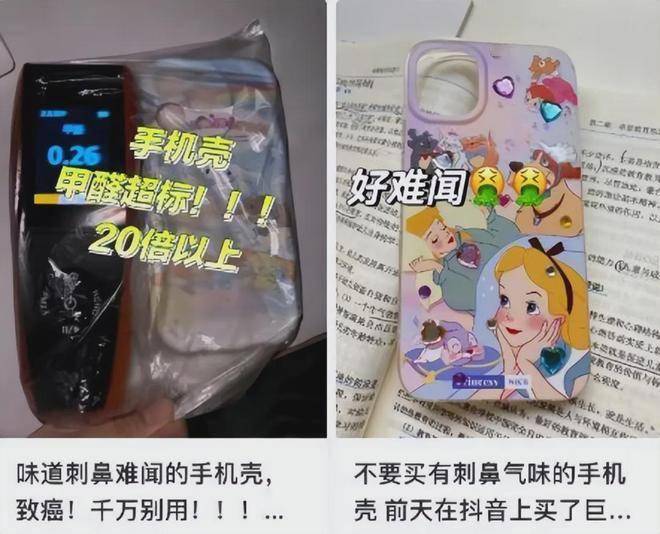
But as everyone knows, not only is the material itself toxic, but the toxicity is also slowly released during use.
When the mobile phone is in normal standby mode, the temperature is about 37 degrees. If it is charged and played two mobile games at the same time, the temperature of the back shell of the phone will directly rise to over 40 degrees.
As the temperature rises, the migration speed of plasticizers and heavy metals in mobile phone cases will increase several times.
The terrible thing is that if you check your mobile phone while eating, harmful substances will be more likely to enter the human body along with the food.
Mobile phone cases may release first-level carcinogens such as benzene, which will be released faster when the phone is charging and heating. If exposed for a long time, it will cause damage to the hematopoietic system and increase the risk of leukemia.
This also explains an easily overlooked fact: Mobile phone cases are not “harmless if you don’t eat them”.
It continues to create opportunities for exposure through a combination of temperature, sweat, friction and time.
Especially when the phone heats up, the case is no longer just a case, but may become a source of slowly releasing harmful substances.
Sampling inspection data from the state market supervision and administration department shows that the pass rate of housing products priced below ten yuan is less than 5%, and the lead content of some samples exceeds the national standard by more than 30 times.
During a random inspection by the Shenzhen Municipal Consumer Council, it was even discovered that a mobile phone case had lead content 1,500 times higher than the legal limit.
This is not an accidental overturn of a certain product, but another verification of a rule: the more fancy the design, the less reliable the material is.
Because mobile phone cases are not ingested or eaten, most consumers have never associated them with “health risks.”
Therefore, when purchasing, what you look for are style, color, feel, and price. Almost no one will check whether there are implementation standards and test reports on the packaging.
This gives the “toxic phone case” room to play.
Inferior mobile phone cases are often “beautified” with industrial dyes and “covered up” with cheap fragrances. What consumers smell is a “fresh fragrance” and what they see is a “high-end color scheme”.
But consumers are not aware of what they are coming into contact with, and this information asymmetry makes inferior products more “competitive” in the market.
What’s more critical is that discarded infusion tubes and syringes are infectious medical waste. After going through the three processes of “crushing-melting-mixing” in the underground factory, they can reappear as recycled plastics. The appearance of the made mobile phone cases is almost the same as that of ordinary recycled materials, which is enough to look fake.
When “cheap” and “good-looking” appear at the same time, consumers think they are getting a benefit, but they may actually be paying for a low-cost, high-risk supply chain.
The more colorful, complexly decorated, and extremely cheap a product is, the more you need to be vigilant about the source of its materials and the use of additives.
How come this kind of cheap “poisonous phone case” can be widely circulated in the market and no one cares about it?
To be honest, mobile phone cases are not food contact materials and are not included in the compulsory certification catalog. Therefore, they are classified as general industrial products. Therefore, there are no mandatory industry standards or certification thresholds.
To put it bluntly, the key to the problem is not whether the standard itself is well written, but its nature, a group standard, which is not mandatory.
Whether an enterprise adopts it or not, and to what extent it adopts it, all depends on its own consciousness.
When “consciousness” becomes the only enforcement mechanism, standards become a dead letter.
Although the merchant claims that his mobile phone case is “food-grade silicone” and actually uses the food packaging standard GB 4806.7, the mobile phone case does not contain food and rice, so the standard he advertises is completely different from that of mobile phone cases.
This is all nonsense and empty talk, and a routine.
Furthermore, the penalties for such poisonous mobile phone cases are extremely limited. Even if they are investigated and fined, the amount of fines will be insignificant.
In March this year, relevant departments announced that two mobile phone stores in Yueqing were selling fake mobile phone cases. As a result, they were fined 20,000 yuan and 10,000 yuan respectively, and all fake products were confiscated.
Compared with the monthly sales of 100,000+ profits, such illegal costs are almost negligible.
Therefore, this is a systemic loophole. When industry standards, platform responsibilities, illegal costs, and consumer awareness are all out of focus, cheap mobile phone cases that exceed the standard by 1,550 times will naturally be plastered on consumers’ faces.
If any one of the links is really stuck, the gray chain will not be so smooth, but when all links are “out of focus”, inferior mobile phone cases can enter the market with swagger.
Fortunately, the country finally took action.
The new regulations that will be implemented on December 1 this year clarify the requirements for the platform: all key industrial products involving personal health and safety must do one thing. If there is a report and the data is qualified, it will be released. If there is no report and the data exceeds the standard, it will be removed from the shelves.
Nowadays, various low-priced mobile phone cases are rampant on the platform, which just shows that the platform has not done the “verification and inspection report” step before.
But it should also be noted that the new regulations will not be implemented until the end of this year, and before then, the risk will not disappear automatically. Platform responsibilities can be investigated and regulatory standards can wait, but consumers’ health cannot wait.
How should we choose a healthy and safe mobile phone case?
Let’s talk about the material first. Liquid silicone and TPU (thermoplastic polyurethane rubber) are better choices. These two materials are relatively stable and will not have an unpleasant smell. If the shell has no smell, then its material is not much different. When you press it with your hand, you will feel softer and more elastic. Do not choose a soft shell with unknown material.
When choosing a mobile phone case, don’t just look at the style, let alone the words “food grade”.
Check on the back of the package to see if there are clear implementation standards, factory name and address, material description and test report. If the product is marked with standards such as “General Technical Requirements for Mobile Phone Case Covers” or voluntary certification, it can be used as a reference.
However, mobile phone cases are usually not included in the compulsory 3C certification catalog, and you cannot judge based on “whether there is 3C or not”.
For regular mobile phone cases, the packaging will usually clearly state what materials are used, such as liquid silicone, TPU, etc. If you can’t find the material description after searching through the packaging, then you have to consider whether the case is reliable.
If the phone case you buy has a strong pungent smell, don’t hesitate to return it directly. Don’t buy cheap phone cases with bright colors and lots of glitter, rhinestones, plush and other decorations, because most of these products use recycled plastic and low-quality dyes, which are very harmful to human health.
Don’t buy those products that don’t have the factory name, factory address, implementation standard number, or clear material description.
Don’t rush to use the new case after taking it apart. First, wash the surface with clean water. Second, place it in a ventilated and cool place to dry naturally. After these two steps are completed, put the phone back on.
Even regular products cannot guarantee permanent safety. Wear and aging are irreversible processes. If they occur, harmful substances will leak out from the inside of the case. Regular replacement of mobile phone cases is the most direct way to cut off this exposure route.
It is not difficult to see that the gray chain of a mobile phone case is not just a loophole in a certain link.
It also reflects another more serious problem. After “cheapness” becomes the only means of competition, who will care about health risks?
Platforms use “technological neutrality” to evade responsibility, and merchants use “food grade” labels to deceive consumers.
By having close contact with consumers without their knowledge, every link in the chain benefits, and only we are kept in the dark.
Related Reading
- Revelations of AI breaches add to safety fears as Trump meets with Anthropic’s CEO2026-09-28
- Original: What Luo Yonghao misses most is Yu Minhong2026-09-28
- The “young master and young lady” in the factory are being counterattacked by traffic2026-09-28
- China is digging an “inexhaustible mine”2026-09-27
- Nubia wants to turn around by relying on bean bags2026-09-27