Not long ago, the National Bureau of Statistics released a set of data: In the first half of 2026, the revenue of enterprises in the waste resource comprehensive utilization industry reached 570.5 billion yuan, with total profits increasing by 104.5% year-on-year, ranking second in the country’s 41 major industrial categories in terms of profit growth. Broken copper and iron, waste paper shells, waste plastics, these “junk” that cannot be put on the table, are breaking out into a veritable golden track.
Immediately afterwards, the National Development and Reform Commission issued the “15th Five-Year Plan for the Development of Circular Economy” with clear goals: by 2030, the output value of the resource recycling industry will reach 8 trillion yuan; by 2035, a high-quality development system for the circular economy will be basically established, and the efficiency of main resource utilization will reach the international advanced level.
Some people may ask: Is it just collecting scraps and worth such a big battle?
值得。Because behind this chess game surrounding “waste” is real resource control and long-term strategic layout. According to the International Energy Agency’s forecast, by 2035, the global supply of copper will only meet about 70% of the expected demand. The situation for lithium is even more severe, and the demand gap may be close to half. Against the backdrop of accelerated global electrification and energy transformation, demand for key minerals such as lithium, cobalt, nickel, and copper will increase by more than three times by 2040. When “having mines at home” is no longer a sure-win trump card, “mining for gold in waste” has become a required course in the game between great powers.
Behind the “waste”,
It is the key to resource security
China is the world’s largest manufacturing country and the largest consumer of energy resources. Key minerals such as copper, lithium, cobalt, and nickel are connected to new energy vehicles, wind power and photovoltaics, and even further, the national defense industry and the digital economy. All are indispensable, and all rely on imports.
But the reality is that geopolitical competition for key minerals around the world has intensified. Forecasts from the International Energy Agency show that even taking into account the advancement of new projects, the copper supply gap will still be close to 25% by 2035. What is even more alarming is that the processing links of key minerals are more concentrated and more fragile than the mining links – global battery-grade graphite processing is highly concentrated, and the supply chain vulnerability score of the rare earth processing link is as high as 95 points (out of 100). This means that even if the mine can dig out the ore, it will still be “stuck” if it cannot be processed or transported.
what to do? Walk on two legs. One leg is to increase domestic exploration and development efforts, and the other leg is to vigorously develop resource recycling. In 2025, my country’s steel scrap will account for 27% of raw materials for production, and non-ferrous metal scrap will account for 30%. In other words, one ton of every four tons of steel comes from scrap steel, and one ton of every three tons of non-ferrous metals comes from scrap. This ratio continues to increase.
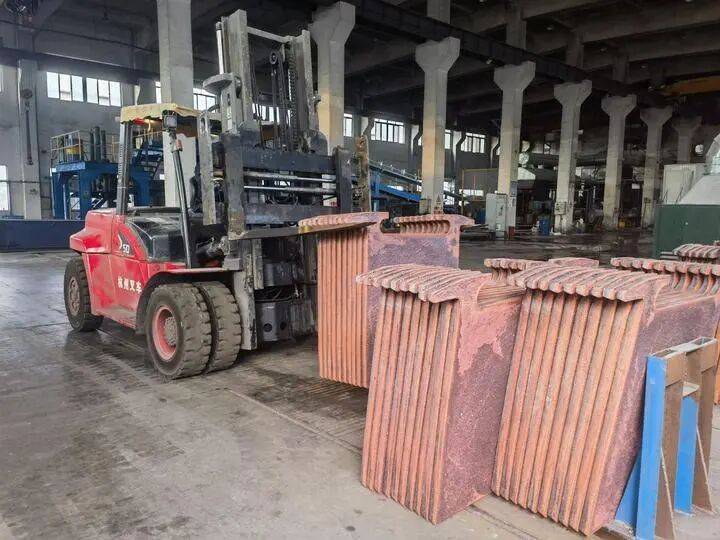
The recycled scrap copper wire is smelted at high temperature and turned into new anode plates. Xinhua News Agency
The “15th Five-Year Plan for Circular Economy Development” clearly states that the annual recycling volume of major renewable resources will reach 510 million tons by 2030. What is the concept of 510 million tons? It is not dug out of the ground, but “scoured” from the city. It is a real “urban mineral”.
From “The Rag King” to the “National Team”,
Circular economy is not just about buying and selling
The waste recycling industry used to give people the impression of being “dirty and messy”: people rode tricycles through the streets, yards were piled with waste paper and iron, and the pollution from small workshops was shocking. But today, things are changing.
During the “14th Five-Year Plan” period, the output value of my country’s resource recycling industry has reached 5 trillion yuan, with an average annual growth rate of around 10%. In the first half of 2026, the profit growth rate of the comprehensive utilization of waste resources industry was unprecedented, outperforming traditional large enterprises such as computer communications and non-ferrous metal smelting. What does this mean? It shows that this industry is moving from “low-end junk picking” to “high-tech resource re-engineering”.
What is more critical is the layout at the institutional level. Bringing home appliances to the countryside, replacing old ones with new ones, building recycling networks, and promoting recycled products—from the consumer end to the recycling end to the utilization end, a complete policy chain is taking shape. In 2025, the total amount of recycled resources from 11 major types of renewable resources in my country will be approximately 410 million tons, and “urban minerals” have transformed from a concept into a real resource pool.
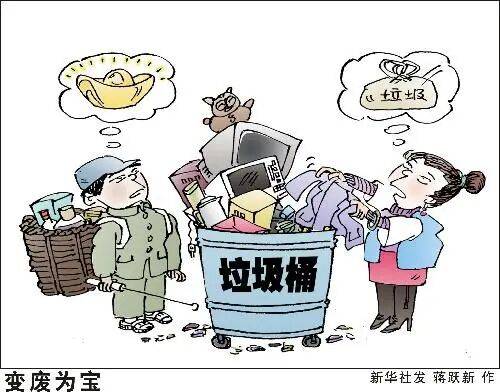
What you throw away is garbage, but what he collects is treasure – what he collects from waste is “urban minerals”, and what he releases is the future of resource recycling. Xinhua News Agency
Looking around the world, this layout is even more forward-looking. Analysis by the Ellen MacArthur Foundation in the UK points out that by 2035, there will be more than 90 million tons of copper waste at the end of its life cycle but not effectively recycled, with a potential value of up to US$110 billion, equivalent to the combined annual output of the world’s top 20 copper mines. Whoever can build a waste recycling system that is more efficient, technologically advanced, and cost-effective will take the initiative in the next round of resource competition.
Released by “waste collection”,
Is China’s future
Some people compare the circular economy to a “second mine.” But this mine is not in the wild, but in the city; it does not require exploration, it only requires recycling; it does not require predatory mining, it only requires meticulous management. What’s more important is that this mine will not be exhausted – the copper you recycle today can be recycled again tomorrow, endlessly.
The “15th Five-Year Plan for the Development of Circular Economy” proposes that the utilization efficiency of major resources will reach the international advanced level by 2035. This is not only an environmental protection goal, but also a safety goal and development goal. At a time when the climate game is becoming increasingly complex and the competition for resources is becoming increasingly fierce, whoever does recycling well will have less “anxiety about supply cuts” in the industrial chain and more confidence at the international negotiation table.
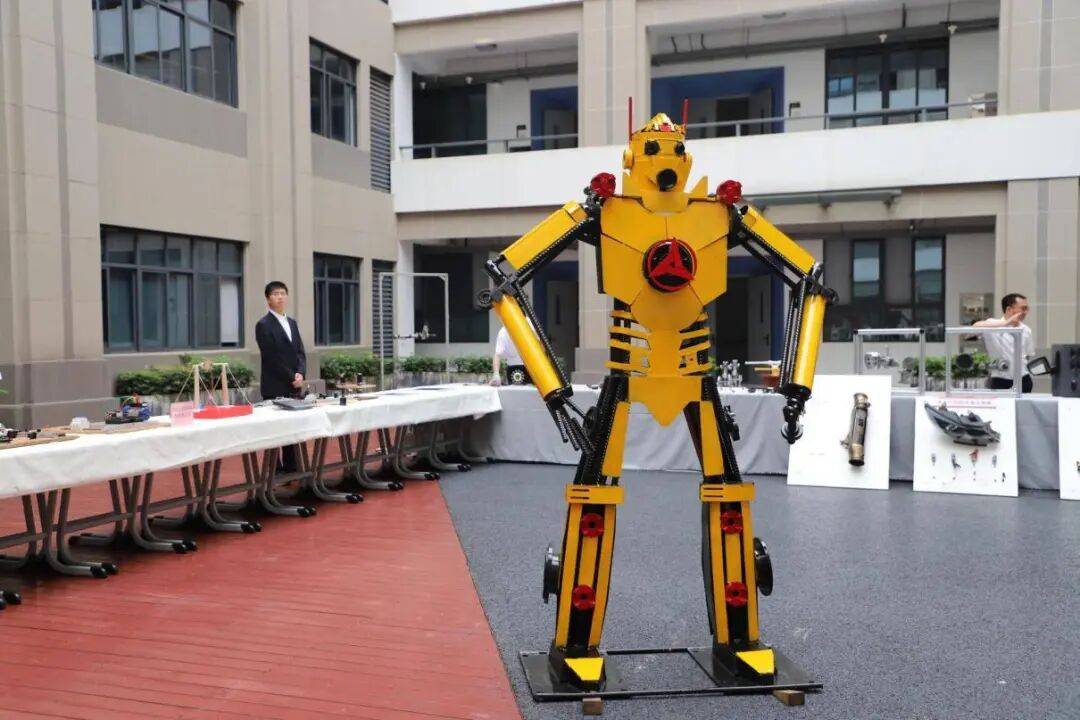
Students from Hunan Trinity Vocational College used scrap steel plates from the workshop to build a 2.3-meter-tall “Transformers” – scrap metal can also be coolly “reborn”. Source: Xiaoxiang Morning News
People who collect scraps were called “junk kings” in the past, and they walked the streets to earn a living. Today, the “comprehensive utilization of waste resources industry” has become a sunrise industry with the second fastest profit growth rate in the country. What has changed is not the waste itself, but the way we view resources – from “throw away when used” to “reuse after use”, from “one-time consumption” to “sustainable recycling”.
What is collected is waste and what is released is the future. This sentence is not true at all!
Related Reading
- Huawei Mate 90 real phone photos leaked: green body with round camera2026-09-28
- Revelations of AI breaches add to safety fears as Trump meets with Anthropic’s CEO2026-09-28
- Original: What Luo Yonghao misses most is Yu Minhong2026-09-28
- The “young master and young lady” in the factory are being counterattacked by traffic2026-09-28
- Medical waste made into mobile phone cases? The poison exceeds the standard by 1,500 times and even causes cancer. Netizen: I still use it2026-09-28