Is Tesla the savior of Robotaxi?
517
Low cost is just the first hurdle.
Fixed focus One (dingjiaoone) original
Author | Jin Yufan
Editor | Wei Jia
In early September, Tesla Cybercab began carrying passengers for a fee in Austin, USA.
As of September 3, Tesla has registered 420 self-driving vehicles in Texas, including 45 Cybercabs and the rest mainly Model Y. Cybercab currently only operates in some areas of Austin and is small in scale.
Based on statistics from the App and user feedback, Huaxing Securities found that Cybercab orders of 3 to 8 miles are currently approximately US$1.5 to US$2 per mile, with dynamic pricing implemented.
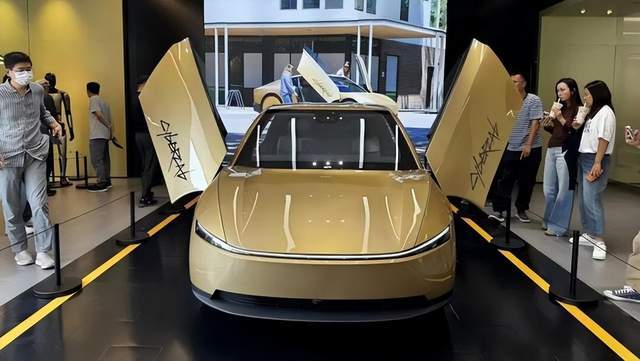
Two weeks later, the car was on static display at the Huamao Tesla Experience Store in Beijing.

On the afternoon of September 17, a circle of people gathered in front of the booth. There are only two seats and a large screen in the car. There is no steering wheel, accelerator and brake pedal. The two doors open upward.
Someone asked when this car would be able to run in China, and the store staff responded that there is currently no clear information.
When talking about automatic car doors, the staff gave an example. If a driverless taxi delivers passengers to their destination and the passengers get out of the car and forget to close the door, traditional vehicles may need operators to rush over to handle it. Cybercab’s doors can be opened and closed remotely, hoping to save this manual step.
This just illustrates the changes that L4 autonomous driving is currently facing. The driver can be removed, but charging, cleaning, maintenance and exception handling will test operational capabilities. The larger the fleet, the harder it is to ignore the manpower and operating costs behind it.
At the same time, leading players such as Waymo, Luobo Kuaipao, Pony.ai, and WeRide have already launched paid services in some cities. This year, the industry has begun to move towards a larger scale.
Now, the industry has begun to calculate more specific accounts: how many orders a Robotaxi can take in a day, how long it will run, how many people will be behind it, when it will be able to recover its costs, and whether a model that has worked well in one city will still hold true in another city.
Cybercab also joined the competition at this stage. It continues to make a Robotaxi cheap, but low cost is only the first hurdle for large-scale operations.
01.Cybercab first makes the car cheaper
Cybercab has made a lot of cuts to Robotaxi.
The most obvious thing is the seats.
Cybercab only has two seats.At the Huamao store in Beijing on September 17, the staff explained that most trips involve only one or two people. If the back row is left empty for a long time, the seats will still take up space and add weight. When traveling with multiple people, the fleet can send Model Y, and in the future there will be larger models like Robovan.
The traditional driving position has also been eliminated.Cybercab has no steering wheel or pedals, the traditional operating area is no longer reserved for the driver.
Cybercab eliminates traditional driving position
There is also more space inside the car for passengers. The threshold is lower and the door openings are larger, making it easier for wheelchair users to get in and out of the car; Braille is also added to the emergency brake and door opening buttons.
Perception hardware continues Tesla’s purely visual route and also makes subtractions.
Public information compiled by Huaxing Securities shows that Cybercab has a curb weight of about 1.4 tons and a battery capacity of less than 50 degrees. It mainly senses the environment through exterior cameras and does not have lidar or millimeter wave radar. The Beijing store staff said:The vehicle uses 8 cameras to collect road information, and then handed over to Tesla’s AI chip for processing.
Two seats, a smaller battery, and the elimination of the traditional driving area are all trade-offs that affect the cost of the vehicle.
The manufacturing process is also based on cost reduction logic. Cybercab uses the new Unboxed manufacturing process. Lars Moravy, Tesla’s vice president of vehicle engineering, revealed in an interview in July this year that the automation rate of the Cybercab production line has exceeded 90%, and the final assembly process only has about 20 to 25 stations. From wiring harnesses, batteries to vehicle assembly, this production line is different from the Model 3 and Model Y that have been produced for many years.
The staff likens Unboxed to “putting together blocks.”The front and rear parts of the vehicle, battery base and seats, left and right bodies and roof are produced separately and then assembled.
There are also changes in body materials and paintwork.
Staff introduction,Cybercab housing uses composite materials, it feels soft to the touch, but still has a rigid structure inside. The vehicle also eliminates the traditional painting process, and the color is directly combined with the material during production.
He compared this to “pouring chocolate into a mold.” The color of the material will be what it will be after molding.This reduces the need for painting and reduces the cost of repairs after some bumps.
Cybercab housing is made of composite materials
When Moravy talked about Cybercab, he repeatedly mentioned “efficiency”. The efficiency he mentioned not only includes vehicle energy consumption, but also includes the full life cycle costs of raw materials entering the factory, vehicle manufacturing, and subsequent charging and operation. For this high-frequency operating vehicle, Tesla has been calculating cost per mile and cost of ownership from the development stage.
Huaxing Securities quoted Tesla as saying,Cybercab costs less than $30,000 to manufacture, the ideal forward operating cost is $0.2 per mile, which already takes into account electricity, depreciation, insurance and maintenance.
However, the cost range of $30,000 is no longer unique to Cybercab.
Baidu stated in its earnings call in early 2026 that the cost of the sixth-generation Robotaxi RT6 currently launched is less than US$30,000. RT6 is also a mass-produced model designed from the ground up for L4.
Therefore, what is most noteworthy about Cybercab is that it has considered many unmanned operation requirements into the vehicle design in advance.
Such as energy replenishment. Cybercab supports 25kW inductive wireless charging. After the vehicle is parked at the corresponding location, there is no need to manually plug and unplug the charging gun.
The seats and floors are made of materials that are more convenient for high-frequency cleaning. The car is equipped with a passenger monitoring camera, and the trunk can be opened and closed electrically. If a passenger forgets to close the door after getting off the car, the background can handle it remotely.
Finding a car has also been made into a product function. After a passenger calls for a Cybercab, the headlight strip can display the corresponding color in the app, making it easier to find his or her own car in a row of unmanned cars.
These subtractions made by Cybercab ultimately fall on the manufacturing cost and operating convenience of a vehicle. After making the car itself cheaper, Tesla is thinking about how to quickly expand its fleet.
Tesla’s official website has opened Cybercab commercial purchase intentions in the United States. Individuals or companies can register to purchase single or batch vehicles for commercial operations.The Robotaxi cooperation page is also soliciting cooperation in Cybercab fleet procurement, operation stations and infrastructure.
The staff specifically mentioned the price and operation methods,Each vehicle costs US$20,000. After the vehicle joins the Robotaxi fleet, it will be maintained and operated by Tesla, and the buyer will share the operating income.This is closer to an operational investment and is not the same thing as buying a private car and driving it yourself.
However, the final price, access conditions, and sharing method have not been officially announced yet. Whether an external buyer is willing to buy it or not ultimately depends on whether the car can settle the bill.
02.Robotaxi begins to calculate operating accounts
As soon as Cybercab went on the road, several domestic robotaxi companies were once again compared. At present, Baidu Carrot Kuaishou, Pony.ai, and WeRide are leading the rankings.
The focus of the three companies is different. Luobo Kuaipao has a wider coverage and has the largest scale of operations; Pony has placed more emphasis on pre-assembled mass production, bicycle economy and cross-city replication in the past two years; WeRide is also developing other L4 products in addition to Robotaxi, and is expanding to overseas markets earlier.
Over the past few years, companies have frequently announced autonomous driving mileage, open areas, and testing progress. In this year’s financial reports and operating announcements, operating data such as average daily orders, bicycle revenue, and UE appear more and more.
In March, Pony.ai announced the bicycle income and expenditure of the seventh-generation Robotaxi in Shenzhen.
As of the end of February, the average daily net bicycle income in the previous month was 338 yuan, with an average of 23 bicycles completed per day, and the bicycle unit economic model (UE) achieved breakeven. Previously, Guangzhou had already done this first.
Pony.ai further splits this cost with “Fixed Focus One”.
The BOM of the seventh-generation Robotaxi’s autonomous driving kit is reduced by 70% compared with the previous generation, of which the cost of domain controllers has dropped by 80% and the cost of lidar has dropped by 68%. In addition to expanding the scale of launch, Xiaoma also borrowed the supply chain channels of OEMs to reduce parts procurement costs.
However, the car itself is only one part. Pony.ai emphasized,Operating costs are almost as important as vehicle BOM
Bike operations also include costs such as charging, ground handling, remote safety personnel, insurance, maintenance, network traffic and parking. If we only make the car cheaper without lowering the operating side, the cost advantage will still be limited.
Manpower is one of the more obvious changes.
After the driver is removed, the person does not completely exit. According to Pony.ai, special situations such as sudden passenger demands and traffic control may still require the intervention of remote personnel; ground operations and maintenance are responsible for charging, cleaning, maintenance and inspection.
When Guangzhou became a regular UE at the end of last year, one remote assistant was responsible for approximately 20 Robotaxi vehicles. At present, it is possible to achieve 1:30 based on technical capabilities. Ground operation and maintenance has also begun to allow one person to service multiple vehicles. Pony.ai said that one operation and maintenance personnel can currently complete the energy replenishment, cleaning and inspection of dozens of vehicles within an hour.
In addition to manpower,Vehicle utilization also directly affects cost recovery.
Pony.ai told “Fix Focus One” that to continue to improve the economics of bicycles, in addition to reducing bicycle prices and operating costs, it also needs to increase daily operating hours and order volume.
After Robotaxi returns to the operating site, it can already find a charging space by itself and can park autonomously even in narrow spaces. Part of the work that used to require people to drive the car back and find a parking space is also being automated.
The Robotaxi fleet currently only has a thousand vehicles in a single city. Walking further up, you can see the number of unmanned vehicles carrying goods that have reached 10,000 units.
Picture source / Tesla Robotaxi official website
Neolithic CEO Yu Enyuan told “Focus One” that the company currently operates about 27,000 unmanned vehicles. At the stage of hundreds or thousands of vehicles, the team will focus more on autonomous driving technology; when it reaches 10,000 or even tens of thousands of units, charging and swapping, operation and maintenance, repair and safety management will obviously become more important, and “the focus will begin to shift from pure technology to ‘technology plus operations’.”
The current human-vehicle ratio in the Neolithic is about 1:50. Yu Enyuan said that if it can achieve more than 1:100 in the next few years, it will be closer to the ideal state.
The length of cargo orders varies even more, so Neolithic internally pays more attention to operating mileage. Yu Enyuan said that Qingdao currently has nearly 2,000 Neolithic unmanned vehicles forming a formal city-wide operation network, and orders at night are roughly the same as during the day.
After running continuously during the day and night, the vehicle utilization rate will increase, which will significantly improve the payback cycle and return on investment.
The indicators for people and cargo are not exactly the same, but they all cannot avoid one thing: the car should be idle as little as possible.
If the bicycle UE is performing well, there is still a long way to go before the entire company can make money.
In the second quarter of this year, Pony.ai’s Robotaxi revenue increased nearly 7 times year-on-year, and WeRide’s total revenue increased by more than 80% year-on-year. However, both companies still suffered losses in the quarter. Investment in research and development, computing power, vehicle expansion and new markets still requires the company to continue to spend money.
In addition to making cars in a city run more efficiently, the next step is to spread the fleet to more places.
Pony.ai introduced to “Focus One” that the same autonomous driving system can now adapt to different markets more quickly, but in specific cities, qualification applications, compliance filings and operating licenses still need to be redone; special road rules, traffic signs, user travel habits, charging standards and service details must also be adjusted according to local conditions.
What they are doing now is to hand over some of these links to partners who already have existing systems.
In March this year, more than 100 GAC Aian Robotaxi entered the Ruqi platform. GAC is responsible for the vehicles, Pony.ai provides the seventh-generation autonomous driving system, and Ruqi is responsible for orders and daily operations. The OEM has a ready-made mass production and supply chain system, and the travel platform already has users, order dispatching and offline operation capabilities.
A practitioner engaged in intelligent driving product planning at a car company told “Focus One” that as L4 continues to develop, car companies may also further participate in autonomous vehicle operations from building and selling cars. His judgment is that technology has been advancing, but many car manufacturers are now “not ready for identity transformation.”
For companies that have already run UE in Shenzhen and Guangzhou, they need to pay attention to whether their efficiency can continue to improve after the scale is expanded. As the data continues to improve, it is possible for L4 to transform from a business operating in a few cities into a business that can be replicated.
03.Who will be responsible if there is no driver?
At L4, the change is not only that there is no driver in the car, but also the ownership of driving responsibilities has changed.
The above-mentioned practitioners told “Fix Focus One” that one of the biggest changes from L2 to L4 is driving responsibility.At the L2 stage, the main responsibility still lies with the person. When it comes to L4, “the responsibility must lie with the manufacturer and the car company.”At the same time, vehicle requirements for operating range, fault handling and safety redundancy will also increase significantly.
He also mentioned that a lot of the main models and data accumulated in the L2 and L3 stages can continue to be used, but at L4, some systems that were not needed for private passenger cars in the past will have to be added. For example, how to deal with vehicles remotely after encountering extreme situations is a new design item.
Cybercab eliminates the steering wheel and pedals, and there are no traditional driving controls for passengers in the car.After an accident occurs, enough data needs to be left behind to restore the situation at that time.
Picture source / Tesla Robotaxi official website
Tianjin Bull Technology Co., Ltd. makes an autonomous driving data recording system for car companies, which can be simply understood as the “black box” of unmanned vehicles.
Its technical director Zhu Peitian told “Fix Focus One” that the autonomous driving system will record data in perception, prediction, planning, decision-making, control and other aspects. But when it comes to actually determining liability, it’s not enough to just look at the instructions issued by the system.
For example, if the system records a deceleration request, how much the vehicle finally slowed down must be combined with real physical data such as wheel speed. If there is a deviation between the control instructions and the actual actions of the vehicle, the cause of the accident may also be determined differently.
There are other uses for this data. Zhu Peitian said that the data from the car and the cloud will also be used to screen extreme scenarios and continue to train and correct the autonomous driving system. An exception is recorded and may later become training data for the next round of algorithm iteration.
As the fleet scale increases, the system that records these data itself must be stable for a long time.
Xin Shubin, product director of Bull Technology, mentioned that he encountered equipment clock synchronization problems during the project testing phase. If any node clock is abnormal during the time stamp synchronization process of image acquisition equipment, various electronic control units, domain control systems and other software and hardware nodes in the vehicle system, the data collected from multiple sources will not be aligned to the same time base, causing timing confusion.
When testing in small batches, some problems may not necessarily be exposed. After the vehicle operates for a long time and at high frequency, the data recording equipment will also face problems such as storage aging and equipment reliability. Xin Shubin believes that this type of system needs to meet the reliability requirements of the vehicle’s entire operating cycle.
Yu Enyuan told “Focus One” that there are more than a thousand unmanned vehicles in a city, and after running 24 hours a day, they will encounter some safety situations that have not appeared in the small-scale stage, and the requirements for technology and operation and maintenance will also increase accordingly.
Cybercab is still stuck at the regulatory level.
The current motor vehicle safety standards in the United States are based on human driving, steering wheels and pedals. After Cybercab removes these devices, Tesla will need to re-certify that it complies with current federal standards.
On September 4, NHTSA launched an investigation; on September 15, it asked Tesla to supplement certification materials and respond before September 30.The core question is: How can a car without a steering wheel prove that it meets existing safety requirements?
The above-mentioned practitioners believe that many current intelligent connected car standards mainly focus on how the car itself is tested, how it is accepted, and what safety requirements it meets. At L4, there will be no driver in the car, and new standards and requirements will arise on how the vehicle cooperates with the road and traffic systems.
Cybercab is already operating for a fee in Austin, USA, but it can only operate in limited areas. There is no clear timetable for when it will hit the road in China.
When Robotaxi truly enters a city, it must also deal with its relationship with the original travel industry. As the scale of autonomous vehicles expands, the income and employment expectations of taxi and online ride-hailing drivers will be affected. Previously, when Wuhan and other places were discussing the implementation of autonomous driving, they also mentioned how new and old business formats could be coordinated and how driver groups could be transformed smoothly.
Therefore, how fast Robotaxi can be deployed is difficult to determine solely by technology. How many vehicles will be opened and how much area will be covered will also need to be considered in terms of urban transportation, employment, and how the original travel industry adapts to this change.
*Unless otherwise noted, the pictures were taken with “Fixed Focus One”.
Return to the homepage to see more car information
Related Reading
- Revelations of AI breaches add to safety fears as Trump meets with Anthropic’s CEO2026-09-28
- Original: What Luo Yonghao misses most is Yu Minhong2026-09-28
- The “young master and young lady” in the factory are being counterattacked by traffic2026-09-28
- Medical waste made into mobile phone cases? The poison exceeds the standard by 1,500 times and even causes cancer. Netizen: I still use it2026-09-28
- China is digging an “inexhaustible mine”2026-09-27