Since September, the Houthi armed forces in Yemen and Saudi Arabia have continued to exchange fire. This week, the Houthi armed forces’ offensive has escalated step by step. Not only has it swept through western Yemen, it has also seized a number of strategic locations guarding the Red Sea and Bab el-Mandeb Strait.
British sources believe that after the Strait of Hormuz, another important energy artery in the Middle East has also become a battlefield.
Saudi Arabia and Houthi tit for tat, Houthis strangle the Red Sea shipping throat
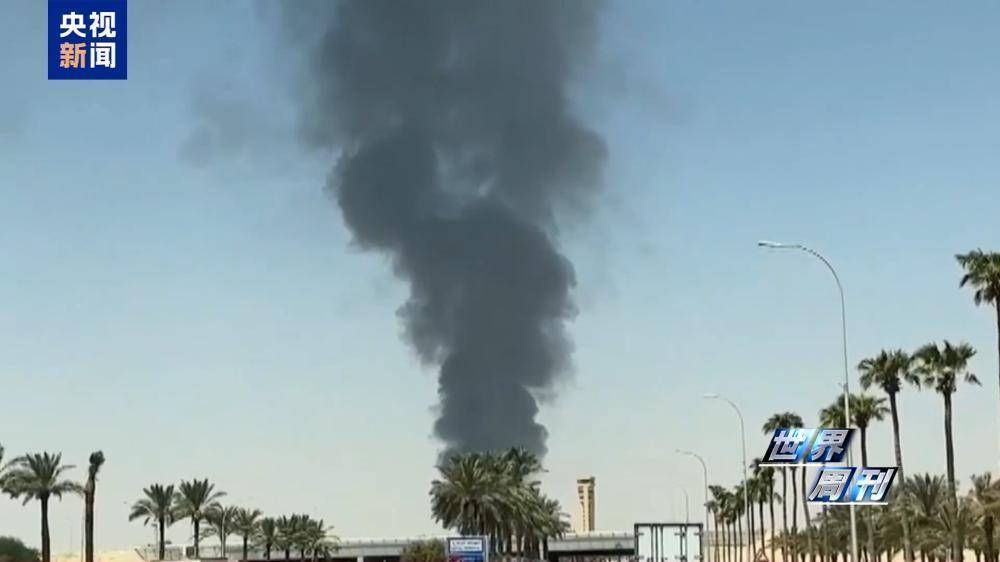
In the early morning of September 19, local time, Riyadh, the capital of Saudi Arabia, was hit by an air strike. At noon, another explosion was heard in Riyadh, and open flames and large amounts of smoke appeared near King Khalid International Airport.
That night, Yemen’s Houthi armed spokesman Yahya Saraya issued a video statement saying that in response to Saudi Arabia’s air strikes on Yemen, the organization launched two military operations against Saudi Arabia that day and launched a large number of missiles and drones.
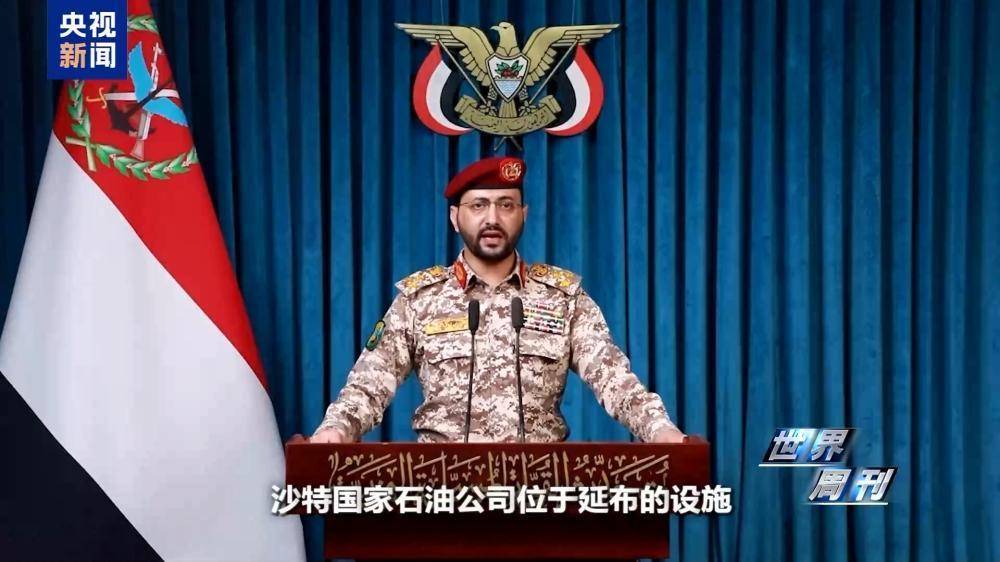
Houthi armed spokesman Yahya Saraya: One of the targets of the attack was a “sensitive target” in the Saudi capital Riyadh, and the other target was a Saudi Aramco facility in Yanbu.
Behind the tit-for-tat confrontation between Saudi Arabia and the Houthis is the reality that the conflict between the two sides continues to escalate.
On September 16, the Houthi armed forces in Yemen stated that they used a homemade surface-to-air missile to shoot down a Saudi Air Force F-15 fighter jet in Marib Province, northeastern Yemen.
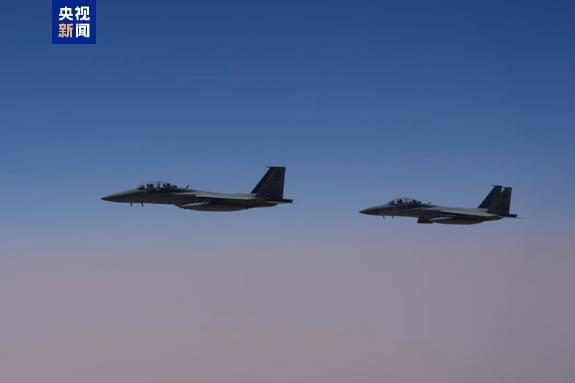
In the past decade, although the Houthis have claimed to have shot down a Saudi fighter jet, Saudi Arabia has usually argued that it was a technical failure that caused the crash. This time, if the Houthi armed forces really shoot down the F-15 fighter jet, it means that its air defense capabilities have undergone major changes.
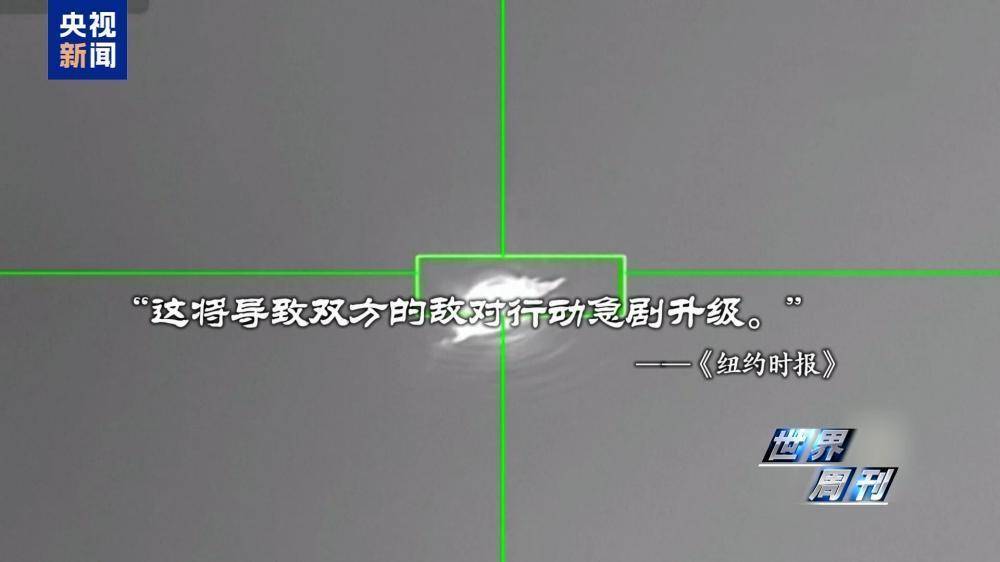
Before that, the focus of global attention was still on western Yemen. On the afternoon of September 9, local time, the Houthi armed forces captured Camp Khalid in the east of Mocha Port, and the base commander was killed on the spot.
Al Jazeera TV presenter: Mocha is located just north of the Bab el-Mandeb Strait, which is a chokepoint and the gateway connecting the Red Sea and the Suez Canal. The strait is only 16 kilometers wide at its narrowest point, and this route carries a large portion of the world’s maritime traffic.
In just 36 hours, the Houthi armed forces successively captured the towns of Mocha, Zubab and Pirin Island in the middle of the Bab el-Mandeb Strait, completely blocking the Red Sea shipping. On September 11, the Houthi armed forces in Yemen stated that since September 3, the organization had captured approximately 5,400 square kilometers of land in western Yemen. The Yemeni government bluntly stated that the Houthi armed forces have controlled the entire western coast of the country and continue to advance southward.
Some analysts pointed out that for a long time in the past, the Houthi armed forces have regarded oil and gas rich areas such as Marib Province in the east as their main targets, trying to obtain oil and natural gas reserves by going deep into the interior. But now, they have adjusted their direction.
Saudi Arabia faces a security crisis and gradually loses confidence in the United States to resolve the crisis
Sources pointed out that Saudi Arabia is facing the “worst case scenario” in this Red Sea storm. In the words of former U.S. Ambassador to Saudi Arabia Michael Ratney, the current situation is what the Saudis least want to see.
In the view of analysts, Saudi Arabia’s predicament also highlights the heavy cost that the US-Israel-Iran conflict has brought to the entire Middle East, including those countries that oppose the war or have repeatedly tried to bring the war to an end, all of which have been affected to a greater or lesser extent.
On September 18, local time, U.S. President Trump said that Washington was holding talks with the Houthi armed forces in Yemen and that the organization was interested in reaching an agreement with the United States.
Previously, on September 12, when Trump visited Ireland, he was asked by reporters whether he would intervene in the situation in Yemen.
U.S. President Trump: The Houthis called us and said they don’t want to go to war with us. They made it clear that they don’t want to go to war with us.
This was also interpreted by the outside world as a rejection of Saudi Arabia’s request for the United States to send troops to help.
Previously, according to people familiar with the matter, on September 10, during the crisis in the Red Sea, Saudi Crown Prince and Prime Minister Mohammed called Trump twice to request the United States to carry out military strikes against the Houthi armed forces.
However, it is reported that Trump said at the time that the United States was willing to provide all assistance except launching a direct attack.
Some commentators say that with the Strait of Hormuz frequently blocked and the Houthis taking control of the Bab el-Mandeb Strait, the hostile front facing Saudi Arabia is expanding.
For Saudi Arabia, it can rely on the Mecca Mutual Defense Agreement just signed with Pakistan and Türkiye on August 7.
However, the Mecca Treaty stipulates that the military intervention obligations of Pakistan and Türkiye are limited to the defense of Saudi Arabia and do not involve Yemen.
Most importantly, the United States, which is in fierce confrontation with Iran, is unwilling to provoke the Houthis again for Saudi Arabia, making Saudi Arabia gradually lose confidence in relying on the United States to resolve the crisis.
In fact, a “double-strait linkage” has formed, putting global shipping and energy under pressure
In the view of many analysts, the Houthi armed forces’ actions in the Red Sea are directly related to Iran. Shahra, a scholar on Yemen at the Royal Institute of International Studies, said that what is happening now “is part of the Houthi armed strategy and an extension of Iran’s behavior and tactics during the negotiation process.”
Glenn Deberg, the United Nations special envoy for Yemen, pointed out that “Mocha is only 75 kilometers away from the Bab el-Mandeb Strait. This development has triggered serious concerns in the international community about threats to freedom of navigation.”
Chatham House Fellow Farea Al-Moslimi: A Houthi takeover of Mocha, whether on their own behalf or on behalf of Iran, would cause psychological panic for insurance and trucking companies around the world.
However, the Houthis have clearly denied that their actions are related to Iran. Even so, some analysts still believe that the Houthi armed forces and Iran have actually formed a “dual-strait linkage”: the more tense the situation in the Red Sea, the more weighty Iran’s pressure in the Strait of Hormuz will be; the higher the risk of Saudi energy exports, the more advantageous the Houthi armed forces will be in the Yemen negotiations.
United Nations Assistant Secretary-General Khalid Khyari: The longer the strait is blocked, the greater the global losses will be.
In the eyes of the outside world, controlling the Bab el-Mandeb Strait allows the Houthis to cut off important shipping lines between Europe and Asia at any time. This will undoubtedly increase the pressure on Saudi Arabia. After the U.S.-Israeli war broke out, in order to bypass the Strait of Hormuz, the Saudi National Oil Company used a more than 1,200-kilometer-long east-west oil pipeline to transport crude oil from the eastern Persian Gulf to Yanbu Port, with an average daily peak of 7 million barrels, of which 5 million barrels can be exported.
Now, however, this alternative channel is not only facing trouble due to the obstruction of the Bab el-Mandab Strait, but it is also under direct attack. On the morning of September 10, the Riyadh and Maidan sections of the Saudi East-West Oil Pipeline were attacked multiple times by drones and were forced to shut down as a precaution.
It is reported that on September 18, Saudi Aramco informed at least two European refining customers that it will not be able to obtain Saudi crude oil supplies in October.
In fact, the Red Sea waterways are public goods that connect the world. Ignoring the crisis in Yemen or relying on unilateral military actions cannot fundamentally solve its security dilemma. At present, only by adhering to the general direction of political settlement and promoting ceasefire, cessation of violence and national reconstruction can Yemen get out of the cycle of “conflict-turmoil-re-conflict” and return to peace in the Red Sea.
Related Reading
- (Aichi·Nagoya Asian Games) The Chinese women’s volleyball team “revenges” the Thai team and advances to the Asian Games finals2026-09-22
- The 60cm “extra long egg tart” hits the screen, with a single piece of calories exceeding 1,000 calories. Doctors remind people with chronic gastric diseases, high blood lipids, etc. to eat with caution2026-09-21
- Huang Renxun: The possibility of AI causing the destruction of the world in 2030 is zero2026-09-21
- Red Sea storm rises again, Middle East energy artery becomes battlefield again2026-09-21
- The Chinese men’s basketball team will return to China today. The team will be disbanded after returning home. The whole team needs to write a summary of the Asian Games campaign.2026-09-21