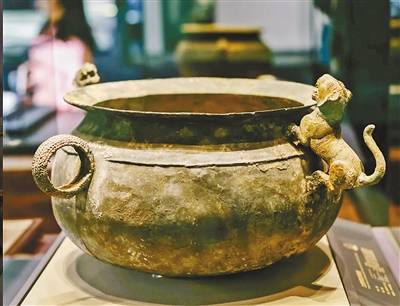
Western Han Dynasty Bronze Cauldron with Tiger Braid and Cord Pattern
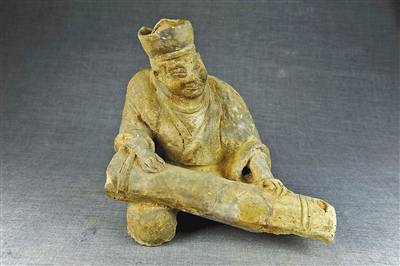
Eastern Han Dynasty Fuqin Figurine
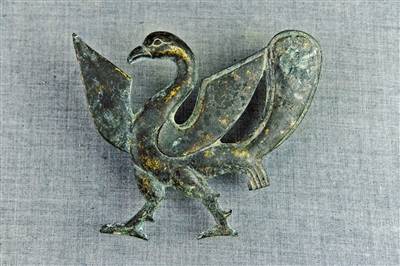
Eastern Han Dynasty Gilt Bronze Phoenix and Bird Ornament
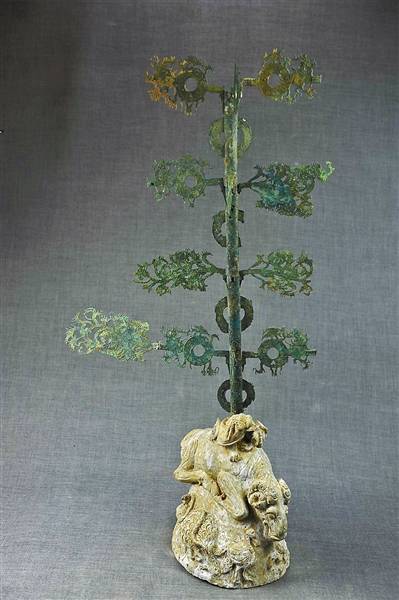
Eastern Han Dynasty money tree
Western Han Dynasty Ganlan Style Pottery House
Western Han Dynasty Sheep Horn Button Clock
Speaking of “Yelang”, people will first think of the idiom “Yelang is arrogant”. The Yelang Kingdom was a minority political power in southwest China from the Warring States Period to the Western Han Dynasty. Sima Qian’s “Historical Records·Biography of the Southwest Yi” begins with: “There are many kings of the southwest barbarians, and Yelang is the largest.” The size of Yelang is a true record of the historians of the Han Dynasty. As for the initial contact between the Han envoys and the rulers of various ethnic groups, the King of Dian asked “Which Han is bigger than me?” Yelang was also confused.
In the Qianxinan Prefecture Museum in Xingyi City, the basic exhibition hall is called “Yelang’s Questions – Exhibition of Historical Relics of the Han Dynasty in Guizhou”. The entire exhibition has three units: “Irrelevant Roads”, “Yizhou Lord” and “Han Guangda”. In ancient times, there was little information, and the civilization of the Central Plains and the southwest were blocked by mountains. It is not surprising that there are questions about “who is bigger, the Han Dynasty or us?” In real history, the ancient Yelang Kingdom had a vast territory and a splendid civilization. It was not arrogant in politics, but rather pragmatic. Facing the unprecedentedly powerful Western Han Dynasty, Yelang sized up the situation and chose to surrender, gradually integrating into the diverse and unified Chinese civilization, and promoting cultural exchanges between the Han Dynasty and Southeast Asia and South Asia.
A jar of wolfberry sauce connects two dynasties
The story that Emperor Wu of the Han Dynasty sent Zhang Qian to open the Silk Road from the northwest and hollow out the Western Region is a well-known story. On the other hand, Emperor Wu’s move to send Tang Meng and Sima Xiangru to “connect with the southwestern barbarians” also had great historical significance. On Emperor Wu’s strategic chessboard, the Xiongnu and South Vietnam were the biggest external threats since the establishment of the Han Dynasty. The original purpose of Zhang Qian’s mission was to contact the Yueshi and other countries to “cut off the right arm of the Xiongnu” and to flank the grassland forces. The original intention of “Tongnan Yi” was to pacify South Vietnam and find military support in the upper reaches of the Pearl River. Emperor Wu’s vision was unique, but in the eyes of later generations, he achieved little military success. The final solution to the Huns and South Vietnam issues still depended on victory on the frontal battlefield. But from a political and cultural perspective, Emperor Wu’s initiative has immeasurable significance.
Mr. Shi Nianhai once vividly described the interaction between the Han Dynasty and the Yelang Kingdom, which originated from a small jar of doubanjiang. In the sixth year of Emperor Wu’s founding, Fan Yang sent Tang Meng as an envoy to South Vietnam and ate wolfberry (jǔ) sauce. Wolfberry paste is said to be made from the fruit of the wolfberry tree. It is a specialty of Shu and is similar to the bean paste of later generations. The wolfberry paste of Nanyue Kingdom comes from the shipping trade of Zangke River in the northwest. Tang Meng was keenly aware that there was a transportation route connecting South Vietnam in the southwest, which was of great strategic value. Later, he sought confirmation from businessmen in Shu and heard that there was a Yelang Kingdom with 100,000 elite soldiers in the Zoke River basin, so he immediately reported it to the court. Emperor Wu immediately sent Tang Meng and a thousand people to set out from Bashu Pass (zuó) as envoy to Yelang, and the Southwest Silk Road was officially opened.
Faced with the generous gifts from Tang Meng and the majesty of the Han Dynasty, Yelanghou and nearby Xiaoyi chose to surrender. The Han Dynasty also established Qian (qián) as a county in the northwest of Yelang’s power. In the process of conquering South Vietnam, the Eighth School Lieutenant defeated the rebellious Qie (jū) Lan (today’s Huangping County), causing a huge shock to the neighboring Yelang Kingdom. Lord Yelang took the initiative to join the imperial court and was named King Yelang by Emperor Wu. The Han Dynasty immediately established Zangqi County in the Nanyi area, with seventeen counties under its jurisdiction.
At this point, Yelang’s hometown was included in the territory of the Western Han Empire, and an effective county management system was initially established. The establishment of counties meant that a large number of officials and people from Bashu and the Central Plains region moved into the Yelang area to cultivate and garrison. After more than a hundred years, when the Han Dynasty became emperor, Yelang Wang Xing and surrounding princes continued to conquer. The imperial court sent envoys to mediate, and Yelang King humiliated the Han envoys. The imperial court appointed the brave Chen Li as the governor of Zangke. Chen Li executed Yelang Wang Xing in public, and the Yelang Kingdom was destroyed and disappeared from history.
The Han Dynasty’s efforts to connect the southwestern barbarians was a huge project to connect the Bashu road system with the southwestern roads, marking the formation of a new transportation network. Tang Meng and Sima Xiangru led the people to dig more than a thousand miles of mountain passes, and worked tens of thousands of people. The projects were not completed year after year, and countless food and financial resources were consumed. What we cannot ignore is that behind the thousand-year achievements of Han culture in advancing to the southwestern frontier is the heavy price paid by the people of Bashu.
Mysterious burial custom is the only one seen in the country
Faced with such a poetic name “Yelang”, later generations have various opinions and conjectures based on different ethnic documents and local legends: some people think that “Yelang” is the name of a mountain, pointing to Yeshan in Xingren City, Guizhou and Langshan in Liuzhi Special Zone, Liupanshui City; some people think that “Yelang” is the name of water. , which is today’s Jinsha River. The ancestors of the ethnic group first migrated from the Jinsha River area; some people think that “Yelang” is a personal name, that is, the original leader of the ancient country; some people think that “Ye” as a clan name should originally be “Xie”, and “Lang” means valley, that is, in ancient times, the Xie people moved south to central Guizhou, and the tribe lived in the valley. The various explanations for the name are just the tip of the iceberg in Yelang’s mystery.
If we want to truly uncover the mystery of the ancient Yelang Kingdom, archaeological work has provided us with the most intuitive and reliable information. The Hezhang Cola ruins are currently the most important ruins from the Warring States Period to the Qin and Han Dynasties in Guizhou. Hezhang County in Bijie City is one of the counties with the highest average altitude in Guizhou Province. Keke Township is located on the eastern edge of the middle section of the Wumeng Mountains. There is a Keke River in the middle of the east-west mountain dam. There is a row of small earth hills 50-100 meters high on both sides of the river. Since the first batch of unearthed cultural relics were discovered here in 1958, archaeologists have conducted more than ten excavations at the Coke site, which has attracted continued attention from scholars.
“The two Sima in the Western Han Dynasty”, Sima Xiangru and Sima Qian were ordered by Emperor Wu to visit the southwest region. Sima Qian personally visited the barbarian lands in southwest China and inspected the local customs of “everyone cultivates fields and has towns gathered together.” Crops such as rice and soybeans, as well as animal bones such as pigs, cows, and sheep, as well as remains of agricultural tools such as hoes, axes, and coaxes, and models of pottery wells unearthed from the Keke Han Tomb, prove that the local people have mastered farming technology. Historical records record that in the late Western Han Dynasty, the ruler of the Yelang region sent as much as a thousand dendrobiums of grain to the court. On the stone wall at the entrance to the tomb in Houshan Township, Jinsha County, people found a picture of fishing. There is a small boat on the left side of the picture. Three fishermen in the boat used long poles to drive cormorants (lúcí) to catch fish. This vividly depicts the production structure of the Guyelang ethnic group at that time, which mainly cultivated crops, as well as animal husbandry, fishing and hunting. The “ganlan” house model found in the Keke Han Tomb shows that the local ancestors lived a settled life. The Zangke River is easy to navigate, and the ancestors of Yelang were also good at boating. A bronze drum unearthed from the Hezhang Han Tomb depicts the grand scene of dragon boat racing.
The pottery spinning wheels, hemp ropes and linen cloth fragments unearthed from the tombs may point to the “Guan Toufu” recorded in ancient books. Because cloth was extremely precious, the ancestors were unwilling to part with it or did not know how to cut it, so they dug a round hole in the cloth and put it directly on their heads. The southwest region is hot and humid, and local people still retain the custom of going barefoot and naked. Haircut tattoos are an ancient custom of all ethnic groups in the south. On a copper money tree unearthed from an Eastern Han Dynasty tomb in Xingren City, there is an image of a naked figure riding a deer and carrying a spear.
After identification, the two iron nails unearthed from the Keke Han Tomb can be traced back to the late Spring and Autumn Period. Iron whittling knives, ring-headed iron knives, and copper-handled iron swords are cultural relics from the early Warring States Period. The local ancestors were exposed to the advanced smelting technology of the Central Plains very early. The Copper Smelting Site at Coke Dashan can prove the existence of local bronze smelting activities. A large number of bronze swords and iron swords unearthed from tombs have distinctive local characteristics such as hollows and stem heads, which also reminds us that the ancient Yelang Kingdom may have “all men as soldiers.” The ancient Yelang people would cast special patterns and symbols on their axes (yuè), which may be a witchcraft curse to increase the weapon’s killing effect on the enemy.
Yelang culture is highly similar to the Dian cultural system, but it also has its own characteristics in details. Different from the realistic style of Dian culture, the bronzes of the ancient Yelang Kingdom prefer abstract animal patterns, such as standing tiger bronze cauldrons and geometric bird patterns. Some scholars pointed out that Dian culture formed a highly centralized royal power system, while Yelang culture was rich in witchcraft and tribal colors. In fact, since the Yelang capital city and the royal tomb have not yet been excavated, many conclusions await future archaeological evidence.
The tomb burial is the most significant and noteworthy cultural phenomenon in Yelang Ancient Kingdom, and is the only one seen in the country. The so-called head burial means that a copper or iron cauldron is placed on the head of the deceased, and sometimes a copper or iron cauldron is also placed on the feet of the deceased. The owner of the tomb not only wears a copper cauldron on his head, but also wears a turban with hairpins on it. If it were not for the archaeological excavation and the discovery of a copper cauldron standing sideways on the head of the deceased, no one would have imagined that it was a burial utensil. The owner of the tomb was presumed to be a wizard or a leader, and the grave goods were extremely rich. Yelang ancestors may have believed that the copper cauldron had the mysterious power to communicate with gods. Some scholars believe that the cauldron represents the female abdomen, and that the deceased can return to his mother’s body by wearing it on his head; some believe that the local ancestors had cultural beliefs to protect the head of the deceased; some suggest that the ancestors of Yelang wanted to bring cooking utensils into another world for continued use… These opinions make the tomb burial another unavoidable mystery in the ancient Yelang country.
The night rhythm of Han style resonates here
“Zangke” is mentioned in the book “Guanzi·Xiaokuang”, but the age of the book is quite controversial. During the Warring States Period, Chu State general Zhuang Qi (qiāo) led his army into the southwest region and brought the Central Plains culture with him. The most direct interaction between the Central Plains regime and the ancient Yelang Kingdom is still attributed to Emperor Wu and Tang Meng. After Emperor Wu passed through the southwestern Yi, the local cultural landscape underwent tremendous changes.
The archaeological cultural landscape of the southwest region underwent epoch-making drastic changes before and after Emperor Wu of the Han Dynasty, but the integration of ethnic groups still followed a gradual rhythm. After Emperor Wu, Han-style utensils clearly appeared in the southwest. Han-style brick chamber tombs gradually replaced indigenous pit tombs with vertical pits. The double replacement of tomb shapes and funerary objects intuitively recorded the integration and evolution of local culture; Han-style pottery, bronze mirrors, five-baht coins, and tiles entered daily life. Influenced by the Han Dynasty’s rich burial custom of “death as life”, Hezhang 2,258 copper coins were found in one Han tomb; the Tonglao bath tray unearthed from another Han tomb could be described as a luxury item at the time. The inscription clearly records that the production time of the artifact was November of the fourth year of the Yuan Dynasty (AD 4), as well as the manufacturing location of Tonglao (now Luliang County, Yunnan Province).
A Sichuan-style hook was unearthed in Zhongshui, Weining (now part of Bijie, Guizhou). The overall shape is the image of a salamander in a swimming posture. The head and torso are plump, and the tail is naturally curved to form a hook-like structure. The official script inscription “Eighty million per day” is engraved on the back. It is cast by the lost wax method.
A lacquer-eared cup was unearthed from Xie’s tomb in Longba, Qingzhen City (now managed by Guiyang City). Lacquerware in the Han Dynasty was extremely precious, and its market value was far higher than that of bronze. Some people speculate that this cup was a gift from the emperor of the Han Dynasty.
A large number of unearthed cultural relics were found in the Eastern Han Dynasty tombs in Jiaole, Xingren City, including bronze chariots and horses, lanterns, figurines of playing musical instruments, money trees, and the seal of “Bajun Shoucheng” and other cultural relics with distinctive Han cultural elements, which are now stored in the Qianxinan Prefecture Museum. The pottery figurines playing the piano have a pleasant smile, and their clothing styles are no different from those in the mainland. The Western Han Dynasty yangjiao button bell discovered in Anlong County in 2008 has great southwest local characteristics. The Han-style harp figurines and the local-style ram horn bells together played a new chapter of national integration and diverse coexistence.
In recent years, archaeologists have excavated rammed earth city walls, wells, and ash pits from the Han Dynasty in the Keke Grain Management Station area, confirming that this place was the county seat of Hanyang County under the jurisdiction of Jianwei County in the Western Han Dynasty. The inscription “Jianshi” among the unearthed tiles is the reign name of Emperor Cheng of the Western Han Dynasty. Some scholars believe that this is the earliest tile with the reign name unearthed so far. The city government offices and officials, people, and soldiers under the county system promoted local social production and gradually changed the local cultural landscape.
On the other hand, with the expansion of the Han Empire, the cultural factors that accidentally contributed to Yelang spread to further Southeast Asia. Experts speculate that after the Yelang Kingdom was destroyed, some descendants of the ethnic group fled south and still used the title Yelang. “Book of the Later Han Dynasty” mentions twice that the Jiuzhenjiu (jiào) Waiyelang and other tribes requested the protection of the fortress. The Jiuzhen County of the Eastern Han Dynasty was located in the area of today’s Thanh Hoa, Vietnam. The remnants of Yelang came thousands of miles away, indicating that the descendants of Yelang had spread as far as Indochina. Cola-style swords were unearthed in northern Vietnam, and the cultural characteristics of the tombs are quite similar. The burial custom of using bronze drums to cover heads and copper wash covers has been discovered in places such as Bohe, Cambodia. The interaction between the migration of descendants of the Yelang ethnic group and ancient societies in Southeast Asia has gradually become an international academic hotspot.
Going back to Sima Qian’s record of Yelang in “Historical Records” mentioned at the beginning of the article, in fact, the idiom “Yelang is arrogant” was not written by Sima Qian, but was gradually formed in the middle and late Ming Dynasty. A question with no malicious intent has been misunderstood for thousands of years. According to Mr. Yan Pingfan’s research, the earliest material related to the meaning of “Yelang” and “arrogance” comes from Wang Shizhen of the Ming Dynasty. People in the Ming Dynasty criticized “Yelang for being arrogant”, borrowing allusions from historical records, alluding to Yang, the chieftain of Bozhou at that time, who was arrogant and rebelled against the court. Behind the idiom “Yelang is arrogant” is the fact that the central government in the Ming Dynasty strengthened the management and development of the Guizhou region, and Guizhou became the focus of scholars’ attention. The wild land in the eyes of the immigrants is the frontier hub for the two-way flow and integration of cultures on the Southwest Silk Road.
The mysterious ancient country of Yelang still leaves many mysteries behind. “Historical Records” records that Dian Kingdom and Yelang respectively accepted the royal seal and canonization from the Western Han Dynasty. In 1956, the “Golden Seal of the King of Dian” was discovered in Tomb No. 6 in Shizhaishan, Kunming City, which shocked the world. In 2014, archaeologists discovered the capital of Dian Kingdom and the seat of Han County during systematic excavations nearby. So where are the city sites of the ancient Yelang Kingdom and the tomb of King Yelang? I believe that as archaeologists travel across the green mountains and trace the ancient country, the historical face of Yelang will become clearer.
Related Reading
- White House removes CNN from TV press pool as Trump’s media restrictions expand2026-09-21
- “Physics Internet celebrity” Zhang Chaoyang went to Beijing Normal University again to lecture on physics, hard-core derivation of gradients and differentials of tensors2026-09-21
- Customized AI wedding photos are becoming popular. You don’t need to spend hundreds of dollars to generate real photos with just one click. What impact will it have on traditional wedding photography?2026-09-21
- Just hand in the storage bag with your mobile phone and come back to college class?2026-09-21
- Macron: Supports Canada and the EU in getting closer; Trump said that allowing the EU to join as a “joint member” or “hostile behavior”2026-09-21