Recently, news that many colleges and universities are promoting “mobile phone-free classrooms” has attracted widespread attention. Guangzhou Institute of Technology, Beijing University of Aeronautics and Astronautics Flight School, Xi’an Aeronautics and Astronautics University, etc. have successively issued regulations requiring students to put their mobile phones into storage bags or store them together before class to darken the screen and raise their eyes.
In the field of public opinion, applauders believe that this is responsible for students, while doubters are worried that this is a “one size fits all” formalism, and even distrusts students’ self-control. If your phone is in your pocket, will class really come back? This issue is probably more worthy of consideration than the regulations themselves.
Breaking away from the simple opposition between “management” and “release”, we will find that this discussion touches on a realistic proposition – in today’s world where attention is infinitely divided, whether concentration can still be retained as an ability.
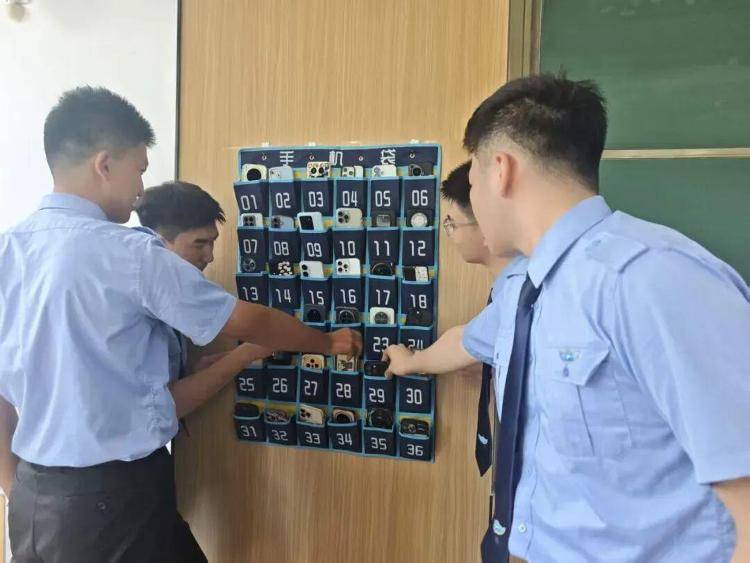
At present, mobile phones have gone beyond the scope of communication tools. They are not only a window for obtaining information, but also the main battlefield for various algorithms to compete for the market. The fast pace of short videos, the notification sounds of social software, and the push notifications of shopping platforms… From a problem perspective, in such an environment, people’s attention is easily cut into pieces, and the habit of deep thinking is quietly worn away. Bowing down again and again in class is an individual’s free choice, and it is also a step-by-step concession of individual will in the face of sophisticated algorithmic mechanisms. This move by colleges and universities is an attempt to carve out a space that will not be disturbed in the flood of distractions.
Looking at it from another angle, this regulation is not a distrust of students, but a “support” for self-control.Self-control is not a talent that grows out of thin air. It requires environmental support and practice. It would be too ideal to expect a young person who has been trained by instant feedback for a long time to suddenly become calm in the classroom.The function of the storage bag is similar to the guardrails on the side of the track and the goggles in the laboratory, providing everyone with a space without interference where they can concentrate on practicing. In this sense, “mobile phone-free classroom” manages things and protects people.
Of course, even a good system is afraid of losing its shape.First, we need to allow necessary flexibility.Some courses require the use of mobile phones to check information, complete questionnaires, and participate in interactions. Such practical needs cannot be blocked by the sentence “never allowed.” There should be openings in the rules, and the openings should be well-organized, such as clarifying the circumstances under which it can be used and establishing a process for temporary access, so that management has both strength and warmth.
Secondly, we must prevent the inversion of responsibilities.Blaming mobile phones for the deserted classroom is a simplistic way of saying it and can easily cover up the problem. If the teacher’s lectures are scripted and there is little interaction in the classroom, the mobile phone put away may lead to quiet distraction. What can really retain students’ attention should be the attractiveness of the content on the podium.
We also need to see that the rules cover one classroom and several classes. When students leave the classroom, they still have to face the screen that will light up at any time. Therefore, “mobile phone-free classroom” should not stop at a management action, but should also strive to become an educational opportunity. Schools can take advantage of this trend to carry out media literacy education and guide students to examine their relationship with electronic devices: Why do they always want to click on that red dot? Which uses are instrumental and which are driven by algorithms? At the same time, efforts should be made to improve the quality of classes, and use problem-driven, group discussions, practical tasks, etc. to “grab” students’ attention back. The constraints of the external storage bag and the attraction of the class itself work together, and concentration can naturally change from forced to voluntary.
In addition, the exploration of “mobile phone-free classroom” also provides a sample for how the entire society should deal with “digital addiction”.While we enjoy the convenience of technology, we must also be alert to its potential risks and build a healthy “digital ecology” so that technology can better serve people.
Related Reading
- Customized AI wedding photos are becoming popular. You don’t need to spend hundreds of dollars to generate real photos with just one click. What impact will it have on traditional wedding photography?2026-09-21
- Macron: Supports Canada and the EU in getting closer; Trump said that allowing the EU to join as a “joint member” or “hostile behavior”2026-09-21
- On the first competition day after the opening ceremony, the Chinese delegation won 11 gold medals, 6 silver medals and 3 bronze medals.2026-09-21
- The anti-skid value is less than half of the national standard. Who is giving permission to the “slide zebra crossing”?2026-09-21
- Four U.S. AI giants face antitrust lawsuits2026-09-21