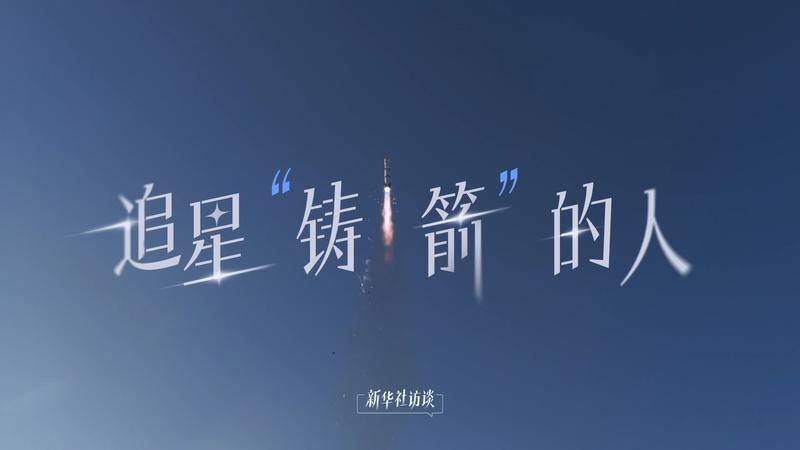
August 19, 2026, the Chinese Valentine’s Day. In the early morning breeze, a rocket named Suzaku-3 stood on the launch tower in the northwest Gobi, waiting for its “big test”-not only must it “be able to go up”, but also “be able to come back and land accurately.” As the commander-in-chief of the rocket, Dai Zheng was sitting quietly in the command hall, staring at the countdown on the screen.
If successful, this will be the first time China has achieved land recovery of a rocket, and will also be a major breakthrough in my country’s reusable rocket technology.
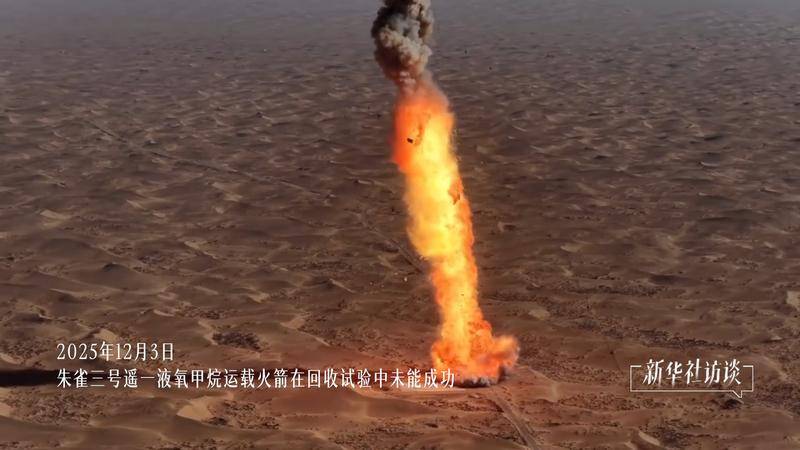
This is not the first time that Zhuque-3 has challenged the rocket into orbit and the recovery of the first stage. Thousands of miles away, in the Beijing office building of Blue Arrow Aerospace, there is a deformed grid rudder. On December 3, 2025, it took off with the Suzaku-3 Yaoyi launch vehicle, and then fell with a sub-stage and was smashed and twisted.
What kind of journey did Dai Zheng and Suzaku No. 3 go through in eight months? This time, where will Li Xian’s “arrow” shoot?
It is rare to see the wreckage of a failure in the most conspicuous place in other industries. But in aerospace, it has another name – zeroing.
Zeroing is a set of strict standard procedures in the aerospace field: when a product has a problem, collect data, list a fault tree, troubleshoot one by one, reproduce the fault, analyze the mechanism, formulate improvement measures, then use ground tests to verify that the measures are effective, and finally implement them on the next product.
There is an old saying in aerospace: Returning to zero makes people grow.
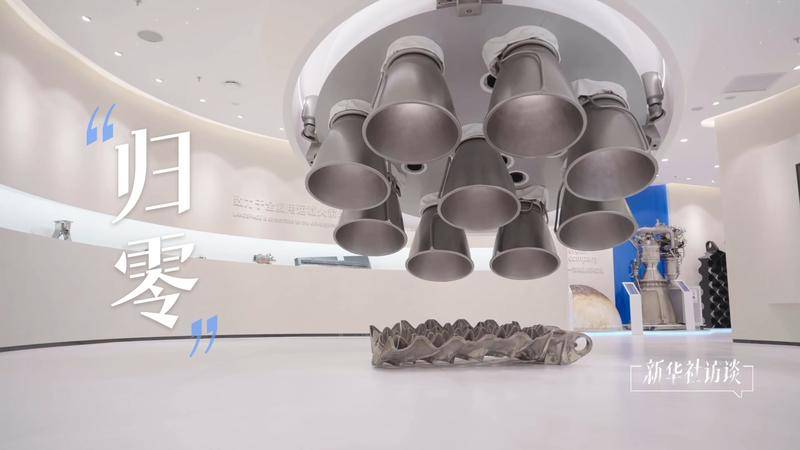
The Zhuque-3 Yaoyi launch vehicle is China’s first launch vehicle with a stainless steel rocket body structure. It uses liquid oxygen methane as fuel. The first stage is designed to be reusable and equipped with grid rudders and landing legs required for recovery.
Dai Zheng still remembers the day it stood at the launch station in its complete state for the first time. “The golden sunshine shone on the silver rocket body, which was very handsome.”
After ignition, it performs perfectly on the ascent. In the safe area of the recycling yard 390 kilometers away, people looked forward to it and cheered when a silver tube-shaped object cut through the sky.
There’s just one last step left. At a distance of 3.3 kilometers from the ground, an abnormality occurred after the first-stage landing ignition was started, and then burned and fell. The wreckage fell on the edge of the recovery field, only 40 meters away from the center of the landing.
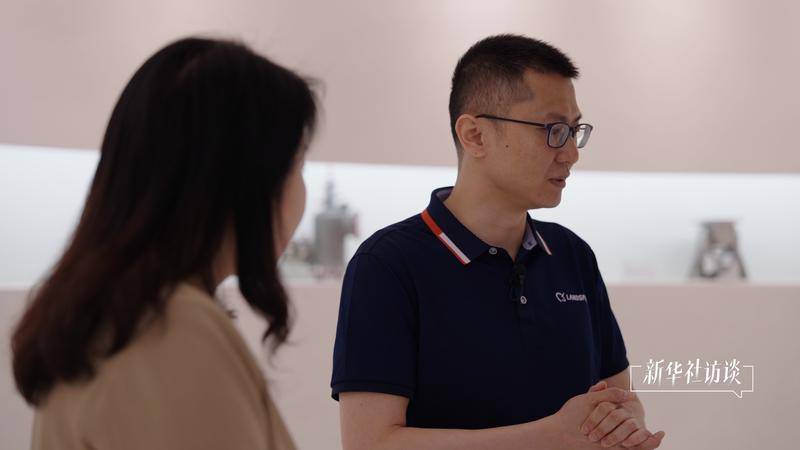
Dai Zheng’s reaction was calmer than expected. “The core goal we set for Zhuque-3 is to ensure that it will enter orbit, which is the basis for future commercial operations.” Dai Zheng said that he had not set dual targets for the team to “both enter orbit and recover it” for the first time. They had long been mentally prepared to obtain real flight data through some “imperfect successes” and then use these data to improve products.
The technical reset of Suzaku 3 was immediately started. The fault tree was listed, one by one was investigated, simulations and tests were conducted, and the ones that could not be ruled out were locked as “suspects”. Then an environment was built to reproduce the fault. Only when the evidence was conclusive was the fault location completed.
This is a set of interlocking and logical processes that do not allow for the slightest chance – the rules established when China’s aerospace industry started more than half a century ago have not changed to this day.
In December 2015, after the American SpaceX Falcon 9 rocket was launched into space, the first-stage booster was successfully recovered, marking the first time that humans achieved a vertical return soft landing of a launch vehicle. Almost at the same time, China ushered in the “policy ice-breaking” of private aerospace.
In a cafe in Yizhuang, Beijing, Zhang Changwu, CEO of Blue Arrow Aerospace, met with Dai Zheng to discuss whether China’s private aerospace companies can do it and how they should do it. On the way back, Dai Zheng received a message from the other party: Many times we still have to believe in ourselves.
That sentence deeply moved Dai Zheng, but the decision was not easy.
“Once this small boat leaves its home port and enters a distant place, the waves may be rough, or it may reach a new continent. Everything is unknown, and you have to bear it yourself.”
What supported him in pushing open the door was a simple judgment: “If we don’t try, who can we expect to take up this responsibility?”
“I don’t know if the ship will sink one day.” He paused, “But whether you can raise the sails of this small ship and sail towards the unknown sea when facing the unknown depends on whether you believe in yourself.”
In 2016, Dai Zheng joined Blue Arrow Aerospace. And further away, what he saw was another weight. Once the satellites of the low-orbit Internet constellation are deployed, they will serve the global market because they will fly over every country. If such a platform cannot be built, you will have to use someone else’s.
“In areas involving national strategic security, we cannot be controlled by others. We must have our own capabilities and tools.” Dai Zheng said, “We have no retreat or choice when doing this. We must do it.”
At 4 pm on October 27, 2018, Blue Arrow Aerospace’s Zhuque-1 solid launch vehicle was launched. This is China’s first privately-operated launch vehicle, and Blue Arrow is also the first domestic company to obtain all industry entry qualifications and obtain the first privately-operated launch vehicle launch license. The rocket advanced according to the established procedures, and at the 402nd second of its flight, Dai Zheng saw that the originally stable image of the Earth on the screen suddenly began to rotate. There were only 15 seconds left before entering orbit, and the rocket failed to launch.
After zeroing in on the problem, it turned out that the problem was in a small liquid power system. This made Dai Zheng confirm one thing: the core power system technology must be in his own hands.
Suzaku 2 was made based on this judgment, using a self-developed liquid engine to build a self-developed liquid rocket. But the road is also full of ups and downs.
On December 14, 2022, Suzaku-2 flew away and failed again.
“We have been cultivating this rocket for many years, just like your child. Now he has to go through a coming-of-age ceremony and go to the college entrance examination room, but in the end he failed.” Dai Zheng said that he knew intellectually that he could do it again, but the emotional blow at that time was very big.
The pressure doesn’t just come from technology. Since the establishment of Blue Arrow Aerospace, the team has experienced failures and has not achieved a single success. Questions from the outside world have always been there – can you develop self-developed engines and self-developed liquid rockets?
“We as a team need to have a success to prove ourselves.”
After returning to zero, the improvements were implemented into the next product. On July 12, 2023, the Suzaku-2 Yao-2 roared into space, becoming the world’s first liquid oxygen methane rocket to successfully enter orbit.
On that day, everyone cheered first and shed tears at the end. Dai Zheng said that it was the most emotionally intense of all the launches he had ever experienced. The spring, which was usually pressed tightly, sprang open at that moment. It proves that it is not just a rocket, but that China’s private commercial aerospace industry can complete a closed loop of technology and develop such capabilities.
Why do you have to build your own engine? Dai Zheng’s explanation is very practical: Rockets and engines need to be iterated closely, and engines purchased from external sources have to face different customers, and the coordination and iteration cycle is much longer than that of self-development. Looking around the world, the most representative commercial aerospace companies all take the path of self-research.
Dai Zheng said that aerospace, not only in terms of design, but also in terms of production and manufacturing processes, must also be a system that is tailor-made and deeply coupled based on the country’s industrial manufacturing system and supply chain. It is deeply rooted in the domestic industrial system and bears the label of Made in China.
When looking for a nozzle for the engine, the team inquired about prices and found that one on the market costs thousands of dollars. Later, they found a company that originally made precision parts for watches and later transformed into precision processing in the electronics industry. They applied the processing technology of consumer-grade products to the nozzles of the “Tianque” engine. The effect was unexpectedly good, the production efficiency was greatly improved, and the unit cost was reduced to dozens of yuan.
“We are actually conducting a large-scale experiment in the domestic manufacturing chain,” Dai Zheng said. “It’s like being in a huge treasure house, and you can always find the ‘gems’ you want in it.”
Blue Arrow Aerospace’s office area in Beijing has six floors and about 400 people. Green plants are placed between the workstations, and people from various majors sit staggered to facilitate communication at any time. The average age of the team is in their early thirties.
Dai Zheng, born in 1984, is considered an old employee.
When asked what his hobbies were, he was a bit embarrassed: “I’m actually quite afraid of people asking me what my hobbies are.” After thinking about it, he just said that he likes computer hardware and likes to install computers and do DIY. Nowadays, fewer and fewer people install computers by themselves, but he still likes to assemble those parts, finally debug them, and press the button to light it up. “You will find it interesting to light up that moment. Maybe this is a kind of thinking of engineers.”
And he felt the same way when he looked forward to the moment when the rocket ignited.
Apart from moments like this, the daily life of aerospace is not romantic. “It is actually a system engineering job that requires a lot of rigorous calculations, design drawings, experiments, iterative improvements, and no mistakes.” Dai Zheng said that for people who don’t understand this industry, this job can even be boring, dealing with a bunch of data, a bunch of drawings, and a bunch of products every day.
“Launching is a bit like going on stage. One minute on stage and ten years off stage.” He said that it may take ten minutes from ignition to orbit of the rocket. Every second and every state during the flight has been designed and calculated in detail by the R&D team. “It is actually a perfect performance, without improvisation.”
The real normalcy is the rigorous and steady work behind the scenes. “There are many unknown engineers who have not come to the forefront, and it is they who forged this ‘arrow’.”
Dai Zheng calls this state “the ultimate delayed enjoyment.” Normal work is boring, and positive feedback comes very late; emotions will only be amplified when the rocket ignites and takes off. There was a low-frequency tremor from the ground, and the supersonic airflow through the atmosphere came with a sharp sound. “You will feel that human beings are really great, exploring the vast universe and space, and you are one of this group of great members.”
The beginning of autumn has passed and the sun is setting low. Dai Zheng stood in front of the launch tower, looking up at the stars that were gradually appearing in the distance.
“The aerospace industry is still very young.” He said, maybe looking back in one hundred or two hundred years, we will still be a group of very “original” astronauts. “But the trend of human beings to constantly break through their self-understanding and explore the universe and the unknown world in twists and turns will not stop.”
More than 100 kilometers away from the Blue Arrow Space Launch Base, lies the Juyan ruins. Thousands of years ago, soldiers guarding the border practiced archery here in autumn. If six of the twelve arrows hit the target, they were considered qualified.
Thousands of years later, a rocket named after the divine bird is waiting here for the moment of departure. Can it penetrate the clouds and the sky, “return home” accurately, and hit the bull’s eye?
At 7:35 on August 19, the Zhuque-3 Yao-2 carrier rocket ignited and took off at the Dongfeng Commercial Aerospace Innovation Test Zone. A few minutes later, the first sub-stage landed steadily at the landing site in Minqin, Gansu; the second stage sent the Honghu 03 satellite into the predetermined orbit.
This is the first time that my country has achieved land recovery of a rocket.
Currently, China’s commercial aerospace industry is accelerating its transformation to large-scale applications. By the end of 2025, my country’s commercial aerospace companies have exceeded 600, covering the entire industry chain such as rockets, satellites, measurement and control, and terminals.
A loose “arrow” competes in the starry sky, never stopping.
Planning: Huang Huo, Chen Fang
Producers: Zhang Pingfeng, Ye Qian
Coordinator: Li Jie, Wang Bingdi, Li Shuzhen, Wang Junlu, Guo Yujing
Reporters: Wang Bingdi, Li Yaguang, Wang Xiunan, Wu Hao
Director: Wu Hao, Li Yaguang
Photographers: Liu Chunhui, Wang Pu, Hao Xiaojiang, Liu Yang, Meng Jing
Vision: Zhang Yalan, Ye Rongchang, Zhang Yuwei, Jiao Lu
Text communication: Wang Xiunan, Li Yaguang
Xinhua News Agency Audio and Video Department
Xinhua News Agency Beijing Branch
Related Reading
- In chaotic L.A. skies, news helicopter pilots juggle competition, camaraderie, risk2026-09-20
- Trump says he will form an “artificial intelligence army”2026-09-20
- 13-year-old Yu Zidi broke the Asian Games record and won the gold medal!2026-09-20
- The State Administration for Market Regulation is clear! This type of infant formula food must not continue to be sold2026-09-20