According to the Global Times, a wild cat that has never been recorded before lives in the forests of Bolivia. Not long ago, researchers identified this cat and it was officially named Leopardus tilcayo. This is the first time that humans have discovered a new cat species in nearly 100 years.

It is understood that this cat species belongs to the tiger cat group in South America. Its fur is light brown and there are irregular dark rose spots all over the body. The adult body length is about 46 centimeters and the weight is about 1.4 kilograms, which is smaller than many domestic cats. Researchers say small rodent remains have been found in the feces of the new species, and camera records suggest it may be active mainly at night. In addition, its distribution range, existing population, breeding methods, extinction risk, etc. are still unknown.
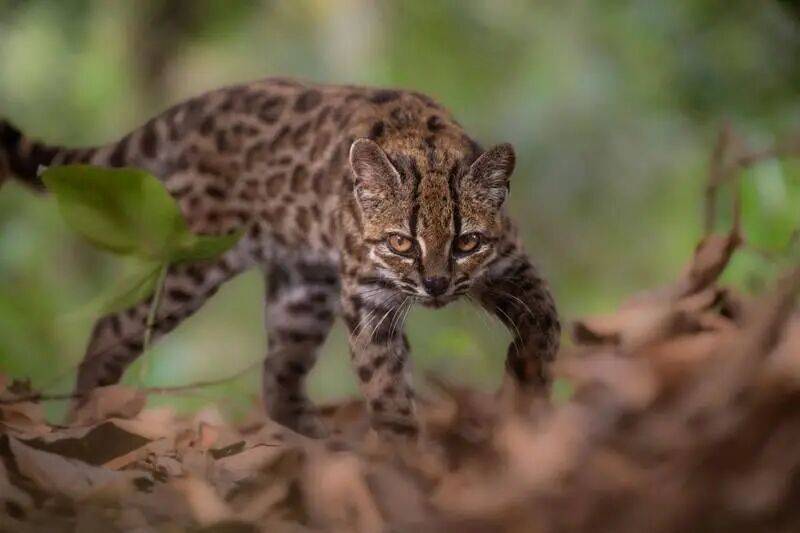
The relevant research results were published in Current Biology on September 17, and the discovery of this species was also announced.
Around 2016, Bolivian biologist and National Geographic explorer Paola Nogales-Ascarrunz received a call from a local wildlife sanctuary saying that someone had sent a “strange cat.” It was a kitten found by a local resident near a forest road. It was first kept at home as a house cat and was sent to the Sunda Verde Animal Sanctuary in the cloud forest area about a year later.
Genome analysis showed that the cat belonged to an independent evolutionary lineage that separated from other tiger cats about 1.4 million years ago, the same time as the gap between modern lions and extinct cave lions. Therefore, the research team named it Tilkayo tiger cat, retaining the “Tilkayo” name used by local residents. Local people explained that the name was passed down from ancestors and the specific meaning is unknown.
Currently, there is a male individual in the sanctuary who is about 10 years old. He is the only living individual of this species known to be in protective captivity. The other living individual has also been inspected and there are only a few camera capture records in the wild. Researchers emphasize that its reproduction, specific feeding habits, population size and wild ecology are still unknown.
Compiled by: Zhang Xiaosong Source: @ Global Times, Yangtze Evening News·Ziniu News.