CCTV news(Focus Interview): On September 16, the Pinglu Canal, the first canal project planned by the state to connect the river and the sea since the founding of New China, was officially opened to navigation. After four years of construction, this 134.2-kilometer-long canal is equipped with a first-class inland waterway and can navigate 5,000-ton ships. It is the shortest and most economical seawater transportation channel in southwest China and the backbone project of the New Land-Sea Corridor in Western my country. After being opened to navigation, the Pinglu Canal will provide a convenient entrance to the sea for the water transportation system in southwest my country. It will combine road and railway transportation to greatly release the advantages and potential of shipping, and become an important strategic hub for my country to create a domestic and international dual circulation.
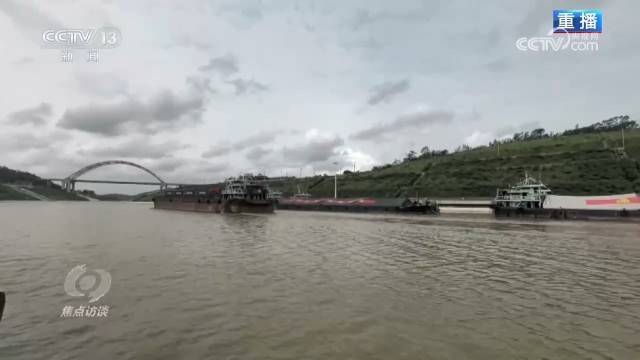
On the morning of September 16, the first voyage ship loaded with cargo departed from Nanning Port and traveled along the Xijiang River to the starting point of the Pinglu Canal. The Xijiang River system is rich in water transportation resources, but due to the lack of north-south access to the sea, ships in the southwest region have always had to go all the way east to the Pearl River Delta to go to sea. The Pinglu Canal opens up the Xijiang River water system to the sea, completing the multimodal transport network of waterways, highways, and railways in the entire southwest region.
Wang Fakun, general manager of Guangxi Nanning Port Development and Investment Co., Ltd.: “The goods on this maiden voyage mainly come from Guangxi and Yunnan, Guizhou, Sichuan and Chongqing, including auto parts, plywood, chemical products, and building materials. These goods are gathered at Nanning Port through roads, railways, and waterways, and then go to the Pinglu Canal to go out to sea. This new channel of highway, railway, and water has truly been opened up.”
Arriving at the mouth of the Pingtang River, the maiden voyage slowly headed south towards the outlet of Qinzhou Port. This is the starting point of the Pinglu Canal. From ancient times to the present, people have never stopped exploring this waterway.
Lei Yubao was born in Pingtang River Estuary. After retirement, he returned here to collect many old objects and opened an exhibition hall to tell the story of the changes in his hometown. Lei Yubao told reporters that merchants in history would use this waterway. When the boats reached the watershed, they would first use horses and then carry them on their shoulders through the 6.5-kilometer mountain road from Shaping to Jiuzhou. This 6.5 kilometers is the purely artificial section of the Pinglu Canal. A total of 315 million cubic meters of earth and stone were excavated along the entire canal, a large part of which came from this section of the project.
After the river was opened, the water level difference between the starting point and the end point was about 65 meters. Engineers designed three ship lock hubs: Ma Dao, Qishi and Qingnian to allow ships to “go down the stairs” to overcome this difference, which is equivalent to a height of more than 20 stories. Among the three ship locks, the one with the largest gap is the Horse Road Junction.
By adjusting the water level changes in the lock chamber, the ship can be raised or lowered to the upstream and downstream water levels. This is the basic function that ordinary ship locks need to achieve. But the Pinglu Canal, known as the project of the century, obviously cannot be satisfied with this.
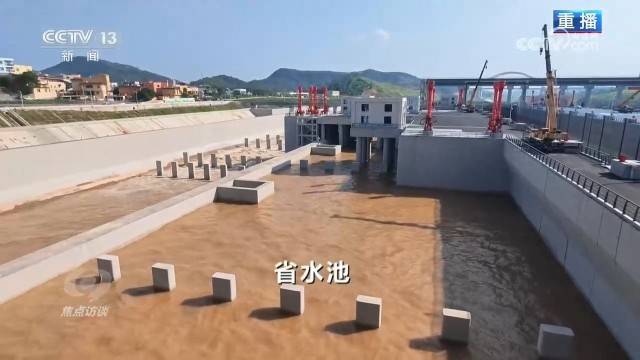
The water in the artificial river section is diverted from other water systems, so water must be saved. In order to save water consumption each time the water level is adjusted, engineers built three provincial pools with different heights to allow most of the river water to circulate between the provincial pools and the lock chambers. This allows the Madao hub to save about 1 billion cubic meters of water every year, which is equivalent to the annual domestic water consumption of the entire Nanning city. Such innovative design also makes the Madao Junction the largest inland water-saving ship lock in the world.
Wei Han, engineer of Guangxi Pinglu Canal Construction Co., Ltd. of the Pinglu Canal Group: “To pass ordinary ship locks, all water in the lock chamber needs to be discharged downstream. (And the water saving rate of the Madao Junction is more than 60%.”
After passing through the upstream Ma Dao Junction, the other two hubs of the Pinglu Canal are the Qishi Junction in the middle section and the Youth Junction closest to the estuary. The Youth Hub was named in commemoration of a former water conservancy facility here, the Youth Sluice. In 1959, in order to withstand frequent floods and prevent the backflow of seawater, more than 7,000 local youth league members and militiamen in Qinzhou responded to the call and built the Youth Sluice on their shoulders. The 88-year-old Peng Shihou is one of them.
The youth sluice, which condensed a generation of youth and protected the tranquility of the area, has been demolished after completing its historical mission. On its original site, the Youth Hub named after him continues its mission in a new way.
Because it is only 10 kilometers away from the canal’s entrance to the sea, the Youth Hub not only regulates the water level of the waterway, but also has multiple functions of regional flood control and drainage and preventing seawater from going upstream.
In addition, as the last barrier before the canal enters the sea, the Youth Hub has also made corresponding designs in terms of ecological protection.
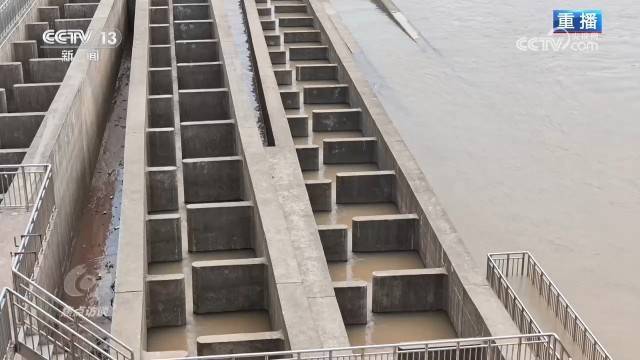
In order to allow fish to return to the upper reaches to spawn, the Youth Hub has also specially built fish passages. Using a winding road-like design, fish can avoid the locks and return upstream easily and safely. Fish passages like this can be seen in many water conservancy facilities in recent years, which also reflects the leap-forward progress our country has made in infrastructure construction, both in terms of technical capabilities and concepts.
The Pinglu Canal not only embodies my country’s infrastructure construction capabilities, but also integrates modern technologies such as Beidou satellite positioning, cloud computing, and artificial intelligence, making the canal intelligent in terms of operation scheduling, navigation management, and navigation warning, becoming a truly smart canal.
Such a historic project will also provide experience and reference for future water transportation network construction.
Fan Yijiang, deputy director of the Comprehensive Transportation Research Institute of the National Development and Reform Commission: “The most advanced planning and design concepts, green development concepts, ecological concepts and the most advanced construction technology, technical equipment and organizational operation and management models are all gathered together. It is not only a benchmark in the current domestic water transportation field, but also an important model in the international water transportation field.”
In recent years, my country’s road and railway transportation networks have been developing continuously. Why should we focus on strengthening the water transportation network? This is because water transport is always the most cost-effective option. In 2025, my country’s total social logistics costs will account for 13.9% of GDP. Compared with the 7% to 8% data in many developed countries, there is still a lot of room for optimization.
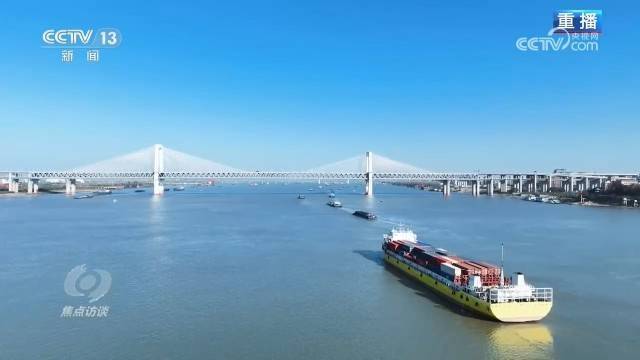
“Four vertical, four horizontal and two networks” is my country’s high-level waterway network plan, which is expected to reach a total scale of 25,000 kilometers by 2035. In key areas such as the Yangtze River Delta, the Pearl River Delta, and the middle reaches of the Yangtze River, the waterway connectivity will reach more than 85%. The improvement of the national high-level waterway network will play an important role in the development pattern of my country’s domestic and international dual circulation and the construction of a unified national market. The Pinglu Canal makes up for the shortcomings of the southwest region, extending the high-level waterway network to the Beibu Gulf.
The water transportation network drives not only the logistics pattern, but also the regional economy and people’s livelihood. For the people in the southwest region, the Pinglu Canal is not only a transportation channel, but also a channel for development and wealth.
Four years ago, when Huang Xubin learned that his village would be relocated collectively due to the construction of the Pinglu Canal, he felt somewhat uneasy.
According to the policy, the Pinglu Canal gave priority to absorbing local labor during the construction process, and provided supporting skills training and employment services, so that people along the line can increase their income at home. Before the canal construction started, Huang Xubin pooled his money to buy an excavator and joined the canal construction. Unexpectedly, as the project continued to advance, the size of Huang Xubin’s team also continued to expand.
Now that the Pinglu Canal is open to navigation, Huang Xubin’s family has also moved to the newly built resettlement community. The new community is much better than before in terms of environment and supporting facilities.
Huang Xubin also established his own company. After the finishing work around the canal is completed, he believes that more projects will come to his hometown in the future. The days are getting better and better, and Huang Xubin is becoming more and more confident. During the construction of the canal, he and his wife had a son. Huang Xubin said that this was a “canal baby” that brought good luck.
The Pinglu Canal brings not only immediate happiness, but also a future that we can look forward to.
Nixing pottery is a traditional craft of Qinzhou, and together with Yixing purple clay, it is known as one of the “Four Famous Potteries of China”. Qinzhou pottery artists also hope that with the opening of the Pinglu Canal, the reputation of Nixing Pottery will spread further and further.
The Pinglu Canal renovated the original waterway of the Qinjiang River and passed through the city from Qinzhou. In order to meet the passing height of canal ships, many bridges in the city have also been repaired and upgraded, making them more beautiful and convenient. There is what the locals call the “Four Bridges” in front of the ceramics company. Long Shaorong believes that the renovated surrounding environment will bring more cultural and tourism traffic and give them better development.
Born by water, prospered by water. A plan that spans a hundred years carries a dream that will remain unchanged for thousands of years. Only by connecting rivers and seas can it have a long history.
Related Reading
- As one data center bill stalls, more proposals to protect consumers from rising energy costs are brought forward in Congress2026-09-19
- Middle East opens new front, European energy supply under pressure2026-09-19
- The marching coastline丨Humanity and sea coexist harmoniously. The changes in sea use behind the fishing festival2026-09-19
- an everlasting mark2026-09-19
- 【Youth Chapter2026-09-19