134.2 kilometers, 4 years of construction, and a total investment of 72.7 billion yuan… On September 16, the Pinglu Canal, the first grand canal connecting the river and the sea since the founding of New China, was officially opened to navigation. Since then, the history of China’s southwestern region going out to sea has been rewritten, and China-ASEAN cooperation has ushered in a “golden channel.” The global maritime and shipping industry website “Sea Trade Maritime News Network” commented that the opening of the Pinglu Canal is expected to further promote trade exchanges between China and ASEAN, thereby reshaping the trade and economic pattern between China and ASEAN countries.
Standing at multiple time points, the value of Pinglu Canal navigation becomes more prominent. This year marks the fifth anniversary of the establishment of China-ASEAN Comprehensive Strategic Partnership. It is also the starting year of the China-ASEAN Comprehensive Strategic Partnership Action Plan (2026-2030). It is also a critical year for accelerating the implementation of the China-ASEAN Free Trade Area Upgrade Protocol 3.0 after the signing. Tomorrow (17th), the 23rd China-ASEAN Expo and China-ASEAN Business and Investment Summit will open in Nanning. With multiple opportunities converging, the opening of the Pinglu Canal is timely and of far-reaching significance.
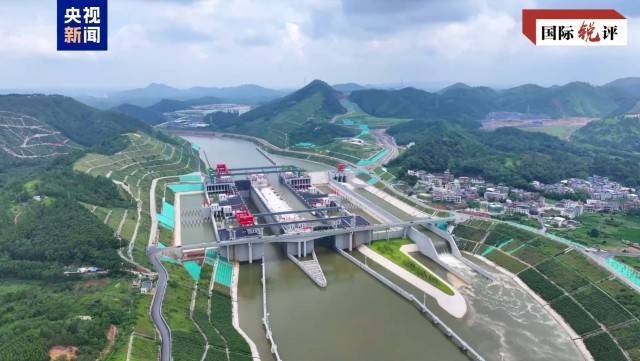
As the backbone project of the New Land-Sea Corridor in Western China, the Pinglu Canal can navigate 5,000-ton ships and is the canal with the strongest navigation capacity among similar canals in the world. Its construction has profound practical needs. From a domestic perspective, China’s southwest region lacks direct connections between rivers and seas, and goods exported to Southeast Asia need to go east around the sea, which greatly increases shipping costs. From an external perspective, China and ASEAN have been each other’s largest trading partners for many years, but high logistics costs have restricted the development of trade between the two parties. The Pinglu Canal was completed and opened to navigation, opening up the shortest water transport channel from southwest China to ASEAN, shortening the transportation distance between the southwest hinterland and ASEAN by more than 560 kilometers, reducing logistics costs by 18% to 30%, and saving more than 5 billion yuan in transportation costs every year. It can be said to have achieved the combination of “speed and province”.
How was such an achievement achieved? Xu Liping, director of the Southeast Asia Research Center of the Institute of Asia-Pacific and Global Strategy of the Chinese Academy of Social Sciences, told the International Review that this is mainly due to the support of China’s scientific and technological innovation strength and technological application capabilities, and also stems from China’s unremitting efforts to achieve mutual benefit and win-win through open cooperation; the navigation of the Pinglu Canal provides “Chinese experience” for the construction of global large-scale water conservancy and shipping projects. Pham Thanh Binh, Vietnam’s ambassador to China, believes that the opening of the Binh Lok Canal not only demonstrates China’s technical capabilities, but also reflects China’s determination to promote regional connectivity.
In recent years, China and ASEAN have continuously deepened economic and trade cooperation. China has remained ASEAN’s largest trading partner for 17 consecutive years. From January to August this year, the total trade value between China and ASEAN reached 5.95 trillion yuan, an increase of 20.6%, accounting for 17.1% of China’s total foreign trade value. After the Pinglu Canal is opened to navigation, how will it empower China-ASEAN cooperation?
A brand new water artery will first bring about cost reduction and efficiency improvement. After the Pinglu Canal is opened to navigation, there will be a two-way, cost-effective “golden channel” between China’s large market of more than 1.4 billion people and ASEAN’s large market of 670 million people. Ning Ziran, chairman of Guangxi Baise Xijiang Investment and Development Co., Ltd., made some calculations: Compared with traditional transportation methods, bulk goods can save 30% in single-ton waterway freight by using the Pinglu Canal logistics channel, and the overall transportation time is almost halved. This brings real benefits to enterprises.
For many ASEAN countries, the Pinglu Canal is their “hopeful channel” to break through development bottlenecks. Cambodian Ambassador to China Song Jiawei pointed out that after the canal is opened to navigation, Cambodian agricultural products can be exported to China more conveniently. Sompong Sigalem, Ambassador of Laos to China, said that as the only landlocked country in ASEAN, Laos has long been constrained by the lack of access to the sea for development. “The completion and commissioning of the Pinglu Canal has brought a new historic opportunity for Laos to break through its development limitations.”
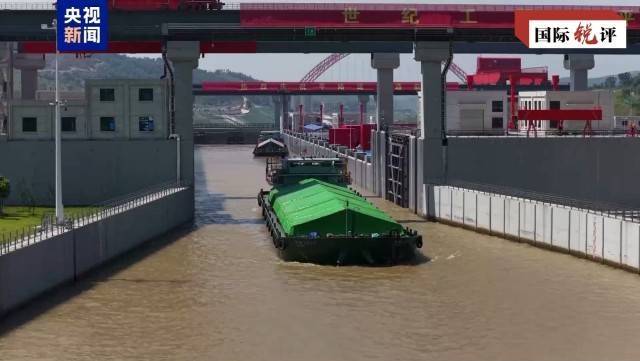
The canal is open and industry is booming. According to the China-ASEAN Free Trade Area Version 3.0 Upgrade Protocol, the free trade cooperation and regional economic integration process between the two sides will be expanded to emerging areas such as digital, green, standards, and production and supply chains. After the Pinglu Canal is opened to navigation, capital, technology, talent, labor and other factors from southwest China and ASEAN countries will further converge, driving the agglomeration of shipbuilding, logistics, processing trade and other port-side industries along the route, forming a new industrial belt and creating more jobs. The French Essen Group’s investment in the papermaking chemicals project in Nanning Liujing Chemical Industry Park is an example of foreign investment stepping up its deployment in the industrial belt along the river. Thailand Public Broadcasting and Television believes that the Pinglu Canal will expand the scale of cross-border trade and international trade, increase opportunities for supply chain connection between Thailand and China, and provide opportunities for Thai investors. Yu Hong, a senior researcher at the Institute of East Asian Studies at the National University of Singapore, pointed out that in the context of global supply chain restructuring and geopolitical tensions, the Pinglu Canal, as an open public good, reduces transaction costs and creates opportunities for common development.
More importantly, the Pinglu Canal creates a new “open hub” to the world. It connects rivers and seas to the south, Europe and Asia to the north, and is organically connected with China-Europe freight trains and rail-sea combined transport. It connects China-ASEAN cooperation and the joint construction of the “Belt and Road”, opening up a new pattern of regional opening up and further connecting the world. At the upcoming China-ASEAN Expo, it is “hard to find a candidate” in the international exhibition area, which reflects that the international community is optimistic about this new channel and is seizing new opportunities for cooperation. Jimmy, the Philippine Ambassador to China, believes that the Pinglu Canal is an important measure for China to promote in-depth global economic and trade cooperation. “In the long run, it will have positive significance for the entire region and even the world.”
The tide of the river is surging, and thousands of sails are racing against each other. At a time when changes in a century are accelerating, the Pinglu Canal connects the river and the sea, which not only improves the efficiency of the New Land-Sea Corridor in Western China, but also deepens the level of China-ASEAN connectivity and provides hardware support for building a closer China-ASEAN community with a shared future. It is a new channel to promote win-win cooperation between China and ASEAN, and it is also a new track for the world to share “China Opportunities”.