The plane landed in Antalya in the morning. The weather was clear and the sea breeze was comfortable. “A very beautiful Mediterranean seaside town.” This was Lin Yiyi’s first impression of Antalya. On November 8, Lin Yiyi arrived in Antalya, Türkiye, preparing to participate in the United Nations Climate Change Conference as a Chinese youth representative.
After walking out of the airport, Lin Yiyi was dragging two suitcases and carrying a backpack, preparing to take the tram to the city. The tram had started, and he was still about 50 meters away from the boarding point. Seeing that Lin Yiyi was still on his way, the staff quickly waved to him to hurry up, then turned around and shouted for the tram to stop, stopping the already started train almost with his bare hands, allowing him to board the train smoothly.
Arriving in the old city, Lin Yiyi met several elderly people who took the initiative to wave and say hello. He stayed in a hotel in the old town. The owner was very welcoming and the breakfast was huge. When he walked out of the hotel, the staff at the surrounding restaurants and souvenir shops often smiled and nodded to him. “Hospitality” became Lin Yiyi’s second impression of Antalya.
In Antalya in November, the temperature is still comfortable during the day and slightly cooler at night. The rainy season is about to begin and the sky is often covered with thick clouds. This city, located on the east coast of the Mediterranean Sea, has a typical Mediterranean climate with hot and dry summers and mild and rainy winters. With the end of the summer and autumn tourist seasons, Antalya ushered in an international event with a scale of more than 100,000 people.
On November 9, local time, the 31st Conference of the Parties (COP31) of the United Nations Framework Convention on Climate Change officially opened in Antalya and will last until November 20. This is the first time that the United Nations Climate Conference has been held in Türkiye, and it is also the first time that a Mediterranean coastal city has hosted this global climate governance event.
In 2026, extreme weather will once again become a common challenge faced by the world. Europe continues to be threatened by high temperatures and wildfires, many regions in North America, South America and Africa are experiencing droughts, floods and other disasters, and Southeast and South Asia are frequently experiencing heavy rainfall and tropical cyclones. In the Mediterranean region, which connects the continents of Europe, Africa and Asia, the challenges posed by climate change are becoming increasingly prominent: heat waves and wildfires in summer, and heavy rains and flash floods in autumn and winter.
At the same time, the region is warming at a rate far exceeding the global average, and challenges posed by ocean warming, coastal erosion, and water scarcity are becoming increasingly severe. The Secretariat of the Union for the Mediterranean calls COP31 a “homecoming COP”, hoping to draw the international community’s attention to climate challenges in the Mediterranean region.
Antalya, where the conference was held, has also become a window for the world to observe climate change: a city that attracts tourists with its pleasant climate and natural scenery is working hard to cope with the new challenges brought about by climate change.
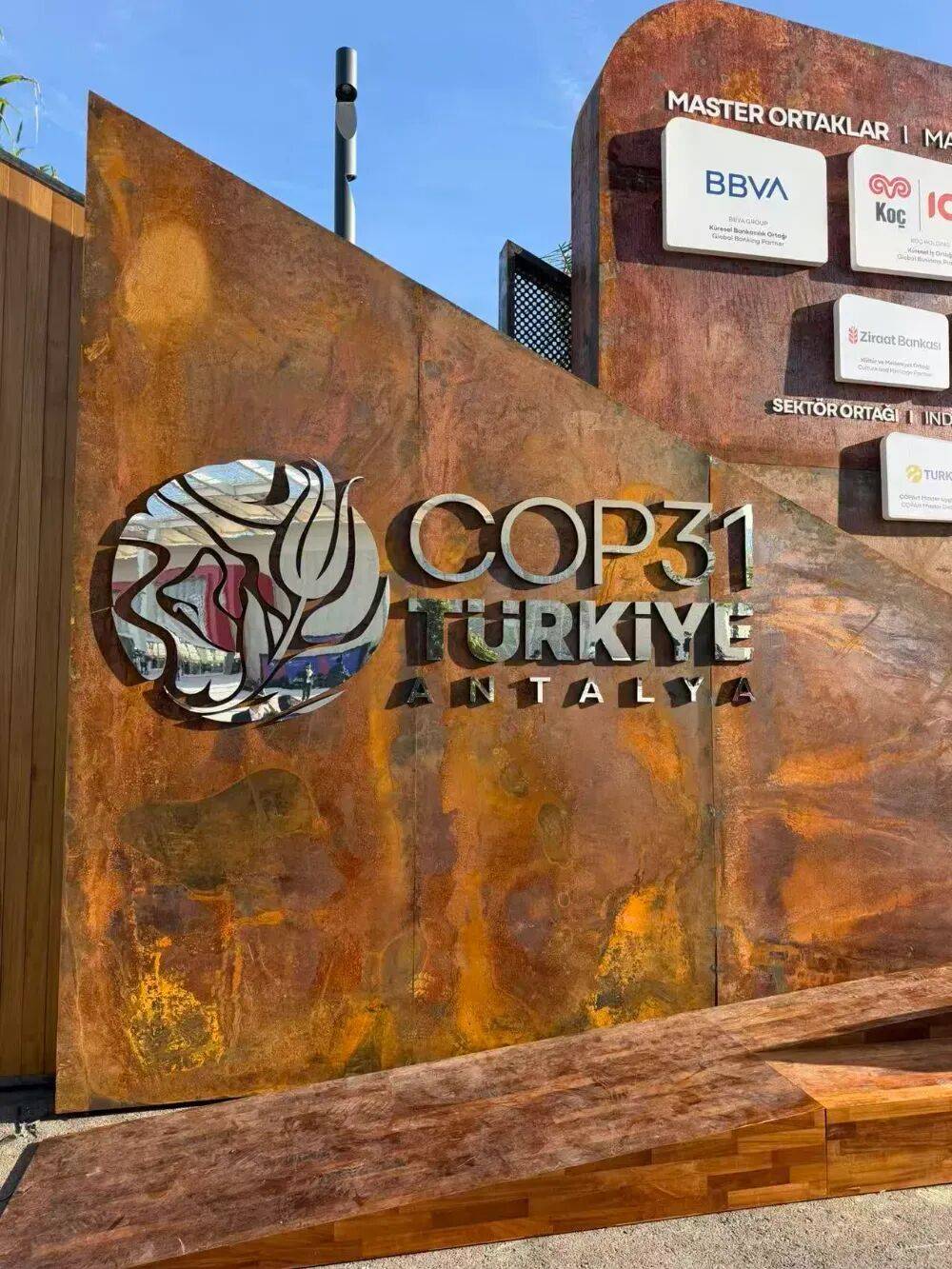
▲On November 9, COP31 opened in Antalya, Türkiye. Photo provided by interviewee
The Dilemma of “Paradise on Earth”
In the 2nd century BC, King Attalus II of the Kingdom of Pergamon sent people to find a “paradise on earth”, and finally chose today’s Antalya area and built a port city here. Since then, the Roman, Byzantine, Seljuk and Ottoman empires have left their historical mark here.
Today, the bright sunshine, white sandy beaches and azure waters make Antalya a famous seaside resort in Turkey, known as Turkey’s “Riviera” – a title usually used to describe the beautiful seaside resorts along the Mediterranean coast.
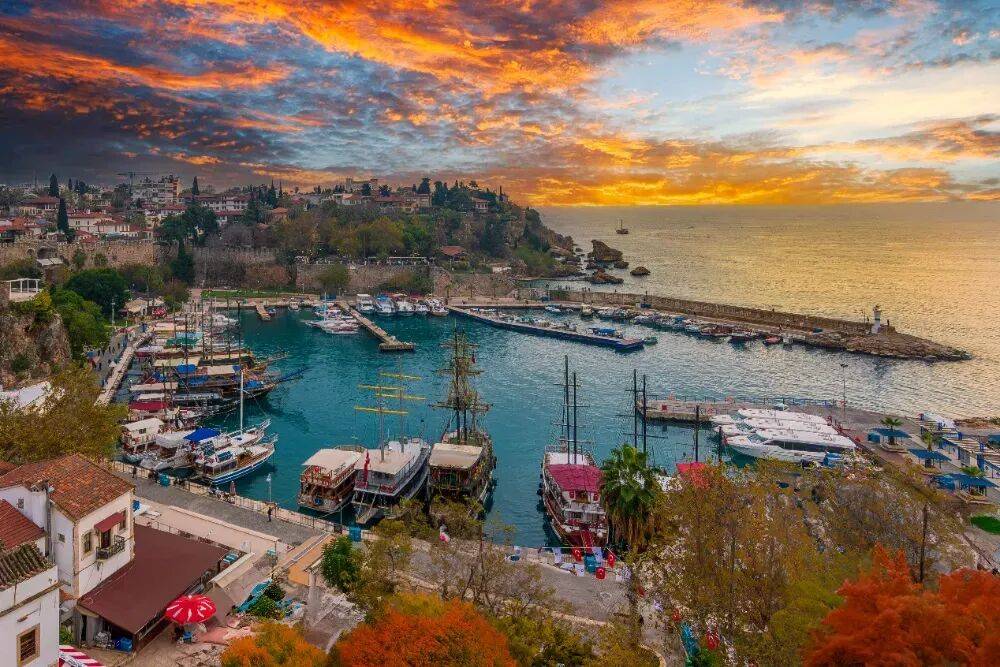
Tourism is one of Antalya’s most important economic pillars. In 2025, Antalya will receive approximately 17.57 million tourists, setting a new record. For this city, a stable climate, sufficient water resources and a beautiful natural environment are not only the conditions for the development of tourism, but also an important foundation for the local economy.
However, the “Sunshine City” between the mountains and the sea is increasingly being hit by extreme weather. Research shows that between 1979 and 2024, Antalya’s average annual temperature increased by about 2°C, and annual precipitation decreased by about 25%. The combination of rising temperatures and changes in precipitation has caused the local area to face more complex water resources management issues.
In February this year, Türkiye’s Mediterranean and Aegean Sea regions suffered continuous heavy rainfall, affecting many provinces including Antalya. Rivers are overflowing and water levels in some reservoirs are close to warning levels. Roads in the Drem area of Antalya were flooded, vehicles were trapped, and infrastructure was severely damaged. The local mayor said that four villages suffered heavy rainfall that had not been seen in a century.
Extreme weather also impacts agricultural production in Antalya. As heavy rainfall, storms, hail and tornadoes hit one after another, a large number of local farmland was damaged, greenhouses were destroyed, and crops such as tomatoes and peppers were affected. Preliminary estimates put the loss at more than 1.5 billion Turkish Lira, and the final loss may reach 3 billion Turkish Lira.
Agriculture is another major economic pillar of Antalya. The warm Mediterranean climate, long frost-free period and relatively abundant sunshine make the area one of the areas with the highest concentration of facility agriculture in Türkiye. Plastic greenhouses are scattered all over the surrounding countryside, where vegetables and fruitsFresh cut flowers and flowers are the main agricultural products, and Antalya is also known as Turkey’s “Fruit and Vegetable Warehouse”.
But agricultural production is highly dependent on stable water sources, temperature and precipitation. Summer high temperatures, long-term droughts, groundwater depletion, and sudden heavy rainfall may all affect greenhouse agriculture and agricultural product supply. Especially in summer, when the tourism industry enters its peak season and agricultural irrigation demand is also at a high level, the two major industries compete for water resources at the same time, further increasing the city’s water supply pressure.
“In recent years, Turkey has been increasingly threatened by extreme heat, long-term drought, water shortages, wildfires, and heavy rainfall that may trigger flash floods and landslides.” Ali Danandeh Mehr, a professor of environmental engineering at Bilim University in Antalya, Turkey, said in an interview with a reporter from the Beijing News that in the past ten years, hundreds of wildfires have occurred in Turkey.
In his view, Antalya faces particularly complex climate risks. The Mediterranean climate itself is characterized by concentrated precipitation in winter and long-term dryness in summer, while local tourism and agriculture have strong demand for water resources. As temperatures rise, the contradiction between water supply and demand becomes more prominent.
Meir said that Antalya is highly dependent on coastal resort tourism, and facilities such as hotels, swimming pools, gardens, and restaurants need stable water supply. Severe drought may affect the normal operations of resorts and cause some natural landscapes to dry up; high temperatures and dry weather will also increase the risk of wildfires and affect tourists’ willingness to travel.
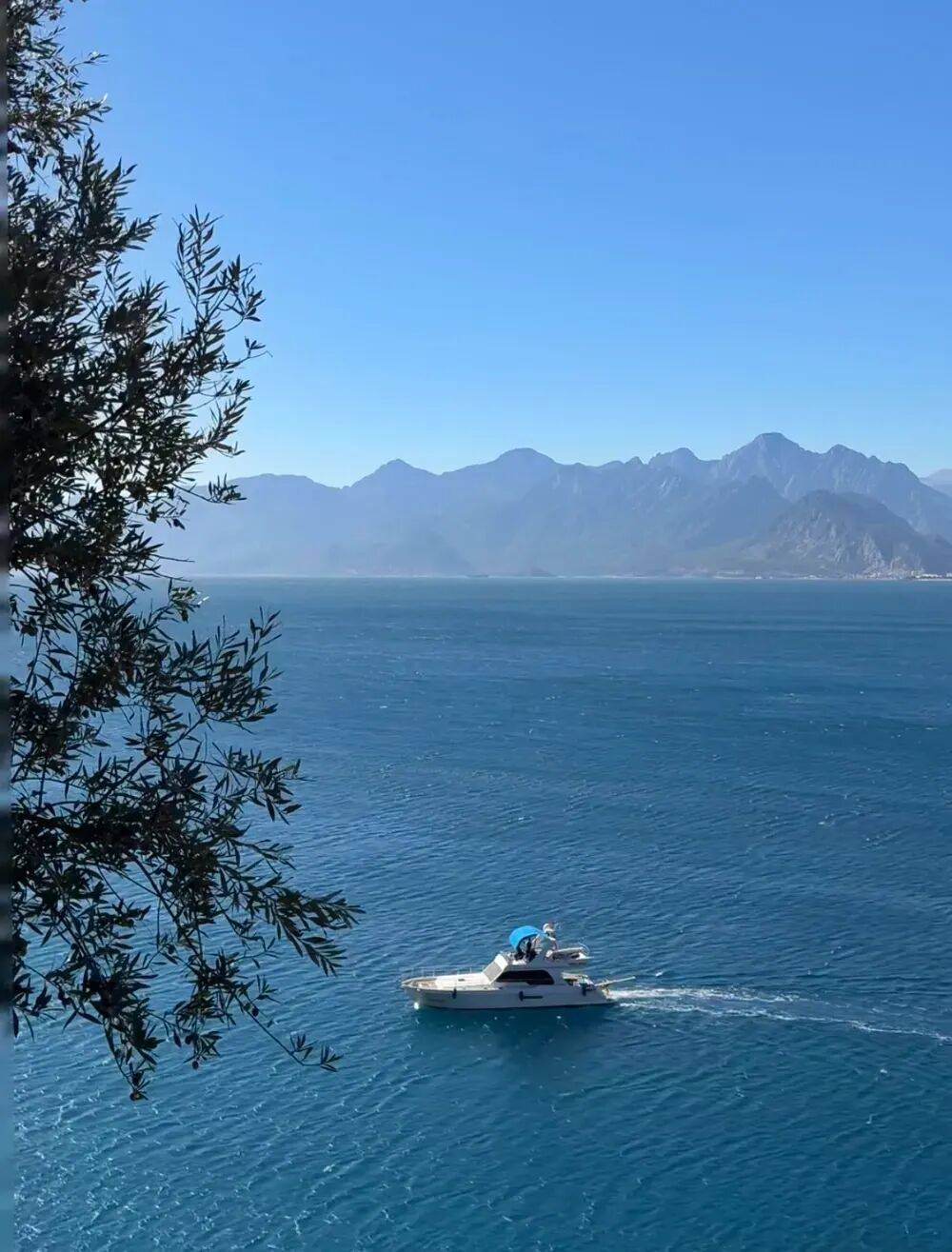
▲Antalya seaside. Photo provided by interviewee
For Meir, who has lived in Antalya for more than ten years, the effects of climate change are very real. Although he is not used to the hot and humid summers, he has been enjoying the comfortable climate from autumn to spring. However, Antalya’s summers have become increasingly hotter in recent years, with extreme rainfall and sudden floods often occurring in autumn and winter. “Ten years ago, these types of incidents were quite rare.”
In fact, a wildfire in September this year brought the climate risks faced by Antalya into the international perspective. September 7, AnnA wildfire broke out in the Talia Aksu region. Thousands of people suffered power outages due to the fire. Thick smoke and ash once reached the city center. It took firefighters 67.5 hours to bring the fire under control.
What is quite dramatic is that the area where the fire broke out is only a few kilometers away from the Antalya Exhibition Center where COP31 is held. Arguably, international climate negotiations have not yet begun, and the city has already used a real fire to demonstrate how climate risks enter people’s daily lives.
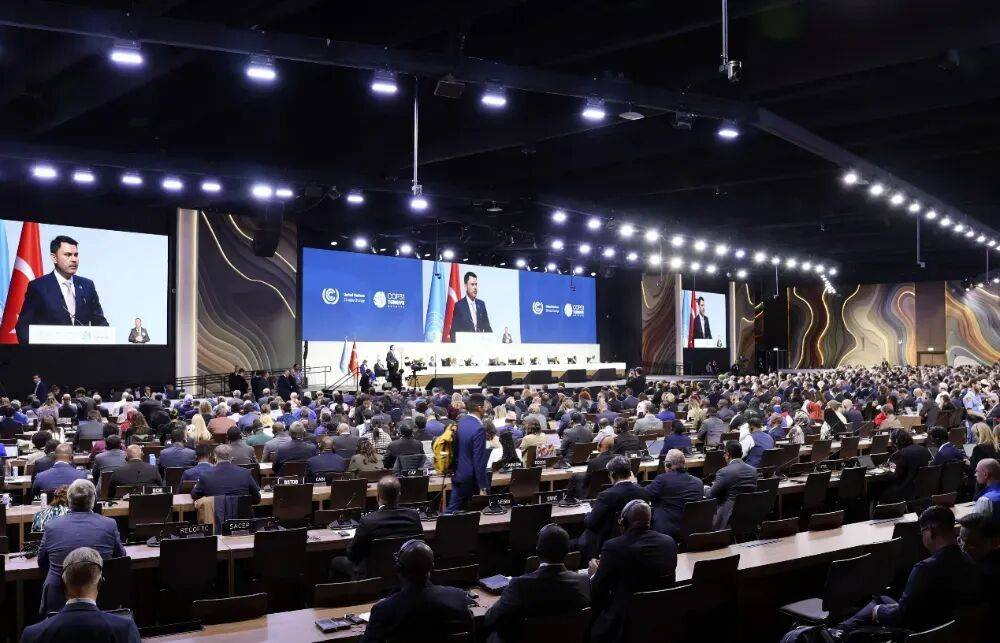
▲On November 9, COP31 opened in Antalya, Turkey. Murat Kurum, Minister of Environment, Urbanization and Climate Change of Turkey, delivered a speech. Source: IC photo
From the Mediterranean to the Himalayas
Antalya’s climate dilemma is a microcosm of the climate change that different parts of the world are experiencing. Saeed Haider Kazmi from Pakistan’s Azad Kashmir region is concerned about the climate challenges facing fragile mountainous areas.
Kazmi is an international development practitioner and sustainable development advocate, currently involved in the work of the Central Asia-Afghanistan-Pakistan Sustainable Development Initiative, the Youth Sustainable Development Goals Forum and other organizations. He came to Antalya with a clear goal: to bring the climate challenges faced by vulnerable mountain communities into the international climate discussion.
Azad Kashmir is located in the western Himalayas and is rich in mountains, forests, glaciers and water resources. Glaciers, permanent snow and seasonal snow are distributed in some high-altitude areas. These ice and snow resources are important water sources for rivers, mountain springs and agricultural irrigation.
But these natural resources are increasingly threatened by climate change. As temperatures rise, ice, snow and glaciers melt at an accelerated rate, which increases the risk of sudden rises in river water levels, easily triggering flash floods, mudslides and landslides. For mountain residents,These disasters not only damage farmland and houses, but may also threaten life safety.
Severe floods in the Himalayas this year have once again drawn attention to the climate vulnerability of mountainous areas. In August this year, a glacier collapsed in the Himalayan mountains bordering Nepal and Tibet, China, causing flash floods. The disaster killed thousands of people and was one of the deadliest single natural disasters in the world in 2026.
Kazmi told the Beijing News reporter that by participating in the conference, he hopes to introduce the climate challenges faced by Kashmir and Pakistan to the international community, establish partnerships with COP31, find climate funding and investment opportunities, and promote the connection between local actions and the global climate agenda.
Mountain issues should not only receive attention after disasters occur, he said. Glacier monitoring, early warning, infrastructure construction and cross-border water resources cooperation all require long-term investment. “Climate change is not only an environmental issue, but also related to survival, economic development, social equity and the future of the community.”
From the Mediterranean coastal city of Antalya to Azad Kashmir in the western Himalayas, the impacts of climate change are already being felt around the world.
On November 9, the opening day of COP31, United Nations Secretary-General Guterres warned that the world has entered a “new era of extreme climate.” He pointed out that global climate records are constantly being broken, and the human and economic losses caused by climate disasters continue to increase. Faced with increasingly severe climate risks, the international community must accelerate action.
The “Global Climate Status Report 2026” released by the World Meteorological Organization that day provides more intuitive data: from January to September 2026, the global average temperature was approximately 1.47°C higher than pre-industrial levels. Overall, the period from 2023 to 2026 is expected to be the four hottest years on record.
The report also pointed out that global ocean heat content continues to be at historically high levels, and sea surface temperatures are also abnormally high. A more pressing short-term risk is that El Niño, which has been strengthening since August, is expected to peak in December and could become one of the strongest events on record, pushing up global temperatures by an additional 0.1–0.2°C and exacerbating extreme weather risks until early 2027.
▲On November 9, COP31 opened in Antalya, Türkiye. Photo provided by interviewee
At almost the same time, the journal Nature Climate Change published a new study on global regional warming. The research team combined historical temperature observations and multiple climate models to analyze 46 regions classified by the IPCC (United Nations Intergovernmental Panel on Climate Change).
The study found that by 2025, various regions around the world have experienced 90% to 94% of the expected regional warming under the 1.5°C global average warming scenario; and 65% to 76% of the expected regional warming under the 2°C global warming scenario. ThatAmong them, the warming in the Arctic region is particularly obvious.
Zhang Xuebin, a co-author of the paper and a senior scientist at the Canadian Ministry of Environment and Climate Change, told the Beijing News reporter that the Paris Agreement sets the goal of controlling the global average temperature increase within 2°C of pre-industrial levels, and strives to limit it to 1.5°C. However, global warming of 1.5°C does not mean that all regions will only warm by 1.5°C. In fact, the temperature increase in many regions has far exceeded the global average.
Zhang Xuebin believes that this study reminds people that climate change is no longer just a potential risk in the future, but an ongoing reality. For the ongoing COP31, the international community not only needs to continue its efforts to control global warming, but also must pay attention to the regional climate changes that have occurred and the actual ability of countries to adapt to climate change.
▲A banana stand outside the COP31 venue. Photo provided by interviewee
When young people enter COP
It is about 15 kilometers from the hotel where we are staying to the Antalya Exhibition Center, the COP31 venue. Huang Shouxin, an international student from China, usually takes the local tram back and forth, which takes about an hour one way.
Huang Shouxin is currently studying law at Durham University in the UK. As a young student representative, he and more than ten teachers and classmatesWe came to Antalya together. He hopes to gain a close understanding of how global climate governance operates from the perspective of students and young observers, and how different countries, international organizations, academia and civil society organizations communicate around climate issues.
At the United Nations Climate Conference, in addition to government officials, experts and scholars, entrepreneurs, and climate activists, young people can also be seen everywhere. For the younger generation, climate change is both a topic they have been exposed to since childhood and a real challenge they are currently facing. There is also increasing participation of young people in COP meetings.
This is the first time for 19-year-old Huang Shouxin to come to the United Nations Climate Conference. His concern about climate change comes not only from his major, but also from his personal experience of the high temperature heat wave in Europe this summer.
“This summer, the UK and many countries on the European continent have experienced sustained high temperature and heat waves. This has made me realize more and more that climate change is no longer just the data about global warming in the news, or a distant environmental problem, but a reality that is closely related to us and is having a serious impact on daily life and social economy.” Huang Shouxin told the Beijing News reporter.
At the scene, what he most directly felt was the complexity and diversity of climate issues. “Everyone is talking about climate change and climate action, but everyone has their own priorities and interests.” Especially on issues such as energy transition, financial support and development responsibilities, the practical considerations behind the parties are different.
▲COP31 China Corner. Photo provided by interviewee
At the same time, as a youth representative, 27-year-old Lin Yiyi has participated in the United Nations Climate Conference for the third time. Lin Yiyi is currently studying for a PhD in earth and planetary sciences at Macau University of Science and Technology, while running a youth climate education project.
His first COP will be COP28 in Dubai in 2023. At that time, he attended and spoke as a representative of Chinese youth. That experience brought him into close contact with global climate governance for the first time, and also prompted him to think about how to bring ideas from international conferences back home and translate them into concrete actions.
After returning to China after COP28, Lin Yiyi and her partners participated in the “Movers4Climate Green Rural Youth Action” project of the United Nations Development Programme. For two consecutive years since then, they have carried out climate education support activities in Yucun, Zhejiang, Maying, Anhui and other villages, bringing knowledge on sustainable development and climate change into rural communities.
From COP28 in Dubai, to COP29 in Baku, Azerbaijan, to COP31 in Antalya, Turkey, Lin Yiyi’s three participation experiences also constituted his process from a young climate issue participant to a practical promoter. “I hope to bring what I saw and learned at international conferences to rural areas in China.” Lin Yiyi told the Beijing News reporter.
When he came to Antalya this time, he mainly focused on two directions: children and youth, and science and technology. During the conference, he plans to participate in relevant side events and discussions in Blue Zones and Green Zones, including events organized by UNICEF’s Office of Global Research and Foresight, the World University Alliance on Climate Change and other organizations.
“On the one hand, we hope to share our experience in promoting sustainable education in rural China over the past two years with our global youth partners, so that we can learn from each other; on the other hand, I also hope to explore the application of satellite imagery in climate change monitoring and response along my professional research direction.”
In his view, the development and application of science and technology are indispensable means to deal with the climate crisis. “Floods, wildfires, sea level rise, and forest area reduction are issues often mentioned in the field of climate change, all of which are inseparable from the monitoring of environmental indicators. These monitoring often require the use of data from satellite remote sensing images, and are inseparable from the development and application of science and technology.”
With the rapid development of artificial intelligence technology, how to apply AI to climate action more efficiently, safely and fairly has also become a direction that Lin Yiyi is paying attention to. However, after participating in COP three times in a row, he gradually realized that the global sharing of science and technology is not a matter of course.
In his previous two participations, he met many representatives from the least developed countries. When communicating with them, Lin Yiyi discovered that the same technical problem may face completely different practical conditions in different countries.
“For example, when we conduct scientific research, we naturally use our own country’s satellite data. But when they asked ‘how to obtain satellite data,’ I realized that many least developed countries do not have their own satellite data at all, and there is a lack of professionals in related fields.”
This prompted Lin Yiyi to rethink the role of technology in global climate governance. “They do not have the opportunity to independently rely on scientific and technological means to solve their country’s climate problems.” He said that these exchanges made him pay more attention to the global sharing of satellite data and science and technology.
On the first day of COP31, Lin Yiyi also memorized a Turkish vocabulary:Imece, meaning solidarity, mutual assistance, and sharing joys and sorrows. “I think this is also the concept that COP has always advocated. The climate crisis requires the cooperation of people all over the world, and no country is immune to its impact.”
“Implementation” is more important than commitment
“We hope that COP31 will become a climate conference that truly focuses on implementation. We hope to achieve practical results.” At the opening ceremony on November 9, local time, Murat Kulu, Chairman of COP31 and Minister of Environment, Urbanization and Climate Change of TurkeyMu was very loud.
Kurum positioned this COP as a conference about “implementation”, hoping to bridge the gap between the commitments at the negotiating table and the actual improvements in ordinary people’s lives, so that climate action can ultimately be reflected in infrastructure, farmland and household energy bills.
But Huang Shouxin was a little discouraged by the transportation arrangements for the conference. He said that the overall transportation of the conference was very chaotic. The most convenient tram ran every 20 minutes on average, and local residents had to squeeze in. Many participants who lived a few stops behind the tram could not get on the bus at all and had to wait and wait. “This also caused a lot of trouble to local residents.”
“The conference also provides shuttle buses, but the stops are hard to find and the buses are few and far between. When there is a traffic jam, it takes two hours to get there.” When talking about the transportation arrangements for COP31, Huang Shouxin was very helpless. “Some participants left at 5:55 in the morning to avoid traffic jams.” He said that what is even more exaggerated is that he heard that it took someone nearly seven hours to get from the hotel to the blue zone of the venue.
▲On November 9, vehicles drove under a viaduct near the COP31 venue in Antalya, Türkiye. Source: IC photo
But he still hopes that COP31 can promote climate action in various countries. “In the past few years, the international community has proposed many climate goals and agreements, but few have been implemented.” Huang Shouxin said, “For me, what really matters is not what countries said at the conference, but whether these commitments can ultimately be implemented into the lives of ordinary people.”
This is also Kazmi’s expectation. He said his biggest concern is that the gap between climate commitments and actual action is widening, especially for climate-vulnerable communities and developing countries that often struggle to receive adequate support. “Pakistan, for example, contributes relatively little to global greenhouse gas emissions but suffers from severe consequences of climate change.” Therefore, he looks forward to more practical support reaching those communities most in need.
The importance of “implementation” has long been recognized. At last year’s COP30, the Brazilian presidency expressed the hope that this would be a “COP about implementation.” At COP28 in Dubai, United Arab Emirates, in 2023, and COP27 in Sharm El Sheikh, Egypt, in 2022, “implementation” has also become one of the keywords.
In fact, since the convening of COP1 in 1995, the adoption of the Kyoto Protocol in 1997, and the conclusion of the Paris Agreement in 2015, global climate governance has gradually formed an institutional framework with emission reduction commitments, climate financing and international cooperation as its core. In recent years, as climate change has become more visible and perceptible, issues such as loss and damage and climate adaptation have also become the focus. However, when it comes to global climate governance, actions fall far short of promises.
Simon Steel, Executive Secretary of the United Nations Framework Convention on Climate Change, said at the opening ceremony that the current progress in global climate action is far from enough and the results are far from fair. Therefore, in addition to sending a signal of commitment, this conference must also vigorously promote solutions, break down existing global goals and national plans into concrete steps, and implement practical solutions.
This conference adopts the “double-chairman” model for the first time. Türkiye serves as the chair and is responsible for promoting global climate action issues; Australia serves as the negotiating chair and leads the formal negotiations. This means that this year’s “action agenda” and formal negotiations will be advanced in parallel.
In terms of the specific agenda, the Turkish presidency has proposed two flagship plans: one is the “Climate Implementation Bridge”, which hopes to build a connection channel for climate projects and investors; the other is the “35 by 35” global electrification initiative, which proposes to increase the proportion of electricity in global final energy consumption to 35% by 2035. This is regarded as a key starting point to implement the energy transition from abstract goals to reality.
Chris Bowen, the chairman of the negotiations and Australian Minister of Climate Change and Energy, focused on the “last mile” of financing. He said that countries that need climate finance the most receive the least, and he hopes that this conference will make the disbursement of funds faster, simpler and more equitable.
At COP29 in Baku, the parties agreed to provide developing countries with a climate financing target of at least US$300 billion per year by 2035, with a total scale of US$1.3 trillion, but how to realize it in Antalya and clear the disbursement pipeline is still a big problem.
As of November 11, the first week of formal negotiations at COP31 has begun, with climate finance, global adaptation goals, loss and damage, and just transition becoming the focus of all parties. From the 11th to the 12th, the COP31 Leaders Summit was also held at the Antalya Exhibition Center, hoping to inject political momentum into the conference.
It is worth noting that before the arrival of the United Nations Climate Conference, Antalya residents have already held their own climate conference. From September to October this year, the Turkish NGO Yuva Association organized a climate citizens’ meeting, inviting 50 residents from five central urban areas of Antalya to participate in five discussions, focusing on the impact of climate change on urban water resources, agricultural irrigation and tourism water.
On November 5, the Assembly issued a Citizens’ Declaration on the future of urban water resources. The declaration makes recommendations such as promoting smart irrigation and drip irrigation technology, conducting climate and water resources education in schools, strengthening groundwater monitoring and implementing rainwater harvesting. Participants also pledged to monitor daily water consumption, recycle domestic wastewater, and promote water conservation at a social level.
This small citizens’ meeting echoed the global climate conference held in Antalya. At the COP31 negotiation table, representatives from various countries discussed global climate financing goals, emission reduction paths, and international responsibility sharing; during discussions among local residents, the issue became more specific: how to provide a seaside city with enough water.
Antalya was once called “Paradise on Earth”. Today, the city welcomes climate negotiators from around the world while confronting the realities of heat, drought, wildfires and flooding. For COP31, which is expected to be “implemented”, the real test may not be how many new commitments can be written on the negotiating table, but whether these commitments can ultimately reach those who are working hard to adapt to climate change.
Related Reading
- Being “black” for no reason, living a life of being watched, Brother Dayi and his “traffic past”2026-11-13
- With El Niño coming, will coffee become more expensive next year?2026-11-13
- Latest research: Obesity diagnosis cannot be based solely on weight, BMI has natural flaws2026-11-13
- Why is it difficult to break the deadlock in the tripartite talks between Russia, the United States and Ukraine?2026-11-13
- The first in the country! How to learn “unpopular secret skills”? Who will teach? Dean’s interpretation2026-11-12