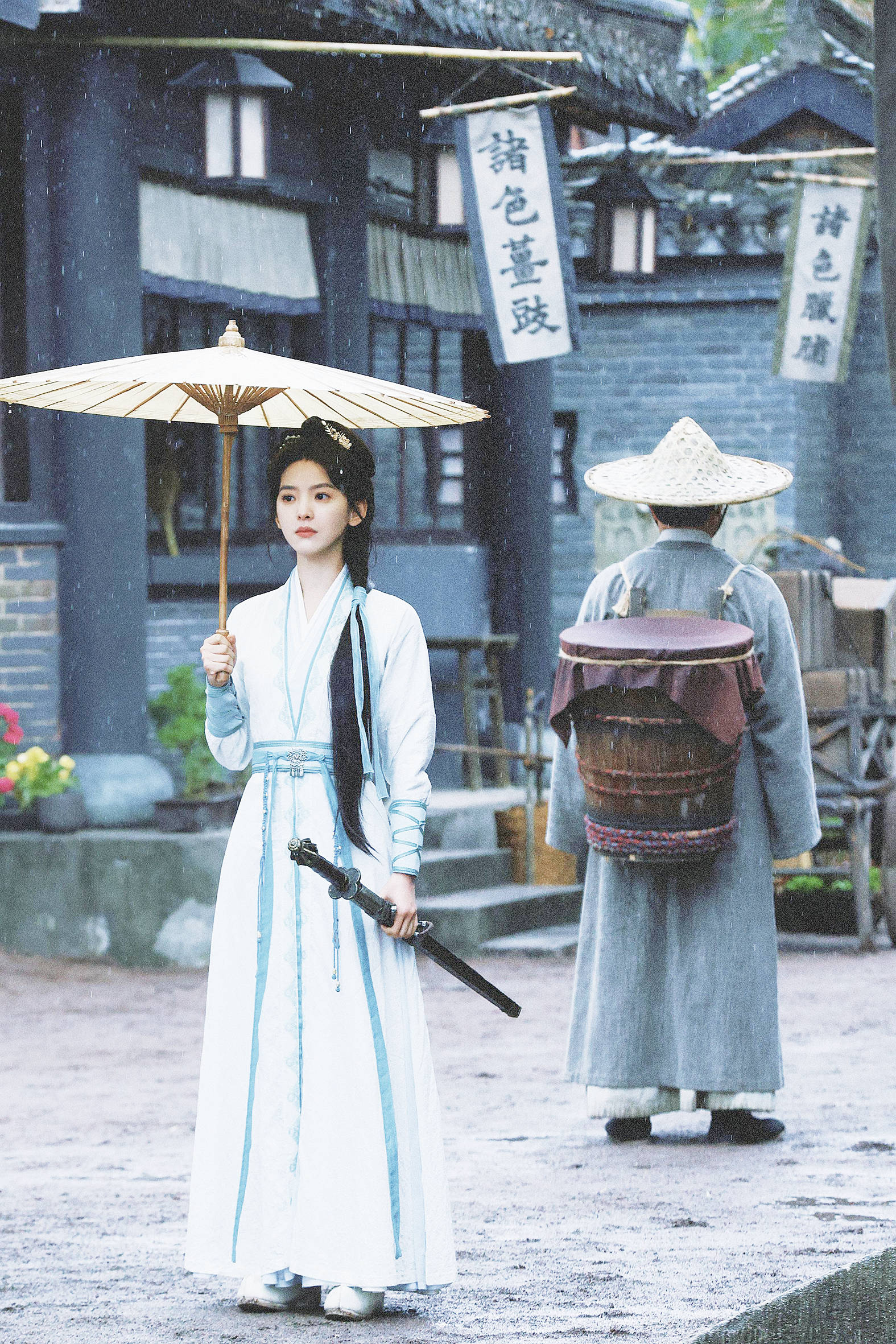
[Global Times Special Correspondent Luc] In recent years, traditional martial arts-themed film and television works have been making a comeback: from the star-studded “Swordsman: The Wind Rises in the Desert” released during the Spring Festival, to the recent eye-catching “Snow Cup: Become Famous”, as well as dramas such as “Raining Bell” and “Golden” and the re-released classic “Swordsman 2: The East is Undefeated”, real-life hard-core “hand-rubbing martial arts” can be seen on the big screen of movies and the small screens of mobile phones. At a time when artificial intelligence (AI)-generated video technology is developing rapidly and generating characters in various scenes is becoming increasingly low-cost, how “new martial arts” works can be inherited and innovated while persisting is a matter of concern to the majority of film and television people, movie fans and martial arts fans.
“The interweaving of temples and rivers and lakes is very solid”
In the past month, word-of-mouth about a new niche martial arts film is spreading among movie fans: “Snow Cup: Become Famous” starring Pan Binlong, An Zhijie and others was well received after premiering at the Pingyao Film Festival at the end of September, and was launched on the video network platform on October 16. The film is adapted from the long-running martial arts novel “A Cup of Snow: Night Rain Strikes the Golden Lotus”. It tells the story of the Southern Song Dynasty when Qin Hui came to power, the Jin envoy was murdered in Qilipu, and the civil servant Shen Fang (played by Pan Binlong) was regarded as the murderer. Tiqi hunted for the murderer, and the 280,000 taels of silver attracted people from all walks of life to round him up. The masters died one after another. After many parties fought, everyone realized that someone seemed to be deliberately setting up a trap. The film is produced by Wei Junzi, who has studied martial arts and Hong Kong films for many years, and is directed by Liu Wenpu, who has participated in many martial arts films such as “Hand Covers the Sky” and “Crazy Tiger Dangerous City”. The film currently has a Douban score of 7.5, slightly higher than “The Daredevil: The Wind Rises in the Desert”.
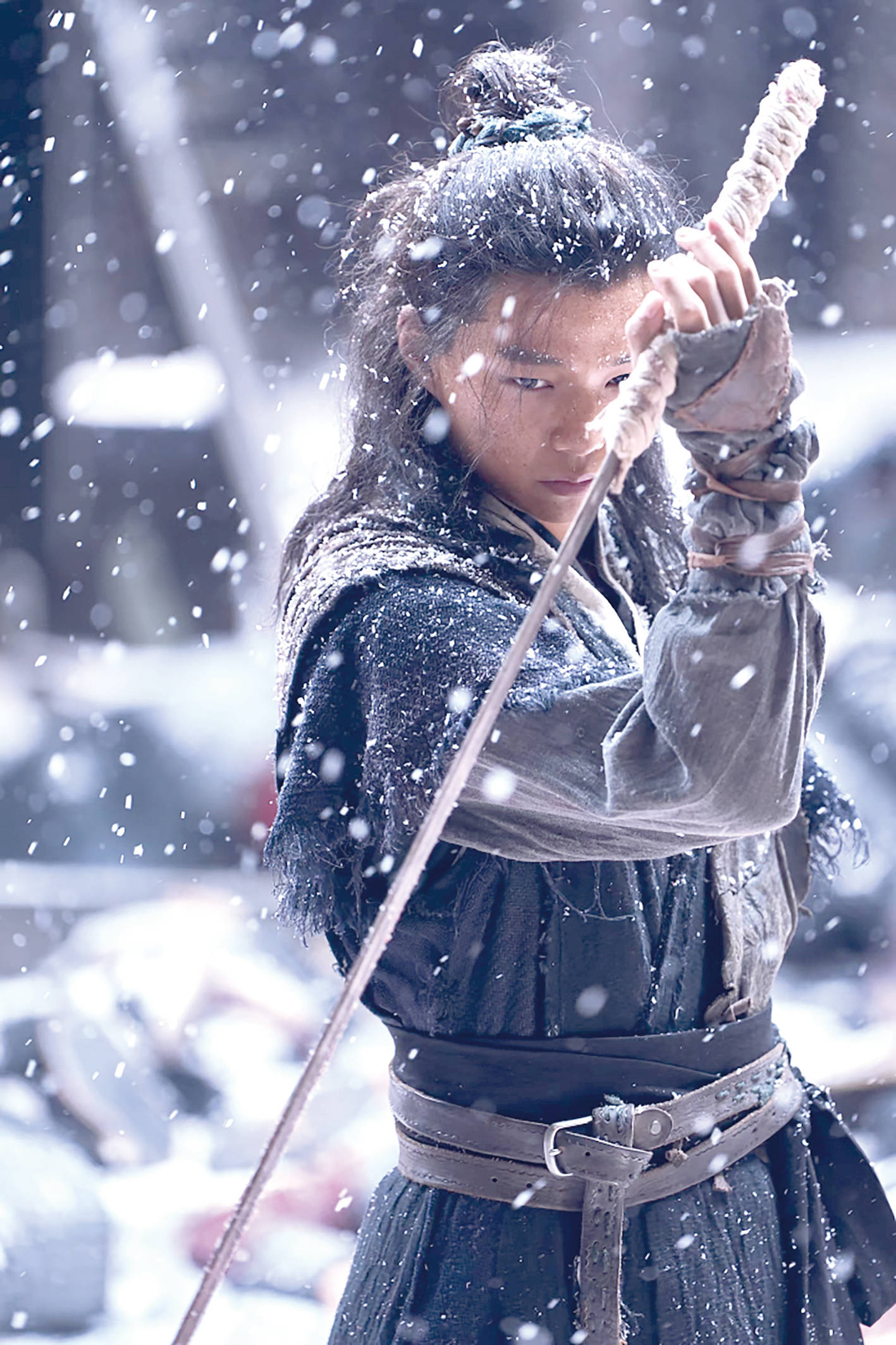
For some viewers, “Snow Cup: Become Famous” is an unexpected surprise. “I didn’t expect that Pan Binlong could also play martial arts.” “The interweaving of temples and rivers and lakes is very solid.” The historical background of the film and the relationship between Yue Fei and Qin Hui are also reminiscent of Zhang Yimou’s “The River is Red”. The film also features old faces from Chinese martial arts films such as An Zhijie and Chunyu Shanshan, as well as new-generation action actors with martial arts skills such as Liu Fengchao. Based on a solid script, experienced martial arts instructors and actors who can “live and fight”, “Snow Cup: Fight to Fame” brings the hard-core texture of Chinese martial arts films, giving people more confidence in this traditional film and television genre.
The inheritance of “Xia” and the innovation of “Martial Arts”
Martial arts films are a highly recognizable genre among Chinese films. From the early Shaw Brothers martial arts and Bruce Lee to the works of Jet Li, Donnie Yen and others, they all occupy a place in the world of cinema. Around 2000, “Crouching Tiger, Hidden Dragon” directed by Ang Lee won an Oscar and gained more overseas fans. Internationally renowned directors such as Quentin Tarantino are also long-time fans of Chinese martial arts films and have produced tribute works such as “Kill Bill”. Kitao Sakurai, the director of the Hollywood action film “Street Fighter” currently being released in North America, admitted that he has been attracted to martial arts films since he was a child. Singaporean director Yang Guorui also integrated his admiration for classic martial arts films such as “Shushan: The New Swordsman of Shushan” and “Ashes of Time” into his new film “The Moon Is Now”. When “Kill Bill: The Legend of Blood” was released in China in September this year, the heroine Uma Thurman learned martial arts from “White Eyebrow” played by Liu Jiahui, which once again made people feel the profound influence of martial arts blood.
Filmmakers such as Yuen Woo-Ping, Jet Li, Tony Leung Ka-fai, and Wu Jing have been persevering, bringing back the martial arts style with “Guardian: The Wind Rises in the Desert” and also bringing out newcomers such as Chen Lijun and Yu Shi. And former “martial arts child stars” like Xie Miao and Shi Xiaolong are now fueling the revival of martial arts films in their own ways. In recent years, in new martial arts works such as “The Defiant Man” and “The Knife Catcher”, Xie Miao and Shi Xiaolong have gradually developed their own styles and developed into overseas markets, gaining international popularity. In addition, Liu Fengchao, who had an outstanding performance in “Xiuchundao 2”, has also been quite active in martial arts works in recent years.
In addition to the big screen, there are also many martial arts dramas that attract more audiences on the small screen. Works such as “Young Song Xing”, “Swordsman in the Snow”, and “Legend of the Magpie Sword” all show the possibility of theme innovation and genre integration. This year’s “Yulin Ling” and “Golden” also explore modernity in traditional materials. “Yulinling”, which was launched in May, borrows the traditional setting of “Three Heroes and Five Righteousness” to tell the story of Nan Xia Zhan Zhao who foiled the conspiracy of the King of Xiangyang in the government and the public, and in the Jianghu. Some settings in the play have a “Liang Jingu” connotation. “Golden”, which was launched in August, is based on Gu Long’s late work “Eagle of the Earth”, which revolves around “three hundred thousand taels of gold for escorts”, and uses the heroine played by Xin Zhilei to bring a new perspective to satisfy the current audience’s taste.
The core of martial arts movies still needs to be “rubbed by hand”
Today’s “opponents” in the martial arts genre are not just immortals and ancient puppets, but also the ever-changing AI. There have indeed been a lot of AI-generated martial arts short films recently. The tone and texture of the images, the action postures of the characters, the editing of the shots and the soundtracks all look very much like the works of Shaw Brothers’ martial arts from the 1960s and 1970s, and the works of Tsui Hark and Cheng Xiaodong from the 1980s and 1990s. However, although AI is good at generating scenes and atmosphere, the core action design and chivalrous sentiments of martial arts films still require real people to “hand rub” them.
Good martial arts movies not only have gorgeous moves, but also a sense of power that can be felt with “punches to the flesh”. The actors’ real body collisions, breathing when taking apart moves and other details are difficult to simulate with the current capabilities of AI. In addition, if AI is used in screenwriting, it is easy to fall into clichés – although it is convenient to combine materials from old martial arts, it will also make the “chivalry” stereotyped and lack innovation. For film and television producers, it is necessary to stick to the creative side. Action design and character shaping are controlled by people. The new generation of martial arts instructors and action actors also need to be cultivated and passed on. AI can be used more as tool-based assistance such as scene preview, action preview, and post-production special effects, or it can be used in multi-language translation and dubbing during overseas promotion, as well as derivative game peripherals and cultural communication.
Related Reading
- The first in the country! How to learn “unpopular secret skills”? Who will teach? Dean’s interpretation2026-11-12
- The price of refined oil may drop for the sixth time this year. Filling up a tank will cost about 15 yuan less2026-11-12
- “Token hoarding” became a hot word in the “Double 11” circle, and after Li Jiaqi, Luo Yonghao also came to sell2026-11-12
- Does the United States really not want to fight Iran anymore?2026-11-11
- Fireballs are scattered around Shijiazhuang. How much is the value of “visitors from outside”?2026-11-11