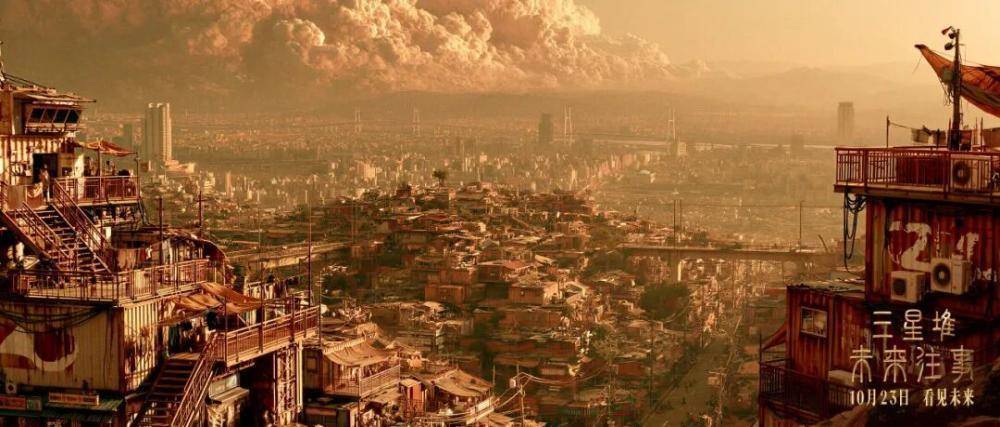
“Sanxingdui: Days of Future Past” was officially released on October 23, nearly half a year after Bona Pictures revealed that the film had won the “Dragon Label”.
According to the source of the photo, this is “the first theatrical film in China to be produced using AI technology and obtain a public release license from the National Film Administration”: the film is 100 minutes long, all images are generated by AI, the characters are original digital images, and the final creation is still judged by humans.
The capital market reacted first: after the film was announced on September 27, Bona Pictures’ stock price hit the daily limit the next day; on the day of release, the stock price closed up 4.41%.
The other end is the box office: as of 13:30 on the 24th, the film’s comprehensive box office was about 498,000 yuan, accounting for about 1.0% of the box office and about 3.0% of the scheduled films.
From short videos, micro-short plays to theatrical feature films, AI imaging is spanning different content scenarios. The film received the Dragon Award, proving that AI-led production methods can complete the compliant delivery of theatrical films; and the box office after its release directly tests the market acceptance of the work.
Whether AI movies can generate sustained consumption depends on how the stories and big-screen experiences, which can often last for hundreds of minutes, convince the audience.
From live-action movies to AI feature films
Looking at the timeline, the starting point of this AI movie is actually a live-action movie project that was stopped due to cost issues.
In a recent interview with the media, Jiang Defu, CEO of Bona Pictures and chief producer of the film, revealed that the company initially wanted to make a live-action version of the Sanxingdui movie, but the scenes in the design were too grand and required huge investment in live-action shooting, so they switched to making a Sanxingdui short play first and then tried an AI feature film.
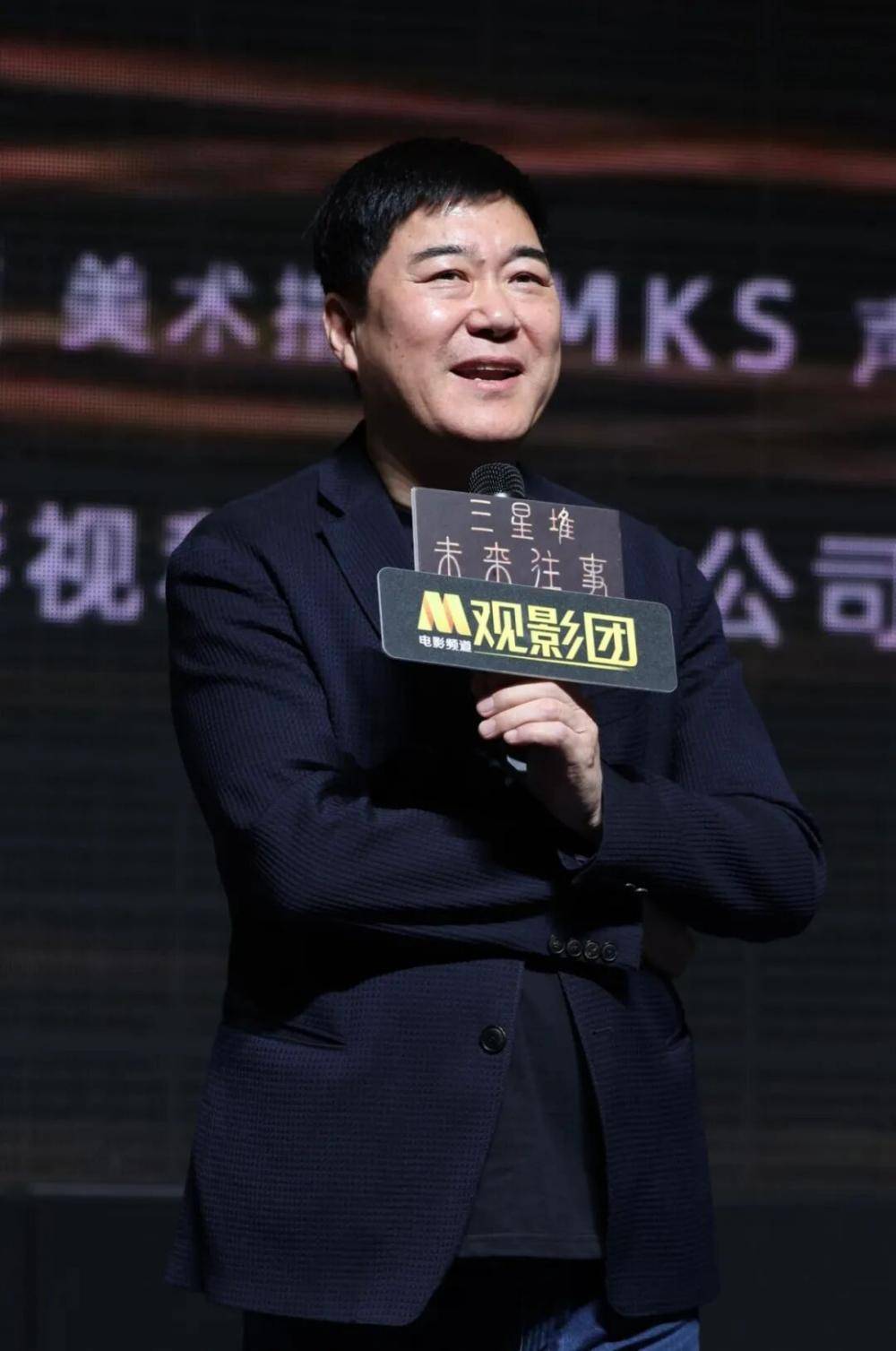
One background is that Bona established the AIGMS production center at the end of 2023, launched the AI science fiction short drama “Sanxingdui Future Apocalypse” in 2024, and promoted film development in the second half of the same year.
In July 2025, the company upgraded the production center to an independently operated subsidiary, extending its business to film and television production tools and technical solutions.
The shift from short plays to feature films means that there is the possibility of further development of original themes, characters and some digital assets.
For film companies such as Bona, there is a very clear business motive for finding cost-controllable ways to achieve big-scenario movies.
In the first half of this year, the national movie box office was 17.356 billion yuan, a year-on-year decrease of 40.62%. Of course, this was based on the higher base of “Nezha: The Devil Boy in the Sea” in the same period last year; while this year’s summer box office increased by 4.45% year-on-year.
This shows to a certain extent that audiences will still go to theaters for the work, but the returns from a single film are difficult to predict.
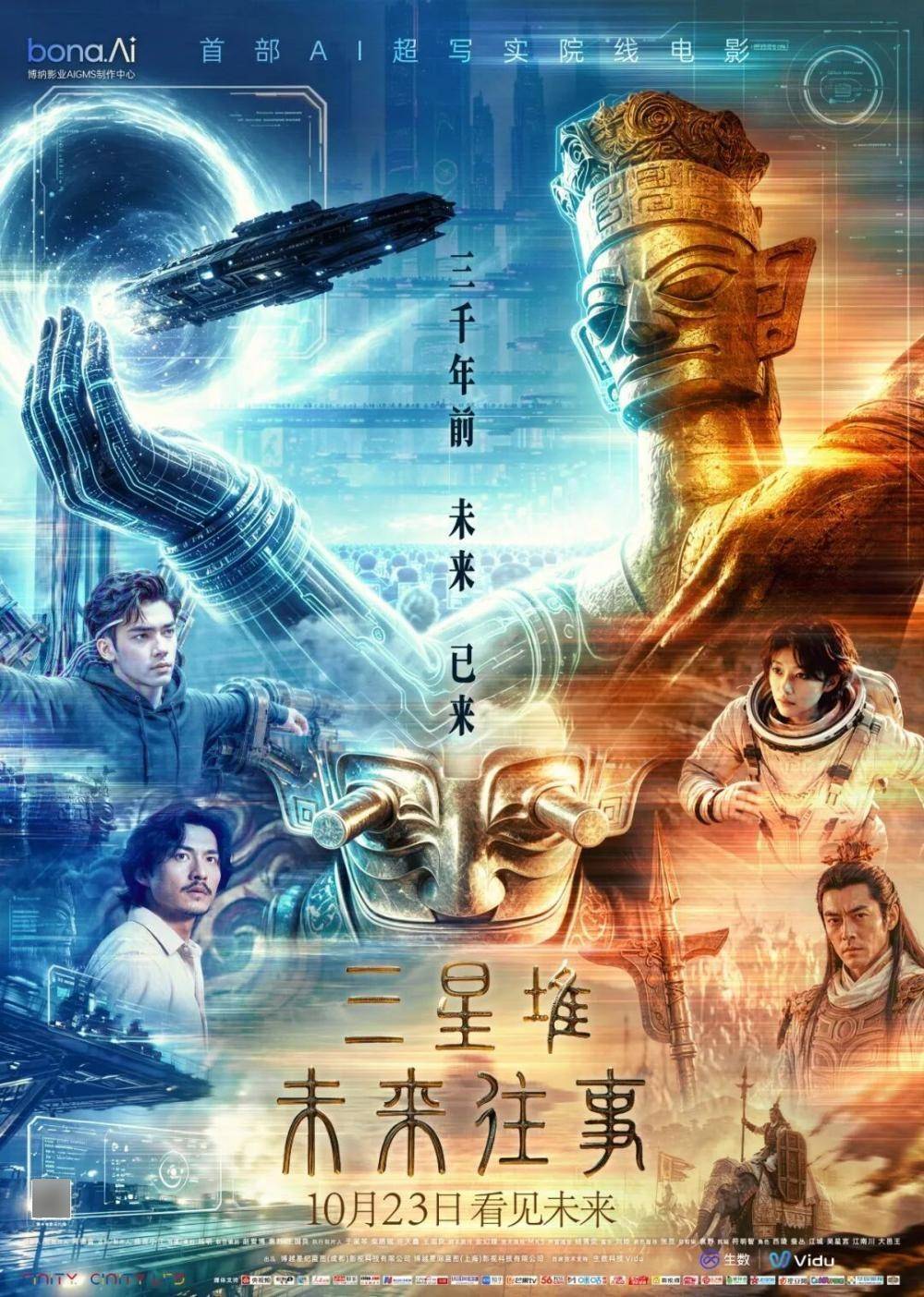
Judging from the name, “AI movie” still needs to be understood in the specific production and approval process. In the project list announced by the National Film Administration in September last year, “Sanxingdui: Days of Future Past” was listed under “Animated Films.”
The film’s producer, Qu Ji Xiaojiang, told the media that the film received the “Dragon Label” for cartoons and followed the traditional film review process; the film was also marked as saying that all images and some sounds were generated by AI.
Specifically, according to the film producer, AI is responsible for generating images, and creative judgments such as script direction, character settings, shots and rhythm are controlled by humans.
Quji Xiaojiang said that nearly a hundred people participated in the production process, and the film cost was in the tens of millions. The film went through more than a hundred minor changes and five major adjustments. In fact, after receiving permission for public release, the model continued to iterate, and the team improved the graphics again.
Bona also hopes to leave behind the production process and digital assets. Jiang Defu said that the accumulated ancient Shu scenes can be used by other projects in the future, and AI may also help live-action movies complete expensive and large scenes; Quji Xiaojiang called the “Boka Movie Cloud Studio” a workflow for organizing various types of film creation.
Will the audience buy tickets for the “first film”?
AI imaging has formed a large-scale supply in the micro-short drama market. According to data from the China Network Audiovisual Association, AI-generated works account for more than 60% of newly launched micro-short dramas in the second quarter of 2026.
As far as short plays are concerned, AI short plays have formed a business model: the video model lowers the production threshold of characters, scenes and special effects, and also allows short content to be quickly tried and tested and continuously updated; the platform can recycle investment through advertising, membership or split accounts.
However, when AI images enter theaters, the “transaction” conditions change.
Audiences need to buy tickets first and then set aside a whole period of time, while mobile short plays can be watched in fragmented time;
In a short play, a novel scene or a compact plot can earn clicks, but a feature film requires characters to be consistent across shots, space and action to be connected, and character emotions to withstand continuous viewing. In this way, the big screen means that technical flaws will be “amplified” to a certain extent.
There is no doubt that big models, platforms and production companies are looking for ways to transition from short clips to full productions, and reducing costs is only one part of the equation.
Technology is moving closer to this goal: video models such as Seedance and Keling have successively improved character and scene consistency, lens control, and video continuation capabilities; however, the models still generate short clips at a time. How to organize a large number of shots into a rhythmic feature film still needs to be solved by the creation and production processes.
At the corporate level, iQiyi announced the expansion of AIGC movie supply. Its movie theaters will focus on works of more than 60 minutes, and plan to cover both platform movies and theater movies.
Film companies also have more than one choice: full-film generation is expected to lower the threshold for realizing fantasy worlds, and partial use of AI can serve pre-previewing, special effects, and post-production. This is also the direction that some companies in the industry are exploring.
But no matter which path you take, you have to answer the same question – can the savings in production costs be transformed into more believable characters, a more complete story, or a more attractive movie-watching experience?
What is certain is that the more AI works there are, the harder it will be for “made with AI” itself to become an independent reason to buy tickets. For the theater market, technological trends have emerged, and the next threshold is still whether the audience is willing to buy tickets for the finished film – this test is still the ability to tell stories.
Related Reading
- “Adaxi” who was “selected” by traffic2026-10-25
- Typhoon warning continues! “Qiangpi” turned around and weakened to tropical storm level. There are still strong winds along the coast of Jiangsu and Zhejiang.2026-10-25
- Tibet Baqing earthquake rescue progress: Power supply has been fully restored, 36 people were injured in the hospital, and the remaining injured have been discharged from the hospital after treatment2026-10-25
- U.S. intelligence warns Iranian plots to kill Americans are in ‘advanced stages’2026-10-25
- Autumn is deep and the leaves are red! The most beautiful autumn colors in these places are online2026-10-24