The National Day holiday is in full swing. If I could sum up this year’s National Day cultural and tourism market in one word, I think it would be “fusion.” Culture, tourism, commerce, and technology are breaking down boundaries and constantly giving rise to new consumption scenarios.
Let’s look at the trends first. During this year’s National Day holiday, the Ministry of Transport predicts that the number of trips nationwide during the seven-day National Day holiday will reach 2.13 billion, with an average of about 300 million trips per day. Data from a certain platform shows that 1 in 10 tourists choose to combine the Mid-Autumn Festival and National Day into consecutive holidays, and nearly half of the consecutive tourists travel for more than 8 days. The ultra-long holiday has also significantly increased cross-provincial travel and in-depth travel, with counties and niche destinations continuing to gain popularity. Tourists have shifted from “seeing the scenery” to “entering the scenery” – people are willing to go to a city for a performance, an intangible cultural heritage, and an old street. Cultural tourism consumption is shifting from “ticket economy” to “stay economy”, and from “one-time check-in” to “immersive experience”.
So, how to integrate? There are currently three paths.
First, content integration makes culture experienceable.The key to the integration of culture and tourism is to turn culture into products, scenes and emotional values; simply attaching cultural symbols to scenic spots is not enough. For example, during the National Day holiday this year, the Xixia Mausoleum in Ningxia further optimized the integrated experience – tourists can not only see cultural relics, but also dip in ink, lay paper, and make rubbings in the wooden movable type printing experience hall to feel the charm of Xixia characters; Xisai Mountain in Huzhou, Zhejiang Province has made tea culture experience classes a “new entrance” for foreign tourists. During the National Day, foreign tourists accounted for more than a quarter of the total tourist flow in the scenic spot. It can be seen that culture is the soul and tourism is the body. But the soul and body must ultimately fall into the hands of people – only when tourists are willing to come, stay and come again can true integration be achieved.
Second, scene integration turns the city into a stage.Integration also occurs in neighborhoods, business districts, venues and at night. The ancient city of Qianyang in Hunan moved the fighting arena into a thousand-year-old alley, and a ring was set up below the ancient city. The blue bricks and black tiles and the dynamic arena formed a contrasting scene of “a blend of ancient and modern”; Daming Lake in Jinan launched the “Minghu Night Drinking Carnival”, integrating fine wines, lawn performances and cultural and creative intangible cultural heritage, turning night tours from “taking a look” to “staying for a night”. Why are tourists willing to stay one more night? Because there is something to see, something to play, something to buy, and something to share. If the integration is done well, traffic can turn into retention, and popularity can turn into wealth.
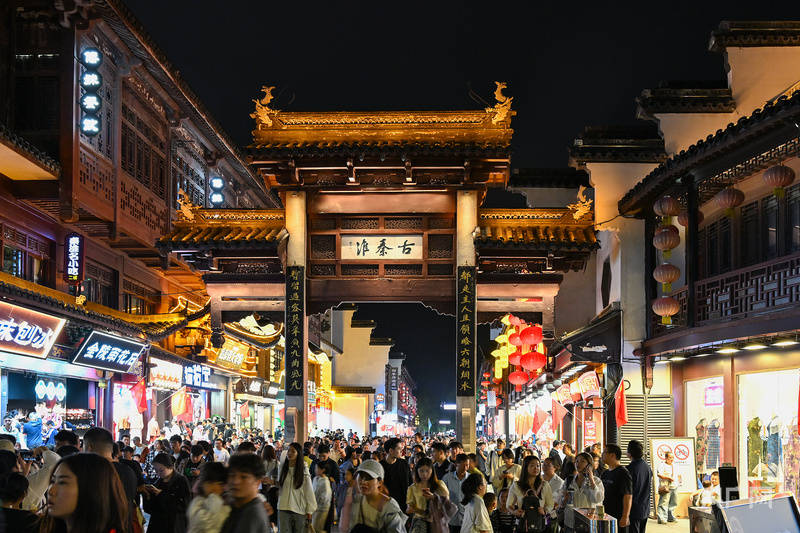
Third, the integration of mechanisms makes resources a closed loop.The government provides policies, the market develops products, the platform guides traffic, and merchants provide services. Chengdu’s “Chunxi Ticket Stub” connects air tickets, performance tickets and restaurants and hotels; previously, Jiangsu launched a “one ticket, province-wide benefit”. After watching a performance in Nanjing, with the ticket stub, you can go to Suzhou to visit gardens and Yangzhou to taste delicious food. At present, Beijing Railway Station, Beijing North Railway Station, and Fengtai Station have simultaneously launched ticket stub linkage, and high-speed rail ticket stubs can be exchanged for discounts on performances at the Jixiang Grand Theater; Zhejiang Lishui has launched “One Air Ticket to Lishui”, where you can enjoy multiple discounts on scenic spots, accommodation, food, and car rentals with your arrival ticket. You can also use “Zhejiang BA” football tickets and high-speed rail tickets to enjoy discounts at more than 100 business district alliance stores, etc. On the surface it is promotion, but on the deep side it is about breaking down the barriers between culture, tourism, commerce and transportation. Once the mechanism is in place, cultural resources can be transformed into tourism products, and tourism traffic can be transformed into increased consumption.
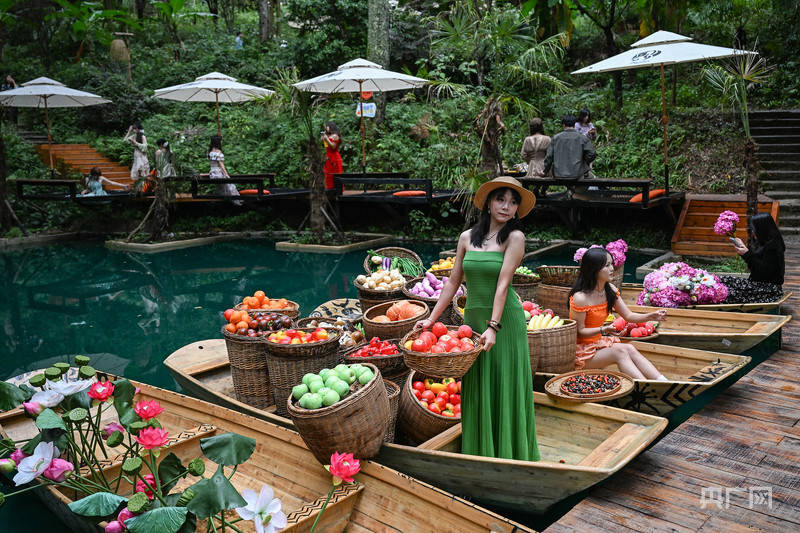
Guiyang: People spend their holidays in cafes in the forest
In short, the integration of culture and tourism pursues the chemical reaction of “culture + tourism” and goes beyond simple physical superposition. It needs to use culture to shape tourism, use tourism to highlight culture, use culture to improve the quality of tourism, and use tourism to amplify cultural value. In the future, cultural tourism competition will not only depend on the number of scenic spots, but also whether it can provide cultural, warm and memorable experiences. Whoever can turn local culture into content that can be perceived, participated in, and disseminated will win the next vacation.
The holiday is still going on, and we look forward to more places deepening and implementing integration, allowing tourists to move from “viewing the scenery” to “entering the scenery”, and from “passers-by” to “regular visitors”.

Jingcai Observation, see you in the next issue!
Editor: Wu Gang
Coordinator: Wang Wei Zhao Jing
Reporter: Wang Jing
Editor: Li Ziran
Design: Tang Yuling
Related Reading
- Video丨Remember to prepare a thick coat when returning from vacation! Know the holiday weather conditions in advance2026-10-03
- Movie丨The total box office exceeded 30 billion! Family film becomes the highlight of National Day movie viewing2026-10-03
- Celebrate the National Day holiday and feel the vibrant China2026-10-03
- Gao City’s “think tank” was exposed in scandal and trapped in “budget scandal”2026-10-03