近期
National railways implement reforms to optimize train schedules
For the general public’s attention
Changes in the use of prefixes T and K
Standard trains with new prefixes Z, N and V
Hot issues such as selection, pronunciation adjustment, and travel protection
The railway department gives you authoritative answers
Q
Why are the prefixes T and K adjusted to the schedule of high-speed passenger trains?
A
K and T, as the prefixes for passenger trains, were first used in 1997 and 2000 respectively during the national railway speed increase, meaning “fast” and “express”. They represented the passenger trains with the highest speed at that time, with a maximum operating speed of 140 kilometers per hour.
At present, my country’s railways have passenger transport products with speeds of 350, 300, 200 (inclusive) to 250 (inclusive), 160, 140, 120 kilometers per hour and below.The concepts of “fast” and “express” are no longer suitable for the definition of speed levels in the current railway passenger transport product system and need to be optimized and adjusted.。
With the rapid development of high-speed railways in my country, the operating mileage and number of EMUs of high-speed railways have increased significantly. Currently, the available number sections of trains prefixed with G can no longer meet the needs of transportation organizations.
This reform of train schedules has adjusted the T and K prefixes to be used in high-speed passenger train schedules, which not only expands the number segment resources of high-speed trains, but also enables a more accurate definition of speed for railway passenger transport products.

Q
What are the considerations behind selecting the initials Z, N, and V for regular-speed passenger train train schedules?
A
The main purpose of this passenger train schedule is toBuild a clearly classified and hierarchical passenger transport product system, allowing passengers to intuitively understand the speed level, product category and operating scope of the train through the train number, so as to facilitate the selection of appropriate travel products.
The schedule of regular-speed passenger trains is divided into three speed levels: 160, 140, and 120 kilometers per hour. Three prefixes need to be selected for identification. In addition to the prefixes already used, multiple options were compared and selected for the remaining letters, and Z, N, and V were finally selected as the prefixes. The main considerations are:
One is historical continuity.Z and N have been used as the initials for passenger train numbers before, and passengers are relatively familiar with them.
The second is letter recognition.Some letters and numbers have similar glyphs. For example, the letter O has a similar glyph to the number 0, the letter I has a similar glyph to the number 1, and the letter A is easily confused with the station ticket gate A. In contrast, the letters Z, N, and V are relatively highly recognizable.
The third is pronunciation friendliness.The pronunciations of some letters and numbers are easily confused. For example, the letter E and the number 1, the letter R and the number 2 have similar pronunciations. For example, the letter W has too many syllables, and some letters are prone to ambiguity due to differences in pronunciation in different regions. In contrast, the letters Z, N, and V are easier for passengers to identify when announcements are made at stations and trains.
The fourth is the accuracy of information transmission.In transportation organization and on-site operations such as railway dispatching and command, station and train joint control, water supply and sewage suction, and emergency support, railway staff are required to pronounce the train numbers clearly so that relevant instruction information can be accurately conveyed. In contrast, the combination of the Z, N, and V initial letters and the number segment has a relatively clear and unambiguous pronunciation, which is conducive to ensuring the safety and orderliness of the railway transportation organization.
Q
Why do the initial letters of train numbers of regular-speed passenger trains adopt English pronunciation standards?
A
In this train schedule reform, the railway department mainly defines product types based on the speed level of passenger trains, adopting the method of “different prefix letters correspond to different speed level passenger trains”, and canceling the original classification methods such as “direct express passenger trains”. Therefore, the prefix letters are mainly associated with the speed level, and their pronunciation is mainly considered:The prefixes for high-speed passenger trains basically follow the existing pronunciation, minimizing changes as much as possible and making it easier for passengers to master; the pronunciations of the prefixes Z, N, and V are used for regular-speed passenger trains, mainly considering the pronunciation friendliness, memorability and recognition., the purpose is to establish a corresponding relationship between the initial letters and the speed grades of passenger transport products, and the letters in civil aviation flight numbers and highway motor vehicle license plates have the convention of using English pronunciation.

Q
The initial letters of the regular-speed passenger trains are pronounced in English. Will this affect the travel of passengers, especially those who do not master English?
A
The railway department uses a variety of methods to provide service guidance for passengers traveling by train., Railway 12306 will actively push ticket information to passengers through multiple channels such as train number, seat number, arrival station, driving time, ticket gate and other information. The electronic screen at the station will display the train number, driving time, waiting location, ticket gate and other information in real time, with clear Chinese guidance. Passengers can enter the station, wait for the train, check in and board the train through the above guidance; stops and related service information will be broadcast in Chinese on the train to remind passengers to get off at the station. At the same time, station and train staff will strengthen on-site boarding and alighting organization, provide consultation and guidance services to passengers in need, and ensure safe and orderly travel for passengers.
Q
The prefix Z for trains has been pronounced as “Zhi” for more than 20 years. Why was the train arrangement reform changed to English pronunciation?
A
The original Z prefix with the pronunciation of “Zhi” represents the “direct express passenger train” classification. The current Z prefix mainly corresponds to the speed class classification.If you continue to read “straight”, it does not match the corresponding product., so the letter Z is adjusted to its English pronunciation.
Editor丨Chen Shuyi
First trial丨Chen Shuyi
Second trial丨Xue Lin
Related Reading
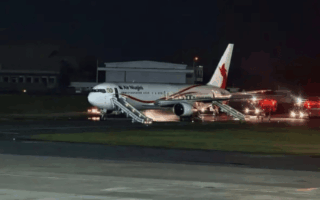
- In the early morning, an international flight from Hong Kong made an emergency landing. 146 people were evacuated through emergency slides. Reports said the plane showed signs of fire; the airline responded2026-11-22
- The AI cheating incident in South Korea’s college entrance examination has been brewing, and Education Minister Choi Gyo-jin has resigned. Previously, Lee Jae-myung offered a large reward to investigate and punish those who cheated in the college entrance examination: 100 million won for every cheating case reported2026-11-22
- The spectacle of “Hai Hao” appears in Weihai, and the sea suddenly seems to be “boiled and smoking”2026-11-22
- Iran’s President: The ongoing economic war is “far more difficult” than a military conflict2026-11-22
- Down jackets priced at 399 yuan are on sale. Is it true that “down jackets priced below 500 yuan are not recommended”?2026-11-21