Recently, the State Administration of Radio, Film and Television’s “Measures for the Development and Management of Micro-Short Dramas” was officially implemented. This is also my country’s first regulation to regulate the micro-short drama industry. However, reporters found that this regulation still faces many practical tests in its implementation.
After randomly browsing some micro-short dramas, the reporter found that most of the AI micro-short dramas have been labeled with words such as AI-generated content, but there are still some AI micro-short dramas that have not been labeled with AI.
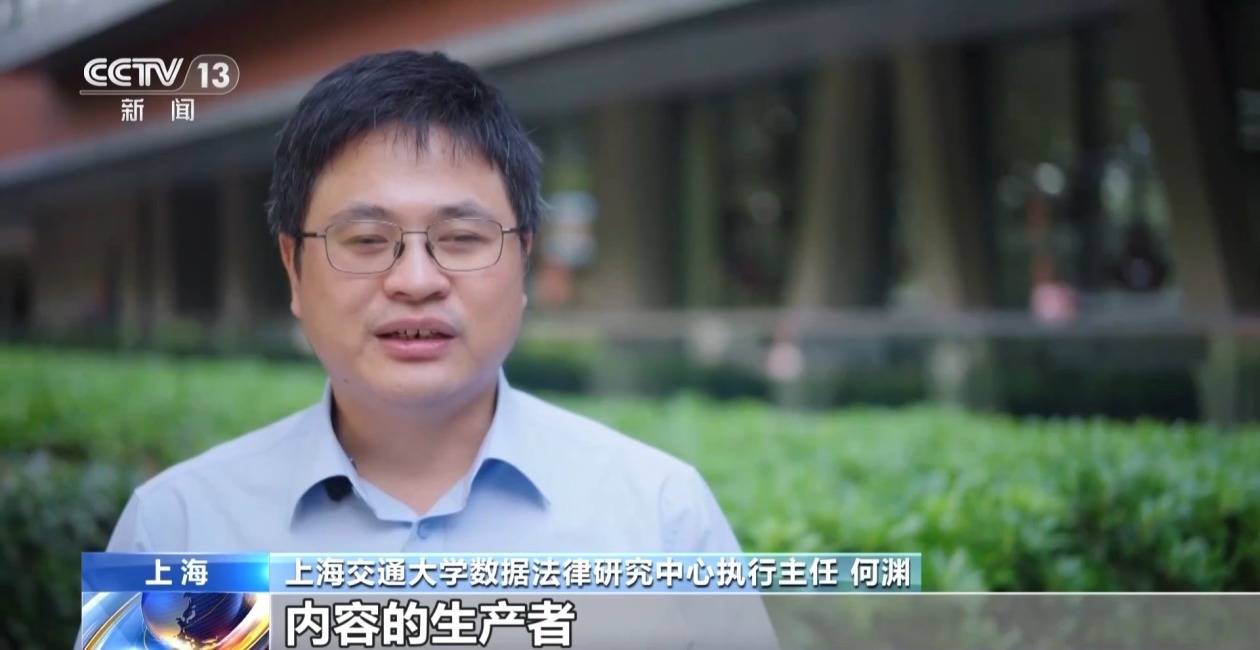
He Yuan, Executive Director of the Data Law Research Center of Shanghai Jiao Tong University: The large-scale introduction of AI technology into the generation of micro-short dramas involves the public’s right to know. AI will mislead the public. For example, it may appear in the skit generated by AI that after the water glass is broken, the glass is not broken, but intact, which violates the laws of nature. From a regulatory perspective, we must know how to allocate legal responsibilities among content producers, platform players, and technology providers, and AI watermarks will play a role.
The reporter found that the core character settings, main lines, and key plots of some micro-short dramas are highly similar, and the situation of “changing the skin but not the bones” is still common.
How to define the numerous infringement issues of AI micro-short dramas?
AI empowerment has significantly lowered the threshold for creating micro-short dramas, and has also given rise to industry chaos such as manuscript washing and transportation, AI face-changing and voice imitation, and online text infringement. The “Measures for the Development and Management of Micro-Short Dramas” brings AI-generated micro-short dramas into standardized supervision for the first time, and also emphasizes that AI technology cannot become a “shield” for infringement.
Regarding the various AI short drama infringement disputes that concern the public, where are the legal boundaries?
A report jointly released by the China Press and Publication Research Institute and the Development Research Center of the State Administration of Radio, Film and Television shows that by 2025, 70% of my country’s micro-short dramas will originate from online texts. Some creators feed popular online articles as scripts to big models, changing character names, lines, scenes, etc., and there is still the problem of “script cleaning” infringement.
Some creators feed their unauthorized online works to AI to produce drama series. This production method of “grabbing online articles” is also suspected of infringement.
Experts believe that if an AI character’s face in a short drama fuses the facial features of many celebrities, or fuses many voices together to form a new voice, once it reaches the level of “recognizability”, it is suspected of infringement.
The changing role of micro-short drama broadcasting platform
責任更重
In high-conflict, fast-paced micro-short dramas, traffic and business mechanisms have always dominated content creation. With the implementation of new regulations on micro-short dramas, platform responsibilities are undergoing important adjustments.
He Yuan: The “Measures” establish a three-level classification supervision mechanism, which reflects the refinement of supervision in our country. One of the biggest changes brought about by the new regulations is that platforms need to assume a kind of main responsibility. It turns out that the platform has a safe harbor principle. Any problems with the uploaded skits are the problem of the content producers. The Supreme People’s Court’s latest judicial opinion on AI mentions: Once the right party provides certain evidence to prove that rights have been infringed, the platform must prevent the expansion of the harm, such as removing short plays and informing the content provider of the contact information. The platform cannot ignore it.
On September 7, 2026, the Supreme People’s Court issued the “Opinions of the Supreme People’s Court on the Legal Trial of Cases Involving Artificial Intelligence Disputes”, which made clear requirements for generative artificial intelligence service providers to promptly stop infringing content.
Lawyer Guo Yanhu: The Supreme People’s Court issued relevant opinions this time, the most important of which is the injunction system for infringement of personality rights. When we have evidence that others are using artificial intelligence to commit or are about to commit acts that infringe on personality rights, we can apply to the People’s Court to order the relevant person to stop the illegal behavior, or order the service provider to stop the service, which will advance the protection measures.
“Micro Short Drama+” Action Plan:
Realistic themes impress the audience
Nowadays, a batch of high-quality micro-short dramas with fresh themes have been unveiled one after another. This year, the State Administration of Radio, Film and Television launched the first batch of 116 recommended micro-short plays, relying on the “Micro-Short Play+” plan to integrate anti-fraud law popularization, intangible cultural heritage, cultural tourism and other contents into the creation of micro-short plays.
Micro-short dramas are no longer limited to routine plots with strong conflicts. A number of high-quality works rooted in reality have gained popularity. The entire industry is also shifting from fighting for traffic to focusing on content quality.
It truly restores the whole process of killing pigs, shows the tricks of scammers impersonating the public prosecutor, presents the real methods of various cross-border electronic fraud, and completely restores the assembly line of the electronic fraud industry. These real-life and shocking stories are presented in the micro-short drama “I Was an Undercover Agent.” As an original online audio-visual masterpiece in Guangdong Province, it was selected as a drama. After the series was broadcast, it topped the short drama hot search list and many other top positions. The high-quality creation of realistic micro-short plays strives to attract the audience with a sense of real quality.
Liang Keqing, chief producer of “I Was Undercover”: The audience’s viewing habits have changed, and they are used to watching a complete work in a short time. Therefore, we may invest more in this track in the future and interact with the audience more with excellent themes.
The “China Online Audiovisual Development Research Report (2026)” shows that as of December 2025, the average daily usage time of micro-short drama users in my country has reached 129 minutes, which has surpassed long videos. According to the “Report on the Path to High-Quality Short Dramas and the Development of New Popular Literature and Art” recently released by the Institute of Journalism and Communication of the Academy of Social Sciences, the size of my country’s micro-short drama market has exceeded 100 billion in 2025. Market development is moving from traffic competition to content quality upgrading. The categories of live-action short dramas have been expanded to 65 categories. The supply of realistic themes and innovative themes has increased, and they are welcomed by the market.
Related reading
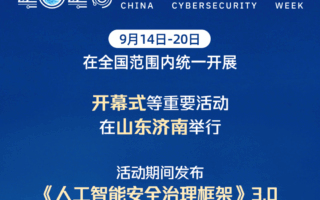
2026 National Cyber Security Awareness Week Opens
The opening ceremony of the 2026 National Cyber Security Publicity Week was held in Jinan, Shandong Province on September 14. A series of important results in the field of network security, including the "Artificial Intelligence Security Governance Framework" 3.0, "2026 Artificial Intelligence Technology-Enabled Network Security Application…

Xi Jinping’s reply to all members of “Zhangzhou 110” in Fujian Province
Xinhua News Agency, Beijing, September 15th Xi Jinping’s reply to all members of “Zhangzhou 110” in Fujian Province All members of “Zhangzhou 110” in Fujian Province: Your letter has been received. "Zhangzhou 110" is a bright business card of the public security system, which left a…
Xi Jinping replied to all the members of Fujian Province’s “Zhangzhou 110”
Xi Jinping wrote back to all the members of the "Zhangzhou 110" in Fujian Province, emphasizing their commitment to serving the people and being a loyal guardian of the Party and the people. Recently, Xi Jinping, General Secretary of the CPC Central Committee, State President, and…