
Text / zero degree
Source / Node Finance
An announcement from the capital circle quietly broke the silence in the property sector.
In the audited interim report released by Wanwuyun, a Hong Kong-listed company, a high-profile incident of illegal shareholding reduction by a non-executive director was disclosed.
The protagonist is Yao Jinbo, the leader of the 58 Group.
Through those cold compliance provisions and figures of the Hong Kong Stock Exchange, a nine-year capital run has come to an end. From the initial high-spirited strategic layout to the current liquidation, this investment is like a mirror, reflecting the choices and looks back that the older generation of Internet leaders had to make in the rapid flow of the times.
A nine-year long-term investment run, earning 2.1 billion
The starting point of the story goes back nine years.
At that time, Wanwuyun had not yet changed its name, and the property service ecology it carried was booming in the capital market.
《According to Node Finance, for 58 at that time, investing in Wanwu Cloud was a real industrial synergy.From the perspective of investment logic, 58.com, which has been deeply involved in local life for many years, has a large amount of online traffic in real estate transactions, housekeeping and cleaning, home repair, and intra-city services, but it has always lacked a stable offline landing scenario.
Vanke Property covers a large number of mid-to-high-end communities across the country and has the most accurate access to home users and community scenes. The blueprint for cooperation between the two parties is very clear:Open up online traffic and offline communities, let 58’s home service needs be implemented in community scenarios, form traffic interoperability and service closed loop, and revitalize the existing resources of both parties.
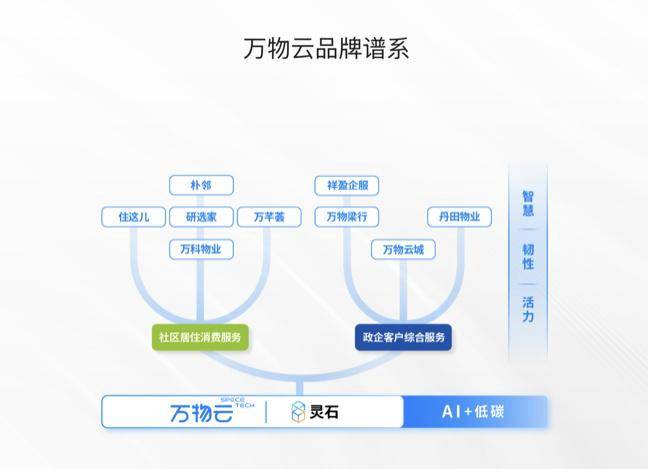
As an important way for 58 Series to expand non-main investment, Yao Jinbo’s investment entity Dream Landing became associated with this company around 2015, starting a long companionship.
For entrepreneurs who are accustomed to the short-term and fast-paced competition of the Internet, property stocks are more like a marathon.
At the end of 2021, on the eve of Wanwuyun’s sprint to the Hong Kong stock market, Dream Landing first transferred about 19.958 million old shares, cashing out about 1.991 billion yuan in one go, and the shareholding ratio was diluted to about 2.55% after the IPO. Later, in March 2022, Yao Jinbo himself was officially appointed as a non-executive director of Wanwuyun, in an attempt to establish closer strategic synergy at the board level.
However, the patience of capital often has its cycles.
In April 2024, Yao Jinbo quietly conducted a round of reductions, further reducing his shareholding ratio to about 1%. The real full-scale retreat will occur in the midsummer of 2026. According to the interim report of Wanwu Cloud, between June and July, Dream Landing cleared all the remaining 11.8489 million shares through two rounds of concentrated sales on the market, and its shareholding ratio returned to zero.
A rough calculation shows that this nine-year investment has brought back more than 2.1 billion yuan in cash for the 58 Series.
This industrial cooperation also failed to proceed as imagined. An important reason is thatCommunity services have heavy contract fulfillment chains and strong localization attributes. Standardized online traffic is difficult to adapt to fragmented offline community needs. The business connectivity planned by both parties has repeatedly encountered obstacles in its implementation, and has been unable to generate substantial business increases.
So Yao Jinbo chose to quit.
However, this exit was not perfect. Under the spotlight of the Hong Kong Stock Exchange, these two rounds of shareholding reductions hit the compliance red line one after another: the sale in June failed to submit written notice to the chairman of the board of directors or designated director of the listed company in advance as required; and the reduction from July 20 to July 31 directly hit the “lock-up period” before the release of the Hong Kong stock’s interim results, and violated multiple standard codes.
In the face of market uproar and regulatory scrutiny, Yao Jinbo’s explanation was that he was “responsible for the unintentional mistake of the external investment management team” and emphasized that he was not involved in the transaction decision-making and had no prior knowledge.
Regardless of whether this “inadvertent mistake” statement can completely smooth the waves at the compliance level, one indisputable fact is that the link between 58 Series and Wanyiyun has been completely severed. Under the pressure of multiple realities such as the adjustment of offshore trust tax policies and the transfer of group funds, the strategic investments in the past have finally turned into “winter surplus” that must be liquidated.
The Rise and Delisting of the 58 Series
When Yao Jinbo’s name once again became a hot topic due to large-scale capital operations, it was difficult for people not to draw their attention back to the huge business empire he created with his own hands.
Looking back in 2005, Yao Jinbo founded 58.com with passion. With the brainwashing advertisement of “This is a magical website” and Yang Mi’s penetrating cry, 58.com quickly penetrated into every corner of urban and rural China, from second-hand housing, recruitment to moving, and local life, and turned a “classified information yellow page” in the Internet era into a monopoly-level traffic giant.
In October 2013, 58.com successfully landed on the New York Stock Exchange and ushered in its highlight moment.
In the following years, Yao Jinbo demonstrated his extremely aggressive capital skills: by annexing his old rival Ganji.com, he pushed the market share of domestic local life services to a new height in one fell swoop. Later, Anjuke and China Talent Network were acquired. In those years, 58.com was extremely popular and almost became the absolute protagonist of China’s Internet O2O wave.
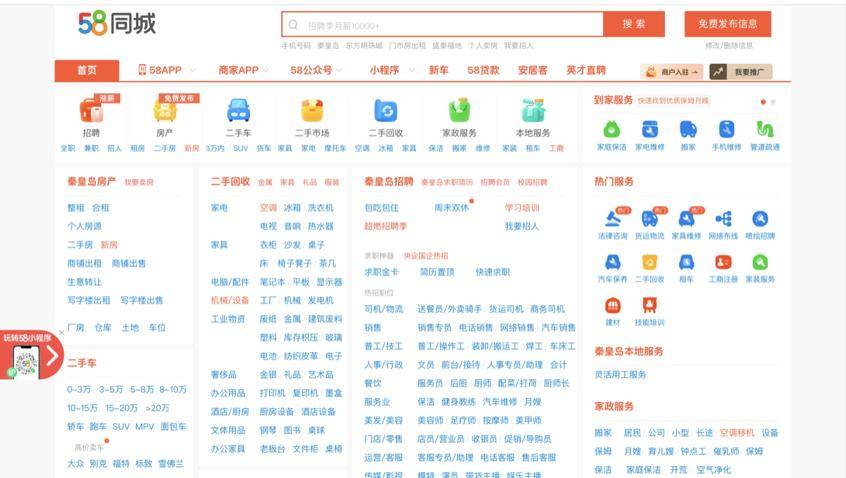
However, the wheel of the times is rolling forward, and the refined operation of the mobile Internet has quickly squeezed the living space of extensive information classification platforms.
When challengers in the vertical segment, such as Boss Direct Recruitment, which focuses on recruitment, and Beike, which specializes in second-hand housing transactions, launch attacks with more efficient algorithms and closed-loop trading experience, 58.com, which has huge traffic, has gradually fallen into the growth bottleneck of “increasing revenue without increasing profits”.
The capital market has the most sensitive sense of smell. Since the stock price hit a high of US$89.90 in 2018, 58.com’s stock price has fluctuated downwards in the U.S. stock market for a long time, and the growth rate of its core membership and online promotion business has shown weakness.
On September 18, 2020, after the US stock market had gone through a seven-year itch, 58.com officially announced the completion of a merger agreement with Quantum Bloom Group Ltd., completing its privatization and delisting at a valuation of approximately US$8.7 billion (equivalent to approximately 61.5 billion yuan). This was one of the largest privatization transactions in Chinese concept stocks that year. On the last trading day of U.S. stock delisting, its share price was fixed at US$55.88, and its total market value remained at US$8.374 billion.
At that moment, a golden age of the PC Internet that relied on advertising and buying traffic officially came to an end on the New York Stock Exchange.
Island breakout and survival with broken arms
Taking off the cloak of a US-listed company and delisting did not allow 58.com to automatically sail into a safe haven, but pushed it into deeper waters.
After privatization, 58.com faced more severe pressures on internal reorganization and independent spin-off. Yao Jinbo tried to find a solution through “split hematopoiesis”: he would spin off his Daojia business and rename it “Swan Daojia”, package the real estate business into Anjuke, and at the same time push Kuaigou taxi-hailing, Zhuanzhuan and other businesses into their respective vertical battlefields.

He once tried to boast that he would build the 58 system into “the world’s first sample to complete the reconstruction of the industrial Internet.”
However, the ideal is full and the reality is skinny.
The various segments that were spun off are also struggling in their respective red oceans. The tightening of the external financing environment has forced these former brands to face the profitability test independently. At the same time, as the parent company, 58 Group’s fundamentals are under tremendous cash flow pressure in the fierce market competition.
According to “Node Finance”, it is under this macro background that the outside world can truly understand the deep logic of Yao Jinbo’s clearance of Wanwuyun. In the past, the 58 Series was accustomed to building its business territory through large-scale foreign investment and land encirclement; but now, faced with the business environment of stock game, the investment logic has completely shifted from “land encirclement to seek incremental growth” to “shrinking defense lines to protect cash.”
The HK$2.1 billion cashed out from Wanwuyun is an extremely valuable cash flow supply for 58 Group, which is undergoing a full-scale transformation and needs to deal with internal and external debt and operational pressures. This investment, which lasted for nine years, ended with a slightly embarrassing and illegal reduction of holdings, which just exposed the real anxiety of the established Internet giants under the cycle change.
Looking back at the juncture of the times, Yao Jinbo and his 58.com are like a microcosm of the brutal growth of the Chinese Internet in the first half. They once rode the east wind of traffic soaring upward, but now they have to learn to survive and plan carefully in the cyclical fluctuations that last for several years. The storm of Wanwuyun’s departure will eventually subside, but the big test for this generation of entrepreneurs is far from being handed in.
Facing the current more complex industrial environment, do you think the “defensive strategy” of traditional Internet giants by divesting assets and withdrawing cash can really help them reshape their moats in the fierce competition in the second half?
Related Reading
- “Xibei will close down” is a hot search topic! The truth behind the boss’s 5.4 million yuan pledge2026-09-21
- Original “Chinese Murdoch” plans to spend 800 million to recognize another “brother” in the film and television industry2026-09-21
- Former “one-hundred-billion-dollar leader” resigns as vice president2026-09-21
- Cellphone bills jumped 5.9% in a month2026-09-21
- Married to a beautiful host who is 14 years younger, Xu Song is suspected to be the largest supplier of the IPO company, earning nearly 700 million in two years of touring2026-09-20