India is going to take action against Xiaomi again.
Around September 10, according to reports from Reuters and other media, India’s Serious Fraud Investigation Bureau (SFIO) has recommended further investigation into Xiaomi’s business in India, involving issues such as foreign investment laws, capital flows, and beneficial ownership disclosure. Xiaomi stated that it has not received a formal notice from SFIO and emphasized that it has always complied with the laws of the country where it is located.
If the proposal is ultimately approved, Xiaomi may face a new round of regulatory scrutiny in India.
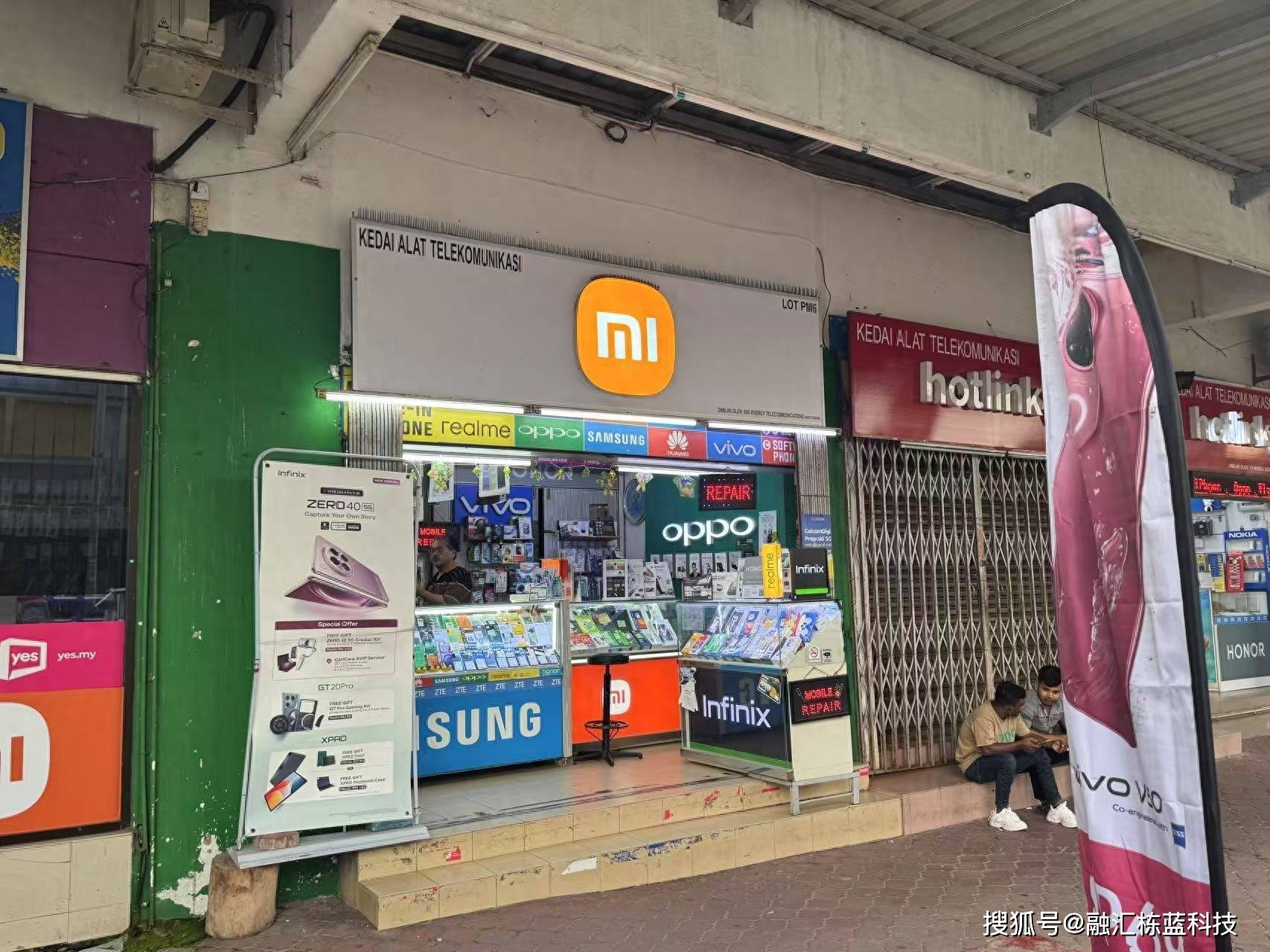
This is not the first time Xiaomi has encountered a similar situation. In 2022, India froze Xiaomi’s assets of approximately US$584 million. Since then, the two parties have continued to have disputes over issues such as funds and royalties. The Reuters report also mentioned that Xiaomi’s share of the Indian smartphone market has dropped to about 13%.
Now that things have come to this point, it would be a pity to simply interpret it as the market ups and downs of a mobile phone company.
Xiaomi has been operating in India for many years. It has built factories, found suppliers, and hired employees. For a company that plans to operate in the long term, declining sales can adjust products, channels and prices, but policy and regulatory expectations cannot be determined by the company itself.
This is what’s more worth watching about Xiaomi’s current turmoil.
Behind 50,000 employees, Xiaomi’s localization is already deep
When Xiaomi entered India, it did more than just ship mobile phones there and sell them.
In the past few years, Xiaomi has continued to increase the proportion of local manufacturing and procurement. Indian suppliers have been involved in camera modules, battery packs, chargers, backplanes, USB cables and packaging materials. The local business has also expanded from mobile phones to TVs, tablets and wearable devices.
It also cooperates with Indian foundry company Dixon Technologies to produce smartphones and promotes some Chinese suppliers to invest in India.
Employment is also a very intuitive indicator. Xiaomi India has publicly stated that the company directly employs about 50,000 employees in India, more than 95% of whom are women.
So looking at Xiaomi today, it can no longer be simply classified as a foreign brand selling Chinese mobile phones to India. It has entered the local manufacturing system and the daily operation of the Indian electronics industry chain.
It just so happened that at this time, regulatory issues came to our door again. What really worries companies about this matter is not necessarily the investigation itself, but whether a company that has been operating in India for many years should re-judge the policy boundaries next time.
A company’s account books are not just for today
Let me make it clear first that India has no problem supervising foreign companies.
Foreign investment policies, tax systems, capital flows, and corporate governance are all part of a country’s regulatory system. When companies enter India, they must do business in accordance with Indian laws.
What companies really need is another thing: whether today’s rules can become the basis for tomorrow’s investment decisions.
In 2020, India passed Press Note 3, setting government approval requirements for investments from countries bordering India. In March 2026, India adjusted this framework again. For some non-controlling investments, India has canceled the prior government approval requirements for non-controlling beneficial ownership of 10% and below; at the same time, it has proposed a timetable for processing and making decisions within 60 days for some manufacturing investments such as electronic components, electronic capital goods, polysilicon and silicon wafers.
This is obviously a change in policy, and the Indian government also defines it as part of improving the business environment, attracting investment and strengthening global supply chain cooperation.
On August 21, data released by the Indian government also showed that as of August 20, there had been 29 foreign investment declarations under the revised framework, involving fields such as IT, artificial intelligence, manufacturing, medicine, data centers and transportation services, with a total planned investment amount of 489.565 billion rupees.
These are all positive signs. But the company’s ledger will not only record this page.
What about the projects that have entered India in the past few years? What to do with factories that have already been built? What about the joint venture project being negotiated? Will the policy be adjusted again after three years?
When a company decides to build a factory, it considers the next five or even ten years. It cannot recalculate policy risks every year.
So policy change itself is not scary. What really increases operating costs is that companies are unable to determine where this change will go.
This cost usually does not appear separately in financial statements, but corporate management will definitely include it.
After mobile phone assembly, India has to move upstream
This is where Xiaomi’s case can be linked to India’s manufacturing goals.
India is really pushing towards electronics manufacturing now. PLI (Production Linked Incentive Scheme) has become an important policy tool for the expansion of mobile phone and electronics manufacturing. The Indian government is also promoting investment in electronic components, semiconductors and related industry chains.
Judging from the results, Indian electronics manufacturing has grown rapidly in recent years. Data released by India’s Ministry of Electronics and Information Technology in April this year stated that the output value of electronic products in the 2024-2025 fiscal year was approximately 12 trillion rupees, and domestic added value has now reached 18% to 20%. During the same period, India’s electronic product exports were approximately 3.3 trillion rupees, and mobile phone exports were approximately 2 trillion rupees.
These figures show that India has scaled up mobile phone manufacturing. But the domestic added value of 18% to 20% also shows another thing: India’s electronics industry chain has not really been completed.
The mobile phone can be assembled first, but the real difficulty is to continue to the more upstream links such as cameras, displays, chips, PCBs, materials, and equipment.
The Indian government is now also making up for this shortcoming. The policies related to electronic component manufacturing launched in 2026 have placed components, sub-modules, basic materials and manufacturing equipment in a more important position.
The problem lies here. India hopes to upgrade its manufacturing industry and needs more foreign capital, technology and supply chain companies to enter; at the same time, for investments from land bordering countries such as China, India still has an approval framework that is different from ordinary foreign investment.
Whole-machine companies can start with assembly, but if they continue to move upstream, they will eventually need suppliers to follow.
Suppliers face another account. The investment cycle of a parts factory is much longer than the sales cycle of mobile phones. What companies really care about is not how much subsidies they can get in a given year, but whether capital, personnel, technology and supply chains can operate as expected after the factory is built.
This is also an unavoidable issue in the next stage of Indian electronics manufacturing.
The Indian market is huge, but companies will still settle accounts
I don’t think Xiaomi’s encounter with regulatory pressure in India means that the Indian market has lost its appeal.
On the contrary, population size, young consumer groups, digital economy and manufacturing policies still make India a market that global consumer electronics companies cannot ignore. India has not stopped attracting foreign investment and developing manufacturing.
The problem is that it is one thing to have a big market, but another thing is whether companies dare to continue investing.
The policy signals now released by the Indian government indicate that it indeed hopes to improve the foreign investment environment. However, cases like Xiaomi remind companies that policy adjustments and long-term investment expectations of companies are not the same thing.
Xiaomi has been investing in India for many years, with factories, supply chains and employees based there. Now, SFIO has suggested an investigation again, but the final results have not yet come out. Xiaomi has also made it clear that it has not received a formal notification.
Therefore, it is too early to draw conclusions on this matter now. But for companies preparing to enter India, what they will really observe is how the investigation will proceed, how the rules will be interpreted, and whether there will be a clearer way to deal with similar issues in the future.
India wants to become a global manufacturing center, and its market size and industrial policies can attract companies.
Whether a company is willing to continue investing depends on another thing: whether the investment decision made today can still be based on a set of rules that can be understood and calculated in a few years.
Related Reading
- Using AI to “resurrect” family members doesn’t seem to be a good business2026-09-21
- Mr. Zhihui’s love letter has been officially sent out2026-09-21
- Original: The long-term pain of Cyrus is worse than the short-term pain2026-09-21
- Star company is in trouble2026-09-21
- In order not to say goodbye to their lover, they began to study the code.2026-09-20