Text | Lan Xi
After watching Qiyuan Robot’s new product launch conference, I felt a bit speechless and unhappy.
On the one hand, the robot content in domestic exhibitions since this summer has indeed exceeded the standard. From WAIC in Shanghai to the World Robot Conference in Beijing, including sprint competitions where only robots are allowed to participate, the program effects are extremely good.
The industry situation is very good, and this is a fact that cannot be overly optimistic.
On the other hand, the application scenarios of humanoid robots seem to be “ideologically stamped”. In addition to performing dancing and boxing, they also perform difficult operations, focusing on the value of human replacement in industrial production.
So it’s really no wonder that the field of humanoid robots is riddled with controversy. It’s not that it negates robots, but it’s about the necessity of humanoid design. The voice of pouring cold water on it has never stopped.
Because if you only use the criterion of productivity to make judgments, you will inevitably find that the humanoid robot is full of redundant parts. It is best to dismantle them all, leaving only the parts that can do work.
But from the perspective of manufacturers of embodied intelligence, if they don’t make humanoids, the biggest gimmick will no longer exist. This is an important means related to traffic, financing and even imagination space.
This has created a very awkward phenomenon. The industrial replacement scene is not yet available for a while, but the tens of thousands of units sold every year cannot be left unused. Therefore, the most mainstream use of humanoid robots is to rent them to commercial performances and contribute “spectacles” to various opening celebrations.
I am afraid that these humanoid robots will all dream of line dancing while charging, just like the eternal night that they cannot wake up from.
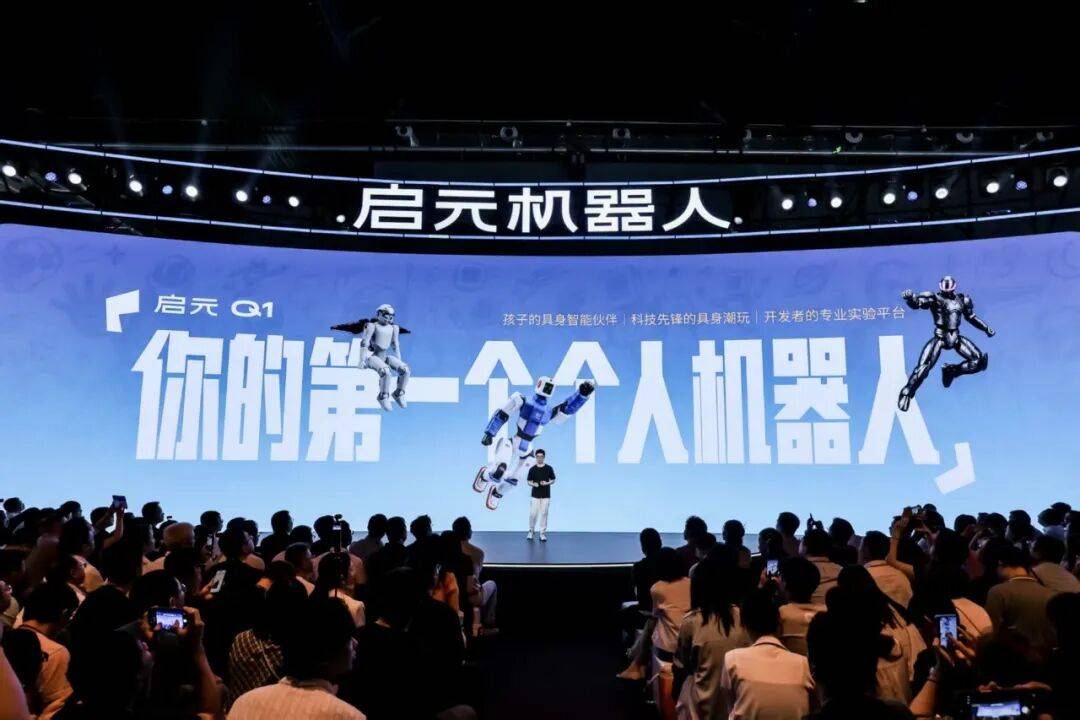
At Qiyuan’s press conference, I finally saw that a company was unlocking the “ideological seal”, and the question that the entire industry was cautiously avoiding answering got a clear answer.
· · ·
The two robots Qiyuan Q1 and Qiyuan T1 released by Qiyuan are the latest works of Peng Zhihui. His online name may be better known as Zhihui Jun.
Zhihui Jun was once recruited by Huawei’s Genius Youth Program and was also one of the top 100 UP owners on Bilibili. His brand is full-stack self-developed and open-source hardware DIY, which is top-notch and has attracted countless fans.
In other words, from the very beginning, he was not just a classical academic who just did research in the laboratory. Using his homework to deal with users was his talent as a native generation of social media.
This is very important, because it determines that Mr. Zhihui is a person with product thinking, not just someone who understands technology.
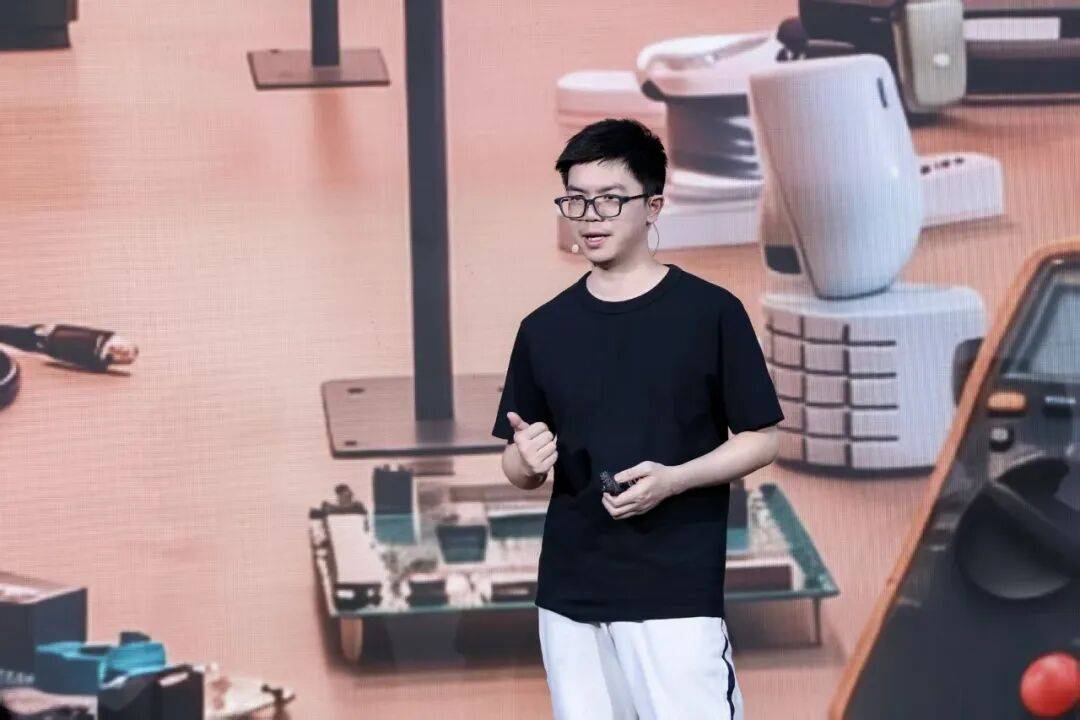
For example, one detail is that the height of Qiyuan Q1 is 88 centimeters. When designing the height of the robot, most engineers consider how to adapt the placement of components. However, Zhihui Jun made this decision because 88 centimeters is just close to the standing height of Chinese 2-3-year-old children, and children can look straight when interacting with it:
“When the eyes are level, the relationship changes.”
If you just look at this sentence, it will seem strange – for example, what is “relationship” – but when placed in the commercialization strategy of Qiyuan Robot, it is completely reasonable.
This is also Zhihui Jun’s answer to the entire industry, a new category called “personal robots”.
Because there is no consumer-level market, humanoid robots can only set parameters and capabilities, and position themselves as “cyber slave labor.” The competition is whether they can earn back their costs on the job before being scrapped. At the same time, because everyone is focusing on productivity theory, the exploration of the consumer-level market is even more elusive.
This is the result of being dominated by technology. Technology is of course important. One of the advantages of China’s robotics industry is the unprecedented abundance of technical talent. However, if there is a lack of product thinking, technology can easily put itself in the perspective of a supplier and work for a mature industrial chain.
Embodied intelligence manufacturers generally tacitly avoid the consumer market for no other reason than this. It is too difficult to create a market, and they have never done it before. They “don’t understand.”
It’s the turn of the companies that know what to do to step onto the stage of history.
· · ·
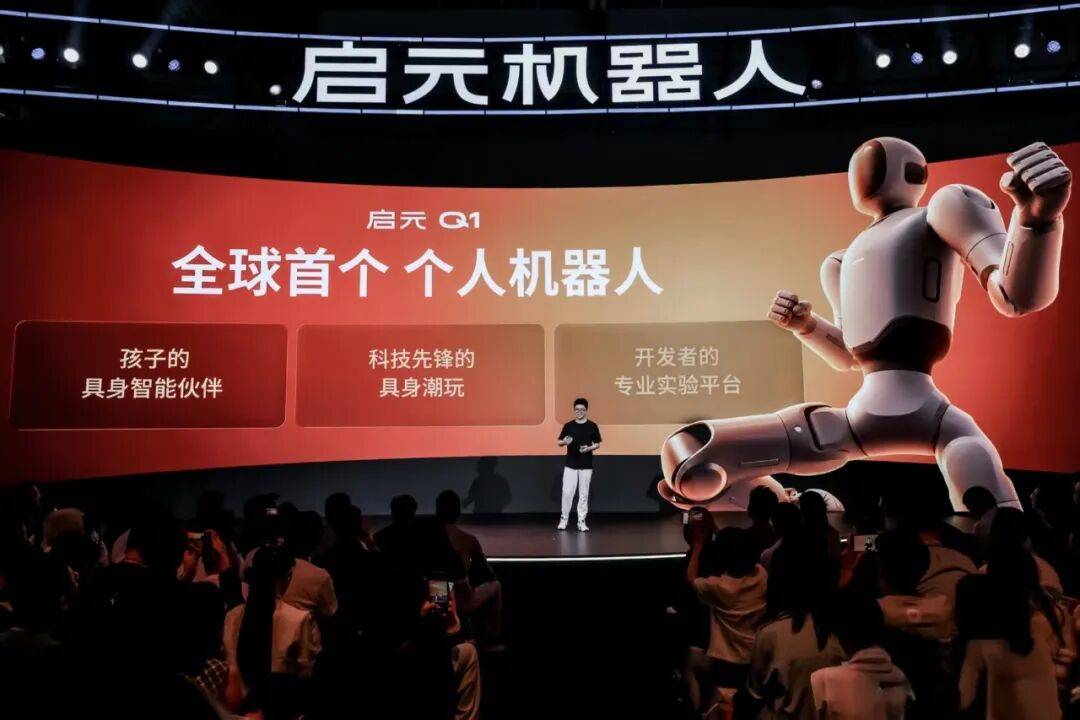
A month ago, Qiyuan Q1&T1 has officially opened pre-orders. Yesterday’s press conference, in addition to announcing the most important pricing, more importantly explained the “personal robot” category thoroughly.
My understanding is that the “humanoid” is just a design plan, and there is no value judgment. It is the “individual” as the direction of use that determines the real value of the “humanoid”.
If we are making coffee, folding clothes, and moving goods in the store, why should the machine be anthropomorphic?
In other words, anthropomorphism is for dealing with humans, so is there a consensus on what kind of machines humans need?
The answer given by Qiyuan is that robots are defined by people and grow with people. It is a bit like the fourth unit of a family of three. It is neither a mere companion nor a labor tool. It is true that they can do things such as relieve emotions and help, but the real role they enter is to establish a new set of human-machine relationships.
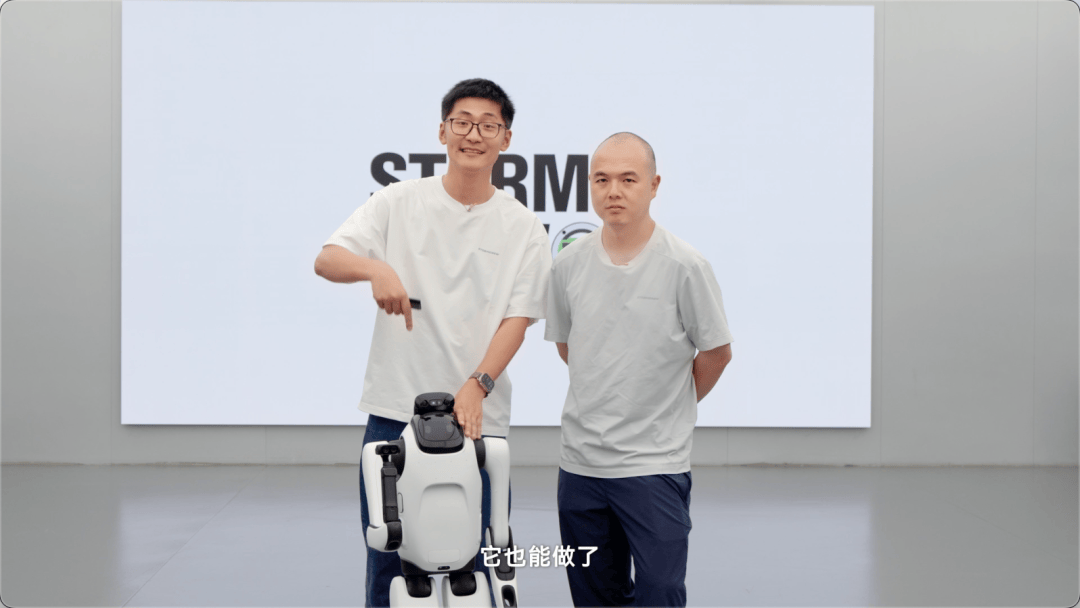
Film and television hurricane Tim is an early trial user of Qiyuan T1. He told an example of training this robot:
“Because I usually shoot videos, I was thinking that since the Qiyuan T1 can walk and follow by itself, can you help me shoot something? For example, remote control shooting, camera movement, follow-up shooting, and group photos. Unexpectedly, the team really took it seriously. I did it, and it was done very quickly. I was very touched by this. Qiyuan is not the kind of robot that says, “The product is already set, you just use it.” You can really put forward your own ideas, and it will continue to develop new abilities. “
Some people may disagree, thinking that Tim’s sharing is too personal, and most people may not have such needs. However, so-called personalization is actually the value of Qiyuan T1 and even the entire category. The upper limit of the robot depends on the upper limit of the user, not the program written in advance by the manufacturer.
The target markets of the two product lines of Qiyuan Q1 and Qiyuan T1 are very clear. The former is mainly for children. It can be called a walking children’s programming machine, and developers can also use it to practice. It is the first entry point for ordinary people to contact the future life. The latter’s two-wheel and four-legged switching attempts to enter the third-person perspective space such as family following, video recording and outdoor companionship, breaking the limitations of the first-person perspective of real life.
In one sentence, the “Vibe Coding” moment for the embodied intelligence industry has arrived.
· · ·
The reason why “Vibe Coding” has become an explosive scene for large models is because it allows people who do not understand code to build products, and everything is verifiable. Users can see their software running with their own eyes. This is an unprecedented experience and fun.
If we believe that embodied intelligence has great potential, then we must face the question of whether the combination of AI + robots can create the same inclusive scenario.
There is only one Tim, but there are thousands of creative people like Tim in the world, and they are all the target customers of the first generation of “personal robots.”
For example, the “life diary” service that is already being implemented by AI initially records computer screens for a long time, using model intelligence to compress human operations into long-term text. Then it becomes portable hardware, which is equivalent to equipping people with a camera and taking pictures of things they see every day as memories.
The “personal robot” can go one step further and capture the user’s spatial information throughout the process, telling you who is hugging you from behind, what the cat is doing when no one is paying attention, where the fitness moves are not standard, the child’s first fall, etc., permanently breaking the fourth wall.
This kind of use is the “Vibe Coding” scenario required by embodied intelligence, and it is also the essence of machines serving people.
“Coding” is of course productivity, but “Vibe” is about self-pleasure. Together, it means production is used by people. Technology is people-oriented. It should not only be effective in the software industry.
I also thought about Zhihui Jun’s finished product that became popular all over the Internet, a self-driving bicycle. It is not necessarily true that this product has great commercial value, but its popularity explains to a large extent that the world is not always driven by utilitarianism.
A bicycle that overcomes the laws of physics and never falls down is itself the product of the brighter part of human nature. Five years later, Zhihui Jun put his curiosity about artificial creations into two robots, hoping to send them to thousands of households.
David Ogilvy said, don’t write the kind of advertisement that you would be ashamed to read to your family. On the contrary, understand that the best advertisement is to sincerely sell your lifelong pride.
· · ·
A few years ago, a special funeral was held at Kofukuji Temple in Chiba Prefecture, Japan. 17 AIBO robot dogs that could no longer be repaired were “transferred” to the afterlife under the collective chanting of monks.
AIBO is a robot dog developed by Sony when it was still a major consumer electronics manufacturer. It has simple functions such as responding to commands and touch feedback. A total of 150,000 units have been sold. In terms of sales, the results are not very good.
However, considering the price of US$3,000 and the far-reaching cultural effect, this product cannot be said to be a complete failure. After Sony stopped maintenance services, the families who sent the scrapped AIBO to the temple for solemn burial were because of the long time together and the accumulation of feelings that are difficult to let go.
Today’s robots are of course not the same thing as the robot dogs of 27 years ago, and today’s Qiyuan is not the same as Sony 27 years ago. However, the 27-year test continues on whether humans are willing to have a long-term relationship with machines.
In my opinion, there may indeed be feelings between humans and machines, but such ethereal things are not enough to support the long-term existence of a category. 27 years later, Qiyuan is opening up a new consumer market with “personal robots”.Whether it can go from “fun” to “useful”, and then from “useful” to a position that people are reluctant to take away, cannot be determined by the press conference, but depends on the response of each real family.
Just like the integrated IELTS-certified speaking practice platform Hi Echo, using a robot to practice English together not only provides an unprecedented experience and reduces the burden on the screen, but also is an excellent reflection of the “scalability” of personal robots. Although each generation has its own learning machine, it is still very shocking that this generation’s learning machine has turned into a robot with all four limbs standing next to tutor humans.
Related Reading
- Why is Xiaomi’s business in India becoming more and more difficult to calculate?2026-09-21
- Using AI to “resurrect” family members doesn’t seem to be a good business2026-09-21
- Original: The long-term pain of Cyrus is worse than the short-term pain2026-09-21
- Star company is in trouble2026-09-21
- In order not to say goodbye to their lover, they began to study the code.2026-09-20