ST Huayi (300027.SZ), which is on the verge of delisting, is waiting for a white knight. Media tycoon Li Ruigang, known as “China’s Murdoch”, may become the new head of this former A-share “film and television stock”.
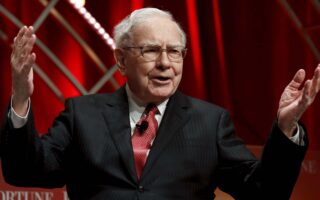
After the market closed on September 16, ST Huayi announced that it had finalized the investor in the reorganization industry. Chinese Culture Co., Ltd. (hereinafter referred to as “Chinese Culture”) will acquire 896 million shares of the company at a price of about 0.93 yuan per share, accounting for 17% of the total share capital after the reorganization. The total cost is about 836 million yuan. After the reorganization is completed, Chinese Culture will become the controlling shareholder of ST Huayi, and Li Ruigang will become the actual controller of the company.
The past few years can be called the darkest moment of ST Huayi. Since 2018, the company has continued to suffer losses, with a cumulative loss of more than 8.5 billion yuan, and its stock price has also been falling. At the same time, the company was short of funds and burdened with debt. Even if it sold off its assets, it was still unable to make a comeback. Finally, in April this year, creditors applied for reorganization.
As the founder of Chinese Culture, Li Ruigang is well-known in the media industry. His subsidiaries include Hong Kong TVB (00511.HK, Wireless Group), Shaw Brothers Holdings (00953.HK), Noon Sunshine, Caixin Media, Xuxu Watson, etc. At the beginning of this year, he just packaged and injected his core film and television assets into Shaw Brothers Holdings. If he successfully acquires a stake in ST Huayi this time, Li Ruigang’s media territory will also be further expanded.
Regarding the considerations for joining ST Huayi and what the follow-up arrangements will be, Times Finance contacted Chinese Culture. Relevant people said that there will be no response for the time being, and everything will be subject to announcements.
The above information failed to reverse the decline in ST Huayi’s stock price. On September 17, ST Huayi finally closed at 1.79 yuan per share, down 10.05%, and its latest market value was only 4.966 billion yuan.
The whole story of ST Huayi’s restructuring
According to the announcement, ST Huayi will use the existing total share capital of approximately 2.775 billion shares as the base, and implement capital reserve to increase share capital by converting 9 shares for every 10 shares. The total increase will be approximately 2.497 billion shares. After the increase, the total share capital will increase to approximately 5.272 billion shares. The converted shares will not be distributed to the original shareholders.
Among them, Chinese Culture acquired 896 million shares at 0.93 yuan per share, accounting for 17% of the total equity after reorganization, at a cost of approximately 836 million yuan; financial investors obtained 1.128 billion shares, accounting for approximately 21.4%; the remaining converted shares were used to pay off bankruptcy reorganization debts. All parties plan to complete the implementation of the reorganization plan before December 31, 2026.
ST Huayi was founded by brothers Wang Zhongjun and Wang Zhonglei. It was listed on the GEM in 2009 and was the first A-share listed company in the film and television industry. It was once dubbed the “No. 1 film and television stock” in A-shares. During its heyday, hit film and television works such as “Mobile Phone”, “If You Are the One”, “Tangshan Earthquake” and “Eight Hundred” were released one after another. At the same time, the company invested in Internet entertainment, live-action entertainment and other sectors by acquiring related companies.
The turning point came in 2018. Affected by the “Yin Yang Contract” incident, ST Huayi suffered huge losses that year and has continued to suffer losses to this day. In the eight years from 2018 to 2025, its cumulative net profit attributable to the parent company exceeded 8.5 billion yuan. In the first half of 2026, the company achieved revenue of 85.4477 million yuan, a year-on-year decrease of 44.10%; the net profit attributable to the parent company was a loss of 36.3851 million yuan.
While performance continued to deteriorate, the company experienced a debt crisis. Between 2018 and 2025, its asset-liability ratio climbed from 48.01% to 96.26%. In order to alleviate financial pressure, ST Huayi also sold Dongyang Meila and other subsidiaries to raise funds, but it was still a drop in the bucket.
In this context, brothers Wang Zhongjun and Wang Zhonglei also lost their glory. They were restricted from high consumption many times, and their equity was successively auctioned by the judiciary. ST Huayi’s latest announcement shows that its total shareholding ratio has dropped to 5.41%.
ST Huayi’s stock price collapsed. Wind data shows that in mid-2015, the company’s market value was close to 90 billion yuan. As of the close of trading on September 17, 2026, this number is less than 5 billion yuan.
Due to a default on a maturing debt of 11.4052 million yuan, on April 15, 2026, creditors applied to the Jinhua Intermediate People’s Court of Zhejiang Province for reorganization and pre-reorganization on the grounds that ST Huayi was unable to pay off its due debts and clearly lacked solvency but had reorganization value. On April 23, Jinhua Intermediate People’s Court decided to initiate pre-reorganization of the company; on April 30, other risk warnings were implemented on the company’s stock, and the abbreviation was changed from “Huayi Brothers” to “ST Huayi”.
According to the announcement, in June this year, the interim manager decided to publicly recruit and select investors for the company’s reorganization; as of the expiration of the registration period on July 6, a total of 6 intended investors (registering as a consortium is counted as 1) have submitted registration materials and registration deposits to the interim manager; as of August 6, when the deadline for submitting reorganization investment plans expires, a total of 5 (registering as a consortium is counted as 1) intending investors have submitted reorganization investment plans to the interim manager. On the basis of reviewing the restructuring investment plan, the interim manager will conduct reverse due diligence on the intended investors and initiate the selection process for the intended investors.
In the end, by organizing a review committee and conducting multiple rounds of on-site review meetings, the interim manager conducted a selection process such as “five out of three” review, “one-on-one consultation”, “select one and prepare two” for the intended reorganization investors, and on September 15, Chinese Culture was determined to be the reorganization industry investor in the company’s pre-reorganization case.
The announcement shows that after the reorganization, Chinese Culture will use its own industry and resource advantages to help improve ST Huayi’s profitability, timely introduce business resources or inject synergistic assets according to the company’s conditions, and promote the development of listed companies.
However, ST Huayi also reminded that as of the disclosure date of this announcement, the company has not yet received relevant legal documents from Jinhua Intermediate Court regarding the acceptance of the company and its wholly-owned subsidiary Huayi Film’s reorganization application. There is significant uncertainty as to whether the company and Huayi Film will subsequently enter the reorganization process.
The capital chess game of “China Murdoch”
Public information shows that Li Ruigang joined Shanghai Television after graduating from the School of Journalism at Fudan University, and became the president of Shanghai Media Group (now Shanghai Radio and Television) at the age of 33.
In 2010, Li Ruigang founded “CMC Capital”, China’s first cultural industry private equity investment institution, and served as a founding partner and chairman of the investment committee. In 2015, he established Chinese Culture, a comprehensive media and entertainment company.
CMC Capital’s official website shows that since its establishment, CMC Capital has gone through the complete management cycle of multiple U.S. dollar and RMB funds, focusing on innovation opportunities in the Internet, consumption, software and hardware technology, new energy and other fields, and investing in outstanding companies that represent the future growth direction of China’s economy. In addition, as early as 2018, Chinese Culture completed nearly 10 billion yuan in Series A financing, with a post-money valuation of nearly 40 billion yuan. Vanke led the investment, and the two founding shareholders Alibaba and Tencent followed.
With his left hand for industry and his right hand for investment, Li Ruigang has built a huge media landscape. In 2015, Chinese Culture invested in Hong Kong TVB, and in 2016 Li Ruigang became the vice chairman of the TVB board of directors. In the same year, Chinese Culture held a controlling stake in Noon Sunshine, which produced high-scoring dramas such as “Nirvana in Fire”, “Ode to Joy”, “Dajiang Dahe”, “Mountains and Seas” and “Do You Know Should Be Green, Fat, Red and Thin”?
In addition, Chinese Culture’s official website shows that its subsidiaries are rich in entertainment media, sports, culture and tourism resources, including Shaw Brothers Holdings, Caixin Media, Life Sciences, Chinese Pictures, Oriental DreamWorks, UME Cinemas, Zilong Games and a series of industry leading companies. His film and television works include “The Lost Girl”, “Nezha: The Devil Boy Comes to the World”, “Chang’an Lychee”, “The Tree of Life”, “Tang Detective 1900”, etc.
According to ST Huayi’s announcement, from 2023 to 2025, Chinese Culture’s operating income was 4.571 billion yuan, 4.022 billion yuan, and 3.178 billion yuan respectively; its net profits were 287 million yuan, 363 million yuan, and 297 million yuan respectively.
It is worth noting that at the beginning of 2026, Li Rui had just led a “snake swallows an elephant” drama in the capital market. Shaw Brothers Holdings announced that it would acquire the core film and television assets of Chinese Culture through the issuance of shares, including Noon Sunshine, Chinese Pictures, etc. The transaction consideration was more than 4.5 billion yuan, while the market value of Shaw Brothers Holdings at that time was less than HK$500 million.