Develop new business.

“Investor Network” Zhang Wei
In the last week of October, investors in Lens Technology (300433.SZ, 06613.HK) saw a scene of great contrast.
The “2026 Hurun Rich List” released on October 27 shows that Zhou Qunfei, founder and chairman of Lens Technology, ranks first among Chinese female entrepreneurs with a wealth of 127 billion yuan. Just a few days ago, the third quarter report for 2026 disclosed by Lens Technology showed that the company’s net profit attributable to the parent company from January to September this year was 1.42 billion yuan, a year-on-year decrease of 50.06%.
On the one hand, it is the founder’s wealth crown that has returned to the top of the list after 11 years, and on the other hand, the company’s steep profit decline since its listing. Two things that happened in a short period of time made Lens Technology, the “fruit chain” giant, attract attention.
A crown 11 years late
Zhou Qunfei’s relationship with glass began in 1993 in a private house with three bedrooms and one living room in Shenzhen. According to public reports, 23-year-old Zhou Qunfei rented this house with several relatives and lived in one room. The living room became a workshop for watch glass printing, finished product inspection and packaging. A workshop-style glass processing factory was opened. This is the prototype of Lens Technology.
In 2003, Zhou Qunfei officially founded Lens Technology in Shenzhen and shifted his focus from watch glass to mobile phone protective glass. Winning the order for the glass panel of Motorola V3 was a key turning point for Lens Technology: at that time, the glass panel of this model had a problem of easy peeling of ink. Zhou Qunfei solved this pain point using a technical route of coating combined with printing, and won customer recognition.
In 2006, Lens Technology entered Apple’s supply chain. When the first-generation iPhone came out in 2007, Lens Technology embarked on an upswing in the smartphone industry. By 2014, Apple’s sales accounted for 47.44% of Lens Technology’s annual revenue.
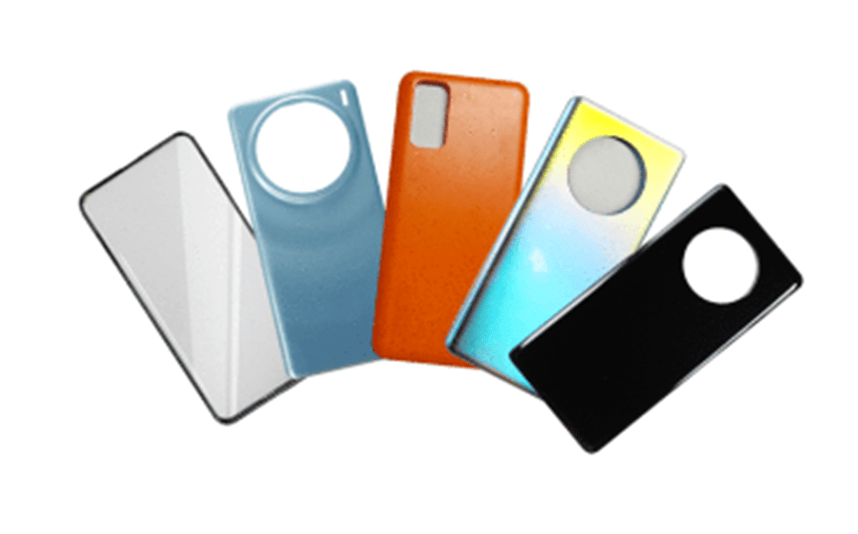
(Figure 1: Lens Technology products source official website)
In 2015, Lens Technology was listed on the GEM of the Shenzhen Stock Exchange. In the same year, Zhou Qunfei topped the Hurun Women Entrepreneurs list for the first time. In the following 11 years, the position of the richest woman changed hands several times. Zhou Qunfei’s ranking rose and fell, but never returned to the top. Until October this year, Zhou Qunfei became the richest woman in China for the second time with a wealth of 127 billion yuan.
Equity information from Qichacha shows that Zhou Qunfei and her husband Zheng Junlong hold a combined 58.59% stake in Lens Technology. The two have a combined wealth of 128 billion yuan, ranking 33rd on the country’s richest list. Hurun specifically pointed out that it returned to the top of the list after 11 years, relying on its businesses such as AI hardware, smart car displays and smart glasses.
It is worth mentioning that the wealth calculation deadline for the Hurun List is September 1. After September, the stock price of Lens Technology A shares fell from a minimum of 37.30 yuan/share to 26.58 yuan/share. As of November 11, Lens Technology’s A-share market value was 154.4 billion yuan and H-share market value was HK$77.4 billion. H-share prices fell by more than 40% during the year.
A financial report full of variables
Wind data shows that in the first three quarters of this year, Lens Technology achieved operating income of 47.902 billion yuan, a year-on-year decrease of 10.74%; net profit attributable to the parent company was 1.420 billion yuan, a year-on-year decrease of 50.06%; net profit after non-attribution to the parent company was 998 million yuan, a year-on-year decrease of 63.07%.
Looking at the third quarter alone, Lens Technology’s operating income was 19.035 billion yuan, a year-on-year decrease of 8.05%, and the net profit attributable to the parent company was 843 million yuan, a year-on-year decrease of 50.42%. Revenue has only dropped by about 10%, but profits have dropped by half, and non-profit deductions are less than 40% of the same period last year. Why does this happen?
Lens Technology provided an explanation in its third quarter report and subsequent investor relations activity record. The revenue side is affected by three factors: rising memory chip prices have put pressure on demand for smartphones and computer terminals, and revenue from related structural parts, functional modules and assembly businesses has declined; the RMB has continued to appreciate against the U.S. dollar, which has had a conversion impact on businesses that are mainly settled in U.S. dollars; major customers have adjusted the pace of new product launches in the autumn, causing the recognition of related business revenue to be delayed.
If you lengthen the timeline, you can see it more clearly. Wind data shows that from 2015 to 2025, Lens Technology’s operating income increased from 17.227 billion yuan to 74.410 billion yuan, and the net profit attributable to the parent increased from 1.543 billion yuan to 4.018 billion yuan. There was only a low point in 2018 (637 million yuan). Since then, it has climbed for many years, reaching a profit high of 4.896 billion yuan in 2020. In 2025, revenue will increase by 6.46% year-on-year and net profit will increase by 10.87%. The figures are still positive, but the growth rate is the lowest in the past four years.
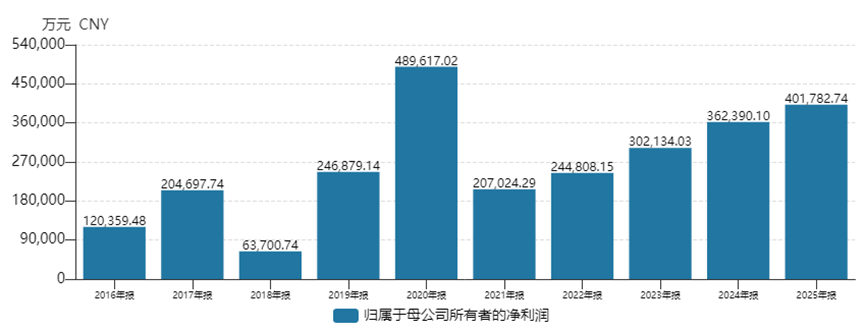
The real gap is this year: in the first quarter, the net profit attributable to the parent company was a loss of 150 million yuan, compared with a profit of 429 million yuan in the same period last year; in the second quarter, a profit of 726 million yuan; in the third quarter, a profit of 843 million yuan, profits improved quarter-on-quarter. In the third quarter, revenue increased by 29.26% quarter-on-quarter, and net profit increased by 16.04% quarter-on-quarter, but the year-on-year pit has not yet been filled.
The market reacted strongly to the third quarter report. Citibank pointed out that third-quarter revenue was 8% and 12% lower than its own and market expectations, respectively, and net profits were 65% and 63% lower respectively. The bank lowered the target price of Lens Technology’s H shares from 31 Hong Kong dollars per share to 20 Hong Kong dollars per share, and the target price of A shares from 40 yuan per share to 30 yuan per share. Net profits from 2026 to 2028 are expected to be 2.7 billion yuan, 5.4 billion yuan, and 7 billion yuan. CICC maintains the “outperform industry” rating for A shares, but sets the target price to 35 yuan per share. It expects net profit attributable to the parent company to be 3.421 billion yuan and 5.456 billion yuan in 2026 and 2027.
Five years of business development path
If you only look at the main business, the story of Lens Technology is a curve that is highly dependent on a single major customer and the mobile phone cycle.
In 2025, the top five customers will contribute 81.64% of sales revenue, of which the top customer’s revenue will account for 45.01%; smartphone and computer business revenue will be 61.184 billion yuan, accounting for 82.23% of total revenue. In the first half of this year, this segment’s revenue was 22.382 billion yuan, a year-on-year decrease of 17.67%, and still accounted for 77.54% of operating income.
Market analysis believes that customer concentration means that the customer’s product rhythm is the performance rhythm of Lens Technology. Because of this, Lens Technology’s efforts to find the second curve started earlier than the outside world imagined.
The announcement shows that as early as October 2021, Lens Technology established a wholly-owned subsidiary Lens New Energy, whose business involves photovoltaic glass, photovoltaic equipment and components. In December of the same year, Lens New Energy signed a contract with Triumph Technology Group and the Anhui Fengyang County Government. The cooperation covers photovoltaic glass, upstream raw material supporting and industrial park construction.
In 2023, Lens Technology established Blue Crystal Photovoltaic, planning to produce photovoltaic cells, and proposed a vertical integration path from glass thinning and deep processing, batteries, modules to energy storage. In June 2025, Lens New Energy and TCL Zhonghuan joined hands to jointly release lightweight photovoltaic modules.
At the 2026 CES conference, Lens Technology exhibited aerospace-grade ultra-thin flexible glass (UTG) for satellite solar wing packaging, extending the imagination of photovoltaics from the ground and the sea to space.
However, judging from the results, Lens Technology’s “photovoltaic dream” has limited implementation. In the 2021 and 2022 annual reports, photovoltaic products were included in the main business areas. Since then, financial reports have no longer appeared in the introduction of “the company’s main business”; Lens Technology has not separately disclosed the revenue and profits of the photovoltaic business.
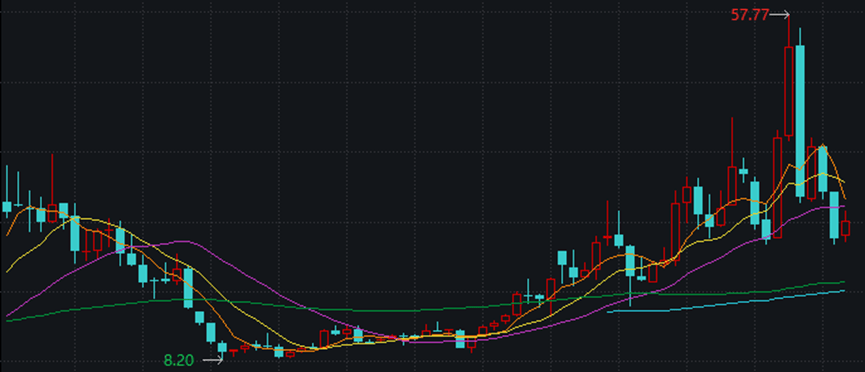
(Figure 3: Lens Technology’s A-share trend, source: Wind)
As embodied intelligence, AI servers, commercial aerospace and other tracks come to the forefront, the position of photovoltaics in Lens Technology’s strategic statement has obviously retreated. Currently, Lens Technology has increased its investment in AI. Lens Technology stated that its research and development resources will focus on high-end new materials, AI computing power and AI terminals.
It is reported that Lens Intelligent, a subsidiary of Lens Technology, has a daily production capacity of 100 units, and plans to provide customers with a monthly production capacity of more than 10,000 units of Q series and T series products. In addition, Lens Technology increased its investment in Yuanshi Technology and held 14.28% of its shares. In October, it signed an agreement to acquire 59.78% of PMG’s shares to achieve control. Lens Technology also acquired Tongsheng Optoelectronics to lay out solid-core optical fiber, hollow-core optical fiber, MPO optical fiber arrays and connectors.
Putting the above projects together, the internal logic of Lens Technology’s transformation is actually quite consistent: it has always been a “brittle material back-end processing” and precision manufacturing company. Lens Technology’s three capabilities of glass precision processing, metal processing, and automation equipment can be reused among mobile phone covers, automobile windows, TGV glass substrates, hollow core optical fibers, and liquid cooling structural parts. The company summarizes it as a trinity technical system of “materials, processes and equipment”. This is why its track seems to be jumping, but the bottom layer has always been on the same line of capabilities.
Related Reading
- Nvidia stock extends $2.7 trillion rout as SEC probe reportedly investigates its accounting2026-11-22
- Original: Three brothers from Hebei started with just 200 yuan and became number one in the world2026-11-21
- Global computing power enters the “post-Huang Renxun era”2026-11-21
- Stock market today: Dow, S&P 500, Nasdaq sink as Anthropic IPO fails to ease AI worries2026-11-21
- Anthropic is on the market, and the big model bubble is not far away2026-11-20