On November 17, Lei Jun, founder, chairman and CEO of Xiaomi Group, stepped onto the podium and spoke at the 2026 Asia-Pacific Economic Cooperation (APEC) Business Leaders Summit at the Qianhai International Conference Center in Shenzhen.
Later, some netizens left a message at the bottom of Lei Jun’s Weibo: “After watching Mr. Lei’s speech, I seem to be a little bit ‘socially afraid.'” The Xiaomi service account replied below: “It’s normal to be nervous in such a big international occasion.”
With such an understatement, “Lei Jun was nervous during his APEC speech” became the top trending search topic. So what is Lei Jun so nervous about?
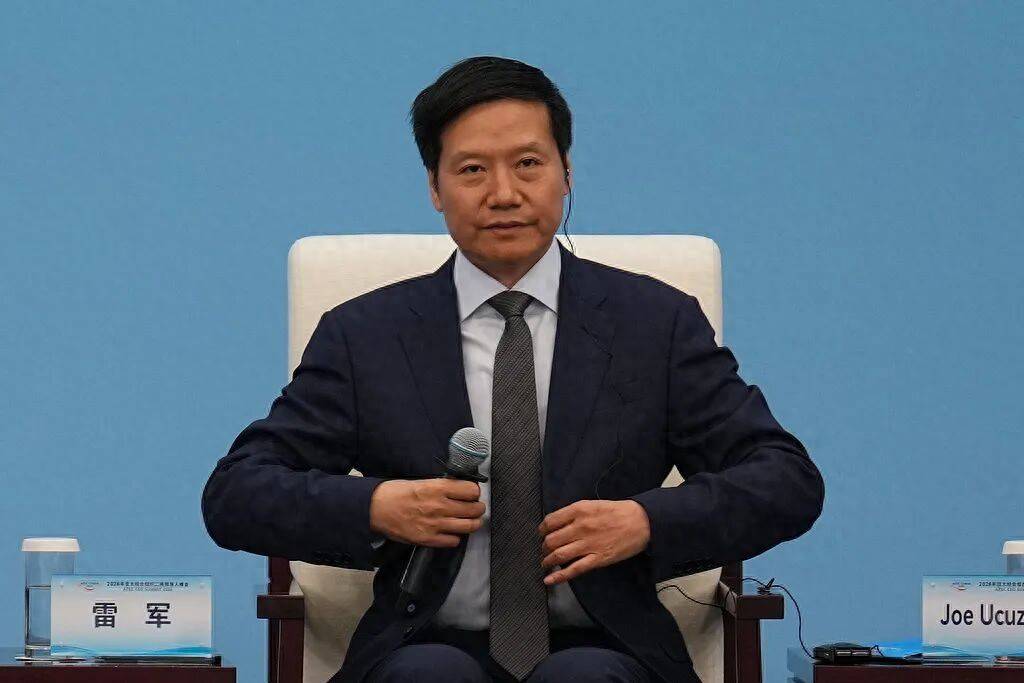
On November 17, during the 2026 APEC Business Leaders Summit, Lei Jun, founder, chairman and CEO of Xiaomi Group. Picture/Visual China
Insufficient business closed loop
Xiaomi’s official reply is half right. Lei Jun’s nervousness may indeed be inseparable from the occasion.
For Lei Jun, the daily Xiaomi press conference is a familiar home ground. In the audience are rice fans, media, and partners. The context is brand promotion, and the rhythm can be controlled by himself.
But APEC is completely different. As the highest-level business gathering in the Asia-Pacific, this summit has more than 2,000 political and business representatives, covering all 21 APEC economies. Among the participating companies are 115 Fortune 500 companies, as well as companies from 13 foreign economies including the United Kingdom, France, and Germany.
In other words, the people sitting in the audience are not rice fans, but colleagues who are in a different rule system.
The other half’s nervousness may come from what Lei Jun is going to say. On that day, Lei Jun was not talking about new mobile phone products or car deliveries, but about a track that has not yet been commercialized: AI.
Lei Jun pointed out that large model technology has advanced by leaps and bounds in the past four years, but the industry also has problems such as huge investment, limited implementation scenarios, and insufficient commercial closed loop. But he firmly believes that in the next few years, AI mobile phones, AI cars and other fields are expected to produce great products. “AI is a brand new era, and it may be worthwhile for us to use AI models, AI thinking, and AI technology to reshape every industry.”
In Lei Jun’s view, embodied intelligence is an important direction for AI to enter the physical world.
According to him, Xiaomi has been making robots for about 6 years. Recently, the humanoid robot was “internship” at Xiaomi Automobile Factory and can complete 8 hours of work, with two independent charging times in between. In his view, embodied intelligent robots will be a huge industrial opportunity, “its imagination should exceed that of the automobile industry.”
Trust is important
It is particularly appropriate to discuss AI’s transition from industrialization to commercialization on the APEC stage, because the audience happens to be the most critical participants in the global manufacturing chain.
On the one hand, AI cannot leave the screen and enter reality without a mature manufacturing supply chain. Take robots as an example. Like mobile phones and cars, they are essentially hardware products, but they are more dependent on the supply chain.
my country has the most complete humanoid robot hardware manufacturing industry cluster in the world, forming outstanding advantages in complete machine integration, structural parts, motor bodies, magnetic materials, batch assembly and other aspects, providing an industrial foundation for humanoid robot prototype research and development and internal production line testing.
However, a complete domestic industrial cluster does not mean that all components are completely self-sufficient. Some high-end encoders, precision transmission devices, and computing chips are still distributed in other economies in the Asia-Pacific.
On the other hand, as the world’s major economies, APEC members have large-scale manufacturing production capacity and generally face the real problem of labor shortage. This has also become the most important demand market for artificial intelligence and embodied intelligence.
APEC’s 21 member economies bring together the world’s core industrial forces. The “APEC in Charts 2025” report shows that manufactured products in the region account for more than 70% of APEC’s total imports and exports, and Northeast Asian economies are the core pillars of the manufacturing industry; the total GDP of the entire APEC economy accounts for 61% of the world, and trade in goods and services accounts for nearly half of the world.
However, an easily overlooked background is that although APEC member economies generally agree on the overall direction of “robots entering factories”, their attitudes, implementation pace, and regulatory rules are not unified.
Driven by aging, Japan and South Korea are actively promoting factory automation and humanoid robots, placing more emphasis on technology to fill the labor gap; while the United States encourages AI innovation, it remains vigilant about the impact on industrial safety and labor employment; labor-intensive economies such as Vietnam and Indonesia are worried about the employment pressure caused by large-scale replacement of robots, and are cautious about the large-scale introduction of humanoid robots into factories.
Therefore, Lei Jun also mentioned in his speech that the industrial and supply chains of Asia-Pacific economies have complementary advantages, and strengthening understanding and mutual trust is conducive to cooperation. “APEC is a platform that helps companies from different economies enhance understanding and promote cooperation.”
Under the summit theme of “Working together to promote prosperity and a win-win future,” how to promote the implementation of this new technology that has yet to be commercialized and verified still requires joint exploration and pragmatic cooperation among Asia-Pacific economies.
Reporter: Yu Yuan
Related Reading
- Nvidia stock extends $2.7 trillion rout as SEC probe reportedly investigates its accounting2026-11-22
- Original: Three brothers from Hebei started with just 200 yuan and became number one in the world2026-11-21
- Global computing power enters the “post-Huang Renxun era”2026-11-21
- Stock market today: Dow, S&P 500, Nasdaq sink as Anthropic IPO fails to ease AI worries2026-11-21
- Anthropic is on the market, and the big model bubble is not far away2026-11-20