“The New Year is called Chinese New Year only when there is Huiyuan!”
Every year when the Spring Festival is approaching, the familiar advertising slogan will sound on the TV, and Huiyuan juice is also an indispensable drink for Chinese people when they have the reunion dinner during the festival.
But this old brand, “Huiyuan” juice, which has been with the Chinese people for 30 years, was almost acquired by Coca-Cola back then. Who would have thought that after going round and round, it would now fall out with the Huiyuan Group, which made it big.
On October 19, Huiyuan Group issued a statement announcing that it would no longer produce juice products bearing the “Huiyuan” trademark, terminate the relevant OEM contracts, and officially launch the new brand “Zhajiayuan”.
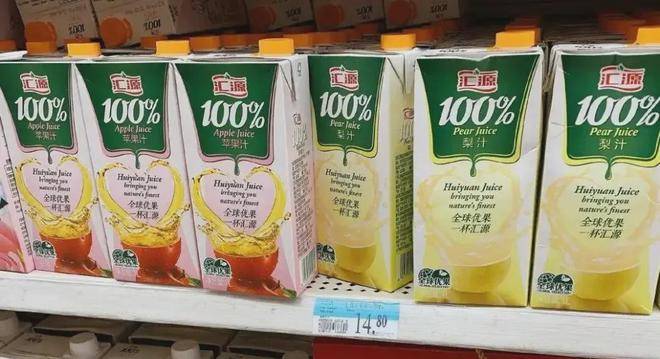
In my opinion, this is exactly the same as the dispute between “Jiaduobao” and “Wanglaoji” a few years ago, and the current situation of “Huiyuan” is just a different version of the same story.
Since the scripts are similar, will the final results be the same? Let’s continue chatting.
At first, it was easy for me to confuse the two “Huiyuan” brands. It wasn’t until I separated the trademark and production line that I realized that this split was not a sudden reversal, but that the lines had been laid for a long time.
Before the story begins, we must first distinguish between the two “Huiyuan”. Although their names are similar, they are legally two families, and today’s cutting is where they grew out.
Let’s look at Huiyuan Group first.
As early as the early 1990s, Zhu Xinli took over a canning factory that was about to collapse in Yiyuan and started slowly starting from scratch.
Later, it moved its headquarters to Beijing to establish a system. It has orchards, factories, production lines and a quality control system accumulated over more than 30 years.
Let’s look at Beijing Huiyuan.
The company is located in Beijing and came to Beijing two years after Huiyuan Group, which was founded in Shandong. Huiyuan Group had previously been a shareholder of Beijing Huiyuan and also helped it produce and supply goods.
Even if they were not separated, the trademark is legally owned by Beijing Huiyuan.
In other words, the brand is under the name of Beijing Huiyuan, and the production line is in the hands of Huiyuan Group. The two parties were originally a family, relying on authorization and OEM to make a living.
However, in 2021, the situation took a turn for the worse, and Huiyuan Juice was forced to delist from the Hong Kong Stock Exchange. Due to the increasing debt burden, it was no longer able to maintain operations, so it had to choose to undergo bankruptcy reorganization in the hope of reversing the situation.
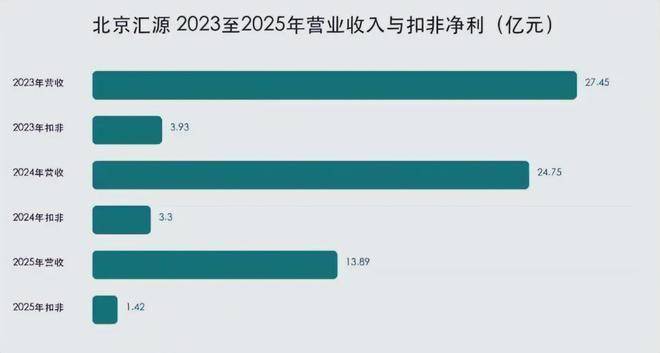
Then in the middle of the next year, the reorganization plan was approved and the assets were split into two pieces:
One piece is a trademark owned by Beijing Huiyuan.Control was handed over to the shareholding platform of restructuring investor Wensheng Asset, accounting for 60% of the shares.
The other piece is that the orchards, factories, and supply chain remain with Huiyuan Group.The founding team will continue to manage it, while Zhu Xinli himself will completely withdraw from Beijing Huiyuan.
In other words, from this day on, the name “Huiyuan” and the production line “Huiyuan” are no longer a family legally speaking. They are bound together by an OEM agreement.
To put it bluntly, Beijing Huiyuan authorized the trademark and handed over the production of juice to Huiyuan Group.
However, this structure lasted less than three years, and insurmountable conflicts arose between the two families, causing the relationship to intensify until it broke down.
In January last year, Beijing Huiyuan terminated the authorization of all trademarks of Huiyuan Group, and the foundry partnership ended.
The two companies were once partners and now are rivals in court.
More than a year later, the verdict was handed down.
In October this year, the Fuzhou Intermediate Court’s judgment concluded that two companies under the Huiyuan Group continued to make and sell Huiyuan juice after the trademark authorization was terminated.
The court found that the two companies had both trademark infringement and unfair competition, and ordered them not to use the “Huiyuan” brand name anymore, and ordered them to pay Beijing Huiyuan more than 97 million yuan in compensation.
As soon as the verdict came out, Huiyuan Group quickly stated its position and would no longer accept any Huiyuan-related OEM orders. The entire production capacity of the factory would be used to make the new brand “Wejia Guoyuan”.
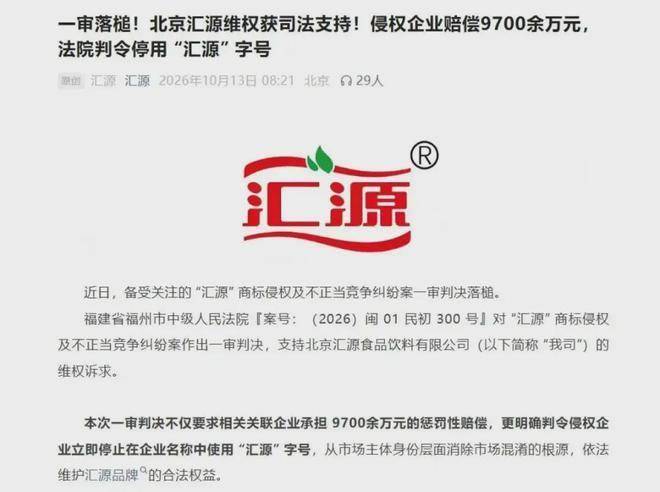
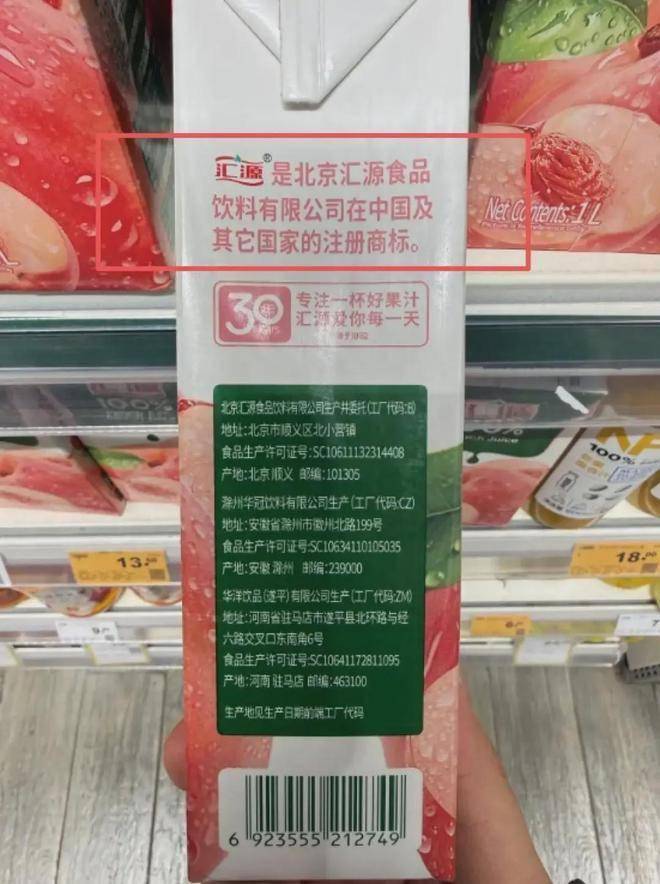
I want to remind everyone that there is a sentence in this statement, which is for us consumers. The Huiyuan juice now on supermarket shelves has nothing to do with the old team in terms of supply chain or quality control.
That night, Beijing Huiyuan also issued a stern statement to counterattack. The wording was very blunt: Huiyuan Group is not the right holder of the “Huiyuan” trademark, and it does not need to and must not make a severance statement on the “Huiyuan” trademark.
To be honest, in my opinion, this is true legally, because the trademark has been under the name of Beijing Huiyuan from the beginning to the end, so Huiyuan Group cannot be said to be “cut off”, but it can no longer be used.
At this point, Beijing Huiyuan didn’t give up yet, and then added another punch: Since last year, there has been no authorization here. It took two full years for the relevant companies to stop the infringing products. The other party said that they were sincerely pleased about this.
Translated, it is: One said “I won’t do it” and the other said “You are not qualified to do it in the first place”.
The two statements were issued on the same day, and they both mentioned this, indicating that the two sides have completely broken off.
For consumers, the most intuitive picture is that starting from today, the brands and production lines of all juices labeled “Huiyuan” on the shelves have gone their separate ways.
To put it bluntly, the name is still the same, but the thing is no longer the same thing.
Speaking of which, I have to tell you about the time when Huiyuan was almost acquired by Coca-Cola.
Although these two events are separated by seventeen years, the thread between them is connected.
In September 2008, Coca-Cola announced that it would acquire all shares of Huiyuan Juice at a price of approximately US$2.4 billion and HK$12.2 per share. The three major shareholders were Huiyuan Holdings, Danone, and Gourmet Grace. At that time, a total of 66% of the shares had signed irrevocable commitments.
Chairman Zhu Xinli was not idle for this transaction and made two preparations:The first is to significantly shrink the sales team, and the second is to frantically deploy orchards and production capacity upstream, trying to sell Huiyuan at a good price with a “whole industry chain” attitude.
But unexpectedly, on March 18, 2009, the Ministry of Commerce vetoed the deal in accordance with the Anti-Monopoly Law of the People’s Republic of China on the grounds that Coca-Cola might use its dominant position in carbonated drinks to tie in with the sale of juices and squeeze the living space of small and medium-sized juice companies.
In this way, the deal that was about to fall was rejected, but the stalls that were paved for the deal would definitely not be taken back.
During the acquisition negotiations, Huiyuan built orchards in Hubei, Anhui, Ningxia and other places, spending 2 billion yuan in just two months. The sales team was cut from nearly 4,000 people to just over 1,000, which meant that terminal control was instantly dispersed.
The result is that Coca-Cola is gone, but the orchards and factories that were opened are still there, but the production lines are idle, so cash flow begins to tighten.
From 2009 to 2017, although Huiyuan’s revenue climbed from 2.8 billion to 5.3 billion, which looks pretty good, its liabilities soared from 2.2 billion to 11.4 billion.
It is not difficult to see that the heavy assets built for acquisition by Huiyuan not only did not wait for the buyer of the other party, but instead waited for high interest rates. Until 2021, the company’s overall operations were really unsustainable, so it had to go bankrupt and reorganize.
When I review this old account, I always feel sad. The stall I set up in order to sell it at a good price ended up becoming a heavy asset that held me back.
In June 2022, the reorganization plan was approved.
According to the original reorganization plan, Wensheng Asset borrowed Zhuji Wenshenghui and agreed to invest 1.6 billion in three years in exchange for 60% of Beijing Huiyuan’s equity.
The plan makes a seemingly smart arrangement in terms of asset division: the trademark belongs to Beijing Huiyuan, while the orchards, factories, and production lines remain with Huiyuan Group. After the distribution, each group of people took what they had.
In other words, Wensheng controls Beijing Huiyuan and holds the “Huiyuan” brand; while Zhu Xinli’s old department guards Huiyuan Group and holds on to the supply chain and production capacity accumulated over more than 30 years.
How will you spend the next days?
The answer is as we mentioned before. Their previous cooperation model was very simple, relying on an OEM contract: Beijing Huiyuan authorized the trademark, handed over production to Huiyuan Group, and sold the finished products to Beijing Huiyuan.
On the surface, there is no problem with this connection.
But if you dig deeper, you will find that such a structure is very fragile in terms of underlying relationships. Because the trademark party feels that the production line party is taking advantage of itself, and the production line party feels that the trademark party only uses the brand and does not work.
It has to be said that such conflicts also laid the foundation for future relationships, and the fire that ignited this thunder was money.
While the lawsuit was ongoing, Huiyuan Group alleged that Wensheng promised to pay 1.6 billion, but after the first installment of 750 million was received, it was left with 850 million, and even after 11 reminders, there was no trace. Moreover, of the money received, 647 million yuan was managed and controlled by Wensheng itself and was not invested in Beijing Huiyuan to maintain operations.
Beijing Huiyuan’s statement is that it discovered that the original management had made large advances to affiliated companies of Huiyuan Group, and the controlling shareholder suspended payments before the risks were clarified.
To be honest, we outsiders can’t tell who is right and who is wrong.
But one thing can be said clearly. Today’s situation has planted the “seeds” of breakup during the asset reorganization.
On the day the cutting announcement was issued, Huiyuan Group wrote in the statement “heartbroken”.
After using a brand for more than thirty years, I watched it become another company’s brand.
But the real weight of this sentence lies in telling consumers: Capital can take away the name, but it cannot take away the orchard base, production and quality control system that have been accumulated for more than 30 years.
But the problem is that consumers recognize names, so without the word “Huiyuan”, this supply chain and quality control system that has been established for many years is difficult to directly convert into orders.
The starting data of the new brand “Zajiaguoyuan” is very honest.
On the day of the announcement on October 19, the four live broadcasts on the Douyin account were watched by more than 10,000 people, and the sales were less than 1,000 yuan. The juice with the highest sales volume in the Taobao flagship store showed “70 sold.”
This is a very realistic scene: these old people who have been making juice for more than 30 years just changed the brand and started over. The money they sold online in one day was not enough to cover the venue fee for a live broadcast.
Some industry analysts bluntly stated that if a brand new and unfamiliar brand lacks the mental accumulation of consumers and lacks the power to promote terminal display, its sales results will inevitably be weak.
On the other side, Beijing Huiyuan, who holds the trademark, is not happy either. Although he won the lawsuit and obtained the registration certificate, he did not own the production line.
Huiyuan Group clearly drew the boundaries in its statement. Don’t think that just because the Huiyuan logo is on it, it means it is still the original “Huiyuan”. In fact, the current “Huiyuan” and the founding operating system, quality, and industrial chain have long been two different things.
As the saying goes: After the gun goes off, there is no winner, and it couldn’t be more appropriate to apply to these two “Huiyuan” companies.
Indeed, the size of the entire market is gradually shrinking. Huiyuan’s market share has dropped from nearly 54% in 2016 to only 11% last year, and its offline market share is even less, less than 3.5%.
Now, after cutting it open, one part is in name only and the other part is in name but no one can create a complete “Huiyuan”.
When we look back on the past seventeen years, the impact of that unsuccessful acquisition on the company continues to this day.
In my opinion, there is no question of who wins or loses in today’s situation. It’s just that this national brand has been split into two halves, and both sides can only take a part and move forward.
As for the paths of both parties, how to move forward is what should be considered next.
At present, Huiyuan Group has changed its brand name to “Our Orchard”, but it will take time for this brand to be recognized by the public and return to the people’s horizons.
As for Beijing Huiyuan, although it won the lawsuit, in the future, whether it is the orchard, production chain or quality control, it must not lose the previous “Huiyuan” level in order to continue on this road steadily.
After all, a trademark is just a piece of paper, while a brand is an industry chain developed over thirty years.
Let me say, this brand split is more like a farewell.
Related Reading
- World, line up to sell goods to China!2026-11-12
- Ni Runfeng, the “King of Color TV”, passed away. From a workshop technician to the head of a state-owned enterprise, his ups and downs in half a life defined an era of home appliances.2026-11-12
- Original “Fearless” Wang Jianlin regains control of Wanda Business Management, and his net worth has evaporated by 200 billion in ten years2026-11-12
- Original: The middle-class people are crazy about grabbing Archaeopteryx in Sam2026-11-12
- There is no more double 11 in the world, leaving businesses miserable2026-11-11