The Labor Department reported that the US added 29,000 jobs in September, missing expectations. The unemployment rate ticked up to 4.2% from 4.1% in the previous month.
Economists expected a gain of 90,000 jobs last month, following a revised print of 133,000 job gains in August.
“Weak across the board when it comes to the demand for labor,” economist Mohamed El-Erian told Yahoo Finance. “The demand side is flashing yellow … [and is] going to put the Fed definitely on hold for October.”
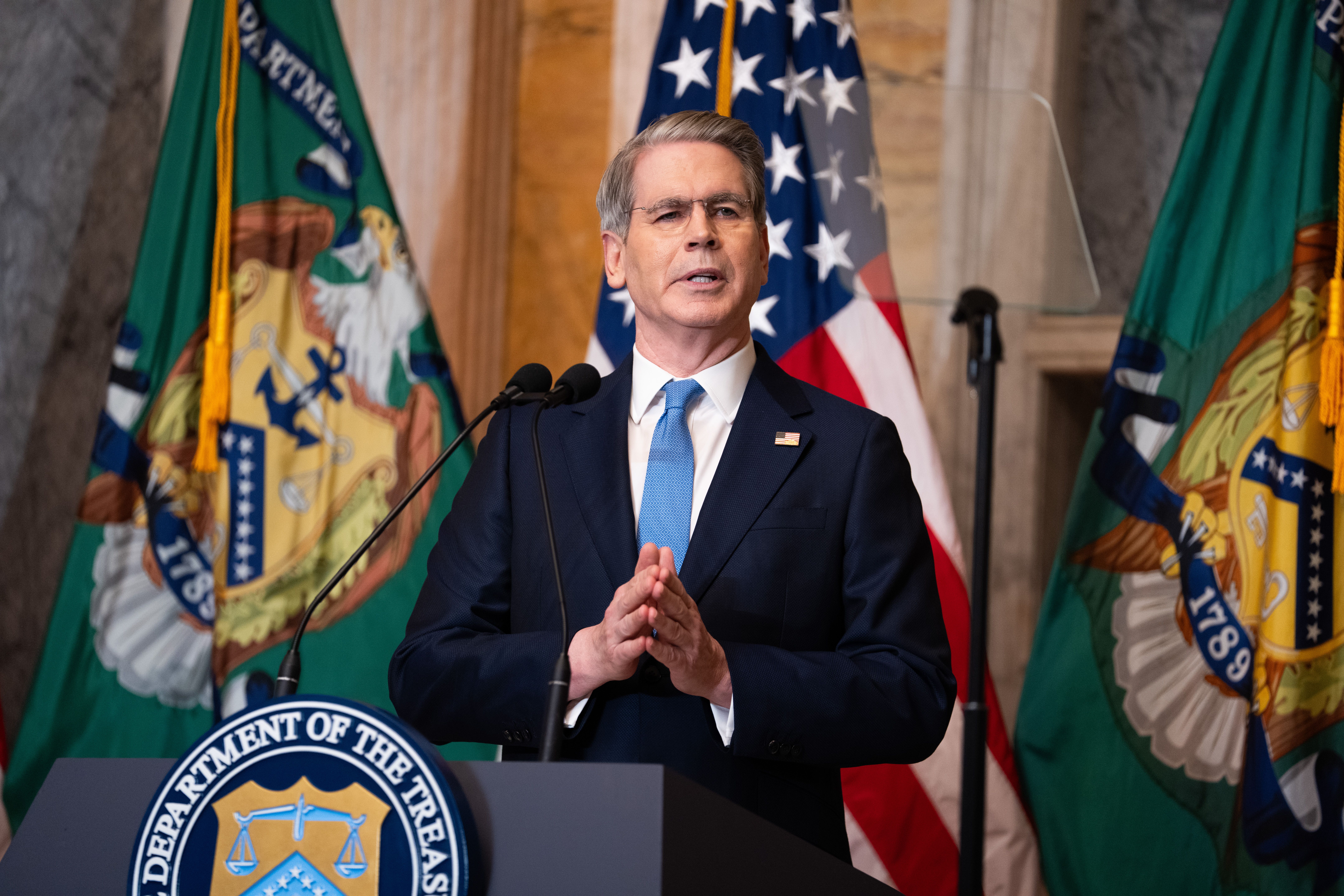
A stable labor market gives the Federal Reserve leeway to raise interest rates in October as the central bank focuses on tackling persistently high inflation. At a press conference following the decision, Fed Chairman Kevin Warsh said that bringing down inflation doesn’t have to come at the expense of US workers.
The September jobs report follows a string of indicators on US employment trends this week. Here’s a recap of what we learned in recent days about the “low hire, low fire” environment:
-
Job openings and hiring were little changed in August, according to the Labor Department’s monthly Job Openings and Labor Turnover Survey. The US added 7.1 million new job openings in July, which was down slightly from the previous month.
-
Private sector hiring picked up in September, according to payroll processor ADP. Private companies added 90,000 jobs this month, an improvement from a revised 36,000 jobs in August.
-
US companies’ layoff plans fell in September to the lowest levels for the month since 2022. But firms don’t appear to be rushing to add staff ahead of the busy holiday season, according to outplacement firm Challenger, Gray & Christmas.
-
Initial jobless claims ticked lower by 1,000 to 197,000 in the week ended Sept. 26. That was below economists’ expectations of 200,000 claims.
Follow along for more updates on jobs and hiring in the US.
-
El-Erian: ‘Weak’ jobs data puts the Fed ‘definitely on hold’ in October
The September jobs report was “weak across the board when it comes to the demand for labor,” economist Mohamed El-Erian told Yahoo Finance in reaction to the numbers.
“The demand side is flashing yellow,” El-Erian said, pointing to the downward revisions in job growth.
However, the supply side looks “encouraging,” El-Erian added. “We had a pop in labor force participation, something that we’ve been worried about for quite a long time, and that went up surprisingly from 61.6 to 61.8.”
“So good on the supply side, but we’ve got to now keep an eye on the demand side, and this is going to not just lower yields, as you said, but it’s also going to put the Fed definitely on hold for October.”
-
Grace O’Donnell
Here are the sectors where jobs were added and lost in September
Here’s a look at the hiring trends by sector, per the Labor Department:
-
Grace O’Donnell
US adds 29K jobs in September, widely missing expectations
The US added 29,000 jobs in September, the Labor Department reported on Friday, a moderation from August’s strong but revised down number of 133,000. Economists expected a gain of 90,000 jobs.
The unemployment rate rose to 4.2%, an increase from 4.1% in previous months.
While the jobs report remains a key piece of data and input for the Federal Reserve, inflation data has risen in significance as the Fed looks to curb higher prices for consumers.
-
Grace O’Donnell
Apollo’s Sløk: Why weak payrolls are no longer weak
Apollo chief economist Torsten Sløk pointed out on Friday that jobs report watchers may need to reset some of their expectations for a “strong” versus a “weak” payrolls number, given demographic and policy shifts in recent years. (Disclosure: Yahoo is a portfolio company of funds managed by affiliates of Apollo Global Management.)
“Breakeven job growth has collapsed from 200,000 per month to close to zero today, driven by a sharp drop in immigration shrinking labor force growth and continued baby boomer retirements pulling down participation,” Sløk wrote. “That means the consensus expectation of 90,000 jobs created in September is not a soft print but a solid one, comfortably above breakeven and consistent with a strong economy and a falling unemployment rate.”
(Chart: Apollo’s Torsten Sløk) As the chart above shows, the Fed and other institutions have slashed their estimates for the breakeven rate of job growth, or the number of jobs needed to be added to keep the unemployment rate stable.
That should also adjust the calculus of how the Fed thinks about the labor market and, therefore, how comfortable it feels about keeping rates higher.
“The bottom line is that with a strong labor market and inflation still significantly above the Fed’s 2% target, rates will continue to stay higher for longer,” Sløk wrote.
-
 Claire Boston
September’s jobs report is expected to show a labor market that’s holding steady
Key jobs data due out Friday is expected to show a job market that’s broadly holding up, even though a repeat of August’s blockbuster figures is unlikely.
Economists surveyed by Bloomberg expect the latest Labor Department data to show that the US added 85,000 jobs in September, far below August’s surprisingly large gain of 162,000 roles. The unemployment rate is expected to remain at 4.1% for a third straight month.
A return to lower but still positive job creation would bring the market back in line with the “low hire, low fire” environment that has defined much of the past two years. It would also be a sign that the Federal Reserve’s interest rate hiking plans haven’t stalled hiring.
“We remain upbeat on the US labor market as the Fed’s tightening cycle gets underway, expecting economic momentum to push the jobless rate lower into early 2027,” Andrew Husby, senior economist at BNP Paribas, wrote in a note.
-
Grace O’Donnell
Holiday hiring is getting ‘smaller and more surgical’
Retail Dive reports:
Many of the largest U.S. retailers historically announce seasonal hiring targets around this time of the year, per the report. The lack of disclosures appears to be part of a larger trend that began in 2024 when retailers “shifted toward flexible, on-demand staffing models,” Challenger said in its study.
Andy Challenger, workplace expert and chief revenue officer of Challenger, Gray & Christmas, said that high prices and tariff concerns are also factoring into retailers’ decisions to assess their current workforce before hiring net-new seasonal workers.
“It’s more about restocking staffing plans surgically than a return to the 900,000-plus seasonal hiring years we saw in 2020 and 2021,” he said in a statement, adding that consumers may also shop more frugally in the fourth quarter amid rising prices.
“The deepening pain from high energy costs may continue into the holiday season, and consumers may contract spending,” Andy Challenger said. “That said, August retail sales jumped 1.2%, and there’s no sign of a major spending pullback. But that resilience is not translating into large, early hiring commitments from the biggest retailers.”
-
Grace O’Donnell
The rise of the ‘two-job job’: 61% of workers say they’re now doing more than one role
Fortune reports:
Companies keep cutting jobs in the name of efficiency. A new survey suggests the work isn’t disappearing.
Korn Ferry’s Workforce 2026 report, released in September and based on a survey of more than 16,000 professionals across 11 global markets, found that 62% of respondents said their workloads had increased significantly over the past two years, and 61% said they were performing the responsibilities of more than one role. Nearly half, 45%, said they were too busy to deliver meaningful results that contribute to growth.
The findings land as companies continue to flatten their organizations. Last month, Uber said it would cut about 10% of its workforce, or roughly 3,300 employees, and reduce its number of managers by 20%. CEO Dara Khosrowshahi framed the restructuring as a way to create “clearer ownership, faster decisions, and more time spent building rather than coordinating,” and said it would reinvest the savings in growth and innovation. Unlike some tech executives, he did not attribute the cuts to AI.
-
Grace O’Donnell
Americans are still spending. Friday’s jobs report will show if that can last
CNN Business reports:
Americans have kept spending despite more than five years of higher prices. But the paychecks that have powered that spending are starting to lose steam.
Friday’s jobs report could show how much further pay gains are falling behind inflation.
The continued resilience of spending, which powers two-thirds of US economic growth, has been attributed to several reasons – mostly gains in wealth, but also demographics, post-pandemic savings, inflation effects, and a robust stock market – but a crucial factor has been the relative stability of the labor market.
“Having a job enables confidence to keep spending despite inflation headwinds,” Kathy Bostjancic, chief economist at Nationwide, noted on Wednesday.
A customer loads her groceries at a checkout counter at a Walmart Supercenter retail store in North Bergen, New Jersey, U.S., November 21, 2025. REUTERS/Mike Segar · REUTERS / REUTERS -
Grace O’Donnell
Job openings and hiring hold steady as ‘low hire, low fire’ market drags on
In the lead-up to Friday’s jobs report, the Labor Department’s monthly Job Openings and Labor Turnover Survey showed that job openings and hiring were little changed in August.
Friday’s jobs report is expected to point to a continuation of the “low hire, low fire” job market.
Yahoo Finance’s Claire Boston reported on the JOLTS report:
The economy had 7.1 million jobs open last month, down slightly from a revised 7.3 million in July, the report showed. The rate of job openings dropped to 4.3%, from 4.4% a month earlier.
Hiring in August held steady, with 5.2 million workers finding new positions.
Layoffs also stayed stable, with about 1.6 million workers, or 1%, involuntarily losing their jobs last month. The number of workers voluntarily leaving their jobs was also unchanged at 3.1 million, or 1.9% of the workforce.
-
Grace O’Donnell
The job market looks steady. Underneath, hiring intentions are stirring.
Yahoo Finance’s Kerry Hannon reports:
With lots of numbers rolling out on the job market this week detailing hiring, firing, and job openings, two new reports reveal what’s simmering underneath the surface.
Amid a long-running ‘low hire, low fire’ job market, Indeed found that annual growth in job postings has turned positive for the first time since 2022, according to new research.
“Our data shows hiring intentions rising slightly, but it’s unclear if those intentions will turn to action,” Cory Stahle, a senior economist at Indeed, told Yahoo Finance.
His take: The number of jobs added in a given month, whether up or down, is ultimately a function of employers’ hiring appetite and workers’ willingness to take a risk on a new opportunity.
-
Grace O’Donnell
Nike expects to cut jobs as part of restructuring effort
Nike (NKE) CEO Elliott Hill sent a letter to employees on Thursday, saying the company will reduce the number of roles in the business as part of larger operational changes.
Hill said Nike doesn’t yet know how many jobs or which jobs will be cut but that those decisions will happen at the start of 2027.
“This work will result in fewer roles across Nike, and I want to acknowledge that news like this creates uncertainty. I don’t take that lightly,” Hill wrote about the restructuring in a letter.
Nike is consolidating its geographies to three regions: Americas, Asia Pacific, Greater China, and EMEA (Europe, the Middle East, and Africa).
Nike has 73,000 employees, according to Yahoo Finance data.
Nike headquarters in Portland, Oregon, USA – June 14, 2023. · JHVEPhoto via Getty Images -
Grace O’Donnell
AI in America has a huge 1.7 million job shortage problem
Yahoo Finance’s Brian Sozzi reports:
To deliver on the stock market’s bold expectations for AI profits, you actually need human beings to build the data centers and handle a ton of other manual jobs in the supply chain.
But that skilled trade labor is getting increasingly scarce.
The US will need to fill 1.7 million skilled trades job openings annually through 2035, according to a new report out Wednesday from the Alliance for America’s Skilled Trades. Current training programs produce just 55 workers for every 100 needed.
The Alliance for America’s Skilled Trades was founded by BlackRock (BLK), Ford (F), Google (GOOG), GOOGL), and Carhartt. But the challenge of finding these workers to build out AI infrastructure could be seen in who the alliance is adding today: Meta (META), Microsoft (MSFT), Nvidia (NVDA), and Waymo.
-
Claire Boston
‘A strong report’: US private sector added 90,000 jobs in September
Private sector hiring picked up in September, according to payroll processor ADP, helped by continued strength in fields like education and healthcare.
Private companies added 90,000 jobs this month, an improvement from a revised 36,000 jobs in August, new data released on Wednesday showed. Economists surveyed by Bloomberg expected a gain of 75,000 jobs.
Workers also saw healthy pay growth, with base wages rising 3.2% year over year, and gross pay up 4.7%. Job changers saw even bigger gains.
“This is a strong report,” ADP chief economist Nela Richardson said. “After a three-month slight slowdown, this is the first re-acceleration that we’ve seen since May.”
Sectors including education and healthcare, along with leisure and hospitality, drove the bulk of job creation. The education and health services category has long been a leader in job growth, but September’s addition of 55,000 jobs was particularly robust, Richardson said.
“Even for the stalwart sector, it’s still positively strong job growth,” she said.
-
Grace O’Donnell
Anthropic study suggests blue-collar workers have decades before robots take their jobs
Yahoo Finance’s Michael Kelley reports:
Robots can already handle most physical tasks involved in American jobs — but mostly in controlled settings and at a cost too high to replace human workers.
A new study from the AI company Anthropic (ANTH.PVT) suggests this could hold true for decades.
“What work can robots do?” found that robots can perform about three-quarters of physical job tasks in the US, making up 34% of all working hours. At the same time, however, there are “significant barriers to adoption: most robots require highly structured environments, and are cost-competitive with people for just 0.3% of work.”
Robot prices have fallen about 3% a year since the 1990s. If that pace holds, the study estimates, it would take 40 years for robots to become cost-competitive for even 10% of US work.
Anthropic notes: “Calculated by comparing robot and labor costs. Labor costs are the fraction of time spent on exposed tasks multiplied by occupation total compensation. Given robot cost declines, the curve plots the share of all job tasks for which robots cost less than labor. Tasks are weighted by estimated time demands and occupation employment.” (Source: ‘What work can robots do?’) -
Grace O’Donnell
Initial jobless claims fall for fourth straight week
The number of people filing for unemployment dropped for the fourth week in a row, highlighting that the pace of firings remains low.
US jobless claims fell by 1,000 to 197,000 in the week ended Sept. 26, the Labor Department said on Thursday. That was below economists’ expectations of 200,000 claims.
Initial claims over the past year (FRED) Continuing claims, a gauge of how many people are receiving benefits, declined by 11,000 to 1.7 million in the week ended Sept. 19.
On Friday, the Labor Department will deliver its monthly employment report, considered the gold standard for jobs data.
-
Claire Boston
Layoffs are down, but employers aren’t rushing to hire for the holidays
Layoff plans fell in September to the lowest levels for the month since 2022. But companies don’t appear to be rushing to add staff.
US employers announced 43,281 job cuts in September, a 20% drop from September 2025, according to outplacement firm Challenger, Gray & Christmas. Through September of this year, layoff announcements are down sharply compared to last year, dropping 39% overall and 15% excluding government workers.
Technology companies continued to be responsible for the bulk of the latest layoffs, announcing 10,799 cuts in September. Nearly a third of all announced job cuts came from tech companies, leading all other sectors.
“Companies are in a wait-and-see period right now. Employers are facing high energy costs, an uncertain war in Iran, a rate hike that could make hiring more expensive, plus the likelihood of surging healthcare costs,” Andy Challenger, chief revenue officer at Challenger, Gray & Christmas, said in a statement.
Related Reading
- Treasury says over 60 million children have been auto-enrolled in Trump Accounts2026-10-02
- 34 tens of billions of fund managers resigned during the year, is public offering entering the farewell season?2026-10-02
- Layoffs are down, but employers aren’t rushing to hire for the holidays2026-10-02
- Original milk tea shop “rebellion”? Selling coffee in the morning and beer in the evening, what do you want to do to grab jobs in convenience stores?2026-10-01
- Trump to begin sending $500 ACA refund checks to 1 million Americans2026-10-01