Author: Hu Wenjing
In the past, luxury goods were an out-of-reach symbol in the spotlight of shows: bags and clothing priced in the tens of thousands, high-end narratives that were dually blessed by status and financial resources.
Nowadays, high luxury is no longer held, and the threshold is being quietly pried open by a cup of Thai milk worth 8.5 yuan – LV, Valentino, Givenchy, etc. have stepped down from the altar and printed brand logos on paper cups and churro bags. For only a dozen yuan, you can have the luxury of being able to “post on Moments”.
This is probably the closest that Chinese young people have come to luxury goods. However, this seemingly gentle “down-to-earth” may not be a compromise from beginning to end, but a precise traffic breakthrough and narrative reconstruction during the industry’s contraction period.
“Haute Couture” fell into the snack cabinet
“Valentino opens a snack shop?”
On the streets of Shanghai in September, a crossover full of contrasts is taking place in fresh snack shops. A can of high-end satin Thai milk for 8.5 yuan, a bottle of high-end velvet cocoa for 12.9 yuan, a pack of roasted buckwheat crisps for 7 yuan… The shelves are filled with food with the Valentino Beauty logo printed on it, covering categories such as baking, dried fruits, chocolate, and drinks. This is a chocolate workshop concept pop-up store jointly created by Valentino Beauty and I’m snack? fresh snack store.
It is understood that the two parties have launched two limited-time high-end products through this cooperation: high-end satin Thai milk and high-end velvet cocoa, which are only about 10 yuan. This is a Valentino that the public has never seen before: no price tag of tens of thousands, no cold and alienated store atmosphere. A drink that costs more than ten yuan a cup and a pack of snacks that cost a few yuan allow ordinary people to achieve “high luxury and freedom.” Many consumers exclaimed: “Finally, I have a Valentino I can afford.”
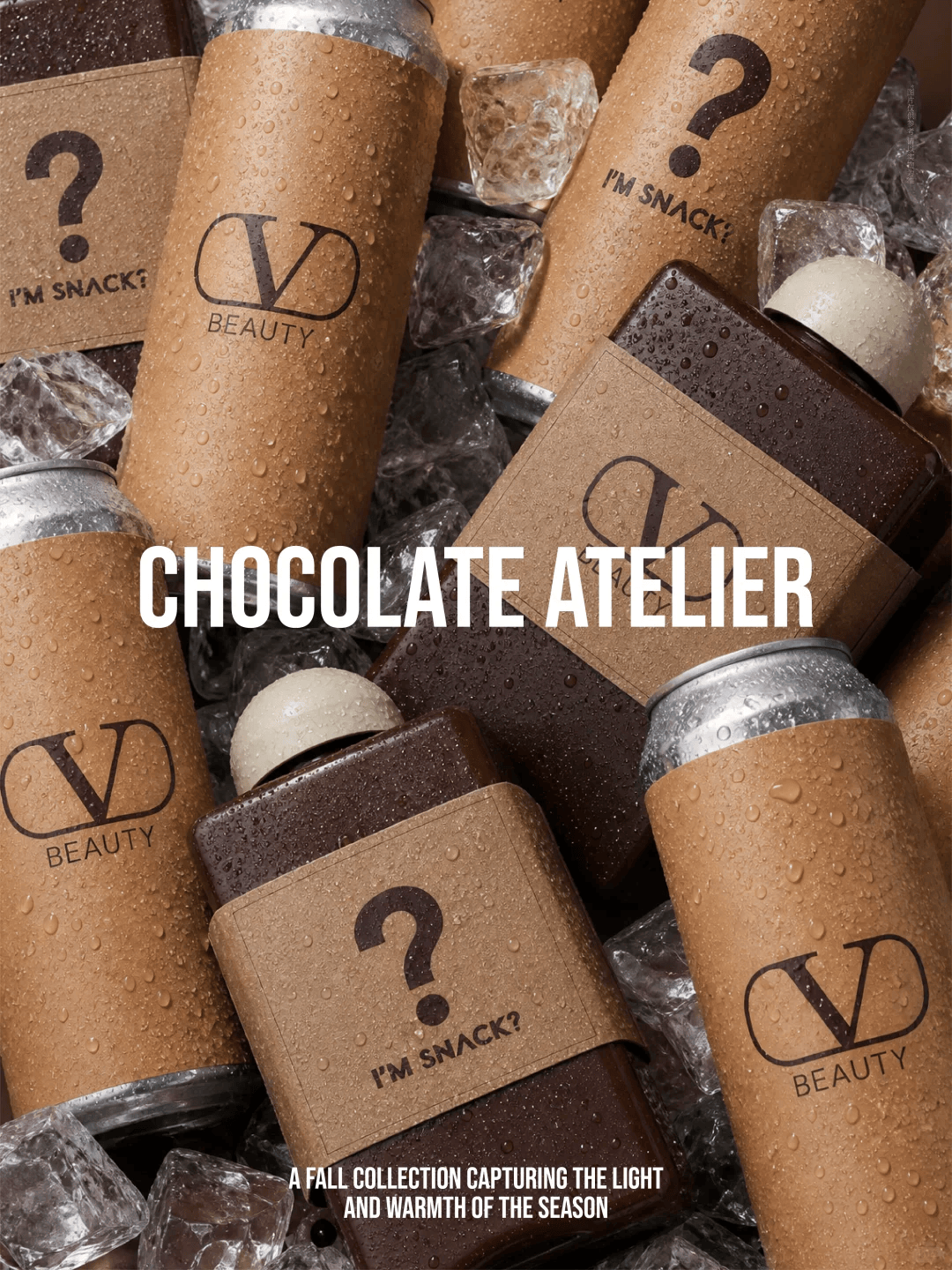
圖源:I’m snack?Fresh Snack Store Official
But what really brings people in is probably not the “couture” snacks. Many consumers admitted that the purpose of entering the store was to “get a sample of Valentino perfume with any purchase.” In other words, a pack of snacks costing a few yuan is actually an admission ticket: at the lowest possible cost, you can get evidence of a relationship with a big name.
The queue for Givenchy’s churros lasts for more than an hour
Valentino’s cross-border snacks are not an isolated example of luxury goods “coming down to earth”. A number of top luxury brands have already put down their posture and plunged into the most pyrotechnic market scenes, staging one after another contrasting pop-up carnivals.
In May of this year, Givenchy, which also positions itself as high-end luxury, launched a three-day limited-time “GIVENCHY Breakfast” pop-up in Shanghai with local stores (rice noodle shops, cafes, bars), selling fried dough sticks for 3 yuan, yellow swan eggs for 5 yuan, soy milk for 8 yuan, pancakes for 15 yuan… all sold are the most common Chinese breakfasts on the streets of Shanghai, and the prices are so affordable that it is hard to believe. Some netizens said: “Isn’t this really AI?” “I thought it was abstraction.”
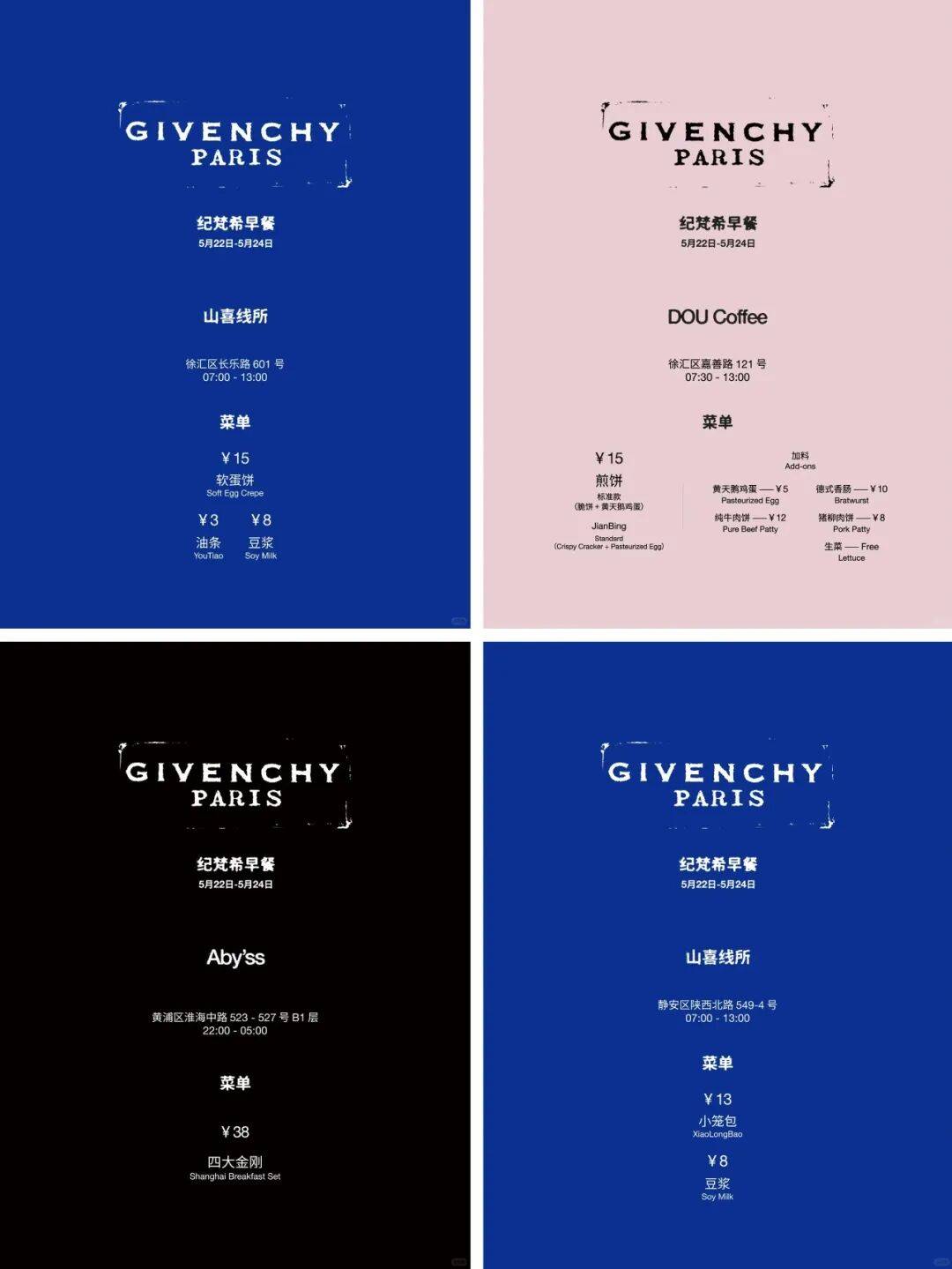
圖源:GIVENCHY Official
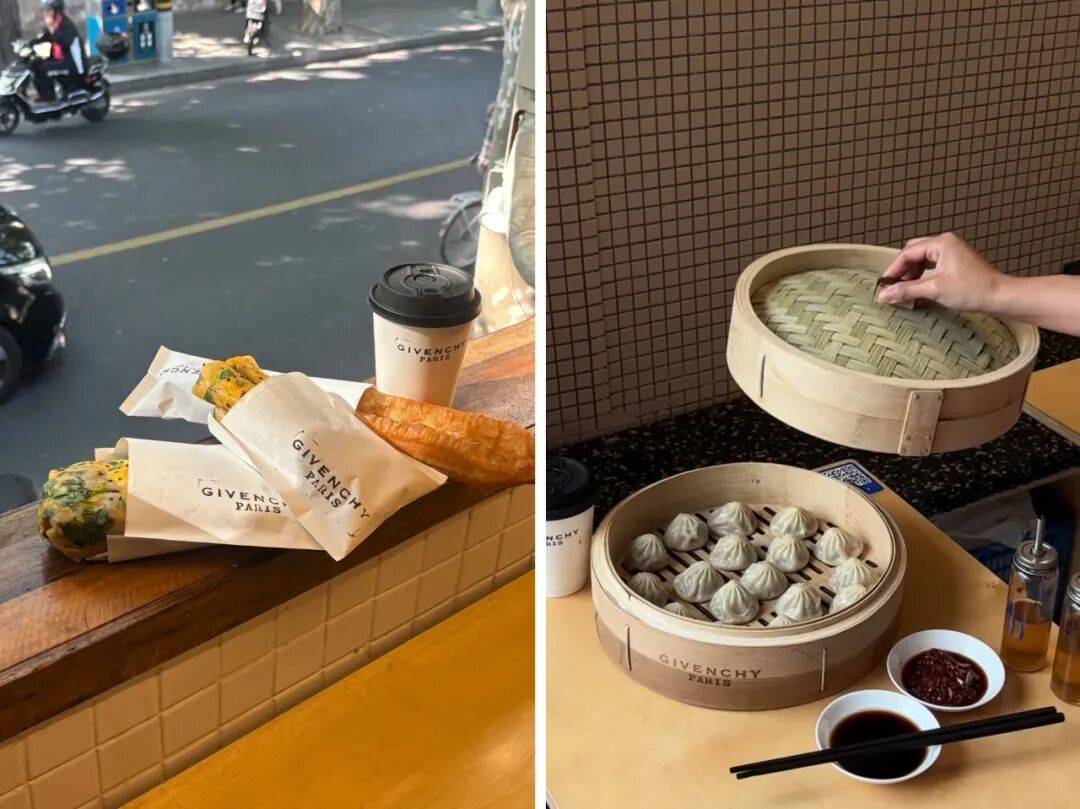
圖源:GIVENCHY Givenchy Official方
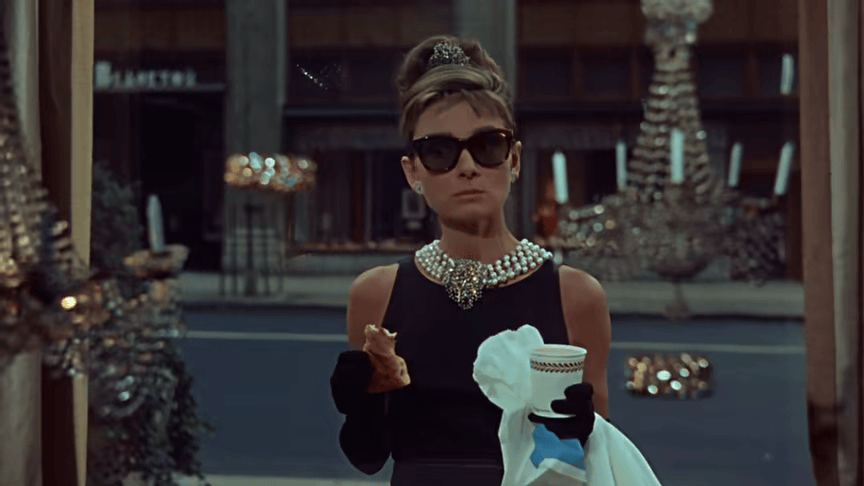
Sixty-five years ago, Audrey Hepburn wore a Givenchy little black dress and elegantly ate a croissant on the streets of New York, which became a classic scene in the history of fashion. Sixty-five years later, young people in Shanghai queued for an hour on the street just to buy a market breakfast with the Givenchy logo. The time and space conflict spanning more than half a century has given this crossover a bit of romance of retro tribute and a bit of banter about industry changes.
Closing stores is a subtraction, and experience is an addition.
Behind the collective sinking of top luxury brands and their deepening of affordable experience is the visible shrinkage and adjustment of the industry. Luxury goods that once frantically expanded stores and seized core business districts have now embarked on a large-scale “store closing and subtraction” process.
Givenchy is a typical representative of the wave of store closures. In the past two years, its stores in first-tier core business districts such as Tianjin Vientiane City, Guangzhou Taikoo Hui, Shanghai Plaza 66, Shanghai IFC International Financial Center, Hangzhou Tower, and Beijing China World Mall have been closed one after another.
Not only Givenchy, but also top luxury brands such as LV, Gucci, Prada, Zegna, and Cartier have all intensively adjusted their offline layout in the past year. LV successively closed its Beijing Capital Airport store, Chengdu Tianfu International Airport store, Kunming Jinge Department Store Time Store and many other stores, and completely withdrew from the Guizhou market on August 31.
Behind the shrinkage of the industry is a complete iteration of consumption logic. The spring update of the “Global Luxury Market Research Report 2026” jointly released by Bain & Company and Altagamma, the Italian luxury goods manufacturers industry association, stated that in 2025, sales of the personal luxury goods market will decline slightly to 358 billion euros (2024 sales of 364 billion euros). The study points out that the current market is profoundly affected by four intertwined forces: experiential consumption value surpasses physical goods, regional growth engines, iteration of consumers’ definition of luxury goods, and customer acquisition channels that are rapidly reconstructed due to the impact of AI.
The Bain report pointed out that the current luxury goods market is undergoing dual structural and cultural changes, and the consumer mentality has shifted from “owning luxury goods” to “experience the present”.
Luxury goods are “not doing business”,
Is it traffic self-rescue?
Based on the new consumption logic, luxury goods have jumped out of the traditional luggage, clothing, and beauty tracks, and built a new brand experience scene in an asset-light cross-border way. Coffee, catering, and pop-up stores have become the “new traffic fronts” for top luxury.
In recent years, luxury brand cross-border catering has become the norm. FENDI collaborates with Heytea, LV collaborates with Manner, Dior collaborates with Grid… The combination of top luxury with national tea drinks and specialty coffee frequently hits the screen; Armani opened China’s first restaurant “ARMANI / CAFFE” at Beijing International Trade Center, positioning Italian cuisine and integrated Western food; PRADA opened Asia’s first dining space in Shanghai’s century-old Rongzhai, conceived by director Wong Kar-wai, with a cafe and restaurant on the second floor. In addition, LV, Dior, and Tiffany have opened high-end cafes in some parts of Asia, becoming top local landmarks.
Among them, the “Louis”, a giant luxury cruise ship built by LV with a lot of money in Shanghai, is the most typical. It has three major business formats: Louis Vuitton store, Le Café Louis Vuitton restaurant and “Extraordinary Journey” brand exhibition. The outside of the hull is crowded with tourists taking photos and checking in, and it has become one of Shanghai’s famous commercial landmarks.
The afternoon tea at Le Café Louis Vuitton restaurant is so popular that it is hard to get a ticket. Consumer Reports checked the official mini program and found that the afternoon tea seats will be full for the next 18 days, so you need to stay in to grab a seat. Scarcity has given rise to business: a service provider that specializes in providing reservation services for restaurants across the country told Consumer Reports that the reservation fee for afternoon tea on the day of the Mid-Autumn Festival (September 25) is 200 yuan per person.
圖源:LV CAFE applet
In addition to the lively check-in trend, there are also dark sides that consumers need to pay attention to. First, the “low prices” in the article are mostly limited-time pop-up or attracting prices. It is still unclear whether the normal pricing after the event is still “down-to-earth”; second, the difficulty of getting a ticket for LV afternoon tea has spawned scalper reservations, which are essentially to add a second dimension to the scarce experience. If resold at a certain price, consumers not only bear a premium, but also face uncertainty about the security of reservation information and payment; thirdly, the experience scenario has cognitive confusion about the main business – if the traffic diversion notification is insufficient, the boundary between “check-in” and “consumption” may be blurred. When a brand exchanges your store visits and data for a cup of coffee, distinguishing between “experience” and “payment” may be the most important thing for ordinary people to keep in this crossover.
High-end perfume brand Lelabo (owned by Estée Lauder) has opened its second coffee shop in the world in Shanghai, which perhaps best illustrates the success of this business. A clerk told Consumer Reports that the coffee business was good, but many consumers “didn’t know they were selling perfume at first,” and only a few bought perfume while drinking coffee.
Photo by Consumer Reports
Closing stores to subtract and adding experience are two sides of the same coin: when “possession” is no longer scarce, brands will use a cup of coffee and a pack of snacks to re-buy the relationship with consumers. Whether this “experience business” can truly convert traffic into sales, the coffee customers in the Lelabo store who “didn’t know they were selling perfume” have given the most simple comments.
For ordinary people, this may not be a bargain-hunting carnival, but more like a carefully designed encounter – you think you are approaching luxury goods, but in fact, luxury goods approached you first.
Related Reading
- “Sky-high divorce” raids Shennong Group2026-09-28
- The courier boy made a lot of money in Africa2026-09-28
- Trump says he’s ‘very seriously’ looking at a diesel export ban2026-09-28
- New energy vehicles are still there, but “father” is gone2026-09-28
- Two accounts of Chinese and foreign car companies2026-09-27