Turn a rural primary school with a lot of books into an Internet celebrity resort hotel priced at hundreds of yuan; turn an overgrown playground into a hot-selling camping courtyard… In the past two decades, more than 320,000 rural primary schools across the country have been dismantled and left idle, turning them into dormant assets that no one cares about.
In the past two years, these old school buildings that no one wanted have become hot spots for hotel brands such as Marriott, Huazhu, and Atour.
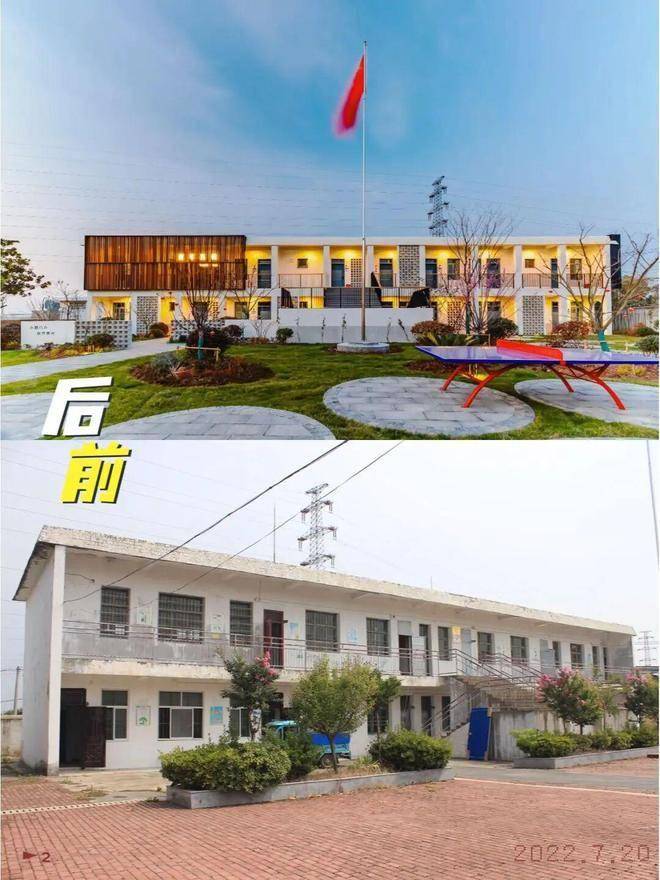
▲Comparison before and after renovation of Fengqiwu B&B in Chaohu, Anhui. Source: Xiaohongshu
Why did the abandoned primary school suddenly become a new trend in the wine and tourism industry? Behind the seemingly ubiquitous dividends, how many traps are hidden that ordinary people cannot see?
01
Tens of thousands of empty school buildings await revitalization
Why did the hotel take over?
Let me start with a heart-wrenching statistic: Since 2001, under the policy adjustment of “dismantling sites and merging schools”, in the past two decades, the number of rural primary schools and teaching sites nationwide has dropped from 491,000 to 163,000—329,000 have been closed.
In recent years, this process has not slowed down. Compared with 2020, there have been 29,700 fewer ordinary primary schools across the country in the past five years.
The once “primary school in every village” has become a limited edition memory of a generation, and the reason is not difficult to understand.
In recent years, the advancement of urbanization has caused the rural population to continue to emigrate. Children are sent to counties and cities to study. There is a serious shortage of students in village primary schools. In the past, every village had primary schools, but now the merger of several village primary schools has become the norm.
Coupled with factors such as the low birth rate, some village schools and teaching centers have become “hollow houses.”
But the problem is that if the children are able to walk, they cannot move out of the house. The children can move out, but the existing teaching buildings cannot be moved along with them.
And generally speaking, schools are carefully selected and carefully laid out in terms of location and courtyard integrity, so they are forced to become “sleeping resources” scattered in various villages, which is really a waste.
Under such circumstances, the wisdom of hotel groups has given the merged village schools a new look. From the “last stop” for children to leave, it has become the “first stop” for cultural tourism reconstruction to attract tourists.
Turning idle village schools into hotels and B&Bs may sound a bit like treating a dead horse like a living horse at first glance, but it turns out to be very wise if you think about it carefully.
As we said above, the old school building is a rare high-quality renovated embryonic body in the sinking market. The school buildings are uniform and regular, with almost no irregular structures that cannot be changed. The hardware foundation is not to mention, and the fault tolerance rate for decoration and renovation is extremely high.
At the same time, school buildings generally have large playgrounds and open public areas, which are undoubtedly a natural fit for the current popular micro vacations, team building, and parent-child tours.
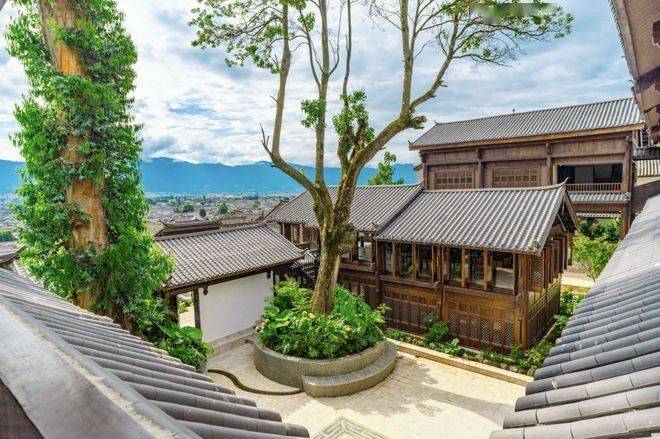
In addition, from the perspective of location selection, most primary schools are rooted in the core circles of villages and towns and are in superior locations. This advantage is grafted onto the hotel industry, which is a natural radiation circle for scenic spots and has its own passenger flow base.
Moreover, compared with new buildings, the renovation period of old school buildings is shorter, the investment is more controllable, and the revitalization costs are relatively lower.
This approach is in line with the direction encouraged by this year’s Central Government Document No. 1—not to engage in large-scale demolition and large-scale construction, but to carry out a “small but beautiful” reform based on local conditions and local conditions.
For counties and towns with financial constraints, this is a way to revitalize idle state-owned assets.
For hotel brands, this means exchanging existing assets for new passenger flows.
A business that benefits both sides is thus formed.
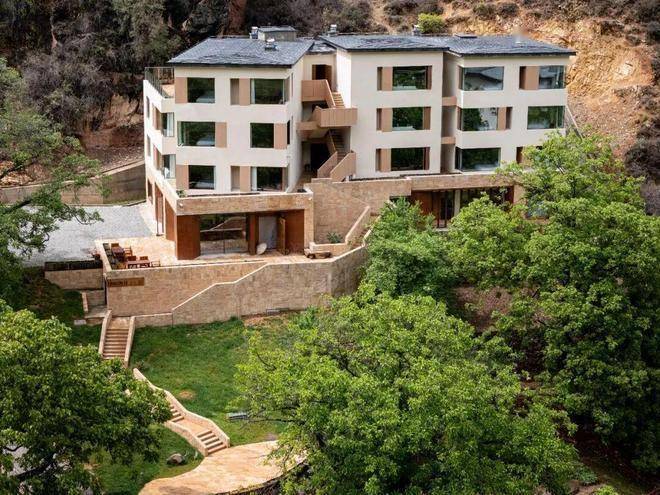
▲Nada Mountain Residence in Xilinyuan, Deqin, Yunnan Source: Xiaohongshu
02
It has been idle for more than ten years and no one cares about it.
Why has it become so popular now?
The idleness of annexed rural campuses is not a sudden phenomenon in recent years, nor is it new for hotel groups to look for incremental markets. There are only two core reasons why the two were accurately bound at this point in time and became the “best CP” immediately:
One is that the traditional hotel business is becoming increasingly difficult to do.
Another is that, coincidentally, new types of accommodation demand have just filled this gap.
At present, mid-to-high-end hotels have been deeply involved. Popular business districts in cities are densely clustered. They rely on price wars to grab customers and OTAs to support traffic. Rent and labor costs remain high. Rigid costs crush profits. It is difficult for new stores to make excess profits.
The “2025 China Hotel Investment, Operation and Brand Development Report” shows that the growth rate of the number of hotel rooms in 2024 will be 6.94%, and the scale expansion will slow down. As of the first half of 2025, the national hotel RevPAR will decline by 5% year-on-year, and the industry’s profit margin will be further compressed.
In addition, homestays, short-term rentals, RVs and other forms of accommodation have become the first choice for more young people due to their high cost performance and personalization advantages. The competitiveness of the traditional hotel model is bound to be impacted, which will directly lead to the diversion of customer groups.
The industry is thinking: How to break out of involution and find a breakthrough point for differentiation, and not rely on price wars to attract traffic, but to attract customers from the source?
At this time, the unused old school has been evacuated from the sinking market and has its own courtyard, playground, and low-density space, which is a perfect fit for the most popular experiential accommodation.
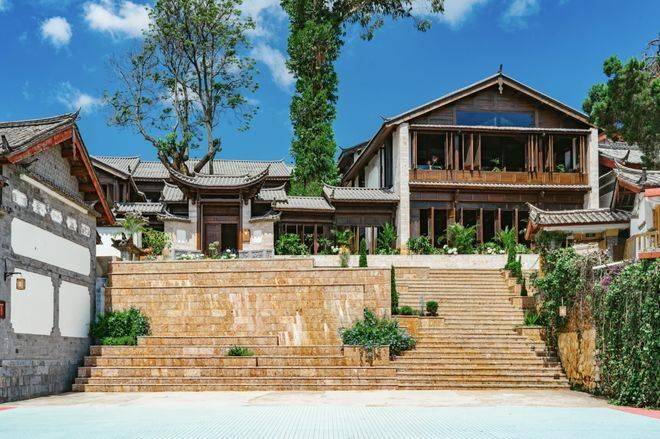
Market demand has also accurately captured the shortcomings of these empty school buildings.
In the past, business hotels relied on business travel and focused on efficiency, convenience and standardization.
But now the needs of the customer base have completely changed. With the rapid development of my country’s economy and society, tourism has entered the era of leisure and vacation. It is against this background that the rural “micro vacation” that has emerged in recent years has gained popularity with its small, light and new attitude, and has become a new choice for many people to go on the go.
Data related to same-trip travel shows that short-distance micro-vacations in rural areas continue to heat up, and bookings for rural destinations in suburban areas continue to increase. More tourists are willing to stay overnight, transforming “a trip here” into a deeply immersive experience.
The change that has accompanied this is that in the past, when talking about vacation, many people may have thought of how far away they were going and how luxurious a hotel they were staying in.
But now, changes in travel patterns, vacation needs, and mentality have made everyone’s travel and accommodation no longer blindly “luxury-only”. Instead, they can truly enter the daily life of the countryside and feel the relaxation and healing brought by the local environment itself.
▲Nada Mountain Residence in Xilinyuan, Deqin, Yunnan Source: Xiaohongshu
In addition to rural micro-vacation, parent-child study and senior health care continue to gain popularity. The old campus’s own educational atmosphere and site conditions are naturally suitable for study and study. The ecological and humanistic resources of the countryside bring its own health advantages. Even corporate team building, “where to go on weekends” and other needs are promoted by many parties, which have completely revitalized the idle old school building.
To put it simply, in the past, it was a flaw for the school property to be a traditional business hotel; but it was a natural advantage to be an experiential and scenario-based accommodation.
From another perspective, the hotel group’s collective “rush to the county” to go to the countryside is being positively confirmed by relevant data and front-line cases.
The “China County Tourism Competitiveness Research Report 2025” clearly points out that mid-to-high-end brand hotel chains are continuing to increase their presence in counties: international brands such as Marriott, Hilton, and InterContinental are collectively sinking into counties, and high-end brands such as Jiuzhaigou Hilton and Anji JW Marriott are entering counties for the first time; local brands such as All Seasons, Atour, and Crystal Orange are simultaneously occupying their spots.
Huazhu Group CEO Jin Hui once publicly stated that in the future, “Huazhu will be available in every county”; Lavande Hotels under Jinjiang Group covers 324 cities across the country, many of which are in county-level cities.
The big international hotel brands that once stood tall and focused on high-end full-service hotels are now beginning to put down their status and compete for the sinking market.
03
Is it a real outlet or a false dividend?
There is no need to demolish and rebuild, nor to tear down and start over. As long as the idle school building resources are used at the lowest cost, the idle school resources can be revitalized and the wasteland can be turned into “gold land” – the hotel group has entered the game at the right time. This looks like a sure-profit and no-loss business.
But is this really the case?
It seems like there are dividends everywhere, but in fact there are “holes” everywhere.
What outsiders see is: the rents in idle villages are cheap, the sites are huge, the renovations are popular, and there are opportunities everywhere.
However, hoteliers who are deeply involved in the renovation of existing hotels know that these empty schools that have been demolished and idle are converted into hotels and are popular, which does not mean that they can make money by entering the game.
▲Nada Mountain Residence in Xilinyuan, Deqin, Yunnan Source: Xiaohongshu
First, it cannot eat standardized meals.
Ordinary mid-to-high-end hotels can survive on business district passenger flow, business travel demand, and OTA traffic. However, most village primary schools are far away from the core business district and do not have stable business travel orders on weekdays. The annual revenue is highly dependent on weekends, holidays, study tours, and team building orders.
This kind of revenue structure greatly tests the hotel’s operational capabilities. Operators who are only good at or accustomed to the passenger flow in urban business districts will most likely have empty rooms all year round.
Secondly, “cheap” is its biggest misunderstanding.
Many hoteliers enter the hotel only because of its low rent, and some even do not require transfer fees. They feel that this is a sure win without losing money.
But the rent is only superficial, and the various hidden rectification costs are not a small amount. For example, fire protection redo, land adjustment, house type reconstruction, sound insulation renovation… any one of them is a big expense.
Although many projects save property money in the early stage, if they double the budget for rectification in the later stage, the payback cycle will never end.
The core sticking points are compliance and resource thresholds.
Ordinary city hotels can be promoted as long as funds are available; school building renovation projects require sufficient funds. The vast majority of rural primary schools are allocated land for education, and the nature of the land is the first red line. Direct use for commercial accommodation is not compliant, and land use regulations and property rights clarification need to be completed.
In addition, fire protection acceptance, cultural tourism registration, and study qualification approval, each test the ability to connect local resources.
Amateurs fight for funds and experts fight for resources, which is destined to fail to become a public cake that everyone can get a piece of.
From idle and abandoned school buildings to Internet celebrity hotels, it is not only a self-rescue for the hotel industry, but also the best way to revitalize existing rural assets.
Related Reading
- “Sky-high divorce” raids Shennong Group2026-09-28
- The courier boy made a lot of money in Africa2026-09-28
- Trump says he’s ‘very seriously’ looking at a diesel export ban2026-09-28
- New energy vehicles are still there, but “father” is gone2026-09-28
- Two accounts of Chinese and foreign car companies2026-09-27