“

Author丨Chasing Life
Editor丨Nuts
Cover source丨Unsplash
“
Amidst the chilly atmosphere of Big A, one company has bucked the trend and taken off in the past two days, setting new records for the highest market capitalization one after another.
This company is Midea Group, the leader in the domestic home appliance industry. Its stock price has recently exceeded the previous historical high reached on February 10, 2021, setting a new record since its listing. The total market value of the company’s A+H shares also once exceeded 720 billion yuan, also setting a record high.
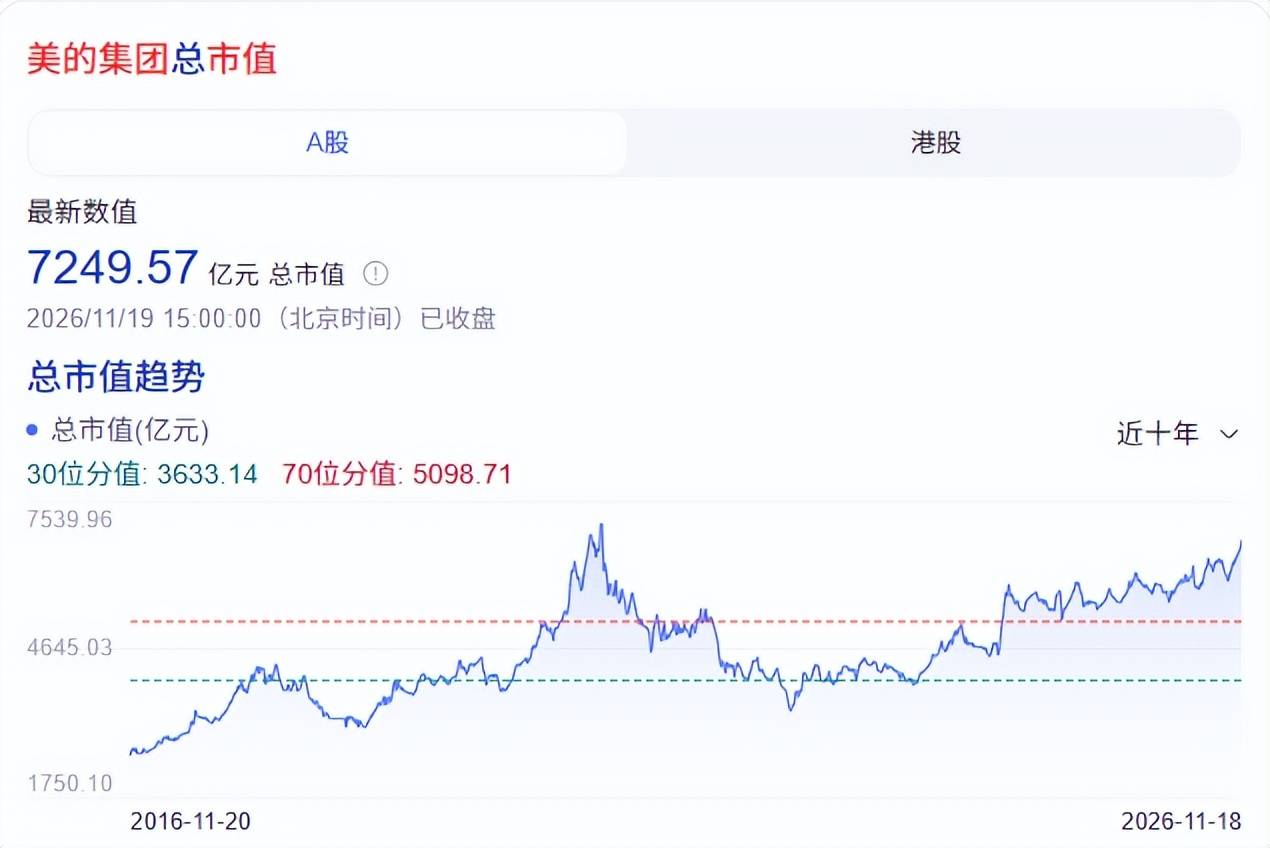
It has been five years since the last time Midea Group’s market value broke through a high of 700 billion yuan, but the domestic home appliance industry has already passed the stage of rapid growth. According to Aowei Cloud monitoring data, from January to September this year, the retail sales of the domestic home appliance market (excluding 3C) were 604.1 billion yuan, a year-on-year decrease of 10%; in quarterly terms, it fell by 6% in the first quarter, 12.4% in the second quarter, and 10.1% in the third quarter.
The stimulating effect of e-commerce promotions on home appliances has also continued to decrease. During this year’s “Double Eleven” period, online sales of home appliances fell by about 14% year-on-year.
In an environment where the overall growth rate of the domestic home appliance industry is slowing down, the stock prices of leading home appliance companies can still hit new highs repeatedly. This actually shows that the growth logic of domestic home appliance industry brands has changed.
The same narrative also happens to the TV giants Hisense and TCL. The Luotu Technology report shows that branded complete machine shipments in the Chinese TV market are expected to be 30.36 million units in 2026, a year-on-year decrease of 7.7%, setting a new low in market size in at least 17 years.
It is difficult to sell domestic TV sets, but the profitability of TV manufacturers has become stronger. In the first three quarters of this year, TCL Electronics’ revenue was HK$95.793 billion, an increase of 15.7%; its net profit attributable to the parent company was HK$2.104 billion, a surge of 43.6%. Hisense Video’s revenue was 44.417 billion yuan, an increase of 3.7%; net profit attributable to the parent company was 1.844 billion yuan, also an increase of 13.23%.
From Midea to Hisense and TCL, why Chinese home appliance brands have collectively embarked on a path of growth against the trend? There is only one answer: going overseas.
1
Chinese home appliances are sold all over the world
At the performance presentation meeting in September this year, Fang Hongbo, chairman and president of Midea Group, disclosed a set of Midea’s overseas operating data: Midea’s overseas sales accounted for more than 40% of the company’s total sales, and its products have been exported to more than 200 countries and regions around the world. Most overseas markets have established complete online and offline sales networks, with approximately 5,500 after-sales service outlets; more than 25,000 overseas retailers have accessed Midea’s overseas sales platform; as of June 2026, Midea has nearly 50,000 overseas employees.
On the R&D side, Midea has 29 R&D centers in 11 overseas countries, which can integrate global R&D resources and form a global technology R&D system with complementary advantages. Among the 68 major production bases in the world, 45 are located overseas, which can realize localized production and delivery and better grasp the growth opportunities in overseas markets.
Judging from Midea’s financial report, its most eye-catching growth engine overseas is the rise of its own brands. In the third quarter of this year, Midea’s overseas OBM revenue increased by more than 20% year-on-year, and OBM has accounted for more than half of overseas revenue.
Especially under the record-breaking high-temperature weather in Europe this summer, Midea’s PortaSplit mobile air conditioners were in short supply in the European market, which further increased the brand’s popularity overseas.
This product, designed to address the pain point of not being able to drill holes to install outdoor units in European apartments, has been “hard to find” in online and offline channels in many European countries and has been completely sold out. Even the second-hand market price has soared. Since June, PortaSplit split mobile air conditioners have received more than 160,000 new orders.
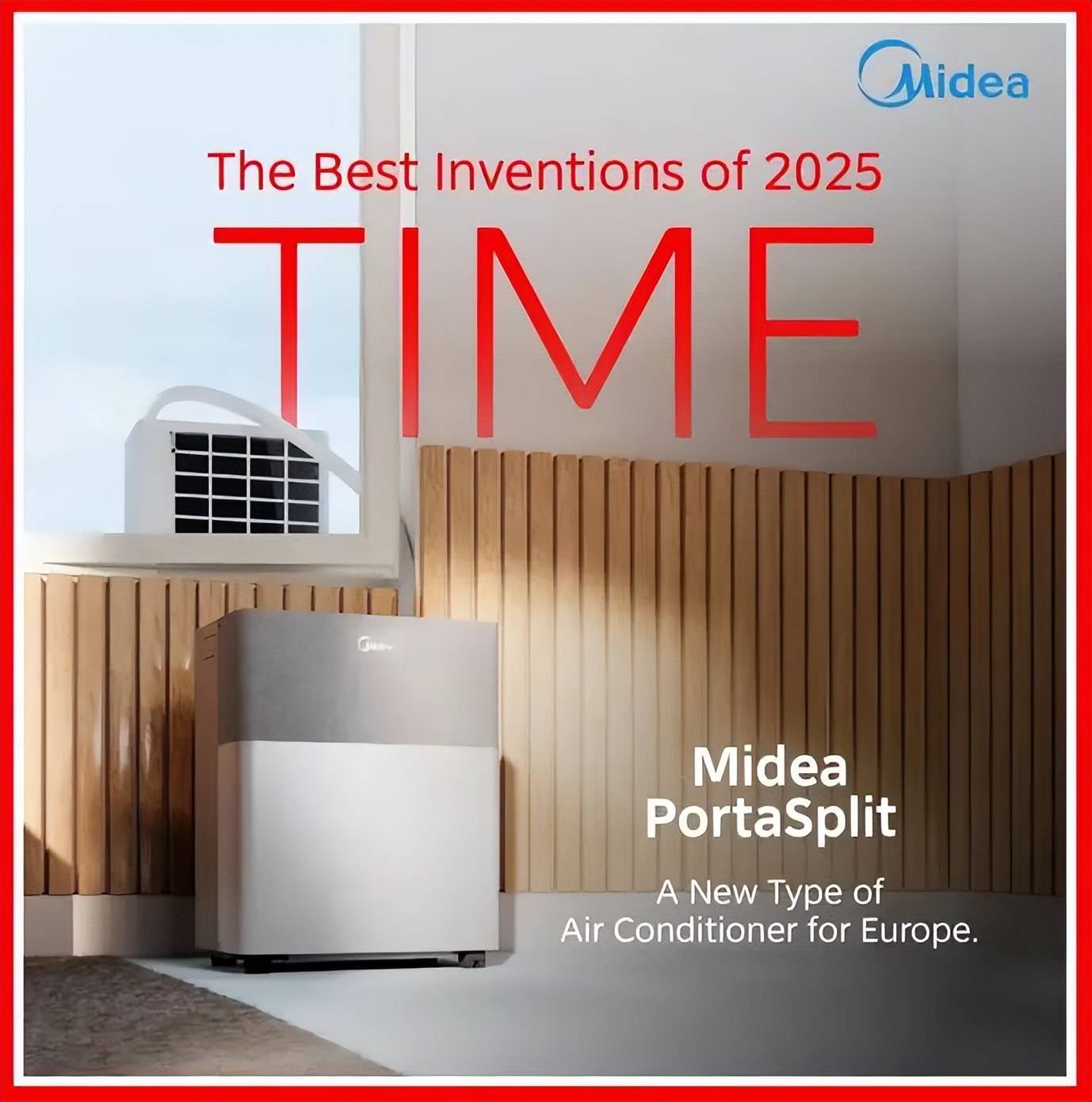
During the same period, Midea’s air-conditioning dual bases in Wuhu and Guangzhou received new orders from Europe for a total of 200,000 units in one month. In July, Midea air conditioners officially announced an emergency shipment of 200,000 air conditioners to the European market to cope with the surge in demand.
While Midea’s air conditioners are selling like hot cakes in Europe, Hisense and TCL’s TV products have also captured large markets overseas.
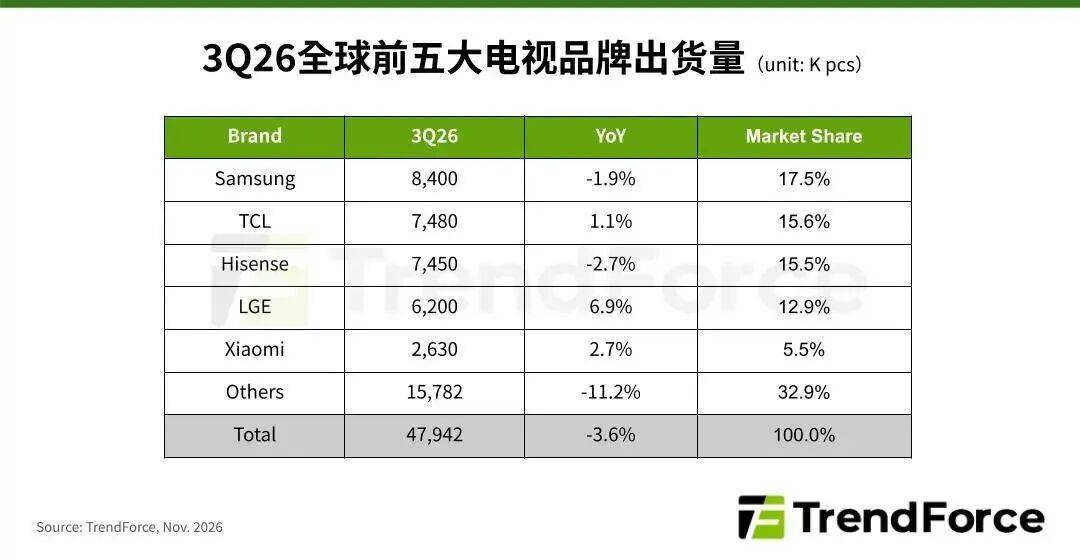
TrendForce’s latest TV industry research shows that Hisense and TCL’s global shipments in the third quarter of 2026 were 7.48 million units and 7.45 million units respectively. While they firmly ranked second and third, they almost pushed the top Samsung into a corner.
And contrary to the inherent impression, domestic color TVs are selling well overseas not just because of their price advantages. Hisense Group Chairman Jia Shaoqian once revealed that in the past, Chinese home appliances sold overseas for an astronomical figure of US$500. Today, Hisense products, especially Mini LED products, are sold overseas for as high as US$25,000, and they can still win the favor of the market.
Hisense sales data shows that from January to September this year, the sales of Hisense TVs in the global large-screen and Mini LED high-end TV markets increased by 77.37% and 75.53% year-on-year respectively. In high-end European markets such as Germany, the United Kingdom, and France, sales of products above US$3,000 increased by 110%, 83%, and 40% respectively.
TCL has also gained a foothold in overseas high-end markets. In the first three quarters of this year, the international market contributed nearly three-quarters of TCL’s TV business revenue. The average selling price of TCL’s overseas TVs increased by 17.8% year-on-year. Mini LED TV shipments in the international market increased by 94.5%. The gross profit margin of the overseas TV business also rose to 19% from 14.6% in the same period last year.
2
Going to sea is a must-answer question
The globalization of Chinese home appliance brands started very early, but based on the huge domestic market demand base, overseas growth in the early years can only be regarded as the icing on the cake, and it is difficult to truly support the development blueprint of the entire brand and group.
However, as the demand in the domestic home appliance market has peaked, the importance of overseas markets has begun to become increasingly prominent. Today, going overseas has become a must-answer for all leading home appliance brands.
Among the white goods groups, in addition to Midea, Haier has already established a basic base overseas.
Judging from the financial report data, Haier has realized that overseas revenue accounted for more than 50% in the second quarter of this year, and Haier’s road to overseas has also taken a long and steep route. On the one hand, it builds consumer trust through the acquisition of brands such as Sanyo Home Appliances and GE Home Appliances. On the other hand, it builds its own overseas factories, hires workers locally and pays taxes to hedge against tariffs and geopolitical risks.
Among small home appliance brands, emerging smart home appliances represented by sweeping robots, Chinese brands have already blossomed overseas. Among them, the two leading brands, Stone Technology and Ecovacs, have basically formed a “big head overseas” business structure.
Specifically, Stone Technology’s overseas revenue in the first half of 2026 was 6.073 billion yuan, accounting for 60.22% of total revenue; in the second quarter of 2026, Ecovacs’ overseas revenue accounted for 51% for the first time, exceeding the domestic market. The overall overseas revenue accounted for 49% in the first half of the year, and the proportion of overseas revenue in the first three quarters has also steadily accounted for more than half.
Whether it is large traditional home appliances such as refrigerators, color TVs, and air conditioners, or emerging small home appliances such as sweeping robots and projectors, Chinese brands and Made in China have become the common choice of global consumers, and this does not include some foreign brands that are already OEMed by Chinese factories.
From the perspective of product characteristics, more and more overseas consumers choose Chinese home appliances not because of low prices, but because real user needs are met.
For example, the Midea PortaSplit mobile air conditioner mentioned earlier, with its split mobile design and hole-free installation, is very suitable for the installation environment of most houses in Europe.
In Pakistan, locals have the habit of wearing large robes, and large families have a large load of laundry. Haier has launched a 15-kg large-capacity washing machine that can wash an entire family’s robes at one time.
In Vietnam, where there are frequent thunderstorms, TCL developed a color TV with lightning protection and stronger signal reception capabilities. It was welcomed by local consumers as soon as it was launched. In 2025, TCL’s share of the Vietnamese TV market will have entered the top three.
But this kind of success obviously did not happen overnight, and was even the result of many painful lessons learned. Just over a year ago, Midea voluntarily recalled about 1.7 million U-shaped and U+-shaped window air conditioners sold in the United States and Canada. The reason was that the U-shaped design of this product was not suitable for the high-humidity environment in North America, resulting in the retention of condensed water and the growth of mold.
The overseas market space is huge, which also means that the usage environment and user needs are different. Only by exploring the real local needs and developing customized solutions can we gain brand premium and long-term growth space.
3
Lessons for mobile phone manufacturers
The current success of Chinese home appliances overseas can easily remind people of the vigorous overseas journey of domestic mobile phones. Xiaomi, OPPO, vivo, Transsion and other brands are typical representatives of Chinese mobile phones overseas. Among them, Xiaomi ranks among the top three in global shipments, Transsion has a market share of nearly 50% in Africa, and OPPO and vivo have outstanding performance in the high-end markets of Southeast Asia and Europe.
From the perspective of overseas expansion, there are similarities between home appliance brands and mobile phone brands. The driving force is the saturation of the domestic market, which forces overseas expansion. The expansion strategy is to first open up emerging markets with cost performance and channel efficiency, and then penetrate into mature markets.
As a “predecessor” who established a foothold abroad and built brand awareness earlier than home appliances, the overseas development history of mobile phone manufacturers is actually very worthy of reference by home appliance manufacturers.
The first is the early warning of legal risks in different regions. The relevant layout must be carried out “before entering the market” instead of “getting on the bus first and paying for the ticket later”.
For example, patent litigation is a pitfall that many domestic mobile phone manufacturers have encountered overseas. Companies such as Xiaomi, OPPO, and Transsion have all encountered intensive and protracted litigation battles overseas. Although some lawsuits ended in Chinese companies winning, the time and energy spent and the damage to the brand are far from being compensated by a single judgment.
In fact, there are precedents for such stories in the home appliance industry. For example, the well-known home appliance brand Whirlpool has repeatedly protected its market in the United States through intellectual property rights and trade barriers. In 2016, it launched an anti-dumping investigation against China’s large household washing machines. In November last year, it launched an “ITC + District Court” dual-track lawsuit against Midea, Haier and other companies. The core target was a specific low-profile microwave-exhaust hood combination product.
The second is unpredictable geopolitical risks. Of course, as a company, it cannot be eliminated by unilaterally “doing the right thing” and can only be hedged by structural diversification.
Chinese mobile phone companies such as Xiaomi, OPPO, and Vivo have suffered a lot in India before. Even if they build local factories, hire people, and operate in compliance with regulations, their assets may still be frozen due to non-commercial reasons, and their equity may still be forcibly diluted.
Not putting eggs in the same basket and avoiding excessive and immovable assets in a single market is still an unbreakable and wise business philosophy in overseas markets.
However, there is an obvious difference between home appliances and mobile phones, that is, mobile phones have short iteration cycles and high replacement frequency, while the replacement cycle of home appliances is usually calculated in years.
But it also means that once brand trust is damaged, the repair cycle of home appliance brands will be longer.
Related Reading
- Anthropic engineer’s warning about Claude Code explains why tech outages could get much worse2026-11-22
- Original Unexpectedly, just one day after the APEC summit, China became famous around the world because of its three “specialties”2026-11-21
- Original Anthropic goes public and creates wealth: 96% of employees became millionaires overnight2026-11-20
- The beauties and handsome guys from UB.com want to enter your home and wait until they arrive.2026-11-20
- Original: Tencent’s shareholders will suffer again2026-11-20