The number 681 itself is an “own error”. According to the customer service explanation, 681 is the total number of global sales orders, which are orders from Virgin, and the two people displayed on the page are reservations that have been received by Ctrip Honghu. If someone in the Chinese channel is willing to pay 5.1 million, what kind of people are placing the order?
Article丨Female author of financial gossip: Jianshan
· · ·
According to Red Star News, 2027 Virgin Galactic space travel tickets were put on the domestic Ctrip platform. The number of copies sold at first was 681, but soon it became 2.

The number 681 itself is an “own error”. According to the customer service explanation, 681 is the total number of global sales orders, which are orders from Virgin, and the two people displayed on the page are reservations that have been received by Ctrip Honghu. If you place an order now, you will not travel with previously booked tourists because they booked earlier.
Ctrip customer service emphasized that a deposit of US$150,000 is required for booking, and the deposit is non-refundable if the trip is canceled. There are currently too many orders coming in, and we will only call you after selection. If someone in the Chinese channel is willing to pay 5.1 million, what kind of people are placing the order?
1./ Price breakdown: What did you buy for 5.1 million? /
Let’s first clarify an easily misleading fact. The ticket price for the same batch on the Virgin Galactic official website is US$750,000 per ticket, which is approximately RMB 5.4 million based on the current exchange rate. Ctrip’s RMB 5.1 million price is actually slightly lower than the official website’s USD price.The “5.1 million” mentioned in the news is not a story about “China’s price increase”, but actually a story about “channel distribution”.
What did the 5.1 million buy?
According to detailed disclosures in Beijing Business Daily, this “airship ticket” includes a total of 6 days of travel.The first four days are spaceport exploration, simulated cabin training, and comprehensive rehearsal. On the fifth day, you will experience a 90-minute suborbital flight on an air-launched spacecraft, and on the sixth day, you will return.The fee includes accommodation, meals, airport transfers during the four-day training period, as well as customized space suits, astronaut badges, Association of Space Explorers pins, flight videos and photo materials.
What’s not included is equally critical: round-trip international airfare, U.S. visa fees, insurance, and “additional costs for extended vacations.” The upfront cost that the buyer really needs to bear is far more “dissuading” than the 5.1 million yuan itself – but obviously, those who are willing to pay 5.1 million yuan will not care about spending tens of thousands more to apply for a visa and buy air tickets.
2./ Who is buying? Virgin Galactic itself gave the portrait/
Virgin Galactic Chief Commercial Officer Prichard rarely disclosed customer portraits at an industry conference in July 2026.
The age span is amazing:
“There are young people in their 28s and early 30s who are already successful in their careers, as well as people over 55 who want to travel intergenerationally.”
The wealth situation was equally surprising: among Virgin Galactic’s “future astronaut” community of about 650 people at the time, “half were high-net-worth individuals and half were not.” Prichard’s original words were: “If you know you can afford it, you will go; if you are excited enough about it, you will find a way to go.”
This means that “space tourist” is not just a label for the rich. A considerable proportion of Virgin Galactic’s customers are enthusiastic pursuers who regard space flight as the “ultimate experience of life”, rather than top wealthy people who purely use their wealth for entertainment. Prichard quoted an astronaut’s words: “The reason I make money in this life is to have this experience.”
Earlier data supports this: the youngest member of Virgin Galactic’s “future astronaut” community is 7 years old, the oldest is 86 years old, and customers come from about 60 countries.
3./ Who is paying for the “2 copies” of the Chinese channel? /
Ctrip customer service said that currently “there are too many inquiries pouring in, and we will not call you back until we are selected.” This sentence is very informative: the number of inquiries far exceeds the actual number of conversions. For Chinese consumers, the price tag of 5.1 million is first of all a “expected” curiosity product, and secondly, it is a serious consumption decision.
A worthy comparison comes from the domestic market. A report from Shangguan News in 2025 shows that the number of inquiries about space travel products has increased by 350% year-on-year, and the customer base is “mainly concentrated in entrepreneurs and investors in technology, finance, manufacturing and other fields.” This is highly consistent with the portrait of global space tourists: the first batch of space tourism payers are almost all from industries that have a natural affinity for technological innovation.
Another clue comes from the actions of domestic commercial aerospace companies. The suborbital flight fare of Traverser 1 is 3 million yuan. The first batch of passengers include academicians, entrepreneurs and actors. Actor Huang Jingyu joined as “009”. This path is completely different from that of Virgin Galactic: the latter sells “the sense of ritual of an American spaceport”, while the former sells “the sense of participation of domestically produced spaceships.” The price difference between 5.1 million and 3 million reflects not only the difference in products, but also the difference in two narrative logics.
4./ Hidden worries from Virgin Galactic: Selling tickets is easy, but taking off is difficult /
Putting aside the question of “who is buying”, a more noteworthy fact is that Virgin Galactic currently does not have the ability to fly continuously commercially.
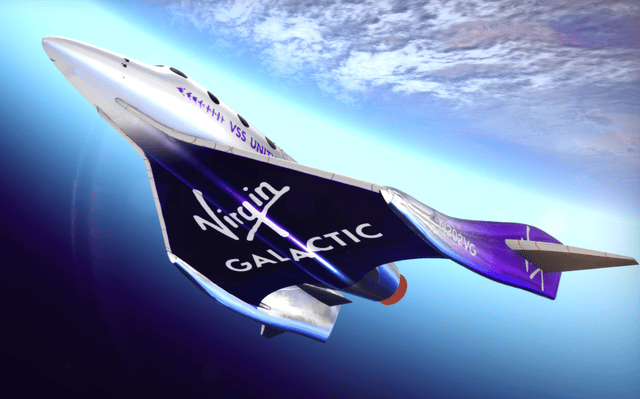
The previous generation spacecraft VSS Unity will be retired after completing its last commercial flight in June 2024. The new generation of Delta-class spacecraft was originally planned to resume commercial flights at the end of 2026, but the latest time has been postponed to February 2027. The second Delta spacecraft is not expected to arrive at the space port until March 2027. Virgin Galactic expects to achieve at least 10 flights per month by the end of the second quarter of 2027 and achieve positive quarterly cash flow in that quarter.
As of press time, Virgin Galactic’s share price is US$3.02, with a market value of approximately US$458 million, a decrease of more than 80% from the high point when it was listed.
This means that what Virgin Galactic is selling online is “futures.” Delivery times are uncertain, the spacecraft is not yet ready, and the company is still losing money. However, Virgin Galactic’s ticket sales pace has not slowed down: the US$750,000 batch launched in March 2026 was originally planned to be 50 tickets. Due to “strong demand and oversubscription”, the total booking amount exceeded US$50 million. The company plans to “open a new round of ticket sales at higher prices later this year.”
If you only look at financial data and operational status, Virgin Galactic’s space tourism business is full of uncertainty. But the consumer logic of buyers has never been about cost-effectiveness.
The core value of space flight lies in its irreplaceability: so far, only a handful of people in human history have entered space. Virgin Galactic’s Prichard puts it bluntly:
“Because so few people have actually been there, there’s not even a language or culture to describe what it is.”
5.1 million does not buy a 90-minute weightless experience, but an identity. An identity that says, “I was an early participant in human space exploration.” The essence of “learning how to leave the Earth” in the first four days is the construction of a sense of ritual – training, badges, customized space suits, and Space Explorers Association brooches. The symbolic meaning of these objects far exceeds their physical value.
Bloomberg Industry Research Analyst Eric Zhu’s judgment is representative: “The fundamental problems of the industry are scalability and cost. It targets a very narrow slice of ultra-high net worth people, but even this group will not generate repeated consumption.”