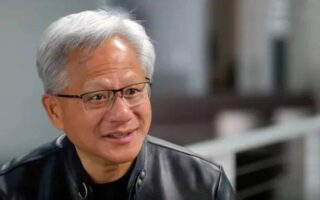
Introduction: A man who changed the world finally admitted that he also had problems that could not be solved with technology.
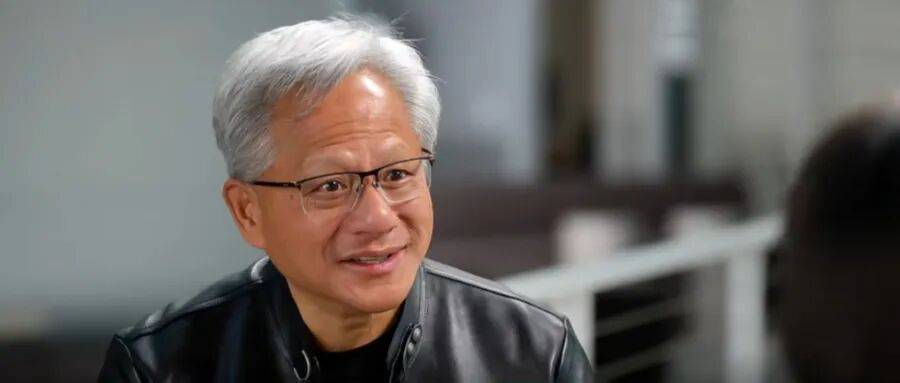
On November 8, Huang Renxun sent an email to Nvidia employees.
This time, he didn’t talk about artificial intelligence, chips, or Nvidia’s next-generation products.
He was talking about his marriage.
In this email, the 63-year-old founder of the technology giant admitted that he had been unfaithful to his wife. He said his actions hurt his wife and children and there was no excuse. He apologized to his family, as well as Nvidia’s employees, board of directors, partners and shareholders.
At the end of the letter, he wrote that his family should not bear responsibility for their choices, the responsibility lies with him.
This is an uncomplicated apology letter.
There are no lengthy explanations, no attempts to deflect blame, and no attributing the problem to life stress, work circumstances, or impulse.
But it still surprised a lot of people.
After all, in the past few years, Huang Jen-Hsun has been almost a successful male sample in another sense.
He stood at the center of the artificial intelligence wave and led Nvidia to become one of the most important technology companies in the world. Wearing his signature black leather jacket, he talks about computing power, technological revolutions and the future on stages around the world.
People are used to seeing him as a nearly omnipotent person.
He always seems to be able to see things in advance that others cannot, and can always find the right direction before the industry changes.
However, this time, Huang Renxun made the mistake that almost every man makes – he cheated.
01 The other side of a successful man
For a long time, Huang Renxun’s private life was kept in a relatively quiet position.
The outside world is more willing to discuss his business judgment, leadership skills, and how he seizes the historic opportunities brought by artificial intelligence.
This is not surprising.
The business world likes successful people and also likes to find explanations for successful people.
People will study his strategic vision, work habits, management style, and even why he always wears leather jackets.
The private life of a successful entrepreneur is often packaged as part of the success narrative.
He is diligent, farsighted, able to withstand great pressure, and able to make correct decisions at critical moments.
These labels gradually combine to form a complete public image.
But a person is not a company.
A person’s ability in business does not automatically prove his reliability in intimate relationships; a person’s ability to manage tens of thousands of employees does not necessarily mean that he knows how to run his own family.
Huang Renxun’s letter just made these two worlds collide.
In the letter, he admitted that he had failed his family and destroyed the life they had built together.
This sentence is worth noting.
Because betrayal in marriage often hurts not just a single moment, but the trust accumulated over a long period of time.
For the injured party, the question is never just what happened, but also how much of the days they lived together was real.
A person can spend many years building a relationship, only to change it with one decision.
This doesn’t make it easier to accept just because he is Jen-Hsun Huang.
Quite the opposite, even.
When a person has great social prestige, wealth and power, people will put higher demands on his self-restraint.
After all, success should not be a reason for one to avoid responsibility.
02 Mistakes that all men make?
Perhaps what is most worth discussing about this incident is not just what Jen-Hsun Huang did, but the familiar explanations surrounding this incident.
男人嘛。
When you have money and status, and there are more temptations around you, it is normal to make some mistakes.
This argument is not new.
In many people’s minds, a man’s career and family seem to be evaluated separately.
Success in career is proof of ability; infidelity in marriage is regarded as a weakness of human nature.
If the man is accomplished enough, the latter incident may even be packaged as some kind of episode not worth the fuss.
What’s even more interesting is that this tolerance often has clear gender differences.
When a successful man cheats, people may say that he just doesn’t control himself.
When a successful woman cheats, the outside world may not be willing to give the same explanation.
The same betrayal in marriage, men are sometimes described as impulses, desires and instincts, while women are more likely to be put into moral judgment.
Therefore, the so-called mistake that every man makes is actually a kind of tolerance that has been shaped by long-term social culture.
It turns personal choices into gender characteristics and interprets proactive behavior as uncontrollable instincts.
But this clearly does not stand up to scrutiny.
Not every man cheats, and not all desires must be fulfilled.
Of course, an adult can have his own emotional needs, but this does not mean that he can leave the consequences of hurting others to the so-called human nature.
Cheating is not about forgetting your keys, nor is it a mistake in judgment at work.
It’s about boundaries, choices, and respect for others.
More importantly, so-called errors do not automatically gain legitimacy just because they occur commonly enough.
If everyone uses human nature to justify their actions, then who should bear the responsibility?
Huang, at least in this letter, did not do so.
He didn’t say it was a mistake all men make, nor did he put the blame on circumstances.
He acknowledges that he made a choice and is willing to bear the criticism that comes with it.
This doesn’t mean that a letter of apology is enough to repair a relationship.
But at least he didn’t ask the outside world to take betrayal as a matter of course.
03 When private life enters the business world
If this matter only stayed at the marital level, it should have been an injury in a personal relationship.
The public can discuss it, but there is no need to turn all the details of a family into public consumer goods.
The problem is that Huang Renxun is not an ordinary person.
He is the founder and CEO of NVIDIA.
What he controls is not only huge wealth and the management rights of a company, but also extremely important business resources and information in the global artificial intelligence industry chain.
The reason why this incident quickly exceeded the scope of private life is that there were previous media reports that Huang Renxun had a close relationship with a Chinese business woman. It was the emergence of this report that made the incident more complicated.
To this end, Nvidia’s board of directors announced the establishment of an independent committee and hired external legal counsel to investigate.
Huang Renxun himself expressed his support for the investigation and was willing to cooperate fully.
This means that two different lines of responsibility have emerged.
The first is family responsibilities.
Whether he can regain the trust of his wife and children is an internal question within the family. The outside world has no right to decide for his family whether to forgive him.
The second article is corporate responsibility.
Whether his relationship with relevant persons involves a conflict of interest, whether it affects the company’s business decisions, or whether it brings information security risks, these issues cannot be resolved solely by a personal apology.
Marriage can have its own way of repairing it, but the governance of a listed company cannot rely solely on one person’s commitment.
Especially a company like Nvidia.
It lies at the intersection of artificial intelligence, semiconductor supply chains and U.S.-China technology competition. Its customers, partners, export restrictions, and business information all have strategic value far beyond that of ordinary enterprises.
For the board of directors of such a company, the CEO’s personal relationship is not always irrelevant to the company.
When personal relationships may touch upon business interests, information security and corporate governance, the investigation is no longer a trial of personal ethics but a duty that the board of directors must fulfill.
This is also where the Jen-Hsun Huang incident really deserves attention.
One person’s private choices can have consequences far beyond the confines of the family.
04 Details worth pondering
Huang Jen-Hsun’s apology letter has a detail worth pondering.
After he apologized to his family, he apologized to his employees, board of directors, partners and shareholders.
He used a similar logic: He failed to live up to others’ expectations of him and failed to become a trustworthy person.
This actually reveals an interesting fact.
Whether it is a marriage or a business organization, trust is a relationship that is built up over time.
In a family, trust comes from day-to-day honesty and loyalty.
In a company, trust comes from reliability in decision-making, transparency of interests, and respect for organizational rules.
The two look completely different, but they have one thing in common: they are not earned by status.
Just because you are a husband does not mean that your wife must trust you.
Just because you are a founder does not mean that employees and shareholders must trust you unconditionally.
Just because you have created huge business value in the past does not mean that past achievements can offset today’s mistakes.
Especially for people like Huang Renxun, the outside world’s evaluation of him originally contains two different expectations.
On the one hand, people hope that he will continue to lead Nvidia to stay ahead in the competition in the artificial intelligence industry.
On the other hand, people also hope that he can prove that an entrepreneur with great power is still willing to accept the constraints of the rules.
These two things are not contradictory.
NVIDIA will not automatically lose its technological advantage just because the CEO admits to an extramarital affair; but NVIDIA cannot ignore possible governance risks just because the CEO’s business capabilities are outstanding enough.
The company needs to continue operating, the board needs to complete its investigation, and the family needs time to themselves.
Nothing can end immediately with an apology.
Perhaps what is really worth observing is not whether Huang Renxun can continue to be a successful technology entrepreneur, but whether he can re-establish others’ trust in him after this crisis.
It takes time and it takes action.
05 Epilogue
Sometimes, our imagination of successful people is too complete.
We hope that a person has both wisdom and self-discipline beyond ordinary people; that he can defeat his competitors in the business world and always remain correct in his private life.
But people in reality are obviously not so perfect.
The same goes for Jen-Hsun Huang.
He can be an excellent entrepreneur, an important promoter of the artificial intelligence era, or a person who made serious mistakes in his marriage.
These identities do not cancel each other out.
We don’t have to defend his private behavior because he promoted technological progress; nor do we have to deny his past business achievements because he made mistakes in his marriage.
A truly mature evaluation should allow a person to have both achievements and flaws, and also require him to bear the consequences of his choices.
The line in the title, “He made the same mistake every man makes,” sounds like a relief.
But if you think about it carefully, it is actually a very frivolous disclaimer.
Because it turns one person’s choice into the common fate of all men.
It seems that as long as a man reaches a certain level of success, he can be more tolerant; as if loyalty in marriage is a standard that can be adjusted according to social status.
This certainly shouldn’t be common knowledge.
Jen-Hsun Huang does not need to be portrayed as a morally perfect person, nor does he need to be completely rejected because of one mistake.
What he needs to face are the choices he made and the consequences of those choices.
For his wife, what he needs to regain is a husband’s trust.
For Nvidia, what it needs to prove is that a CEO is still worthy of the trust of the board of directors, employees and shareholders.
As for the outside world, there is no need to declare forgiveness in advance for anyone.
After all, changing the world is one thing, but how you treat the people around you is another.
A man can be very successful, but success is never a pass for him to hurt others.
Related Reading
- Nvidia live updates: Jensen Huang ousted, CFO Colette Kress to serve as interim CEO2026-11-13
- Are mangoes not afraid of red fruits?2026-11-12
- Original: After Huang Renxun, who is most likely to take over Nvidia?2026-11-12
- Samsung’s roll-screen mobile phone is exposed, creating a new form ahead of Huawei and Apple, and folding screens are expected to be eliminated2026-11-12
- Musk’s favorite car is going to be discontinued.2026-11-12