Text | Zhang Jiaru
In May 2023, Jack Ma used Nokia and Kodak as mirrors at an internal meeting and issued a warning: half a year to one year is enough for a company to go from industry benchmark to death. In the Internet industry, this speed may be faster.
At that time, Alibaba was at an inflection point in its development. Its main e-commerce business was encountering strong competition, and Pinduoduo and Interesting E-commerce continued to squeeze market space. In the first quarter of 2023, China’s commercial business revenue, including Taobao and Tmall, fell 3% year-on-year. Taobao and Tmall’s online physical goods GMV recorded a mid-single-digit decline year-on-year. A sense of crisis hit us.
In the fourth quarter of that year, Alibaba’s status as the largest Chinese concept stock in the U.S. stock market was challenged, and many market voices regarded this as a signal of Alibaba’s decline. Faced with pessimism from the outside world, Jack Ma rarely expressed his stance: “Alibaba will change, Ali will change.”
Three years have passed by in a blink of an eye, and now Alibaba’s performance has stabilized and rebounded. Judging from the latest second-quarter financial report, AI cloud commercialization is accelerating, e-commerce fundamentals have stabilized cash flow, capital market confidence continues to recover, and Alibaba has firmly secured its position as the largest Chinese concept stock in the US stock market.
More importantly, Alibaba’s underlying growth engine has completed the switch, from being highly dependent on “e-commerce consumption” in the past to being driven by “AI + cloud” intelligent services.
The core figure supporting this critical transformation is Wu Yongming, Alibaba’s first-generation programmer and CEO with the deepest technical background. In 2023, Wu Yongming was appointed at the critical moment when Alibaba was deeply questioned, and he made “several blows” one after another, starting a drastic strategic reshaping.
Undervalued entrepreneurs with technical background
Wu Yongming’s most distinctive label is technology, but few people have noticed that he is also a serial entrepreneur with both business insight and capital vision.
In 1996, Wu Yongming, who had just graduated from the Computer Science Department of Zhejiang University of Technology, was worried about finding a job. One day, he saw a news about recruiting programmers in the newspaper. He was very interested and went to the interview with several small Java programs he had written. The interviewer was named Jack Ma, who was still running the “China Yellow Pages” at the time.
In 1999, Jack Ma founded Alibaba. Wu Yongming, who was still a little green three years after graduation, became Alibaba’s technical director. In the Hangzhou Lakeside Garden, when Ma Yun convened the “Eighteen Arhats” to outline the blueprint for the Internet, Wu Yongming, wearing a white shirt and glasses, sat next to Ma Yun.
For a long time, “technology” has always been Wu Yongming’s most distinctive label. Judging from his resume, he has served as the chief technology officer of Alipay since December 2004. In September 2008, he served as Taobao’s chief technology officer, single-handedly consolidating the two fundamental technical foundations of Alibaba’s e-commerce and payment.
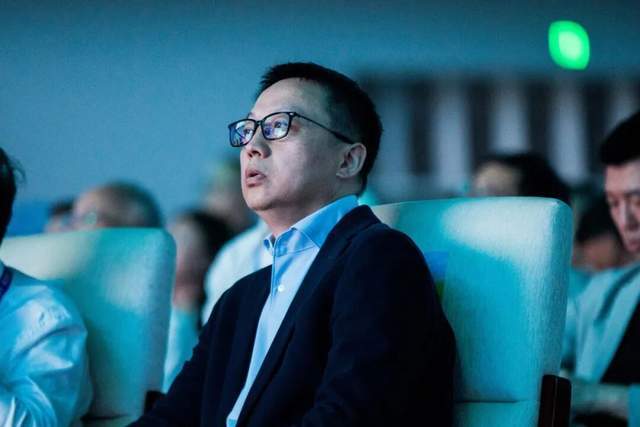
Not only is he deeply engaged in technology research and development, Wu Yongming has served as an internal pioneer many times, leading the implementation of multiple innovative businesses from scratch.
In November 2005, Wu Yongming served as the director of Alimama’s business department and was promoted to general manager in December 2007. Under his leadership, Alimama built an open marketing platform for the entire Internet and quickly opened up the market, linking millions of merchants.
In addition, in October 2011, Wu Yongming served as the head of Alibaba Group’s search, advertising and mobile business. From April 2015 to March 2020, he served as Chairman of Alibaba Health. While at Alibaba, Wu Yongming also led investment and mergers and acquisitions such as UCWeb, Amap, and Momo.
Outside Alibaba, Wu Yongming is both an entrepreneur and an investor. In August 2015, he founded Yuanjing Capital to invest in advanced technology, corporate services and digital healthcare. Yuanjing Capital is behind well-known companies such as Li Auto, Tuya Smart, Fada, and Jushuitan.
In Alibaba, it is not difficult to find talents who understand technology, and there are countless elites who understand business and capital. However, Wu Yongming is probably the only person who can integrate the three, maintain a sense of cutting-edge trends, and have been with Jack Ma and Alibaba for nearly 30 years.
This compound quality of “technology + business + capital” makes Wu Yongming the best successor to Alibaba during its transformation period.
On September 10, 2023, Wu Yongming took office as Ali’s new CEO, becoming Ali’s first CEO with a technical background. On September 12, Wu Yongming issued an all-member letter and wrote this sentence at the end:
“With an entrepreneurial mentality, not dwelling on the past, and not adhering to old habits, Alibaba will continue to achieve great development and create more value in the AI era.”
Swing the knife inward and replace Alibaba with a new growth engine
After taking office, Wu Yongming “swung three swords” inward to systematically reshape Alibaba’s organizational structure, asset territory and growth engine.
This reinvention starts with “people”. In the letter to all employees, Wu Yongming stated that within four years, the post-85s and post-90s generation will be the main managers to refresh the business management team.
In December 2023, after Wu Yongming concurrently served as the CEO of Taotian Group, he quickly promoted six young managers to directly manage the core business of Taotian Group. At the end of 2024, when Alibaba established its e-commerce business group, 39-year-old Jiang Fan took over as CEO to oversee the overall situation.
After taking office, Wu Yongming also decisively “cut off” Alibaba’s asset territory. Before he took office, Alibaba was promoting the “1+6+N” spin-off and the independent listing plans of Alibaba Cloud, Cainiao, and Hema. However, after he took over, he decisively stepped on the brakes and stopped three listing plans, including Alibaba Cloud.
At the same time, non-core assets such as Intime Department Store and Sun Art Retail were successively sold by Alibaba. This series of seemingly “shrinking” actions is actually to “focus” more accurately and anchor on the dual-core formation of “e-commerce + AI cloud”.
On this new chassis, “AI drive” is placed at an unprecedented strategic height.
Wu Yongming not only personally serves as the chairman and CEO of Alibaba Cloud Intelligence Group, but also announced an investment plan in February 2025 that exceeds the total of the past ten years: investing more than 380 billion yuan in the next three years to build cloud and AI infrastructure.
At the Yunqi Conference in September 2025, Wu Yongming repositioned Alibaba Cloud as a “full-stack AI service provider” and is committed to providing customers with full-link, one-stop AI services from the underlying AI cloud infrastructure, to the middle-layer AI development platform and large models, to the upper-layer AI applications and industry solutions.
With heavy focus, results show up. In fiscal year 2026 (April 1, 2025 to March 31, 2026), Alibaba’s revenue was 1.02367 billion yuan, a year-on-year increase of 3%. China’s e-commerce groups (Taobao, Tmall, Xianyu, etc.) have annual revenue of 554.217 billion yuan, which is Alibaba’s fundamental foundation.
The biggest highlight in the financial report is that Cloud Intelligence Group (Alibaba Cloud) has become Alibaba’s new growth engine, with revenue of 158.132 billion yuan, a substantial growth of 34% compared to 118.028 billion yuan in the previous fiscal year.
In the first quarter of fiscal year 2027 (second quarter of 2026), Alibaba’s revenue increased by 9% year-on-year. AI cloud and computing power services increased significantly by 45% year-on-year; combined with the 16% growth rate of the AI laboratory and application sectors, AI commercialization continued to accelerate.
Wu Yongming also outlined a long-term blueprint for Ali. At the earnings conference call in March this year, Wu Yongming proposed that within five years, the annual revenue from cloud and AI commercialization will increase significantly from more than 100 billion yuan to 100 billion US dollars (about 690 billion yuan).
At the Yunqi Conference held on September 22, Wu Yongming released another blockbuster information: by 2032, the scale of global data centers operated by Alibaba Cloud will exceed 20GW.
According to some analysts’ calculations, if each GW corresponds to approximately US$12-15 billion in revenue, Alibaba Cloud’s external revenue is expected to exceed RMB 1 trillion by 2032.
Behind the numbers is a fact: Alibaba’s transformation is far from over. While many companies are still discussing whether AI commercialization can be successfully implemented, Wu Yongming has used a complete set of reform plans to promote Alibaba from a platform company relying on consumer e-commerce to a technological entity driven by AI and cloud computing.
Related Reading
- Li Feifei can’t wait any longer.2026-10-04
- The pig-killing plate uses AI, and the scam begins batch production2026-10-04
- US road rage killer’s sentence quashed because AI video of victim was shown in court2026-10-03
- What we’re learning about the FlyDubai co-pilot who allegedly stabbed the captain and tried to crash the plane2026-10-03
- Robin Li bet on big models, what did he think clearly?2026-10-03