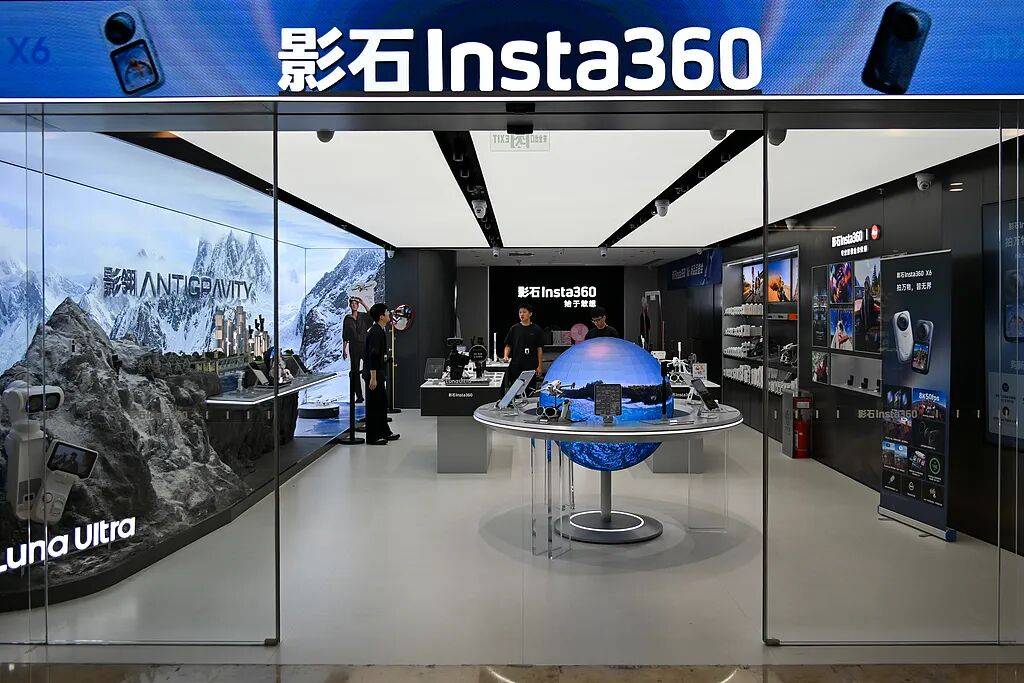
The core factors for Yingshi’s profit shrinkage are rising raw materials and intensifying industry competition. These two factors will continue. Yingshi has begun to adjust its strategy, including full-link cost reduction and business expansion.
Text | “Finance” researcher Zou Lu
Editor|Liu Yiqin
After more than a year on the market, the key indicators of intelligent imaging company Shadowstone Innovation have changed significantly.据其财报,今年上半年,其净利润同比跌超九成;经营现金流净流出27.61亿元,去年同期净流入2.41亿元;存货周转天数254.31天,较前两年翻倍增长。
Liu Jingkang, the founder of Shadowstone, said that the current decline in profits is the “result of active choice” in exchange for long-term technical barriers. An employee working in Shadowstone’s non-R&D department told Caijing that many employees have witnessed the company’s rapid growth in the past few years. The company’s continued decline in profits this year has affected the confidence of some employees.
Shadow Stone has begun to adjust its strategies, including cost reduction and business expansion. Many Shadowstone employees said that Shadowstone is reducing costs across the entire chain, including sales and production, and employee benefits are also shrinking. In the past year, Yingshi’s management style has also changed. The decision-making chain has been lengthened, and more emphasis has been placed on execution and result orientation. Employees believe that this is the result of Yingshi’s efforts to expand the organization and seize market share.
In the financial report, Yingshi attributed the sharp decline in the company’s profits in the first half of this year to two aspects: the rise in raw materials affected by the global supply chain, and the decline in gross profit margin caused by intensified competition in the imaging industry.
A market tracking report released by International Data Corporation (IDC) on September 23 shows that in the second quarter of 2026, global gimbal camera shipments were close to 2.8 million units, a year-on-year increase of 87%, and the average unit price fell by 6% year-on-year to 2,968 yuan. There is an obvious trend of “price-for-volume” in the handheld smart camera industry.
In the past few years, DJI and ShadowStone have completed market education on handheld smart cameras. With the entry of mobile phone manufacturers, the smart imaging track has become increasingly crowded. Shadowstone faces not only the rising cost of raw materials that all consumer electronics manufacturers face, but also the counterattack from industry giant DJI.
“DJI may not feel that Shadow Stone is a big threat.” An analyst from a leading brokerage commented to Caijing that DJI has not encountered a serious competitor on its track for many years. Even though Shadow Stone is not large enough to pose a threat, DJI has already regarded Shadow Stone as its biggest competitor at this stage, fearing that “if Shadow Stone starts to be built, it will only become more and more difficult for DJI to fight again.”
A year ago, Yingshi, which had been established for ten years, broke into the Science and Technology Innovation Board. Liu Jingkang rang the bell with a panoramic camera X5, which shocked the entire Shenzhen hardware investment circle. Before this, many people’s impression of Shadow Stone was limited to panoramic cameras, and they never expected that it could achieve annual revenue approaching 10 billion yuan, go public, and have a market value of over 120 billion yuan at its peak.
Since the beginning of this year, Yingshi’s stock price has been falling, from the highest point of 377 yuan per share to about 90 yuan, a cumulative decline of nearly 70%, and the market value has evaporated by nearly 100 billion yuan, with the latest market value of 36.4 billion yuan.
New categories drag on profits
Shadowstone’s financial report shows that revenue in the first half of 2026 was 5.517 billion yuan, a year-on-year increase of 50.29%. The increased revenue failed to be converted into profits. Its net profit attributable to shareholders of the listed company was 30.4073 million yuan, a year-on-year decrease of 94.15%. After deducting non-recurring gains and losses, the net profit loss attributable to shareholders of the listed company was 15.3392 million yuan, the first time it turned into a loss since its listing.
According to the financial report, the main reason for the sharp decline in profits in the first half of the year is that the upfront costs of developing new categories cannot be realized for the time being. Breaking down the investment costs of new categories, they are mainly divided into research and development expenses and sales expenses. The financial report shows that Shadow Stone’s R&D expenses and sales expenses in the first half of the year exceeded 1 billion yuan, with increases of 79.26% and 61.96% respectively in the same period.
In recent years, Yingshi has developed new businesses including smart conference microphones, panoramic drones and handheld gimbal cameras, and some business lines have entered the market verification stage.
A person from Shadowstone mentioned that Shadowstone first tested the waters with conference line products including microphones, but the business curve was not very smooth and “sales were average.” According to the microphone accessories category compiled by the global e-commerce platform Amazon, Shadowstone has not yet entered the best-selling list. Top Chinese brands on the list include DJI, Hollyland Mammoth and FIFINE.
In July 2025, Shadowstone announced the launch of a new brand of panoramic drones, Yingling A1, which drove Shadowstone’s stock price to rise by up to 13% in a single day. According to “Latepost”, when the A1 panoramic drone was launched, more than 30,000 units were shipped within one month of its launch. Datong, DJI’s largest domestic competitor, had annual sales of nearly a few thousand units before giving up on consumer drones.
DJI soon launched the Avata 360, a competing panoramic drone at a price lower than the Yingling A1. According to media reports, within less than two months of its launch, DJI’s market share in the global panoramic drone market exceeded 98%.
Shadowstone’s financial report pointed out that the panoramic drones built with heavy investment have not yet achieved scale effects, and the newly entered track “will drag down the overall profits in the short term and have a negative impact on the company.”
Several Yingshi people told Caijing that Yingshi’s panoramic drone business line is relatively independent, and Shenzhen Yingling Technology Co., Ltd. is responsible for product development and marketing. The company was established in January 2025. The industrial and commercial information platform Qichacha shows that the actual controller of the company is Liu Jingkang. But before that, Shadow Stone had already begun to develop drones.
One of the Yingshi people said that there were two internal explanations for the company’s decision to transfer the drone business to another company. One was that “it was the first time for the company to make drones, and they were worried that the drones would not do well and would ruin Yingshi’s brand.” Second, given that the category of drones has become increasingly sensitive around the world, the regulatory pressure on DJI drones in the United States has also affected its gimbal and camera series. Using drones as a separate brand will at least not affect the sales of other products in overseas markets.
In addition to R&D expenses, another drag on profit performance is marketing expenses. A shadow person believes that the direct reason for the increase in marketing expenses is to fight against the “price war” launched by friends. It is difficult for this amount to be reduced quickly in the short term, “unless it makes peace with DJI,” and this is almost impossible to achieve in the short term.
Recently, Shadowstone has also extended its cooperation tentacles to DJI’s competitors in niche fields, and launched cross-border linkages with consumer-grade 3D printing brand Tuozhu and outdoor power supply manufacturer Zhenghao respectively. Tuozhu and Zhenghao are Shenzhen hard technology unicorn companies that have grown rapidly in recent years. The founders and some core members are from DJI, and they are typical “DJI” companies. This move was evaluated by the smart hardware circle as the formation of the “Avengers”.
Liu Gang, an investor active in the hardware track and a partner of Alpha Commune, believes that Shadowstone’s development trend from panoramic cameras to imaging platform companies is almost irreversible. Imaging is the greatest common denominator between both parties, and the categories are very close. “The boss and the second child are fighting for turf” is inevitable. One possible outcome is that both parties will achieve growth, and together they will “defeat the rest of the pursuers.”
Shadowstone has been trying to expand into new categories in recent years, trying to shift from a panoramic camera company to an imaging platform company. One of the main reasons is that there is an expansion limit for the user penetration rate of a single category. All hardware companies will encounter bottlenecks when they grow to a certain scale. A Shadowstone person called Shadowstone’s current situation as “overcoming the middle-income trap.”
There is still a gap in supply chain capabilities
In addition to panoramic drones, another important new product of Shadowstone is the gimbal camera.
The market size of Yingshi’s core business, panoramic cameras, is not large. Judging from the latest data released by IDC, in the global handheld smart camera market in the second quarter of 2026, global shipments of handheld gimbal cameras were close to 2.8 million units, accounting for nearly half of the overall handheld smart camera market. It is the largest segment in the industry, while global shipments of panoramic cameras exceeded 530,000 units, and the global shipment scale was less than one-fifth of the former. Shadowstone has enough motivation to launch a gimbal camera.
To enter this field, DJI is a giant that cannot be avoided. An IDC report shows that DJI’s handheld gimbal cameras have a global market share of 93%, which is equivalent to more than 9 of every 10 gimbal cameras sold globally, which means DJI has a solid market position.
In June this year, Shadowstone entered DJI’s home market with the Luna series of handheld gimbal cameras, and has high hopes for it, expecting it to become “another important business growth point after panoramic cameras.” Many filmmakers said that it took courage to make this decision, but they had to do it because the handheld gimbal camera plate is large enough and there is room for growth.
In fact, before Shadowstone released Luna, DJI was asking various parties about the time when Shadowstone would release the product. Zeng Qiang (a pseudonym) from the optical supply chain revealed to Caijing that the new DJI Pocket 4 products have already been mass-produced and stocked. They will only price and ship the new products after Shadowstone releases them. DJI already has the conditions for new product releases and is “just waiting for this time.”
A person in the shadow stone market told Caijing that although Shadow Stone has been quite aggressive in seizing market share, Luna Ultra faced a short-term supply shortage after its launch. He mentioned that the procurement of hardware core raw materials needs to be prepared in advance on an annual basis. The tight supply capacity will be transmitted to the market and affect the marketing rhythm. When the supply is limited, “marketing actions have to be done strategically.”
“Suppose the production capacity of a new product is 1,000 units per unit time. We need to use 1%, which is 10 units, for marketing, but we want to put more effort into marketing. We originally cooperated with 100 experts, but we have to make a choice in how to distribute these 10 units to 100 people.” The market person explained.
He also mentioned that models with built-in storage in new categories are particularly affected. Since there are only a handful of upstream manufacturers in the industry that can provide relevant storage solutions, supply flexibility is insufficient.
According to the financial report, the Luna product line is currently in the market introduction and production capacity ramping stages, and will face uncertainties such as production capacity stability, intensified market competition, channel expansion, and user acceptance in the future.
“Caijing” previously reported that DJI’s Osmo Pocket series was not developed overnight. Initially, Pocket was almost killed by DJI founder Wang Tao when the project was established. It was not a product with high hopes. The first-generation product was limited by the craftsmanship, production restrictions and price of the time, and was only well received in professional photography circles. It wasn’t until 2023 that Pocket 3 became a hit. Many media estimated that its sales would reach 5 million units in 2024, contributing nearly 20 billion yuan in revenue to DJI.
Liu Gang believes that many star hardware products often don’t really explode until their third generation. The first two generations of iterations were not only about polishing the product, but also about accumulating the team’s judgment and the supply chain’s delivery capabilities.
According to multiple media reports, many suppliers have signed exclusive agreements with DJI or received verbal requests, agreeing that they cannot cooperate with Shadow Stone. Some companies will avoid scrutiny by establishing subsidiaries.
Zeng Qiang said that due to the large scale of orders, DJI has almost the best quality supply chain among its peers for some hardware. Overall, there is still a certain gap between Shadowstone and DJI in terms of performance requirements, yield rate, and price.
This will affect the pricing space of Shadow Stone. According to the teardown report of the Wellsenn XR, the comprehensive hardware cost of the Yingling A1 standard package is approximately US$687, and the comprehensive cost after tax is approximately 5,512 yuan. In March this year, the price of Yingling A1 was reduced from the original 6,799 yuan to 5,499 yuan. If marketing and channel expenses are included, it is likely that it will not make money.
Zeng Qiang believes that Shadow Stone, as a latecomer, needs to re-train its own supply chain, which will take years.
Hongjing Optoelectronics, which will be listed in 2025, is a typical example. As a camera module supplier, it has participated in the iteration of many popular products such as Shadowstone panoramic cameras over the years. In 2022, the two parties signed a strategic cooperation agreement, and Hongjing promised to provide the most favorable support in terms of cost for the products it supplies to Shadow Stone. In 2024, Hongjing has ranked first in market share in the field of global panoramic camera modules.
Shadowstone Insta360 Luna product manager Allen said at the new product launch conference, “We empower these technologies to our suppliers, provide training, and output the mass production process and production line testing requirements of our motors to cooperative suppliers, so that the cooperative suppliers can help us carry out large-scale production.” He said that in addition to technical support, Shadowstone also spends money to help suppliers purchase some advanced equipment.
Storage or key variables
In addition to R&D and marketing expenses, another account is the cost of raw materials. Shadowstone’s financial report shows that due to fluctuations in global memory chip supply and demand, the prices of DDR and other chips continue to rise and remain high. In the first half of this year, Shadowstone purchased nearly 2 billion yuan of memory chips, a much larger scale than before. Together with the purchase of other raw materials, the net cash flow generated from operating activities turned negative to 2.761 billion yuan.
The problem of rising storage prices is a common situation in the consumer electronics industry. Due to the rising demand for AI (artificial intelligence) computing power, storage giants such as Samsung and SK Hynix are accelerating adjustments to their production capacity structures. As an indispensable core supporting component for AI servers, HBM demand growth far exceeds that of the traditional consumer electronics market, further squeezing the supply of ordinary memory for consumer electronics terminal products.
A person from Shadowstone told Caijing that in the past, for the same component, DJI could get a better price because of its larger procurement scale. Shadowstone’s procurement cost was higher, and the product price was correspondingly stable and higher by a certain percentage, forming a relatively stable pattern. But once the variable of storage is added, this balance may be broken.
The two sides have been trying to find ways to learn about each other’s purchases of memory chips. The source said that in the end, storage costs were a crucial factor in the comparison, so it was crucial to learn about this information. “For consumers, the essential difference between products is not significant, and the final battle is price.” The key variable that will affect prices in the future may be storage.
Five days after Shadowstone released the Luna, DJI released a competing product, the Osmo Pocket 4P, at a price lower than Luna’s 200 yuan. In a large shopping mall in Shenzhen, a Shadowstone store is located almost directly below the DJI store. When faced with inquiries from customers about similar products from rival vendors, a DJI clerk gave a straightforward reason: “We are cheaper.” In the mature consumer electronics market, price is a key decision-making factor.
Not only gimbal cameras, but also DJI’s panoramic cameras frequently use low prices from latecomers to suppress Yingshi’s panoramic cameras. For example, in August 2025, Shadowstone released a panoramic drone, and three days later DJI released the panoramic camera Osmo 360, priced at 300 yuan lower than the Shadowstone X5. DJI’s offensive intensified a year later. In August this year, the price of the second-generation DJI Osmo 360 was even 700 yuan lower than the new Shadowstone product.
Liu Jingkang mentioned on different occasions that he opposed competition through “price war”.
At a media communication meeting in early August this year, Liu Jingkang once again mentioned his “threshold barrier theory.” In his view, most categories of consumer electronics have thresholds, but no barriers. Including gimbal cameras and panoramic cameras, he believes that they are “not difficult categories to make, but if you do it first than others, you can enjoy the exclusive window of competitive advantage.”
He said that the essence of barriers is to establish user habits, and it is difficult to spend time catching up with barriers. The so-called threshold is a lead that can take time to catch up. He hopes to build Shadow Stone’s barriers through “continuous innovation.” “Key device patents or channel levels can create some barriers, and this is not something we are particularly pursuing.”
But the reality is that the threshold established by supply chain and channel advantages determines the pricing power of products to a large extent, and price is almost the core competitive variable in the current consumer electronics market.
Shadow Stone is no longer “small but beautiful”
In 2015, 24-year-old Liu Jingkang rented an 80-square-meter duplex apartment in Shenzhen with a small team of ten people to start Yingshi. At that time, in the eyes of the outside world, Shenzhen’s hardware circle was still synonymous with Huaqiangbei – a gathering place for copycat machines, white-label electronics, and OEM OEMs. However, the low cost and complete industrial chain were already attracting a large number of young makers.
A Shenzhen hardware investor who had early contact with Liu Jingkang told Caijing that at the same time, there were no less than ten teams doing similar things to Yingshi, and no one expected Liu Jingkang to emerge. Among the early investors of Shadow Stone, there were very few well-known institutions like IDG Capital and Qiming Venture Partners, and even until it went public, few outsiders knew about the company.
In the first few years, whether the Nano series opened up the panoramic camera market or the ONE series redefined action cameras, Shadowstone has always been regarded as an innovator exploring immature markets and the one who has the courage to validate the market. Just like DJI has single-handedly opened up the consumer drone market and handheld gimbal camera market.
Tang Lin (pseudonym) was also impressed by the “technical idealism” of Shadow Stone and Liu Jingkang at first, and joined Shadow Stone’s non-R&D department. But he observed subtle changes in the company’s management this year. In the past, his department encouraged employees to express themselves more freely.
In recent years, his department has introduced many management personnel with backgrounds from mobile phone manufacturers or DJI, and the process has become more standardized and intuitive. Even the simplest tasks require a long approval chain. Another Yingshi insider gave an example. It is a routine operation to send a machine to the channel for offline activities, but even if it only involves a few hundred dollars, it still needs to be applied to and approved by the sales director in the system, and a sales director may be in charge of one or two hundred people.
Under this management method, “anyone can be trained into a standardized person.” Tang Lin believes that the disadvantage of this is that the efficiency of information transmission and decision-making is reduced, which is also an unavoidable problem for many companies as they grow larger. A former Yingshi person told Caijing that when he first joined the company more than two years ago, the company had less than 3,000 people, and this year it has grown to more than 5,000 people.
More than one person from Yingshi’s marketing department told Caijing that Yingshi’s work rhythm has become more “volumey”. On the one hand, the management requires the marketing costs to be compressed to the extreme. On the other hand, it pays more attention to the conversion rate and requires a pre-estimate of the input-output ratio. This includes requiring the exposure and conversion rate to reach a certain value when negotiating cooperation. “As long as you do something with complete certainty and you can see the benefits.” Tang Lin said, “In short, trial and error is no longer allowed.”
Marketing pressure was transmitted to the front line. The most intuitive change was that Tang Lin began to have frequent meetings. Sometimes, in order to cope with the meeting tomorrow, he would take the initiative to speak less content the day before.
A Shadowstone R&D employee also told Caijing that the entire consumer electronics industry is in a downturn, and Shadowstone has recently been reducing costs across the entire chain, not only on the production side, but also on the internal employee benefits.
Reflecting on the industry chain, a Shadow Stone supplier said that due to tight cash flow, Shadow Stone has recently been discussing deferred payment plans with some suppliers. This is acceptable to the suppliers when the company has a high reputation. But he is still optimistic about Shadow Stone’s prospects. “After all, there are very few companies that are still trying to make good products.”
Editor | Chen Xiang
Related Reading
- US road rage killer’s sentence quashed because AI video of victim was shown in court2026-10-03
- What we’re learning about the FlyDubai co-pilot who allegedly stabbed the captain and tried to crash the plane2026-10-03
- Robin Li bet on big models, what did he think clearly?2026-10-03
- New forces reshuffle in September: Xiaopeng and Xiaomi sell for 40,000, Hongmeng Ideal retreats2026-10-03
- OpenAI fires workers for mishandling ‘sensitive information’2026-10-02