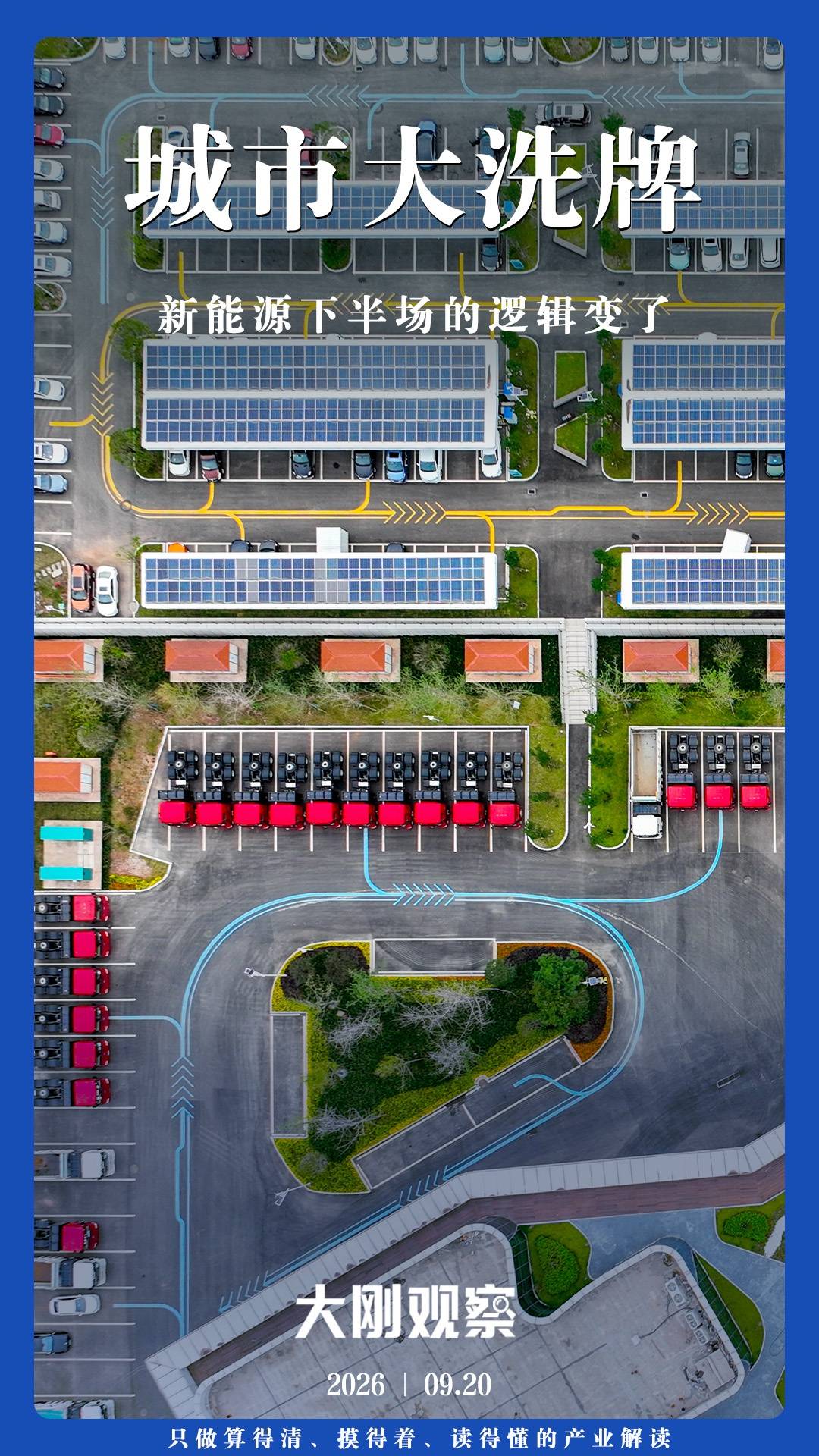
The market value has evaporated by 700 billion yuan in 4 months.
Recently, “Ningwang” has been troubled by the stock price. Since May this year, CATL’s share price has experienced a sharp decline, with a cumulative decline of more than 35%, and the total market value has shrunk by 700 billion yuan.
In fact, the year-on-year growth rate of CATL’s revenue and net profit in this year’s interim report still reached 54.80% and 41.98%. In other words, the decline in stock prices is not due to poor performance.
According to industry analysis, behind the sharp drop in stock prices is the reluctance of car companies to use CATL as a single supplier. This is also the “de-Ningdeization” that the market is worried about.
This change is about much more than just one company.
In the past ten years, the new energy industry represented by power batteries is becoming a new force in the rise of cities. A group of originally unknown cities have rewritten their destiny by betting on new energy.
Wherever the new energy landscape is spread, the story of urban counterattack will be written. During this process, Ningde Times participated in the counterattack of many cities, and many cities built factories, attracted investment, and changed their lives around it.
If the faucet sneezes, will the city catch a cold?
In addition to the Ningde era, an intriguing signal was also sent at the policy level – “Production Capacity Early Warning and Regulation” was first written into the “15th Five-Year Plan” for new energy vehicles, which may have a profound impact on the new energy landscape.
Both leaders and policies have changed, and the second half of the new energy city competition has begun.
01
“Ning Wang” is not only a nickname, but also a market summary of its industry dominance: in the power battery market, it has huge production capacity, leading technology, and the resulting bargaining power.
In the first half of this year, Ningde Times’ net profit was 43.3 billion yuan, which is approximately twice the total profit of the 20 mainstream domestic listed car companies.
▼The factory of Sichuan Times in Yibin, a subsidiary of CATL
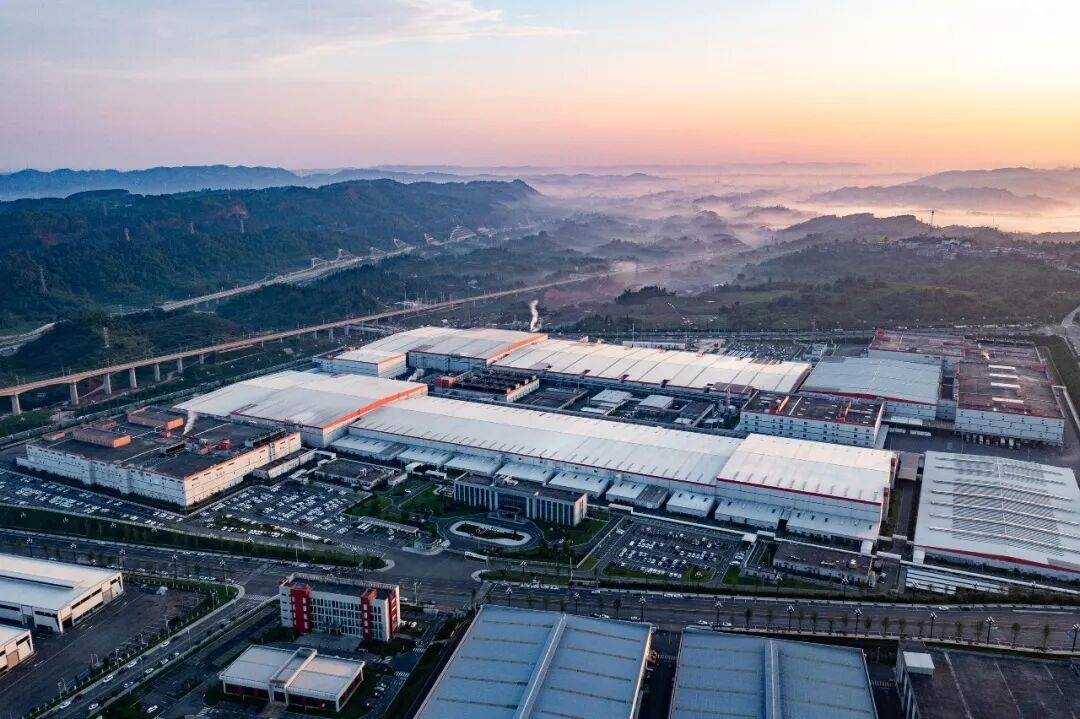
Batteries account for 30%-40% of the cost of the entire vehicle and are the most expensive parts of new energy vehicles. The more cars are built and sold, the more “wedding clothes” they provide to battery manufacturers. This is the reason why more and more car companies choose to develop their own batteries.
Once “de-Ningning” becomes a reality, CATL’s bargaining power will be weakened and its right to speak on prices will also decline.
However, this path of self-study is not easy.
CATL’s R&D investment in 2025 will be 22.1 billion yuan, and the total investment in the past ten years has exceeded 90 billion yuan, with more than 20,000 R&D personnel. During the same period, the total R&D expenses of Sunwoda and China New Aviation were approximately 6.5 billion yuan, a gap of more than three times.
McKinsey has calculated that for car companies to have a cost advantage in producing their own batteries, they usually need to produce 500,000 cars per year, or have a battery production capacity of more than 15GWh. To date, only BYD and Tesla have truly taken this path of self-research.
Therefore, the precise meaning of “de-Ninghua” is not “not using Ningde era”, but “no longer only using Ningde era”.
▼Ideal Tianjin factory one-piece die-cast rear end aluminum body
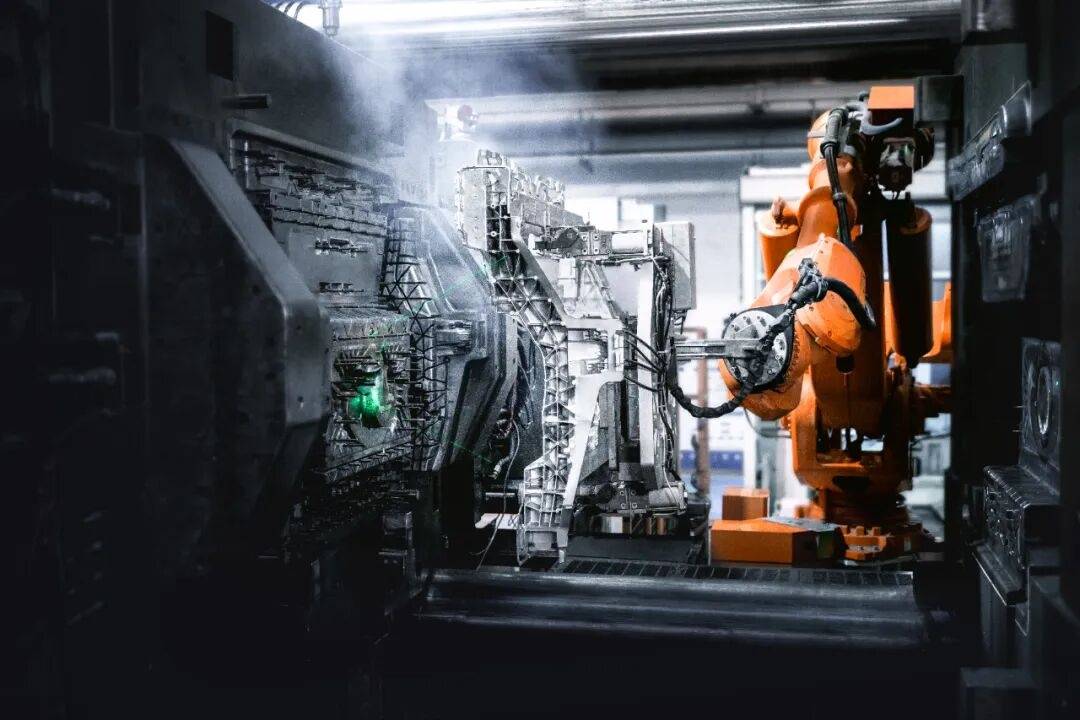
The enterprise side is “decentralizing”, and the policy side is “cutting overcapacity”.
Recently, nine departments issued the “15th Five-Year Plan for the Development of the Intelligent Connected New Energy Vehicle Industry”, which proposed that new energy passenger vehicle sales will account for 70% in 2030, making it one of the world’s automotive powers.
What is more eye-catching than 70% is that “capacity early warning and regulation” has been written into the plan for the first time. Clarify and strictly establish project conditions for new independent new energy automobile companies, increase the intensity of legal mergers and reorganizations and cross-regional integration of automobile companies, and promote the orderly exit of backward and inefficient production capacity through market-oriented and legal methods.
The regulation did not come by chance, as production capacity had been rolled out long ago. At its peak, at least dozens of cities across the country made new energy vehicles their leading industry.
At present, among the major cities in China, Shanghai, Guangzhou, Changchun, Chongqing, Wuhan, Xi’an, Wuhu, Liuzhou, etc. all use automobiles as their absolute pillars, and Shenzhen, Hefei, Changzhou, Zhengzhou, and Changsha also use them as their core pillars.
If we include cities dominated by power batteries, Ningde, Yibin, Suining, Yichun, Jingmen, etc. are among them. Among them, Yibin’s power battery production accounts for 16% of the country and 11% of the world.
Once the industry bids farewell to high growth and enterprises enter a large-scale integration, the urban landscape of new energy may usher in a major reshuffle.
02
The first half of the new energy city competition is essentially about betting on the leader.
It is particularly clear when looking at the data of the past ten years: the national production of new energy vehicles has soared from 350,000 to 16.6 million, and the installed volume of power batteries has increased tenfold in five years; in August this year, the domestic sales of new energy passenger vehicles accounted for 68%.
The industry is on the rise, and the cake is big enough. As long as you focus on one leader and grab a chain owner, it will be enough to change the fate of a city.
The most typical one is Ningde. Ningde Era has transformed this city, which was originally a “little transparent” city in Fujian, into the capital of lithium batteries.
Yibin’s story is even more dramatic. Sichuan’s urban layout was relatively fixed before, with Chengdu and Mianyang taking the top two spots, and Yibin’s reputation was mostly associated with Wuliangye.
▼Yibin Sanjiang New District
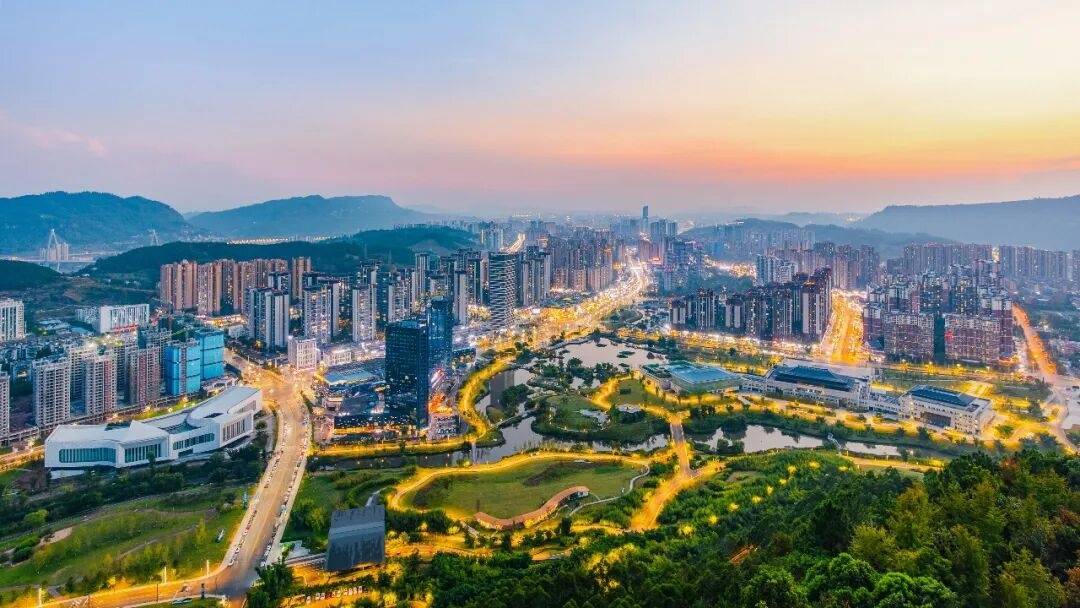
A turning point occurred in 2019. CATL settled in Yibin, and its subsidiary Sichuan Times established a power battery manufacturing base there.
Yibin is located at the intersection of the Jinsha River, Minjiang River and Yangtze River, and is rich in hydropower resources. For battery manufacturers, electricity is one of the biggest costs. Cheap and clean green electricity means lower costs and a smaller carbon footprint. Sichuan Times has thus become the world’s first zero-carbon battery factory.
In just a few years, Yibin has developed a complete battery industry chain, accounting for 16% of the country’s output and 11% of the world’s output. It has become a veritable capital of power batteries and has strongly joined the competition for Sichuan’s second city.
Although Changzhou is located in southern Jiangsu, with a prosperous economy and developed industries, it has long been overshadowed by Suzhou and Wuxi, and is known as “Suzhou and Wuxi are impermanent”.
New energy is an important breakthrough for Changzhou to choose to compete differentiatedly with Suxi. Among them, Xingxin Airlines’ capital chain was in crisis, and Changzhou decisively took action to catch it, retaining today’s dark horse.
▼Changzhou Cultural Plaza
Subsequently, Changzhou attracted CATL, Li Auto, and BYD to create a “chain” layout around the core link of power batteries, making the power battery industry chain complete to 97%, completing the energy level transition from a traditional industrial city to a “new energy capital.”
Why does this model work? In the era of incremental growth, the expansion of production by leading enterprises can directly boost urban GDP. When the market value of CATL soared, Ningde’s investment manual and Yibin’s negotiation table became more confident.
Cities and leading enterprises achieve mutual success. When the leading market fluctuates, or the industry enters adjustment, the cities that bet on it will be trapped in the corresponding cycle.
In the traditional automobile era, there was no place for Changsha and Xi’an. In the new energy era, Changsha and Xi’an completed their counterattack by attracting BYD. However, as new energy vehicles enter a period of adjustment, it directly affects the GDP performance of Changsha and Xi’an in the first half of this year.
The change in industry trends will directly affect the city’s report card.
The 2026 World Power Battery Conference held in Yibin this month has been held for five times. The five conferences have attracted more than 1,100 key enterprises, signed more than 400 major projects, and total investment of nearly 380 billion yuan.
But this year’s venue sent a different signal. Thematic meetings no longer focus on production capacity scale, but discuss forward-looking technologies, diverse battery applications, recycling systems, and carbon footprints.
It can be seen that in the first half, New Energy is betting on leadership and scale, but the track in the second half may be different.
03
The technologies, cycles, and scenarios discussed at the 2026 World Power Battery Conference are ostensibly industry issues, but are actually the urban competition track for the second half of new energy.
The first is technology.
2026 is called the first year of large-scale vehicle installation of semi-solid-state batteries by the industry. With the dual advantages of high safety and high energy density, solid-state batteries are at the forefront of industrialization. However, semi-solid-state batteries are very technical, and head cities with more intensive technology often have more opportunities.
Qingtao, which was incubated in Kunshan, Suzhou, by an academician of the Chinese Academy of Sciences and a professor of Tsinghua University, is the company with the highest installed volume of solid-state batteries in China. Qingtao is sprinting towards an IPO and is expected to become the “number one solid-state battery stock.”
Beijing Weilan has the technical resources of the Chinese Academy of Sciences and is the only industrialization platform for solid-state battery technology in the Institute of Physics, Chinese Academy of Sciences. Weilan customized and developed a 150kWh semi-solid-state battery pack for Weilai Automobile, and the CLTC operating range actually exceeds 1,000 kilometers.
Wuhan is also squeezing into this track. It has gathered more than a dozen solid-state battery-related companies, and semi-solid-state battery products are on the vehicle road test list. A solid-state battery innovation consortium at the Hubei provincial level has also been established, bringing universities, material vendors, and vehicle manufacturers to the same table.
Second is the cycle.
Battery recycling is changing from a multiple-choice question to a must-answer question. The EU battery passport will be mandatory in February 2027. A battery must bring 90 pieces of data before entering Europe. The EU’s “New Battery Law” also writes “producer responsibility” into the law, and battery manufacturers are responsible for the entire life cycle of a battery.
Hunan Bangpu is one of the largest recycling companies in China. Relying on GAC Group’s 4S store network and after-sales system, Youpai Energy has opened up a full-link closed loop of “car sales – car use – battery exchange – retirement”.
▼Jingmen GEM New Materials Co., Ltd.
Representing Hubei in the game are Jingmen and Yichang. GEM has set up its recycling base in Jingmen, with the annual processing volume accounting for more than 10% of the country’s scrapped batteries, with a lithium recovery rate of 96.5% and a nickel and cobalt recovery rate of over 99.5%.
What supports this cycle is that Jingmen allows upstream chemicals and downstream lithium batteries to be “partitioned” in the park. Raw materials and products go through pipelines instead of tankers, which saves logistics, reduces costs and reduces carbon emissions. Jingmen High-tech Zone has been selected into the first batch of zero-carbon parks in the country and is currently the only selected park in Hubei.
Yichang Bangpu integrates phosphate rock, batteries and recycling into the same chain. The nickel, cobalt and manganese recycling rate reaches 99.6%. A used battery can be turned into a new lithium iron phosphate cathode material within a week.
▼Yihua New Energy Materials Industrial Park
Another meaning of recycling is resource security. China is highly dependent on imports of lithium, nickel, and cobalt, and cobalt’s external dependence has long been above 90%. Taking back the batteries and refining them is equivalent to bringing the “overseas mines” back to China.
The third is the scene.
Among them, energy storage is the biggest scenario. CATL’s energy storage revenue increased by 87.5% in the first half of the year, accounting for nearly 20% of total revenue. “Ningwang” hopes to create a second growth curve in addition to power batteries. Changzhou Jintan Salt Cave Compressed Air Energy Storage Power Station is equivalent to burying a “super power bank” 1,000 meters underground and has become a national demonstration project.
Yichang Chuneng focuses on long cycle, safety, and scene-based customization, taking into account multiple scenarios such as commercial vehicles, ships, heavy trucks, and passenger cars. Based on the inland waterway shipping scenario, Chuneng provides customized marine power battery solutions for Yichang’s “electrification of the Yangtze River”. Link shipyards and ports to promote the coordination of ship power replacement and port energy storage to help the green transformation of Yangtze River trunk shipping.
▼Yichang Yangtze River coastline has become an ecological corridor of “three modernizations” Photo/Hubei Daily
At the same time, as low-altitude economic growth begins, eVTOL puts forward new requirements for battery energy density and magnification; mass production of humanoid robots is imminent, and the “battery heart” of embodied intelligence has become a new track; engineering machinery, two-wheeled vehicles, and ship electrification, every scenario is a new opportunity for new energy.
There is no standard answer to the scene track. Whichever city creates one more scene will have one more growth curve.
Technology, circulation, and scenarios, the three tracks point to the same thing: the battle for new energy in the second half is no longer scale, but system.
In the first half, the city was competing to see if it could seize a leading position and attract a project. In the second half, the comparison is whether the chain is complete and the growth is stable after leaving any company.
The system is not a bet, but is developed day by day with technical foundation, recycling ability, and scenario imagination. This makes it possible for more cities to enter the game, and also tests the city’s wisdom and foresight.
文/肖純
Editor/Xiao Chang
Related Reading
- The anti-skid value is less than half of the national standard. Who is giving permission to the “slide zebra crossing”?2026-09-21
- Four U.S. AI giants face antitrust lawsuits2026-09-21
- Undercover “matryoshka-like loan assistance”: a loan of 1.05 million yuan with a service fee of nearly 230,000 yuan. One company claims to be able to “let bank personnel control the lending time”丨Red Star Deep Dive2026-09-20
- Why is Xibei surrounded by rumors of bankruptcy? The “prepared dish crisis” is not a fatal factor, and the transformation effect does not meet expectations2026-09-20
- Video丨Focus on the care of the disabled elderly and medical treatment for people in mountainous areas. Financial funds are precisely used to “make up for shortcomings”2026-09-20