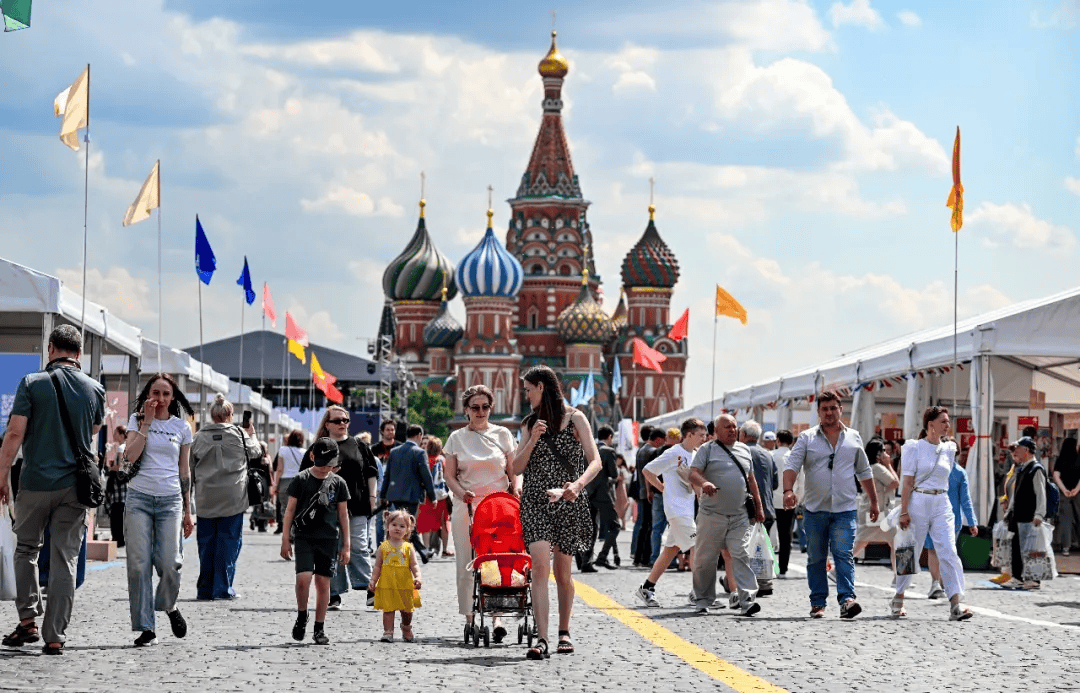
▲Photo by Xinhua News Agency reporter Feng Kaihua
The election for Russia’s Ninth State Duma (lower house of parliament) will be held from September 18 to 20. This is the first national parliamentary election held by Russia since launching a special military operation against Ukraine in 2022. It is also one of the most important domestic political events in Russia this year. What is the current status of preparations for the election? Which political parties and people are running for election? What are the highlights worth paying attention to?
How are the organizational preparations going?
Preparations for the Russian State Duma election are now basically in place. According to the arrangement, the voting time for this election is from September 18th to 20th, and September 20th is the unified voting day for all Russia. In order to adapt to the characteristics of Russia’s territory spanning 11 time zones, voting periods in various places will be staggered according to the location, and remote electronic voting channels will be opened at the same time. 319 overseas polling locations will also be opened for the election, with more than 1.816 million overseas voters.
This is the first national parliamentary election since the launch of special military operations, so its security situation has attracted much attention.
When reporting to Russian President Vladimir Putin in the Kremlin in early August, Pamfilova, chairwoman of Russia’s Central Election Commission, said that this year’s election is facing a very severe situation. Ukraine may launch an attack during the election, and the election commission is fully prepared to deal with it. She said that to ensure election security, the Election Commission has conducted joint training with powerful departments such as the Ministry of Emergency Situations and the Ministry of Interior.
Putin delivered a televised speech on the evening of September 16, calling on people to actively participate in voting. “The voice of every voter is crucial. Your personal choices directly determine who and which political forces will represent the interests of the people in the Federal Parliament and at all local levels.” Putin said that he hoped that the election results “can reflect the maturity and resilience of Russian society.”
Which political parties and people are involved?
According to reports, the seat setting for this election continues the traditional model. Among the 450 State Duma seats, 225 seats are allocated proportionally according to the party list. The participating parties need to reach the 5% vote threshold to obtain seats; the remaining 225 seats are elected through the national single-seat constituency with a relative majority voting system. It is worth noting that 4 regions including Donetsk, which will be voted into Russia by referendum in 2022, will participate in parliamentary elections at the Russian federal level for the first time. A total of 7 single-seat constituencies will be divided among the 4 regions.
So far, more than 3,000 candidates have completed official registration across Russia, and 10 political parties have qualified to run on the federal candidate list, including the ruling party United Russia (United Russia), the Communist Party of the Russian Federation (Communist Party of the Russian Federation), the Just Russia Party, the Liberal Democratic Party of Russia and the New People’s Party. Five existing parliamentary parties, as well as five non-parliamentary parties including the Fatherland Party and the Green Party.
It is worth noting that, according to Pamfilova, there are 110 participants in special military operations and veterans on the list of federal candidates for this year’s Russian State Duma election.
What are the highlights worth paying attention to?
Based on comprehensive public opinion analysis, there are three main aspects to watch in this Russian State Duma election.
First, the seat pattern and governance stability of mainstream political parties have attracted much attention. For a long time, the United Russia Party, as Russia’s ruling party, has occupied a dominant position in the State Duma and is the core support for Russia’s national governance and legislative advancement. In this election, the focus of attention is whether the United Russia party can continue to stabilize its “absolute majority” of seats in the parliament. At the same time, other traditional parties such as the Russian Communist Party and the Just Russia Party will compete fiercely for parliamentary seats. The rise and fall of each party’s votes and the increase and decrease of seats will directly reflect the current public opinion trends in Russia and affect the internal game pattern of the parliament.
Secondly, the performance of new forces in the political arena is eye-catching. In recent years, new political forces represented by the New People’s Party have emerged in Russia. Such parties focus on issues such as social equity, enterprise development, and youth employment, and their influence among local voters, youth groups, and professionals has gradually increased. In this State Duma election, the performance of these emerging political forces will become an important window for observing the diversified development of the Russian political arena and the iteration of the political ecology.
Finally, the campaign issue orientation highlights the core demands of national development. The campaign platforms of each participating political party highly focus on key issues such as national security, economic recovery, industrial development, and social welfare, and are in line with Russia’s domestic development needs under the current complex international situation. The differentiated policy propositions proposed by each political party around economic boost, improvement of people’s livelihood, and social governance, as well as voters’ voting tendencies, will reflect the current core concerns of Russian society and will also mark the key directions for subsequent Russian legislation and policy formulation.