This year’s flu season is indeed a little different: H3N2, H1N1, and influenza B Victoria strains are active at the same time. What is even more alarming is that there is no cross-protection between different influenza strains. If you have been infected once, you may be infected again with another strain of virus.
Li Tong, chief physician of the Department of Infectious Diseases at Beijing You’an Hospital affiliated to Capital Medical University, once said in an interview with the media that there is no cross-protection between different influenza strains. The co-circulation of three strains may increase the risk of being infected with different strains in a short period of time. On the other hand, it may lengthen the overall duration of the influenza season and push up the total number of infections.
According to the national sentinel surveillance of acute respiratory infectious diseases, from October 26 to November 1, 2026, the number of influenza-like cases reported by sentinel hospitals nationwide accounted for 4.1% of the total number of outpatient and emergency visits, with southern provinces (4.8%) being higher than northern provinces (3.3%).
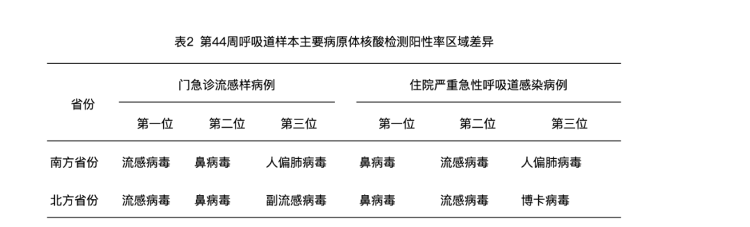
According to analysis by the Chinese Center for Disease Control and Prevention, respiratory infectious diseases are currently at a low level in most areas of the country, showing an upward trend with slight fluctuations. Among them, influenza activity showed a fluctuating upward trend, with A(H3N2) subtype, A(H1N1) subtype and B(Victoria) influenza viruses co-circulating, and the proportion of A(H1N1) subtype increasing. There was a significant difference in influenza activity levels between the northern and southern provinces. The detection positivity rate in the northern provinces was at a low epidemic level, which has been on an upward trend recently, and the detection positivity rate in the southern provinces was at a medium epidemic level. The detection positivity rate of the 5 to 14-year-old case group was higher than that of other age groups.
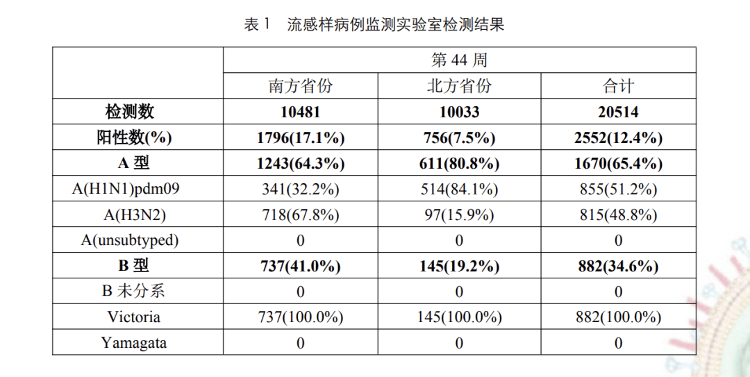
Monitoring data from the China Influenza Surveillance Weekly Report show that from October 26 to November 1, influenza A viruses accounted for 65.4% and influenza B viruses accounted for 34.6% of influenza-positive samples nationwide; among influenza A viruses, A(H1N1)pdm09 accounted for 51.2% and A(H3N2) accounted for 48.8%, and influenza B viruses were all B (Victoria) lineage.
In addition, from October 26 to November 1, a total of 106 influenza-like illness outbreaks were reported across the country. After testing, 12 cases were A(H3N2), 21 cases were A(H1N1)pdm09, 7 cases were type A/type A (subtype not shown), 17 cases were type B (Victoria), 4 cases were type B/type B (type not shown), 23 cases were mixed type, 3 cases were influenza negative, and 19 cases have not yet obtained pathogen test results.
Related Reading
- The first in the country! How to learn “unpopular secret skills”? Who will teach? Dean’s interpretation2026-11-12
- The price of refined oil may drop for the sixth time this year. Filling up a tank will cost about 15 yuan less2026-11-12
- “Token hoarding” became a hot word in the “Double 11” circle, and after Li Jiaqi, Luo Yonghao also came to sell2026-11-12
- Does the United States really not want to fight Iran anymore?2026-11-11
- Fireballs are scattered around Shijiazhuang. How much is the value of “visitors from outside”?2026-11-11