This article is reproduced from [Voice of China, China Central Radio and Television];
China’s 43rd Antarctic Expedition, organized by the Ministry of Natural Resources, set off from Sanya, Hainan, to Antarctica today (7th). The reporter learned that this inspection will not only fully completemy country’s fifth Antarctic research station——On-site construction finishing and acceptance work of Qinling Station, will continue to advanceMary Byrd Land Research StationThe planned supporting facilities will be surveyed and mapped, and preliminary preparations will be made for the upgrading of the Great Wall Station and Zhongshan Station, and the modernization of polar security capabilities will be accelerated.
In addition, this expedition will focus on the impact of climate change on the Southern Ocean ecosystem, continue to carry out comprehensive Antarctic multi-field comprehensive survey and monitoring; target the international polar science and technology frontier to implement key tasks; promote the testing and application of domestic facilities and equipment such as the new generation of inland expedition pressurized buildings; continue and expand bilateral and multilateral international scientific research and support cooperation. So, what are the highlights of this expedition?
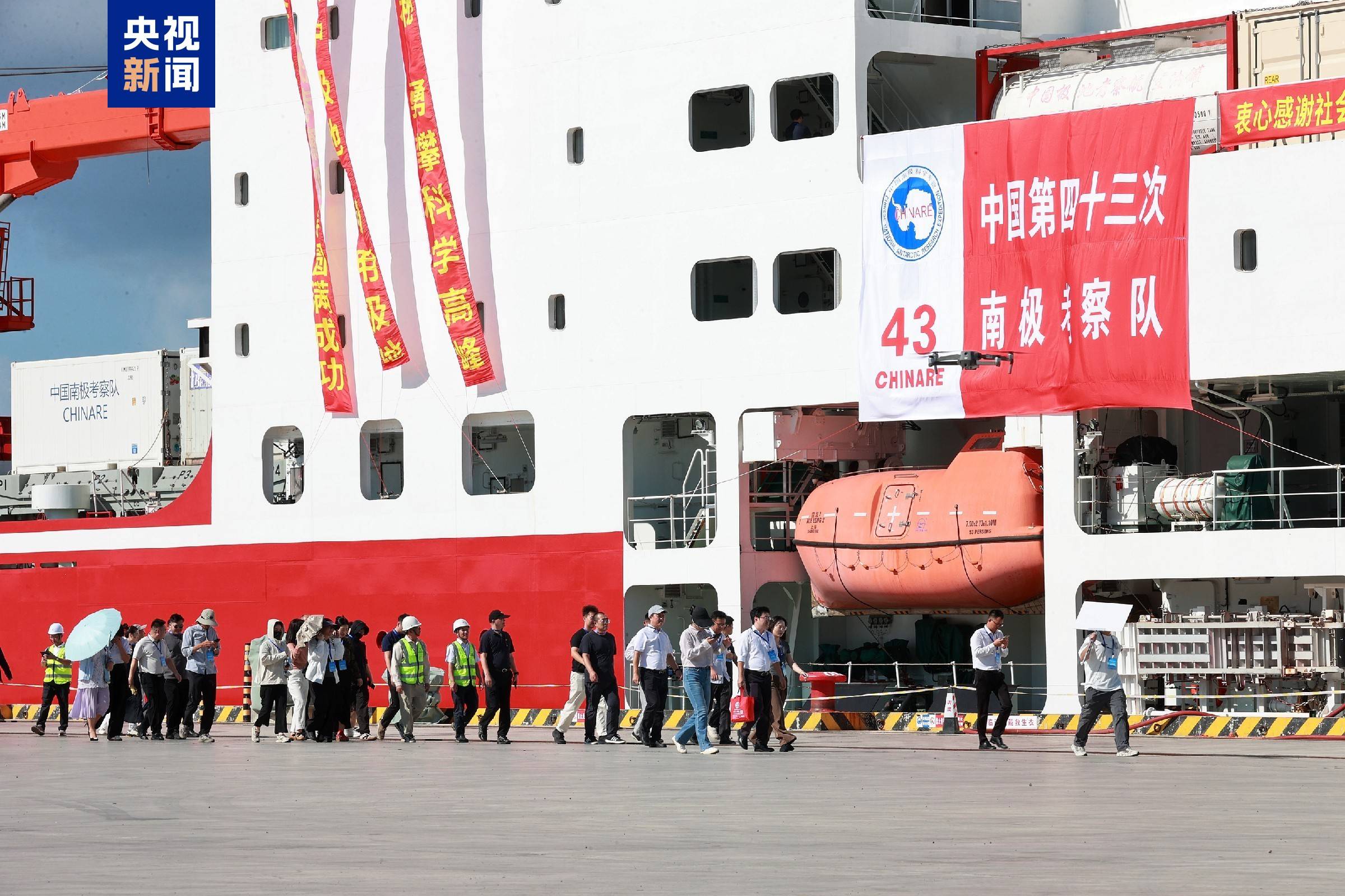
△China’s 43rd Antarctic expedition sets sail
The Qinling Station is my country’s fifth Antarctic expedition station. It will officially open in February 2024. Subsequently, the key task of China’s 42nd Antarctic expedition team that will set out at the end of the year is to carry out the construction of supporting facilities and equipment for the Qinling Station. Last year, the expedition team on the overwintering mission continued to promote the internal engineering of the main building of the Qinling Station and the installation of the pipe network system, and carried out finishing work such as joint debugging and testing of the entire station system and integration of functional modules. During construction, debugging, and operation, they gradually realized the safe and orderly operation of the Qinling Station. Zhang Tijun, leader and chief scientist of China’s 43rd Antarctic Expedition, introduced that this Antarctic expedition,The on-site construction finalization and acceptance work of Qinling Station will be fully completed.
Zhang Tijun, leader and chief scientist of China’s 43rd Antarctic Expedition:The Qinling Station has built a clean energy system that is complementary to wind, solar, hydrogen and storage. It is the first large-scale new energy system built by my country in Antarctica. It has the largest new energy power generation system configured at my country’s Antarctic research stations at this stage. The proportion of clean energy can reach up to 60%. It can save more than 100 tons of fossil fuels for the station area every year. It is a vivid practice of my country’s Antarctic green expedition, green construction and low-carbon development. During this inspection, we will continue to complete the construction and finishing work of Qinling Station and organize the acceptance of Qinling Station.
The Qinling Station is not only my country’s first research station facing the Pacific sector, but also a world-class scientific research platform with a superior geographical location that can meet many challenges of current Antarctic scientific research. Its completion and acceptance will provide important support for human beings to carry out research in Antarctic marine and terrestrial ecology, sea ice, geophysics and other fields. In addition, Zhang Tijun introduced that this inspection will also carry out survey and mapping of the proposed supporting facilities of the Mary Byrd Station, and carry out preliminary preparations for the upgrading of the Great Wall Station and Zhongshan Station.
張體軍:Up to now, our country has a total of five research stations: Great Wall Station, Zhongshan Station, Kunlun Station, Taishan Station and Qinling Station. Among them, the Great Wall Station and the Zhongshan Station are the two earliest Antarctic research stations put into use in my country. They were completed in 1985 and 1989 respectively. They are the starting point of my country’s Antarctic scientific research system and an important supporting hub for scientific research into the inland ice sheet. This expedition will carry out preliminary preparations for the upgrading of these two research stations. At the same time, preliminary survey and mapping of the Mary Byrd Land Research Station will be carried out to further build an independent and controllable station network system. Mary Byrd Station is located in southwest Antarctica, close to the Amundsen Sea. It is a key area for studying the dynamic changes of the Antarctic ice sheet and the evolution of marine ecosystems. It will further fill my country’s research gaps in West Antarctica.
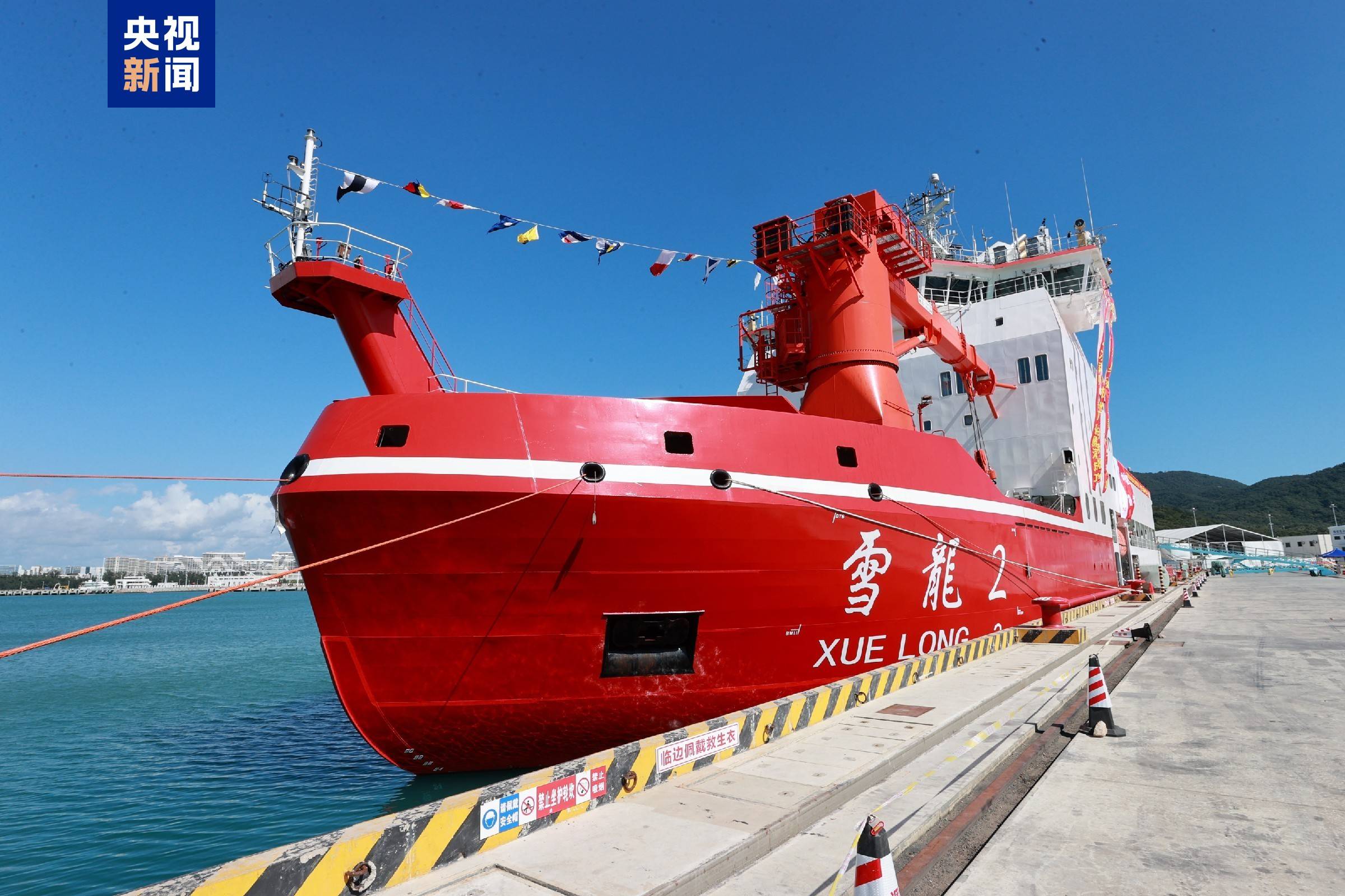
△”Snow Dragon 2″
This expedition will also continue to carry out comprehensive investigation and monitoring of Antarctica in multiple fields. In typical sea areas such as the waters adjacent to the Antarctic Peninsula, the Astronaut Sea, Prydz Bay, the Ross Sea and the Amundsen Sea, focusing on the impact of climate change on the Southern Ocean ecosystem, multi-disciplinary comprehensive surveys and long-term monitoring of physical oceans, marine chemistry, marine biology, marine geology, atmosphere and sea ice are carried out through moored submersibles, thermohaline depth devices (CTD), box grabs, biological trawls and automated monitoring. At the same time, Zhang Tijun said that this expedition will aim at the forefront of international polar science and technology and implement a series of key tasks.
張體軍:We will continue to carry out the national key research and development project “Antarctic Kirin Subglacial Lake Drilling” mission. We will conduct in-situ sampling operations through clean drilling in the approximately 3,600-meter-thick overlying ice sheet of the Kirin Subglacial Lake to promote my country’s research on the boundaries and potential of life adaptation in extreme environments. At the same time, we will also organize and implement the National Natural Science Foundation shared voyage “Research on the Subduction Stop Mechanism of the Scotia Sea Plate in Antarctica and Its Resource Effects” to conduct in-depth research on major cutting-edge scientific issues such as the linkage mechanism of geological disasters in the polar region and the interaction of “hydrothermal fluid-cold seeps”.
In recent years, my country’s Antarctic expedition has continued to promote the testing and application of domestic technical equipment in the Antarctic field, including the AR500 large unmanned helicopter, the crawler-type high-horsepower tractor THT550, etc. China’s 43rd Antarctic expedition is no exception. Zhang Tijun introduced that during this inspection, my country will promote the testing and application of domestic facilities and equipment such as the third-generation “Snow Leopard” 6×6 wheeled vehicle and the new-generation inland inspection pressurized building complex, carry out the research and development of heavy-thickness snow surface compaction equipment and the verification of mobile full-module assembly terminal prototypes, and continuously improve my country’s independent support capabilities for polar technical equipment.
張體軍:This time we are mainly promoting the testing and application of four domestically produced equipment: the domestically produced large-scale unmanned helicopter AR500, which is mainly to explore the establishment of a UAV route between Zhongshan Station and Zhongshan Ice and Snow Airport, taking a pioneering step for my country in the field of unmanned and intelligent Antarctic aviation; the domestically produced crawler-type high-horsepower tractor THT550, which can improve the level of my country’s equipment independence and get rid of dependence on foreign countries; the “Snow Leopard” 6×6 wheeled vehicle will be deployed for the first time. Carry out omnidirectional limit testing and robust capability verification to the highest area of the Antarctic inland ice sheet to improve my country’s rapid arrival and independent monitoring capabilities in the extreme environment of the Antarctic interior; a new generation of domestically developed inland expedition pressurized buildings will be tested and verified at the Kunlun Station to explore and break through the systemic problems of long-term low pressure and continuous hypoxia in the Antarctic inland plateau area, and provide guarantee and support for the long-term safe existence and uninterrupted operation of my country’s Antarctic inland expedition.
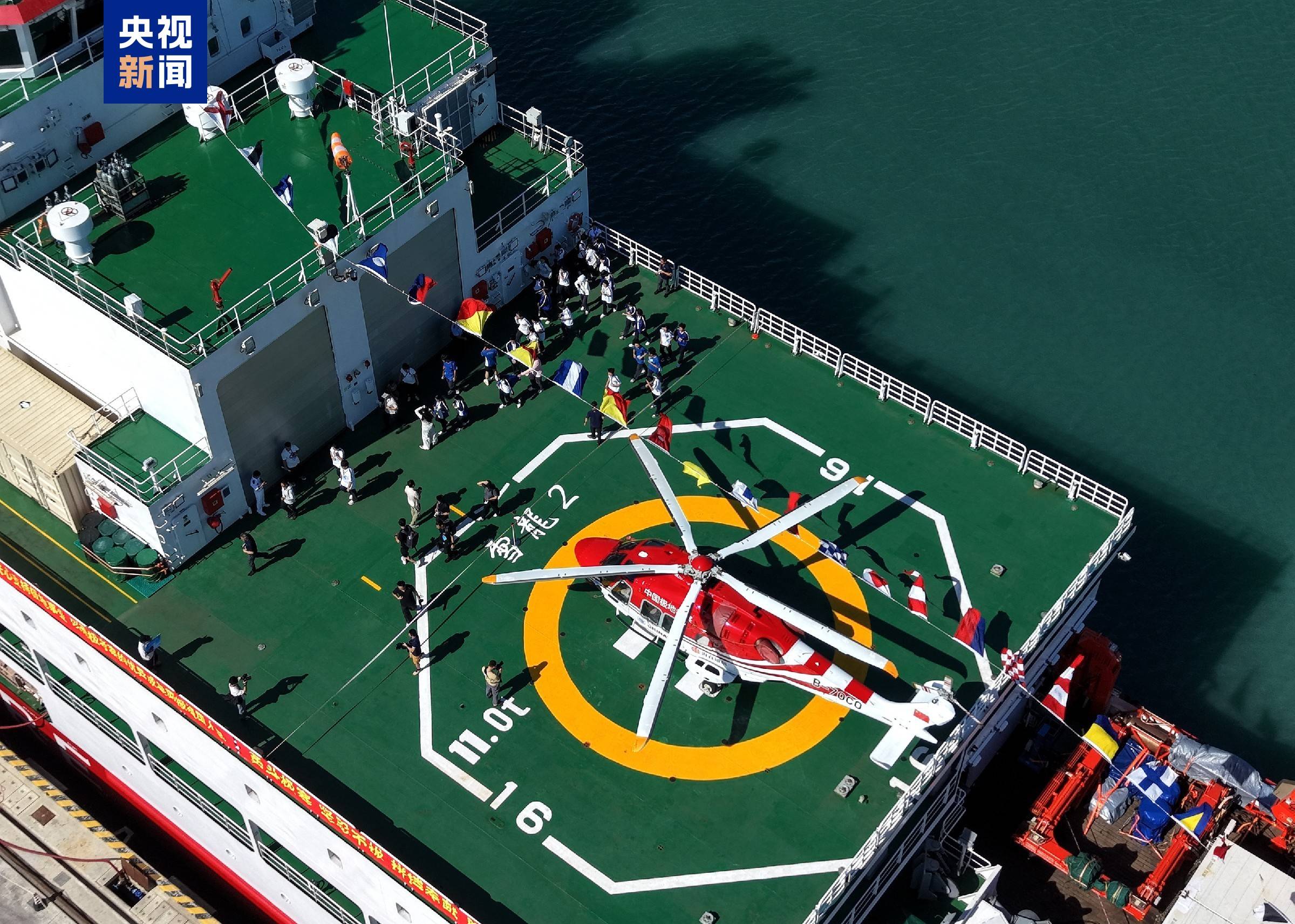
△my country continues to promote the Antarctic field testing and application of domestic technical equipment
In recent years, my country’s polar expedition equipment R&D and manufacturing capabilities have achieved leapfrog development, forming an all-round three-dimensional “air-space-ground-sea-ice” expedition system, which has also made my country an important force in human scientific expeditions to Antarctica. Zhang Tijun said that this inspection will also deepen bilateral and multilateral international scientific research and support cooperation, and make new and greater contributions to benefit mankind and promote the construction of a community with a shared future for mankind.
Zhang Tijun: We will cooperate with Norway, Chile, Bulgaria and other countries to carry out research on Antarctic ice caps, geology, ice and snow environment and other fields; invite scientific researchers from Thailand, France, Belgium, Portugal and other countries as well as Hong Kong and Macau to participate in this Antarctic expedition; and continue pragmatic cooperation in the field of logistics support with the United States, the United Kingdom, Australia, New Zealand, Russia, Italy, South Africa and other countries. Deeply participate in international Antarctic scientific research activities and continuously improve our country’s ability to understand, protect and utilize Antarctica.
It is understood that China’s 43rd Antarctic expedition is jointly supported by the three ships “Xuelong”, “Xuelong 2” and “Dayang”. More than 600 team members from more than 100 domestic units participated. It is expected to complete the mission in April 2027 and return to China.
Reporters丨Wang Zehua Xu Shuyang
Related Reading
- The first in the country! How to learn “unpopular secret skills”? Who will teach? Dean’s interpretation2026-11-12
- The price of refined oil may drop for the sixth time this year. Filling up a tank will cost about 15 yuan less2026-11-12
- “Token hoarding” became a hot word in the “Double 11” circle, and after Li Jiaqi, Luo Yonghao also came to sell2026-11-12
- Does the United States really not want to fight Iran anymore?2026-11-11
- Fireballs are scattered around Shijiazhuang. How much is the value of “visitors from outside”?2026-11-11