Xinhua News Agency reported in Los Angeles on October 31 that the vast agricultural areas in the United States have long been regarded as the electoral base of the Republican Party and are also an important vote base for Trump’s two elections as President of the United States. However, as the November 3 midterm elections approach, polls show that Republican candidates are in a tight spot in many agricultural states where they have long held an advantage.
Analysts believe that the Trump administration’s military action against Iran has pushed up energy and fertilizer prices, and its tariff policy has directly affected agricultural exports. This has harmed the interests of American farmers, thereby affecting the Republican election, while the Democratic Party has seen an opportunity for a comeback.
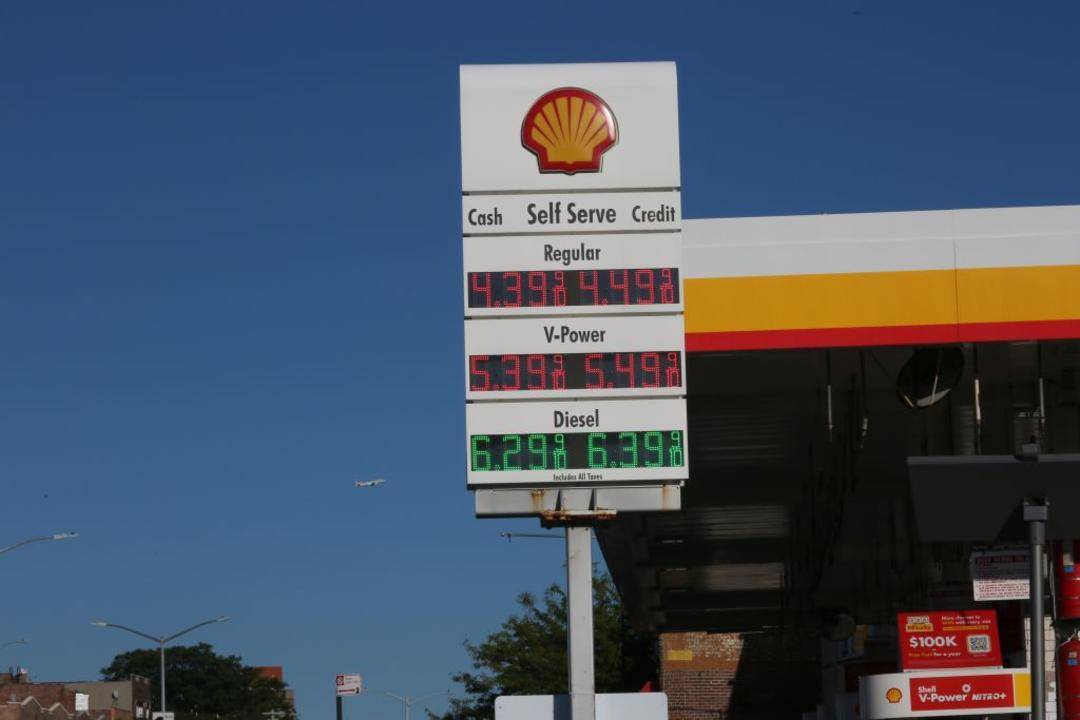
This is a price sign taken at a gas station in New York, USA on September 15. Photo by Xinhua News Agency reporter Zhang Fengguo
Multiple factors lead to farmers’ dissatisfaction
“Anger can be seen everywhere” and “pressure is coming from all directions”… Many American media described the farmers’ continuing dissatisfaction in this way, and at the same time conducted in-depth analysis of the multiple factors behind it.
First, high oil prices exacerbate financial pressures. The delay in the conflict between the United States and Iran has blocked shipping in the Strait of Hormuz and continues to impact global energy prices. The latest data from the U.S. Energy Information Administration shows that the average retail price of automotive diesel in the United States has recently increased by more than 70% year-on-year. Diesel is a widely used fuel for agricultural machinery and transportation vehicles in the United States, leading many farmers to complain that current oil prices are “ridiculously high.”
Secondly, rising fertilizer prices have made the situation even worse. Tensions in the Middle East and sluggish exports of liquefied natural gas from Gulf countries have led to an increase in the price of nitrogen fertilizers, which use natural gas as a key raw material. Steve Schaeffers, president of the Montana Grain Growers Association, said that about 40% of his planting expenses are spent on purchasing fertilizer. If prices continue to rise, the business prospects will be very bleak. According to the U.S. Department of Agriculture’s forecast, U.S. farm fertilizer expenditures will increase by 15.3% throughout 2026, further squeezing farm profit margins.
Thirdly, the Trump administration’s tariff policy affects agricultural exports and market stability. Some analysts pointed out that trade restrictions such as tariffs are prompting major importers of U.S. agricultural products to change their procurement models and turn to other alternative suppliers, thereby affecting the international market for major U.S. agricultural products such as soybeans and beef. Coupled with the impact of other retaliatory trade measures from various countries, uncertainty in U.S. farm income has increased, making investment decisions and long-term planning more difficult.
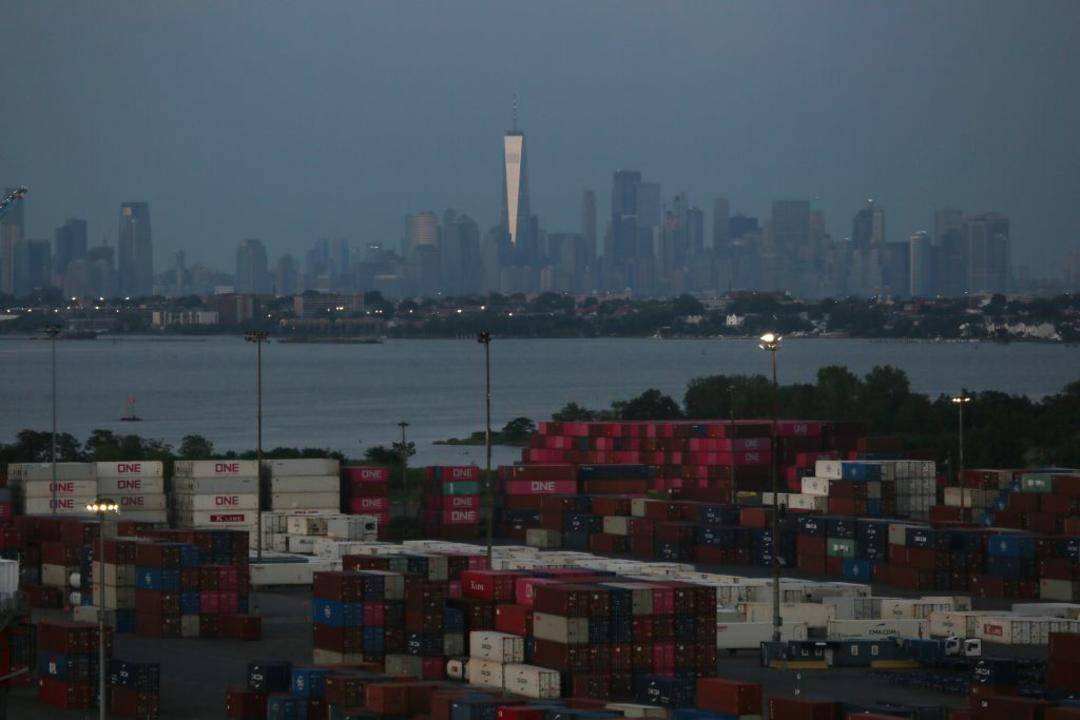
This is a container terminal taken in New York, USA on August 24. Photo by Xinhua News Agency reporter Zhang Fengguo
In addition, the Trump administration’s overly tough immigration policies have also been accused of leading to a reduction in the agricultural immigrant labor force in the United States, causing dissatisfaction among some farmers.
Affected by the above multiple negative factors, data from the United States Department of Agriculture show that U.S. net agricultural income is expected to fall by 2.6% this year compared with 2025; if inflation is taken into account, the decline will reach 5.5%.
“Stable state” slides into “swing state”
Data shows that Trump will win the support of about 60% of rural voters in the 2024 presidential election. However, poll results released by the Associated Press in September this year showed that about 60% of rural voters disapproved of the Trump administration’s response to economic problems, and about three-quarters of rural voters believed that the cost of living in their area was “average” or “poor.”
US media believe that the Trump administration’s low approval rating has put pressure on the Republican Party in many Midwestern agricultural states. Since September, Trump has traveled to Texas, Montana, Kansas and other traditionally Republican states to support the election. Polls show that in states such as Kansas and Iowa, Democratic candidates vying for Senate seats have basically the same support or even a slight lead over their Republican opponents. These places that were originally considered “safe states” for the Republican Party have a tendency to slip into “swing states”.
Take Kansas as an example. Trump won the state with a clear advantage in the 2024 presidential election. Democrats have not won a Senate election in the state for decades. But now, Republican U.S. Senator Roger Marshall, who is trying to run for re-election, has been overtaken by his Democratic opponent in the polls. Previously, the political action committee affiliated with the Kansas Livestock Association announced that it would no longer support Marshall.
Iowa, another large agricultural state, has also been a strong Republican state in recent years. Now, Republican Representative Ashley Hinson is facing a tough battle as she aims for a Senate seat. Even though Hinson has “distanced herself” from Trump on issues such as the Iran war, she still trails her Democratic rivals in the latest polls.
Even in the “deep red state” of Texas (red is the color of the Republican Party), Democratic candidate James Talarico is expected to defeat state Attorney General Ken Paxton, who is backed by Trump, and become the state’s first Democratic U.S. Senator in decades.
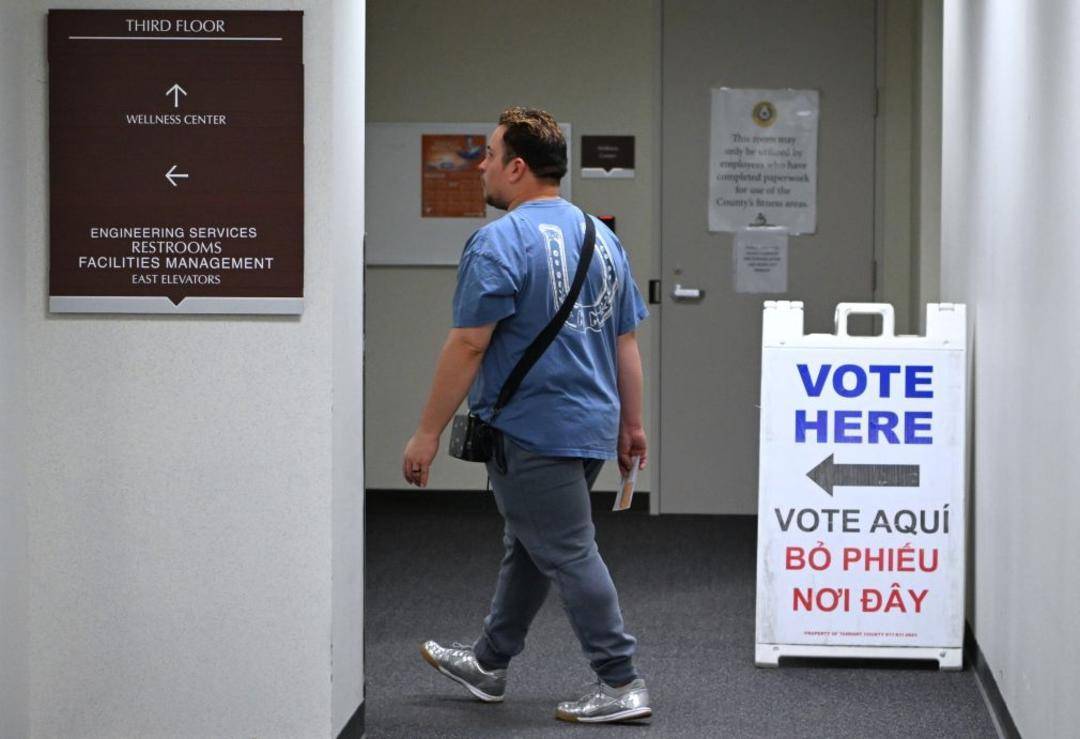
On October 23, in Fort Worth, Texas, the United States, voters went to the polling station to vote in advance. Photo by Xinhua News Agency reporter Li Rui
Voter turnout may become a key variable
According to data from multiple forecasting agencies, the Democratic Party currently has an advantage in the House of Representatives election, while the Senate election, which was once considered relatively favorable to the Republican Party, is becoming close to a stalemate. The Democratic Party is expected to set off a “blue wave” in the election (blue is the representative color of the Democratic Party). However, if the Democratic Party wants to control the Senate, it needs to flip at least four seats to the blue, which still faces many challenges.
Currently, the two parties are intensifying their competition for voters in agricultural states, and a large amount of campaign funds are flowing to states with traditional Republican advantages such as Kansas. Voters in agricultural states who used to support the Republican Party are beginning to waver, believing that the Republican Party has “brought little benefit to the Midwest” in terms of policies such as health care, cost of living, trade and immigration. Don Heineman, a Kansas rancher and Republican former state House majority leader, said dissatisfaction among Republican voters, including farmers, is growing, and some Republican ideas are gradually losing support in Kansas.
Analysts believe that although there are currently no clear signs that rural voters will switch to the Democratic Party on a large scale due to dissatisfaction, the current risk for the Republican Party is that supporters who are disappointed with the Trump administration may simply choose not to vote, thereby reducing the vote share of Republican candidates and affecting the election results.
Dee Davis, chairman of the American Rural Strategy Center, said that in the 2024 presidential election, Trump supporters in rural areas will drive to vote even if they encounter storms, “but I don’t think they will vote for Trump’s Republican Party at all costs this year.”
Related Reading
- The first in the country! How to learn “unpopular secret skills”? Who will teach? Dean’s interpretation2026-11-12
- The price of refined oil may drop for the sixth time this year. Filling up a tank will cost about 15 yuan less2026-11-12
- “Token hoarding” became a hot word in the “Double 11” circle, and after Li Jiaqi, Luo Yonghao also came to sell2026-11-12
- Does the United States really not want to fight Iran anymore?2026-11-11
- Fireballs are scattered around Shijiazhuang. How much is the value of “visitors from outside”?2026-11-11