[Global Times reporters Zheng Xuan and Ding Yazhi, Global Times special correspondent Liu Zhi]Editor’s note:The conflict between Russia and Ukraine has been delayed for more than four years, and the fighting has not stopped. Ukraine recently announced plans to expand the recruitment of mercenaries to join the Ukrainian army, drawing attention to the role and fate of foreign mercenaries in this conflict. According to multiple media reports, over the past four years, tens of thousands of foreign mercenaries have entered the Russian-Ukrainian battlefield. Many have died on the front lines, but their families have struggled to receive pensions. For them, there is another dilemma beyond the battlefield – they are neither protected by international law, but may violate the laws of their country, and thus fall into the cracks of fate.
“Possibly reduced to cannon fodder”
“Everything was bad from the beginning… By the fifth month, the food situation was terrible, simply terrible.” In August this year, a Colombian mercenary captured on the Russian-Ukrainian battlefield told the “Russia Today” TV website about the experiences of himself and a companion. He warned not to believe what recruiters say, as it is all lies, their promises are far from reality, and mercenaries brought to the battlefield may become cannon fodder.
What happened to the two men is not an isolated case. Since the outbreak of the Russia-Ukraine conflict, a large number of mercenaries have come to this battlefield. According to recent statistics from Uzbekistan, there are approximately 16,000 foreign mercenaries from 72 countries in Uzbekistan. Ukrainian President Zelensky recently stated that citizens of 47 countries are fighting for Russia.
At the beginning of the conflict, most of the mercenaries on the battlefield came from European and American countries, but now the number of source countries has greatly increased. According to reports from Spanish newspapers such as El Pais, in a prison, the mercenaries captured on the Russian-Ukrainian battlefield were not only from Europe and the United States, but also some from Latin American countries such as Colombia and Brazil, some from Middle Eastern countries such as Egypt, and some from Central Asian countries such as Tajikistan and Uzbekistan. In addition, there are approximately 7,000 Colombian soldiers fighting on the front lines in Ukraine, more than any other foreign soldiers.
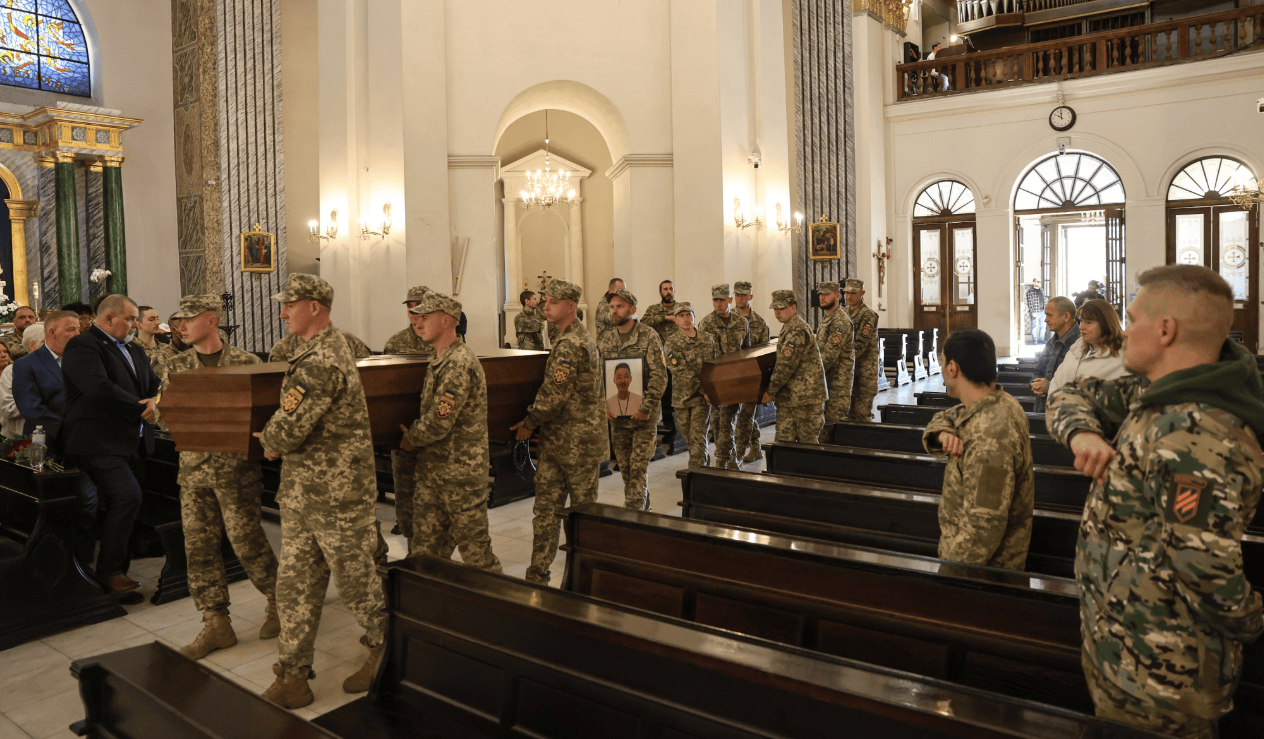
Many mercenaries fighting in Russia and Ukraine admitted in interviews that their chances of survival on the battlefield were slim. Some recruits were sent to the front without even receiving adequate training. In May 2022, Hoft, a mercenary from the United States, posted a video on social media saying that some mercenaries did not receive enough weapons and equipment, and those who were lucky could only receive about 10 rounds of ammunition. At the end of last year, a mercenary from Colombia told McPhee, a scholar at the Atlantic Council of the American think tank, “Tell Colombians not to go there (the Russian-Ukrainian battlefield) because more people will die than come back.”
It is difficult for dependents to receive pensions
The ABC and other media previously stated that some of the foreign mercenaries on the Russian-Ukrainian battlefield are looking for the excitement of war, some come with the mentality of “becoming famous in one battle”, and more are attracted by “high salaries.” According to McPhee’s research and a report by Spain’s El Pais, the monthly salary of foreign mercenaries on the Russian-Ukrainian battlefield is between US$2,000 and US$5,000. Some mercenaries can also receive signing bonuses.
However, these mercenaries do not necessarily get paid on time and in amount. According to Russian media reports such as the “Russia Today” TV website, the two Colombian mercenaries mentioned above said that after arriving on the battlefield, their “wages” became intermittent, rotations were never implemented, and there were shortages of basic supplies. An Australian mercenary who came to the Russian-Ukrainian front line said that many foreign mercenaries were unable to receive full compensation.
After foreign mercenaries die on the battlefield, it is difficult for their families to receive pensions. Panchenko is a researcher at Pryncyp, a Ukrainian NGO that protects the rights of active duty military personnel, veterans and their families. After she and other scholars investigated the situation of foreign mercenaries fighting for Ukraine, they published an article in “Ukrainian Pravda” and introduced the multiple reasons behind this phenomenon.
Panchenko said that first of all, many foreign mercenaries did not submit DNA samples in advance, so it was difficult to identify them after their deaths, which would delay the legal confirmation of their deaths and the payment of pensions. Secondly, informing family members of the death of a mercenary requires a complex and lengthy process. Finally, to receive pensions, family members must contact their country’s diplomatic mission and prepare a series of documents. They must also designate a representative in the conflict country and submit the above documents to relevant agencies in that country. The process is also complex and lengthy. The combination of these factors makes it difficult for the families of mercenaries to obtain timely information and systematic support. Therefore, some guarantees are largely symbolic for them rather than actually available. There are also media reports that on the Russian-Ukrainian battlefield, some armies will conceal the news of the death of mercenaries in an attempt to avoid paying pensions to their families.
Some mercenaries may also encounter bullying and beatings in the army, and even die as a result. According to the Kiev Independent, da Silva, a mercenary from Brazil, died at a military base near Kiev in December last year and was beaten by other soldiers before his death. Other soldiers at the base said they heard da Silva scream for about 40 minutes and saw his bruised body placed in the snow near the camp the next morning. Da Silva previously “served” in a unit called the “Advanced Company.” Ukraine’s Military Intelligence Directorate said it had launched an internal investigation into these issues with the Advanced Company.
Not protected by international law and may be prosecuted at home and abroad
On the battlefield, foreign mercenaries also face legal problems. Some mercenaries do not submit necessary documents due to language barriers and other reasons, making it difficult to obtain combatant status. Military expert Song Zhongping said in an interview with a reporter from the Global Times that mercenaries are not protected by the Geneva Convention on Prisoners of War, and Russia has warned that it will not show any mercy to mercenaries. They will not be treated as prisoners of war, and their actions may also be considered criminal offenses.
Russia’s “Viewpoint” newspaper recently stated that Zhdanova, the head of the Russian delegation participating in the Vienna military security negotiations, said that Russian investigative agencies have identified more than 4,000 foreign mercenaries, and Russia has filed lawsuits against 1,094 of them, 296 of whom have been transferred to the court, and 243 of whom have been sentenced.
Leng Xinyu, associate professor at the School of Law at China University of Political Science and Law and deputy director of the Institute of Military Law, told the Global Times reporter that according to the 1977 Additional Protocol I to the Geneva Conventions, mercenaries are not allowed to enjoy the rights of combatants and prisoners of war. However, even if they lose their status as prisoners of war, captured persons still enjoy minimum basic humane protections and are prohibited from being subjected to torture and ill-treatment, and may not be convicted without trial. If criminal proceedings are brought against a mercenary, the responsibility rests with him personally. The person concerned can apply for consular protection, but how to convict the case is decided by the arresting country in accordance with its own laws. If a mercenary is killed in a firefight, the country of origin does not need to bear national responsibility because the mercenary’s participation in the war is an individual act.
Mercenaries may also be prosecuted in their home countries. According to the BBC, some Nigerian citizens were lured by promises of well-paid jobs, immigration incentives, and more, only to find themselves being pushed into an active war zone. A spokesperson for Nigeria’s Ministry of Foreign Affairs warned its citizens not to accept such invitations, stressing that they not only endanger lives but may also violate Nigeria’s laws on foreign enlistment. In May this year, Colombia’s then President Petro stated that mercenaries were prohibited by the country’s law. Brazil’s Ministry of Foreign Affairs issued a consular warning in July last year, urging Brazilians to reject offers to join foreign armies and warning them that they could face prosecution in Brazil if they commit serious crimes abroad.
Or be used by drug trafficking groups or illegal armed forces to exacerbate regional instability.
McPhee said that many Colombian mercenaries who returned from the Russian-Ukrainian battlefield were not only physically and mentally traumatized, but also deprived of some political rights and may also face prosecution. This dangerous convergence creates a dangerous reintegration vacuum that is likely to be filled by criminal organizations eager to recruit trained personnel who feel abandoned.
This fear may have become a reality. In June last year, the French independent investigative news platform “Online Intelligence” reported that Mexico’s national intelligence agency had warned Ukraine that people associated with Mexican drug cartels had voluntarily joined Ukraine’s “International Legion” as mercenaries. These people hope to learn how to operate suicide drones on the Russian-Ukrainian battlefield so that they can be used in future confrontations with Mexican security forces. According to a recent report by the Washington Post, anonymous U.S. officials and people familiar with the matter revealed that Mexican drug cartels are recruiting Colombian mercenaries who have returned from the Russia-Ukraine battlefield to learn how to use drones. The British “Independent” stated that more and more reports show that illegal armed groups and drug trafficking groups in Latin America are using drones more and more frequently.
Song Zhongping also reminded that mercenaries returning from the Russian-Ukrainian battlefield have accumulated combat experience. If they engage in mercenary-related activities after returning to their home country or region, they will become instructors and can use more combat experience in armed conflicts in their home countries. This will lead to the further strengthening of anti-government armed forces and further tension in the regional situation.
Related Reading
- The “Purple Train” with KTV boxes prefixed with Y is popular2026-10-27
- Here comes the truth | Does the word “cod” in the name mean cod? How to eat healthier? Explain clearly in one article2026-10-27
- To balance bilateral relations and stabilize dialogue channels, the German President visited China again after 8 years.2026-10-27
- The election situation is urgent! While seeking help from Trump while exaggerating nuclear panic, Netanyahu faces a big political test2026-10-27
- Comment now2026-10-26