On September 14, local time, China officially presented the first batch of human lunar soil samples collected by Chang’e-6 to the United Nations. The samples will be permanently displayed in the outer space exhibition area of the United Nations Headquarters in Vienna together with the 1:1 model of the Chang’e-3 lunar rover that was previously presented, presenting the results of my country’s lunar exploration project landing on the moon and the first unmanned sample return from the moon’s back.
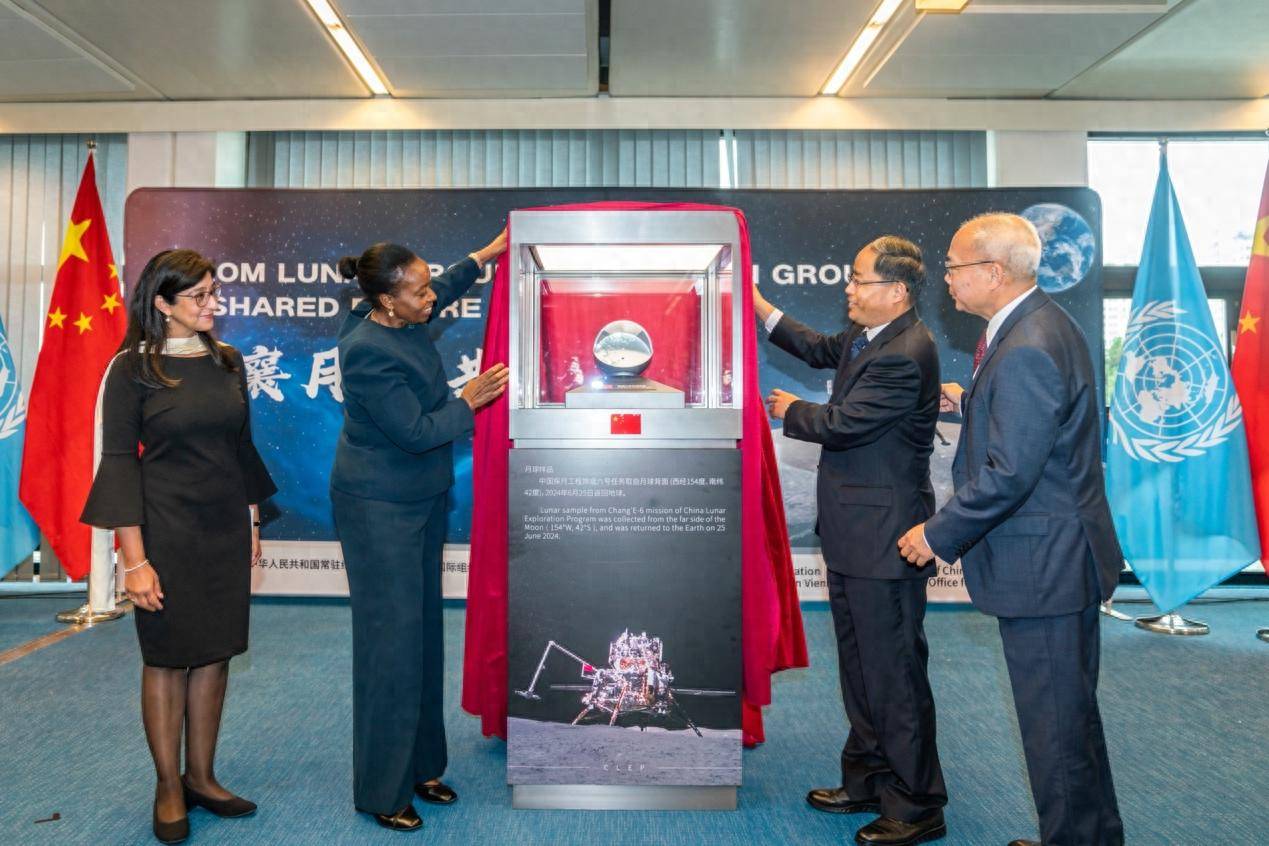
Foreign Ministry spokesperson Guo Jiakun said that China looks forward to working with other countries to uphold international law based on the Outer Space Treaty, follow the most important principle of exploring and using outer space for peaceful purposes, firmly oppose the weaponization and battlefieldization of outer space, jointly promote aerospace scientific and technological achievements to better benefit all mankind, and make outer space a platform for win-win cooperation for mankind.
Why use moon soil?
Bring it back to Earth?
Being able to “settle” at the United Nations Headquarters in Vienna, this piece of lunar soil spanning 380,000 kilometers is not a souvenir that can be dug up casually. The moon is a unique “time safe” in the solar system. It does not have active plate movements like the earth, and does not have continuous erosion by water and organisms. It has preserved almost intact the complete imprint of volcanic activity, asteroid impacts, and solar wind particle injection for billions of years. It is a “natural archive” that records the evolution of the solar system.
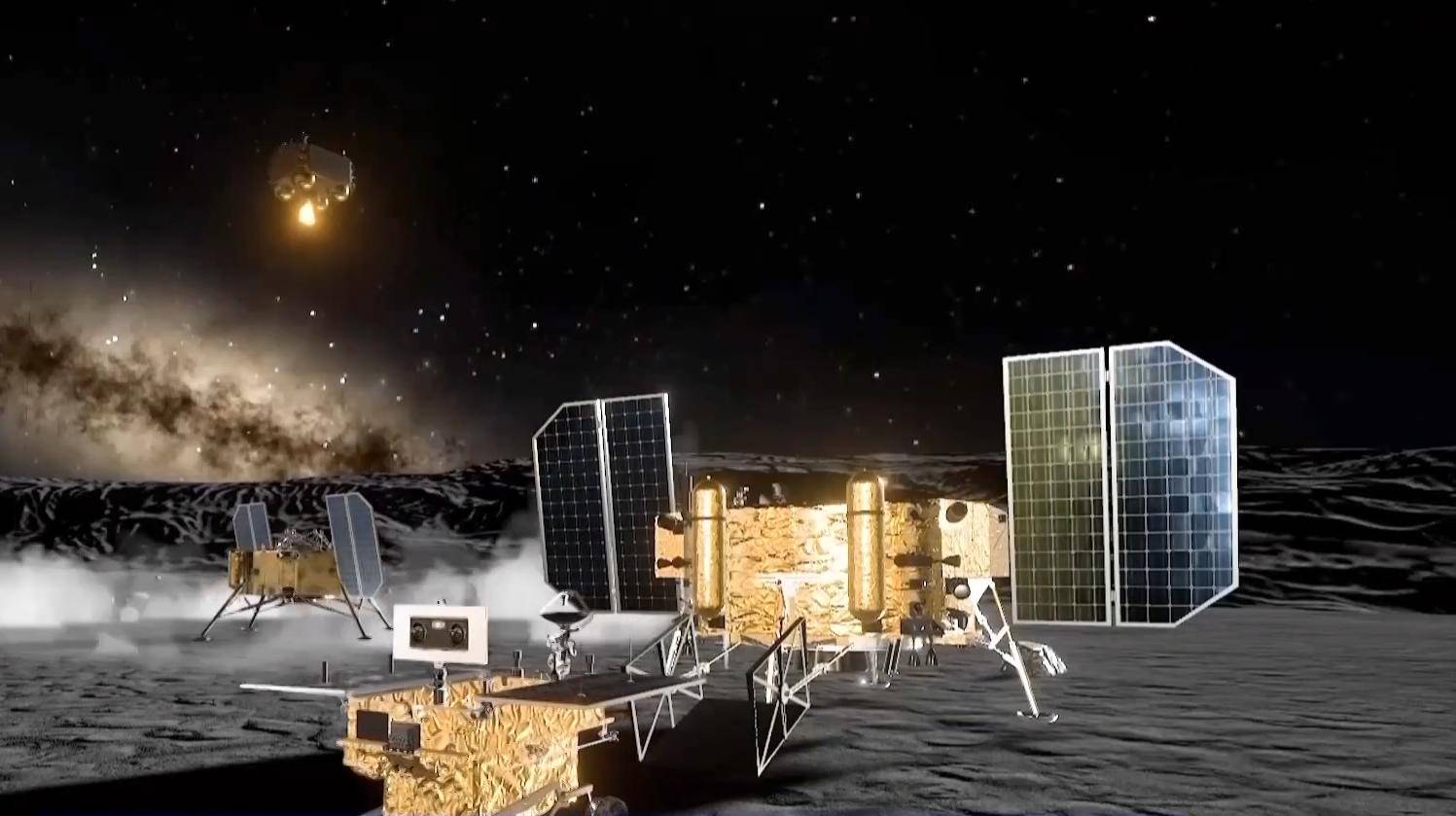
To decipher this “natural archive”, telescope observation and remote sensing research alone are far from enough, and the physical objects must be carried back to the laboratory.
Previously, all human lunar samples were taken from the front side, but the 1,935.3 grams of lunar soil brought back by Chang’e-6 is the first sample collected from the back side of the moon in human history. It was collected from the largest, deepest and oldest impact crater on the moon – the Antarctic-Aitken Basin. It provides a rare opportunity to clarify the difference in material composition between the front and back sides of the moon and solve the mystery of the moon’s “duality”.
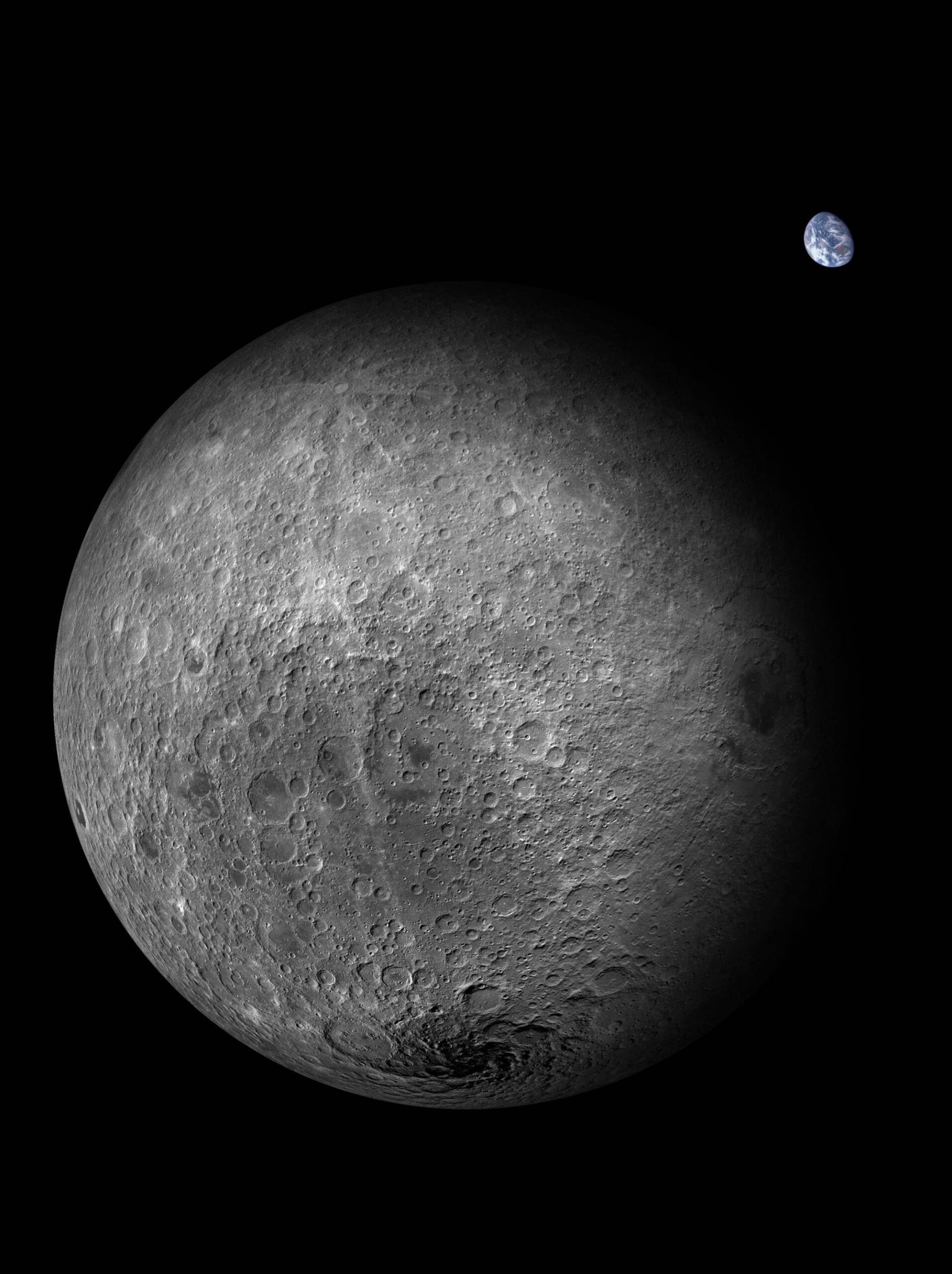
△Image of the far side of the moon
China dug it out of lunar soil
How many surprises?
This unique lunar soil is now on display at the United Nations and permanently displayed to the world, demonstrating the strong strength of China’s aerospace industry.
From the Chang’e-5 mission bringing back China’s first lunar front-side sample in 2020 to the Chang’e-6 mission’s first lunar backside sample return in 2024, Chinese scientists have relied on the two lunar soil samples to achieve a series of blockbuster results that have rewritten global understanding in the fields of lunar evolution and solar system exploration.
Chang’e 5:
China’s groundbreaking discovery of first lunar soil
Chinese scientists have made a number of breakthrough discoveries using Chang’e-5 samples, which have been evaluated by international people as “changing the understanding of the evolution history of the moon”, bringing lunar sample research into the “Chang’e Era”.
- Determining the year of formation of lunar soil samples delayed the end of lunar volcanic activity by about 800 million years
Using self-developed ultra-high-resolution dating technology, the Chinese research team determined that the basalt of the Chang’e-5 lunar soil sample was formed 2 billion years ago, delaying the end of lunar volcanic activity by about 800 million years, and providing a key anchor point for the impact crater dating curve.
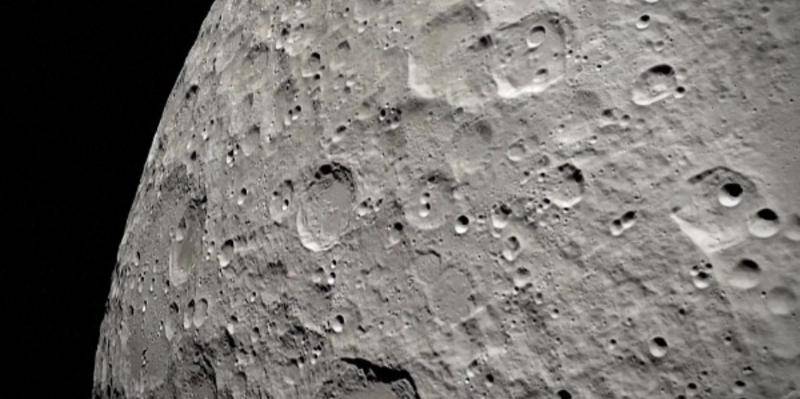
- Study the causes of lunar surface water, solar wind brings usable water to the moon
Chinese scientists’ research on Chang’e-5 lunar soil samples shows that the solar wind in the mid-latitudes of the lunar surface has injected more water into the surface layer of lunar soil particles than previously thought, and the high latitudes of the moon may contain a large amount of valuable water resources. This discovery is of great significance for the future utilization of lunar water resources.
- Study the extraction of helium-3 from lunar soil to provide basic scientific data for the development of lunar energy
As a potential nuclear fusion fuel, helium-3 is considered a future energy source. Scientific researchers have established the optimal extraction temperature parameters for helium-3 from the lunar soil. These key scientific data provide basic support for my country’s future estimation of the total amount of lunar helium-3 resources and the exploration and development of helium-3 resources.
- 我國發現 兩種New lunar minerals Magnesia Chang’e and Cerium Chang’e
On April 24, the China National Space Administration released the results of research on the Chang’e-5 lunar samples, discovering two new lunar minerals, magnesium chang’e and cerium chang’e. Magnesia chang’eite and the previously discovered chang’eite are both calcium rare earth phosphate minerals, but they are richer in magnesium and rare earth elements. Cerium Chang’eite is richer in the light rare earth element cerium, recording different stages of the moon’s evolution.
△Left of the picture: Ideal crystal of magnesia chang’e. Right of picture: Ideal crystal of cerium chang’e.
At present, my country has discovered three new minerals from Chang’e-5 lunar samples, providing new mineralogical objects for lunar research.
Chang’e 6:
Subversive achievements of mankind’s first lunar soil
Previously, the Chinese Academy of Sciences released a series of research results on Chang’e-6 lunar samples. Four hard-core studies allowed people to understand the evolutionary history of the far side of the moon for the first time, and refreshed humankind’s cognitive framework for the evolution of celestial bodies in the solar system.
- Calibrating the “Moonside Clock”
It is confirmed for the first time that the sampling area on the far side of the moon experienced two different phases of basaltic volcanic activity about 4.2 billion years ago and 2.8 billion years ago respectively, indicating that the volcanic activity on the far side of the moon spans a wide range of time and is generally older than the magmatic activity about 2 billion years ago revealed by Chang’e 5’s sampling on the front of the moon.
- Capturing the “Heartbeat of the Moon”
Obtaining ancient magnetic field data on the back of the moon for the first time, it was found that the strength of the moon’s magnetic field may have rebounded 2.8 billion years ago. Wu Fuyuan, an academician of the Chinese Academy of Sciences, explained: “This subverts the traditional understanding of the monotonous decay of the magnetic field.”
△Under the Earth’s magnetosphere, the difference in solar wind received by the moon on the front and back of the moon
- Revealing the “Moonmantle Desert”
The water content of the mantle on the far side of the moon was obtained for the first time, and it was found to be significantly lower than the mantle on the front side, indicating that there is also a “dichotomy” in the distribution of water inside the moon.
- “Impact fossil” discovered
The team discovered a new type of rock on the back of the moon – Antarctic-Aitken impact lava. Experts said that this is a “time capsule” created by a giant impact and provides an excellent sample for studying the impact effects of Earth-like celestial bodies.
Next stop, the South Pole of the Moon!
After completing the lunar back sampling, China’s next target for lunar exploration is the lunar South Pole. Chang’e-7 will go to the lunar South Pole to carry out water ice exploration and environmental survey.
Chang’e-7 is heading to the moon’s South Pole to search for evidence of water ice. Why choose Antarctica? Because the tilt of the moon’s axis of rotation is extremely small, sunlight sweeps across the polar surface almost close to the moon’s horizon. The temperature in the permanent shadow area is as low as about -230°C, and water ice may be hidden there.
Secondly, Chang’e-7 is mainly powered by solar energy and must be accurately positioned to successfully land before the high-quality polar day window in Antarctica opens. If the best opportunity of this year is missed, the Antarctic light will have weakened by the time the probe arrives, and there will be problems with equipment power supply and navigation, and the operating window for lunar surface exploration will be compressed or even lost.
On August 19, the Chang’e-7 mission vehicle and arrow assembly completed vertical transfer.
On August 23, the China Manned Space Engineering Office announced: Based on the principle of soundness, reliability and foolproofness, after comprehensive research and judgment, the Chang’e-7 mission does not meet the launch conditions and cannot be implemented within the scheduled window this year.
Let us wait for more information about what Chang’e-7 will bring back to the moon in the future.
From Chang’e-5 to Chang’e-6, China used two lunar soil samples to step by step unlock the hidden code of the oldest “time safe” in the solar system.
This year marks the 70th anniversary of the founding of China’s aerospace industry. “Dongfanghong No. 1” is playing in the sky, “Chang’e” is capturing the moon, “Tianhe” is stationed in the sky, and “Tianwen” is detecting fire. China’s aerospace industry is moving towards deep space step by step. We look forward to Chang’e-7’s steady departure and arrival in the next window period.