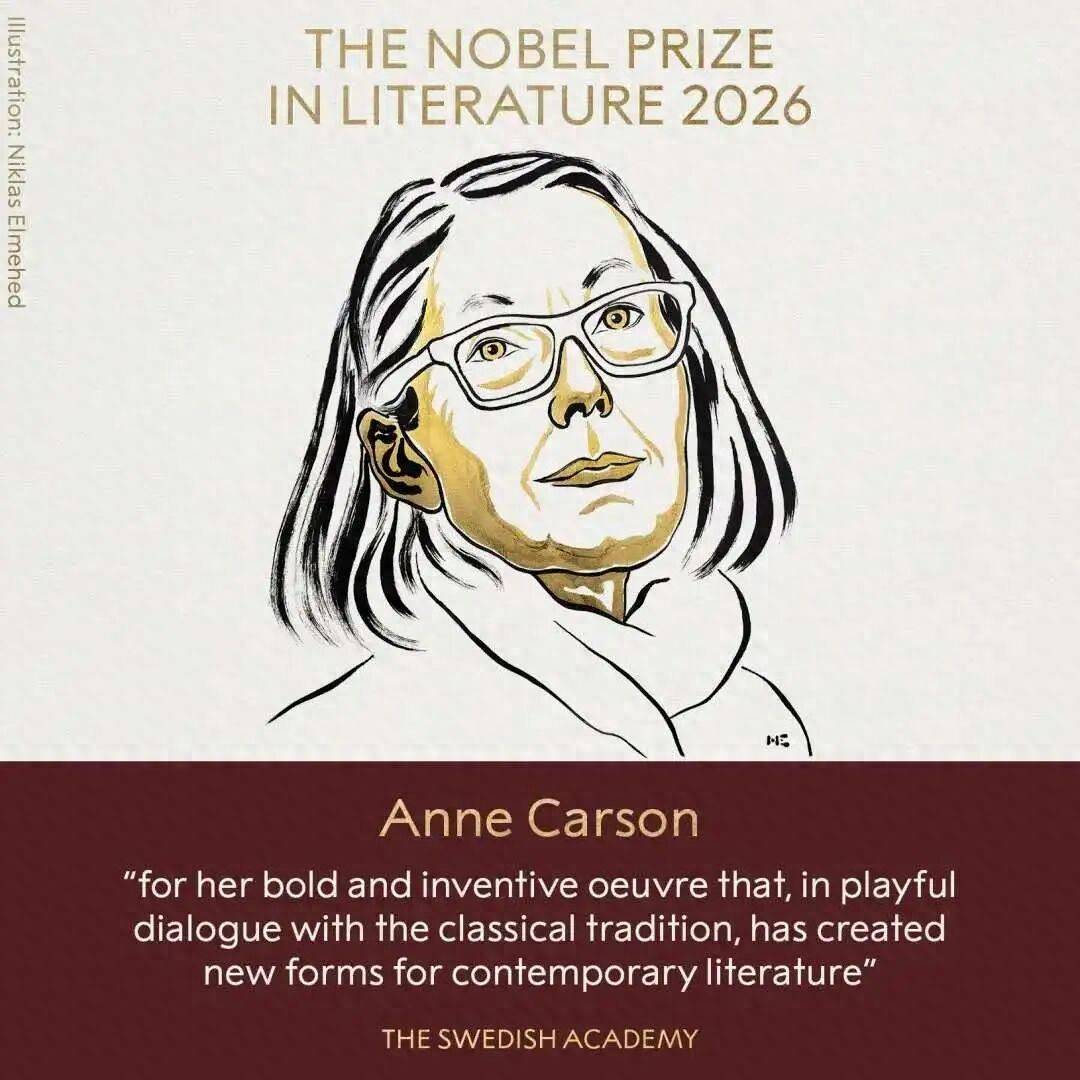
At 13:00 local time on October 8 in Stockholm, the Swedish Academy announced that the 2026 Nobel Prize in Literature will be awarded to Canadian poet Anne Carson. The award citation stated that she “created new forms for contemporary literature through bold and creative works in an ingenious dialogue with classical tradition.”
This result is not surprising to the world literary world and global readers. Carson’s name has been at the top of the odds lists issued by various bookmakers for several years, and this year it has jumped to the highest ranking among poets. Although the predictability of these lists has weakened in recent years, they still demonstrate their popularity and importance. As far as Carson is concerned, this honor from the Nobel Prize may be just an ordinary coronation. She is 76 years old and has been exploring the path of literature for decades. She is still exploring and will continue to explore.
people who speak ancient greek for a living
Anne Carson was born in Toronto, Canada in the summer of 1950. Because her father was a bank clerk and his job changed frequently, she often moved around with her family when she was a child. She described her childhood as “spent on the move”, and books became the only constant coordinates in that ever-changing world. In high school, she came into contact with ancient Greek literature under the guidance of a Latin teacher, and was immediately struck by those texts from more than two thousand years ago. After that, she was admitted to the University of Toronto to study classics and received her bachelor’s, master’s and doctoral degrees.
During his PhD, Carson devoted all his energy to the study of Sappho. In her opinion, although only a few incomplete fragments of this ancient Greek poet remain, she has written thoroughly about the joy and pain of love. In 1986, she published her first formal work “Bittersweet Eros” based on her doctoral thesis, which not only put forward the concept of desire that later dominated her poetry creation, but also established her “creation style based on classical Greek literature.”
Carson later taught classics and comparative literature at McGill University, the University of Michigan, Princeton University and many other universities, and also served as a poet-in-residence at New York University. She has been active in the art and opera circles for a long time, and has collaborated with others to put poetry on the stage of drama and opera.
Her author introduction only has one sentence: “Anne Carson, born in Canada, lives by ancient Greek.” She is not even willing to flaunt her identity as a “poet”. When asked in an interview whether understanding a writer’s life helps to understand his work, she simply responded: “Well, good luck to you.”
Bridging the gap between classics and modernity
Carson’s writing is difficult to categorize. Most of her works combine poetry, essays, translations, diaries, history, documentary and other genres to form a highly recognizable collage text.
One of her most important masterpieces, “The Autobiography of Hong” (1998), is a novel in verse. She drew inspiration from papyrus fragments of the ancient Greek poet Stesiklos and reconstructed the life trajectory of Geryon, a monster with red wings in Greek mythology. She recasts Geryon as a contemporary teenager full of vulnerability and self-awareness, giving a gentle soul to a monster hunted by Hercules. Writer Michael Ondaatje calls the work “an ambitious and singular bridge between classical texts and contemporary autobiographical poetry.”
Another masterpiece, “The Beauty of Husband” (2001), is more personal. In it, Carson dances twenty-nine styles of death tango, records the failure of a marriage with cold and powerful strokes, and re-collages and combines text fragments from Keats, Beckett, Georges Bataille and others to create a quasi-autobiography with both intellectual edge and emotional undercurrent. It was this poem that won her the T.S. Eliot Poetry Prize, and she became the first female poet to win this award since its establishment in 1993.
Harold Bloom, the master of literary criticism, once made no secret of his admiration for her, calling her “one of the living geniuses” and said: “I am twenty years older than Carson. Perhaps one of my regrets when I die is that I will not be able to see her life’s work.” Susan Sontag said: “Anne Carson is a bold, erudite, and disturbing writer. I will read anything written by Anne Carson.”
A footnote to ten years of Nobel Prizes
Over the past ten years, the Swedish Academy has shown a clear and resolute pluralism in its selections. In 2016, American musician Bob Dylan won the Literature Award for his lyrics, which caused huge controversy but also expanded the boundaries of “literature”; in 2017, the Japanese-British writer Kazuo Ishiguro won the award; in 2018, the award was suspended due to scandal, and was awarded to Polish writer Olga Tokarczuk in 2019; in 2020, the United States Poet Louise Glick; in 2021, it is Tanzanian British writer Abdulrazaq Gourna; in 2022, French writer Anne Ernault won the award for her autobiographical writing; in 2023, Norwegian playwright Jon Fother won; in 2024, Korean writer Han Jiang became the first Korean woman to win this honor…
Rough statistics show that the winners’ works in the past ten years cover lyrics, poetry, drama, autobiographical novels and other genres, spanning the United States, the United Kingdom, Poland, Tanzania, France, Norway, South Korea and Canada. The Swedish Academy seems to be intentionally breaking the inertia of “European male novelists” and focusing on a wider geographical space and more diverse writing forms.
Carson’s award seems logical in this context: she is a poet, translator and classical scholar; her writing spans North America and Europe, and she has opened up a unique voice as a woman in classics, a field that has long been dominated by men; her poetry is not only rooted in the ancient Greek lyric tradition of more than 2,000 years ago, but also explores love, memory, identity and trauma in a very contemporary form. She almost condenses in one person all the key words that the Nobel Prize has tried to convey in the past ten years: cross-border, pluralism, classical and contemporary dialogue.
Carson in the Chinese world
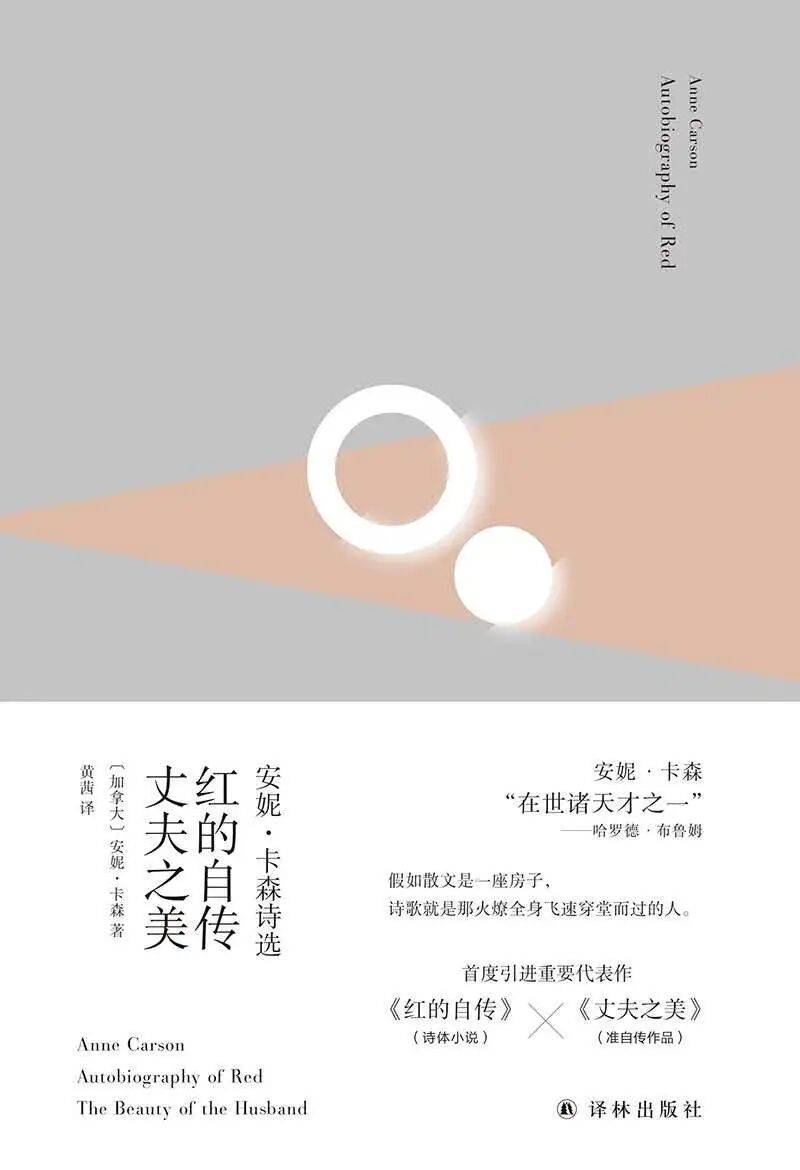
It is not too early for Carson’s name to enter the eyes of Simplified Chinese readers. In January 2021, Yilin Publishing House launched “Selected Poems of Anne Carson: The Autobiography of Red: The Beauty of a Husband”, which was translated by poet and translator Huang Qian and included in the second volume of the publisher’s “Orpheus Poetry Translation Series”. This is the first time that Anne Carson’s works have been introduced into the Simplified Chinese world.
Yilin Publishing House noticed as early as 2018 that the simplified Chinese copyrights of Carson’s two masterpieces had not yet been introduced, and bought the copyrights that year. “The Autobiography of Red” is a poetic novel and Carson’s most important masterpiece; “The Beauty of My Husband” is her elegy for a failed marriage. The two works combined into one volume combine characters and plots, myths and magic, showing Carson’s most typical writing style.
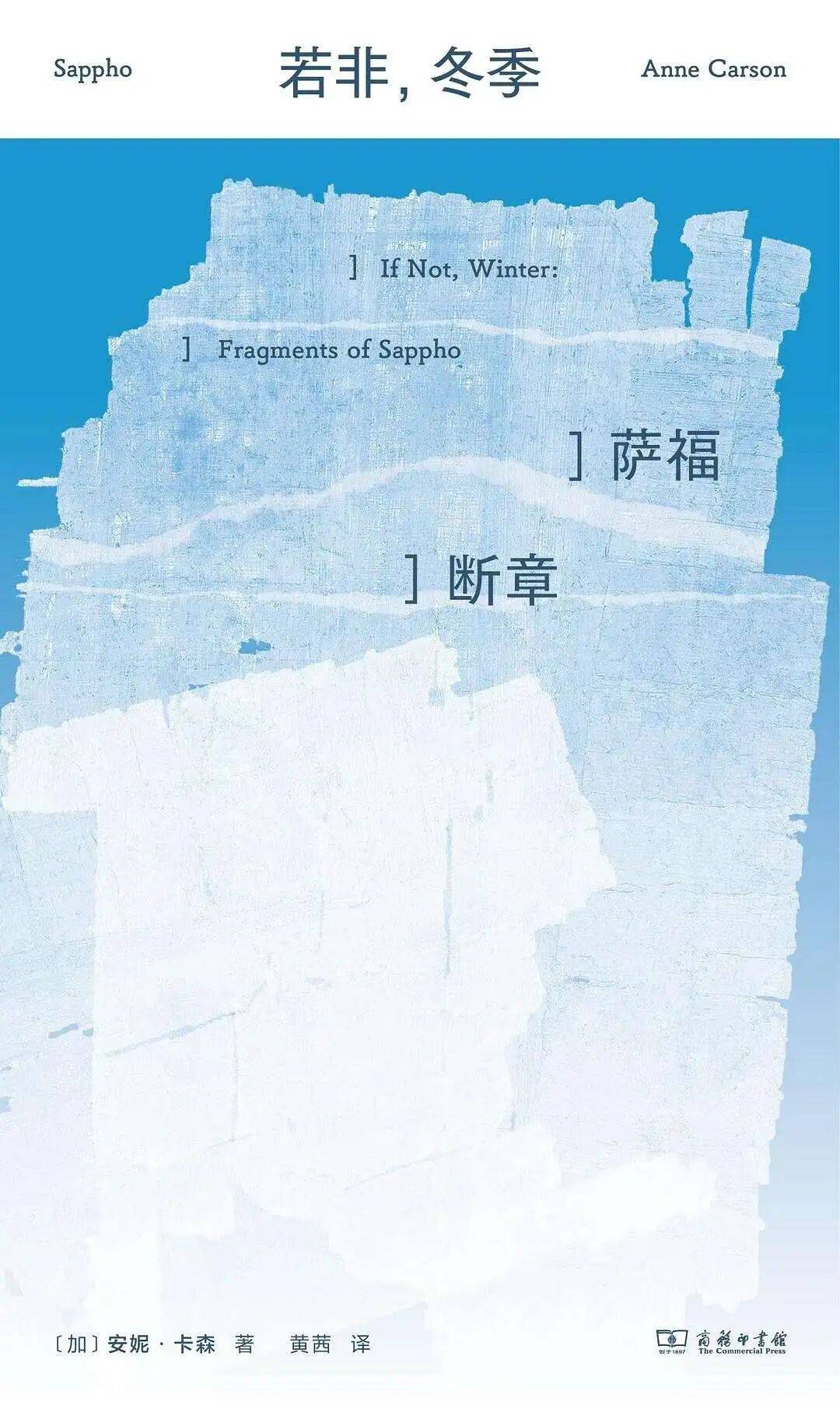
In October 2025, the Commercial Press published the hardcover Chinese translation of another important work of Carson’s “If But Winter: Fragments of Sappho”, also translated by Huang Qian. This book is Carson’s translation and commentary of Sappho’s poetry, which runs through ancient and modern times, connecting lyric poetry more than two thousand years ago with contemporary poetry writing.
Before the Nobel Prize was announced, Carson’s latest work “Night” was also introduced to China. This is an experimental work that breaks through the traditional elegy genre and constructs a complex “elegy system” through stylistic collage and material intervention. In form,
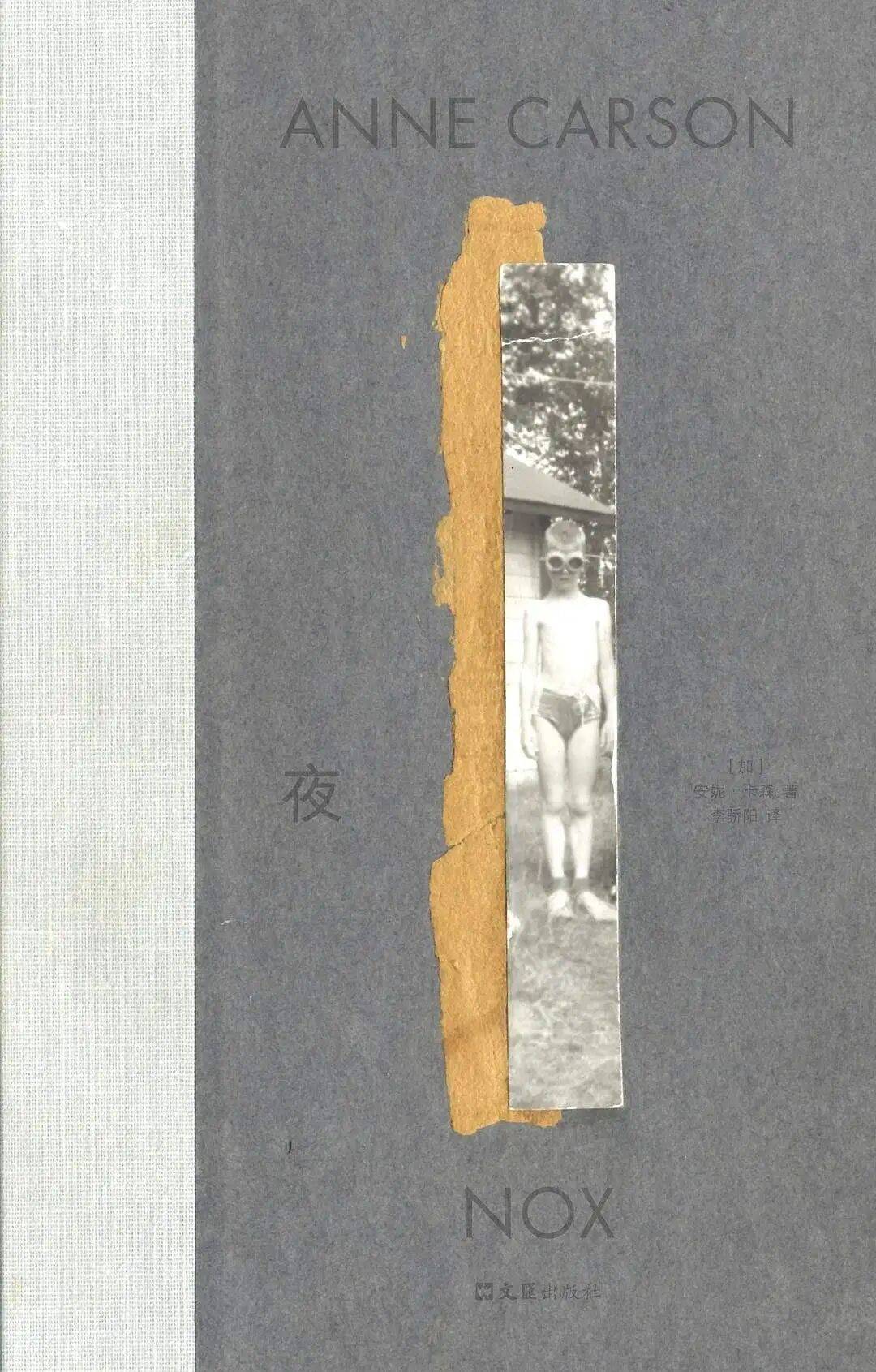
The book adopts a 26-meter-long organ fold design and integrates collage art of poems, photos, letters, handwritten notes, newspaper clippings and other materials; in terms of content, Carson disassembled and annotated the 101st mourning poem of the ancient Roman poet Catullus word for word, and juxtaposed it with his own personal memory fragments, which fully reflects Carson’s “comprehensive writing” characteristics of combining a classical scholar and a pioneer poet.
“If prose is a house, poetry is the person running through the house with his body on fire.” This is Carson’s sentence in “The Selected Poems of Anne Carson: The Autobiography of Red: The Beauty of a Husband”. Perhaps, this is the first door she leaves for all readers who have not yet met her. Behind the door is a world rebuilt from the fragments of two thousand years.
Reporter: Xu Pengyuan
(xupengyuan@chinanews.com.cn)
Related Reading
- The “touchstone” battle: Zheng Qinwen hits the semi-finals of China Open2026-10-09
- Three years after the Palestinian-Israeli conflict: The ceasefire has not stopped the fighting and reconstruction has no timetable2026-10-09
- Undercover visits to release chaos: Good deeds turn into business? Why can’t I control this bucket of “released fish”?2026-10-09
- Venezuela’s Maduro, wife Flores tortured opponents to stay in power, US prosecutors say2026-10-09
- (Photos from China) As evidenced by mountains and seas, “destination wedding” has become a new trend in marriage and love among Chinese young people2026-10-09