Will it become the norm to implement “eight-percent full” charging in some high-speed service areas?
40萬
Today is the last day of the National Day holiday. In the past two days, many self-driving owners have begun to return. The Ministry of Transport predicts that during this year’s National Day holiday, the average travel volume of new energy vehicles will be 1.8 times that of daily use, and charging piles in service areas will once again undergo a major test. In order to alleviate queuing pressure, some highway service areas implement “eight-point full” charging during peak hours. That is, when the battery reaches about 80%, car owners are guided to end charging and leave the parking space.
Such measures have improved the turnover efficiency of charging piles, reduced the waiting time of car owners, and received many praises. However, some car owners are worried that if they have to recharge their batteries several times if they are not fully charged once, will this “damage the battery”? Will “eighty percent full” charging become the norm in high-speed service areas?
△Information pictures
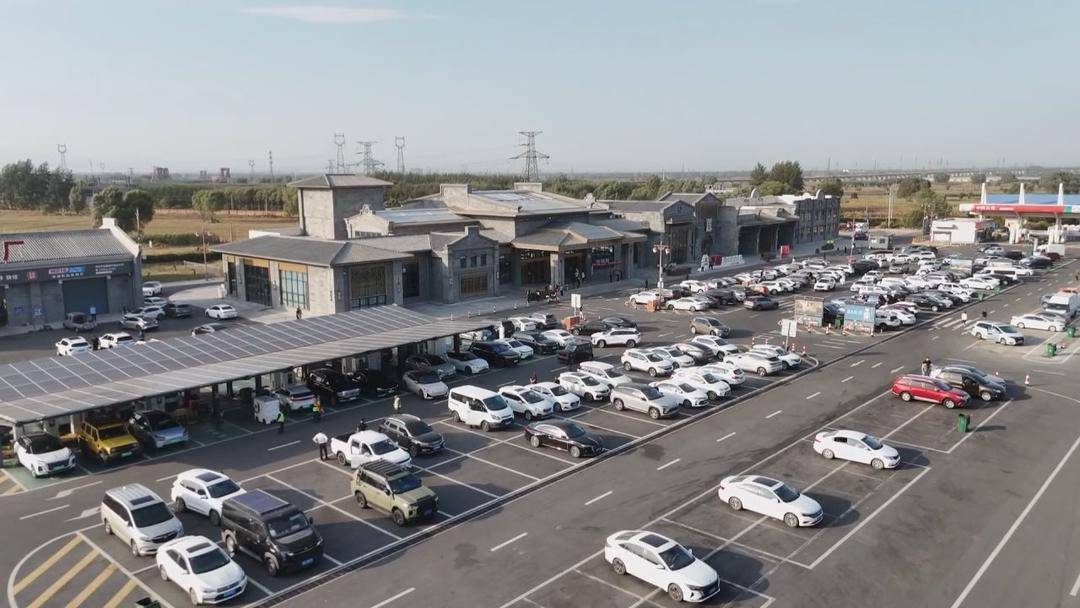
As the holiday season enters its peak period for return trips, there is a waiting situation for vehicles in the charging parking area of Hubei Communications Investment Zaoyang North Service Area. In order to maintain order, staff directed vehicles to wait outside the charging area, issued charging serial numbers to vehicles one by one, called numbers in turns, and released them in sequence.
In addition to the number queuing, the service area has also taken a more attention-grabbing measure: during peak hours, when the battery is charged to about 80%, the staff will guide the vehicle away from the charging pile and give up its position to the vehicle behind it. Bicycles occupy less time and can serve more vehicles at the same time. Mr. Mu, the car owner, said that he saw the long queue and did not expect that his turn would come soon. The actual waiting time was much shorter than expected.
Mr. Mu: To be honest, I quite understand this rule. There are indeed too many cars traveling during holidays, so charging up to 80% is enough, and you can recharge at the next stop. If every car had to be full, people in line behind would have to wait longer. If everyone accommodates each other a little, the efficiency will increase and it will be convenient for everyone.
Qiu Xinyuan, deputy general manager of Hubei Communications Investment New Energy Company, said that they have set up the charging pile system. When encountering peak traffic flow, the charging limit will be dynamically adjusted to 80% to 85%. This measure will not be enabled all the time. When the traffic flow decreases and there are no longer queues, the system will automatically restore and the car owner can fully charge the battery.

△Information pictures
Why is it “eighty percent full”? Qiu Xinyuan explained that the characteristics of lithium batteries determine that after approaching a higher power range, it may take longer to charge a kilowatt hour of electricity, and 80% is a key dividing point.
Qiu Xinyuan: This 80% threshold upper limit is not set arbitrarily. Before the holiday, we combined the charging characteristics of lithium batteries and made calculations and demonstrations with power experts from the United Nations Network: Lithium batteries belong to the high-efficiency fast charging range between 0 and 80%, with high charging power and fast energy replenishment. After the power exceeds 80%, the battery protection mechanism starts and enters the trickle slow charging stage. The charging power drops off a cliff and the time consumption increases exponentially.
Some car owners are worried that “not fully charged” may mean that they need to be charged several times. Will this damage the battery? Qiu Xinyuan said:
Qiu Xinyuan: After an electric vehicle travels at high speed, the battery temperature is often relatively high. If it is still too full at this time, the battery will be more likely to heat up, which will affect its lifespan. The charging life of lithium batteries is not calculated based on the number of charges. The best way is to charge and discharge shallowly, which will not have any impact on the battery.
In fact, highway service areas in many places have taken similar measures.
△Information pictures
The Ministry of Transport has previously studied and judged the charging demand on highways during this year’s National Day holiday based on data from the Internet of Vehicles platform over the years, and dynamically released a list of particularly busy charging service areas. The Pengcheng service area of the Jiangsu section of the Lianhuo Expressway is among them. Starting from noon on October 5, the return charging peak will be here. Zhang Qiang, the person in charge of the service area, said that during peak hours, staff will actively persuade car owners to drive away when the battery reaches 70% to 80%. After taking a number of diversion measures, the service area can turn over up to 82 charging vehicles in a single hour, and the turnover of piles has been significantly accelerated.
Zhang Qiang: During the peak traffic period, we and the State Grid’s on-site management personnel actively guide car owners to charge to about 70% to 80% and leave the site in time to avoid long-term full charging and traffic backlog. By standardizing and scientifically guiding charging behavior, the turnover efficiency of single piles in the district has increased by about 20% compared with the past.
Temporary control measures in service areas can effectively improve the utilization efficiency of charging piles, and it is also indispensable for car owners to plan their trips scientifically.
Zhang Qiang: In order to ensure efficient and smooth travel for our car owners, we also remind drivers and passengers of new energy vehicles to plan their itineraries rationally and travel at staggered peak times scientifically. Actively avoid driving into service areas for charging during morning and evening peak travel hours to reduce waiting time in queues; plan your itinerary in advance, rely on the navigation platform to check the usage status of charging piles in service areas along the way in real time, and promptly detour to surrounding low-load service areas when stations are saturated; make preparations before traveling, replenish vehicle power before departure, reserve sufficient battery life, and formulate alternative energy replenishment plans in advance.
Return to the homepage to see more car information
Related Reading
- Customs reminds: Don’t take these “souvenirs” back home2026-10-08
- Solve the century-old chemical mystery of “how homochirality occurs spontaneously”! Official explanation of why this year’s Nobel Prize in Chemistry was awarded to these two scientists2026-10-08
- Chinese scientists successfully develop nuclear optical clock2026-10-08
- Democrats cry foul as U.S. lifts sanctions on Serb nationalist, MAGA-linked firm gets huge Bosnia energy contract2026-10-08
- Weeks before Election Day, the nation’s campaign finance regulator can’t enforce the law2026-10-08